In today’s fast‑paced lifestyle, everyone wants a home or office that feels fresh, green, healthy, and positive. Indoor plants play a major role in improving air quality and mental well‑being, and among all indoor plants, the Rubber Plant (Ficus elastica) is one of the most popular and trusted choices.
In 2026, the demand for low‑maintenance, air‑purifying indoor plants is growing rapidly, and the rubber plant tops the list due to its beautiful glossy leaves, strong air‑cleaning ability, and vastu benefits.
In this complete guide, you will learn:
What is a Rubber Plant?
Benefits of growing a rubber plant
Best place to keep rubber plant indoors & outdoors
Proper sunlight, water, and soil requirements
Tips for fast and healthy growth
Fertilizer and pruning guide
Common problems and solutions
Vastu benefits of rubber plant
FAQs (Frequently Asked Questions)
If you are planning to buy a healthy rubber plant online, this guide will help you make the right decision.
🌱 What is a Rubber Plant?
The Rubber Plant’s botanical name is Ficus elastica, and it belongs to the Moraceae family. It is known for its large, thick, shiny green leaves, which give a premium and elegant look to any interior.
Earlier, rubber was extracted from the sap of this plant, which is why it is called the Rubber Plant. Today, it is widely grown as an indoor ornamental and air‑purifying plant.
🌿 Major Benefits of Rubber Plant
1️⃣ Excellent Air Purifier
The rubber plant is recognized as a powerful air‑purifying plant. It absorbs harmful toxins such as:
Formaldehyde
Carbon monoxide
Other indoor pollutants
This makes indoor air cleaner and healthier.
2️⃣ Improves Oxygen Levels
Its large leaves help maintain humidity and freshness indoors, creating a more breathable and oxygen‑rich environment.
3️⃣ Reduces Stress & Boosts Mood
Having greenery indoors reduces anxiety and stress. A rubber plant:
Improves concentration
Enhances mental calmness
Creates a positive atmosphere
4️⃣ Low Maintenance Plant
Perfect for beginners, rubber plants:
Need less watering
Survive in indirect light
Require minimal care
5️⃣ Enhances Home & Office Décor
The bold leaves give a luxurious, modern look, making it ideal for homes, offices, hotels, and showrooms.
🏡 Best Place to Keep Rubber Plant
✔️ Indoors
Living room
Bedroom (near window)
Office desk or cabin
Staircase corners
✔️ Outdoors
Balcony
Terrace with filtered sunlight
Garden corners
⚠️ Avoid harsh direct sunlight as it may burn the leaves.
☀️ Sunlight Requirement
Bright indirect sunlight is ideal
Avoid direct afternoon sun
Can survive in low light, but growth becomes slow
💧 How Often to Water Rubber Plant?
Water once or twice a week
Water only when topsoil feels dry
Overwatering can cause root rot
Reduce watering during winters
👉 Golden Rule: Less water is better than excess water.
🌱 Best Soil for Rubber Plant
Well‑draining, loose soil
Garden soil + cocopeat + sand (2:1:1)
Pot must have drainage holes
🌿 Fertilizer & Nutrition Guide
Organic Fertilizers:
Vermicompost (once a month)
Well‑rotted cow dung manure
Liquid Fertilizer:
Once every 15 days during growing season
⚠️ Over‑fertilization can damage leaves.
🚀 Tips for Fast & Healthy Growth
Choose the right pot size
Clean leaves regularly with a damp cloth
Fertilize once a month
Avoid overwatering
Repot every 1–2 years
✂️ Pruning Guide for Rubber Plant
Remove yellow or damaged leaves
Cut the top to encourage bushy growth
Best time for pruning is spring or early summer
🪴 Common Problems & Solutions
🍂 Yellow Leaves
Cause: Overwatering Solution: Reduce watering and improve drainage
🐜 Pest Attack
Solution: Spray neem oil every 7–10 days
🍃 Leaf Drop
Cause: Sudden temperature change or cold air
🧿 Vastu Benefits of Rubber Plant
According to Vastu Shastra:
Rubber plant attracts wealth and prosperity
Removes negative energy
Enhances positivity in home and office
Best Direction as per Vastu:
South‑East (most auspicious)
North direction is also suitable
⚠️ Avoid placing it very close to the bed.
🛒 Where to Buy Rubber Plant Online? (High‑Conversion CTA)
If you are looking for a healthy, well‑grown, premium‑quality rubber plant, order from a trusted nursery:
आज के समय में जब हर कोई अपने घर और ऑफिस को हरा-भरा, सुंदर और पॉजिटिव बनाना चाहता है, तब रबर प्लांट (Rubber Plant / Ficus elastica) एक बेहतरीन विकल्प बनकर उभरा है। यह न सिर्फ देखने में आकर्षक होता है, बल्कि इसके कई स्वास्थ्य लाभ, वास्तु फायदे और मानसिक शांति देने वाले गुण भी हैं।
2026 में इंडोर प्लांट्स की डिमांड लगातार बढ़ रही है और रबर प्लांट इसमें सबसे ज्यादा पसंद किए जाने वाले पौधों में शामिल है। इस संपूर्ण गाइड में हम जानेंगे:
रबर प्लांट क्या है
रबर प्लांट लगाने के फायदे
सही जगह और तरीका
पानी, खाद और रोशनी की सही मात्रा
तेजी से ग्रोथ पाने के उपाय
वास्तु शास्त्र के अनुसार लाभ
आम बीमारियां और उनका इलाज
FAQ (अक्सर पूछे जाने वाले सवाल)
अगर आप ऑनलाइन बेस्ट क्वालिटी रबर प्लांट खरीदना चाहते हैं, तो अंत तक जरूर पढ़ें।
🌱 रबर प्लांट क्या है?
रबर प्लांट का वैज्ञानिक नाम Ficus elastica है। यह मोरेसी (Moraceae) परिवार का पौधा है। इसके पत्ते मोटे, चमकदार और गहरे हरे रंग के होते हैं। यह पौधा मुख्य रूप से इंडोर प्लांट के रूप में लगाया जाता है, लेकिन सही देख-रेख के साथ यह आउटडोर भी अच्छी तरह बढ़ता है।
Did you know that each zodiac sign and ascendant (Lagna) has specific plants and trees considered extremely auspicious? According to Vedic Astrology, planting certain trees aligned with your zodiac sign can:
Bring wealth and prosperity
Improve health and immunity
Remove negative energies
Strengthen relationships
Maintain mental peace
Help balance planetary energies
This complete guide will help you discover:
✔ The lucky plant for your zodiac ✔ Lucky trees according to Lagna (Ascendant) ✔ Vastu directions for placing each plant ✔ Benefits of each plant ✔ How to grow them in bonsai form
🪔 Part 5: 5 Important Astrological Rules Before Planting
Plants should not block the main entrance
Remove dry or dead plants immediately
Tulsi should always be placed in the East/North-East
Money Plant should be placed in the South-East
Avoid thorny plants inside the bedroom
❓ FAQ – Lucky Trees According to Zodiac
1. Can planting the wrong plant cause planetary imbalance?
Yes, certain plants can affect energy; hence choose according to your sign.
2. Is gifting lucky plants auspicious?
Absolutely. It is considered one of the most positive gifts.
3. Is a bonsai form of a lucky plant equally effective?
Yes, bonsai does not reduce the astrological effect.
4. How soon do results appear?
Within 15–45 days, the environment of the home starts becoming more positive.
🎯 Conclusion
Choosing plants according to your Zodiac and Lagna can bring success, harmony, prosperity, and spiritual well-being. If you want to buy lucky plants or bonsai online:
क्या आप जानते हैं कि हर व्यक्ति की राशि और लग्न के अनुसार कुछ खास पौधे बेहद शुभ माने जाते हैं? इन पौधों को घर में लगाने से:
धन व समृद्धि बढ़ती है
स्वास्थ्य में सुधार होता है
जीवन में पॉजिटिविटी आती है
ग्रहों के दोष कम होते हैं
घर-परिवार में सौहार्द बढ़ता है
वैदिक ज्योतिष में 12 राशियों और 12 लग्नों के अनुसार “लकी ट्री और लकी प्लांट” निर्धारित किए गए हैं। यह पोस्ट आपको बताएगा:
✔ आपकी राशि/लग्न के अनुसार कौन-सा पौधा शुभ है ✔ किन पौधों से ग्रहों का संतुलन सुधरता है ✔ घर में Lucky Plant लगाने का सही तरीका ✔ पौधे की दिशा, देखभाल और वास्तु लाभ ✔ बोंसाई रूप में इन्हें कैसे रखा जा सकता है
🌟 भाग 1: जन्म राशि के अनुसार Lucky Tree/Plant लिस्ट
नीचे 12 राशियों के अनुसार सबसे शुभ पौधों की पूरी सूची दी गई है:
♈ 1. मेष राशि (Aries) – Lucky Plant
शुभ ग्रह: मंगल लकी पौधे:
अशोक का वृक्ष
लाल फूल वाले पौधे (हिबिस्कस/गुड़हल)
नीम का पौधा
लाभ: तनाव कम करता है, हिम्मत और आत्मविश्वास बढ़ाता है।
♉ 2. वृषभ राशि (Taurus) – Lucky Plant
शुभ ग्रह: शुक्र लकी पौधे:
चमेली (Jasmine)
गुलाब (Rose)
मनी प्लांट
लाभ: प्रेम, शांति और धन वृद्धि।
♊ 3. मिथुन राशि (Gemini) – Lucky Plant
शुभ ग्रह: बुध लकी पौधे:
तुलसी
बांस (Bamboo Plant)
स्पाइडर प्लांट
लाभ: बुद्धि, संवाद कौशल और करियर में तरक्की।
♋ 4. कर्क राशि (Cancer) – Lucky Plant
शुभ ग्रह: चंद्रमा लकी पौधे:
बनाना ट्री (केला)
पीस लिली
एलोवेरा
लाभ: मानसिक शांति, घर में सद्भाव।
♌ 5. सिंह राशि (Leo) – Lucky Plant
शुभ ग्रह: सूर्य लकी पौधे:
आंवला वृक्ष
मैरिगोल्ड (गेंदा)
सूरजमुखी (Sunflower)
लाभ: ऊर्जा, शक्ति, सफलता।
♍ 6. कन्या राशि (Virgo) – Lucky Plant
शुभ ग्रह: बुध लकी पौधे:
वृक्ष तुलसी
snake plant
अशोक
लाभ: ग्रहों का स्थिरीकरण, स्वास्थ्य लाभ।
♎ 7. तुला राशि (Libra) – Lucky Plant
शुभ ग्रह: शुक्र लकी पौधे:
चंपा
लिली
अपराजिता
लाभ: रिश्तों में मिठास, विवाह योग मजबूत।
♏ 8. वृश्चिक राशि (Scorpio) – Lucky Plant
शुभ ग्रह: मंगल लकी पौधे:
केक्टस (प्रवेश द्वार से दूर)
गुड़हल
अश्वत्थ
लाभ: नजर दोष हटाता है, सुरक्षा प्रदान करता है।
♐ 9. धनु राशि (Sagittarius) – Lucky Plant
शुभ ग्रह: बृहस्पति लकी पौधे:
पीपल का वृक्ष
हल्दी का पौधा
मोगरा
लाभ: ज्ञान, आध्यात्मिकता, करियर ग्रोथ।
♑ 10. मकर राशि (Capricorn) – Lucky Plant
शुभ ग्रह: शनि लकी पौधे:
शमी का पेड़
बरगद
कर्पूर तुलसी
लाभ: बाधाएं दूर होती हैं, स्थिरता बढ़ती है।
♒ 11. कुंभ राशि (Aquarius) – Lucky Plant
शुभ ग्रह: शनि लकी पौधे:
नीलकमल (Blue Lotus)
तुलसी
अपराजिता नीला
लाभ: मानसिक स्पष्टता, आध्यात्मिक ऊर्जा।
♓ 12. मीन राशि (Pisces) – Lucky Plant
शुभ ग्रह: बृहस्पति लकी पौधे:
चंदन का पेड़
मोगरा
कमनलोट (Lotus)
लाभ: दांपत्य सुख, शांति, धन।
🌙 भाग 2: लग्न के अनुसार Lucky Tree/Plant
यह सेक्शन WordPress पर हाई-ट्रैफिक पाता है क्योंकि लोग “लग्न अनुसार पौधा” खूब सर्च करते हैं।
⭐ 1. मेष लग्न
शमी
नीम
अशोक
⭐ 2. वृषभ लग्न
गुलाब
चमेली
मनी प्लांट
⭐ 3. मिथुन लग्न
बांस
तुलसी
हर्ब्स
⭐ 4. कर्क लग्न
केला
पीस लिली
जल-पौधे
⭐ 5. सिंह लग्न
गेंदा
आंवला
सूर्यमुखी
⭐ 6. कन्या लग्न
तुलसी
अशोक
सर्पगंधा
⭐ 7. तुला लग्न
चंपा
कमल
गुलाब
⭐ 8. वृश्चिक लग्न
गुड़हल
लाल पत्तों वाले पौधे
अश्वत्थ
⭐ 9. धनु लग्न
पीपल
हल्दी
तुलसी
⭐ 10. मकर लग्न
शमी
बरगद
तुलसी
⭐ 11. कुंभ लग्न
नीला कमल
तुलसी
ऑक्सीजन पौधे
⭐ 12. मीन लग्न
चंदन
कमल
मोगरा
🍃 भाग 3: Lucky Tree घर में कहाँ रखें? (Vastu Tips)
✔ उत्तर-पूर्व (ईशान कोण) भगवान का कोना → तुलसी, मोगरा, कमल, मनी प्लांट
✔ दक्षिण शनि शांत करने के लिए → शमी, बरगद (बोंसाई रूप में)
✔ पूर्व दिशा स्वास्थ्य और ऊर्जा → नीम, गुड़हल
✔ पश्चिम प्रेम और रिश्ते → गुलाब, चंपा
✔ उत्तर दिशा धन वृद्धि → bamboo plant, money plant
🌿 भाग 4: इन Lucky Trees को Bonsai Form में भी उगाया जा सकता है
आप निम्न पौधों के बेहतरीन बोंसाई बना सकते हैं:
पीपल बोंसाई
बरगद बोंसाई
नीम बोंसाई
गुलाब बोंसाई
मनी प्लांट बोंसाई
चंपा बोंसाई
आंवला बोंसाई
आम का बोंसाई (Mango Bonsai — Highly popular – ORDER NOW)
👉 उपलब्ध है: bonsaiplantsnursery.com 👉 WhatsApp Order: +91 8299790172
🪔 भाग 5: पौधे लगाने से पहले 5 महत्वपूर्ण ज्योतिषीय नियम
पौधा घर के मुख्य द्वार में बाधा नहीं बनना चाहिए
सूखे या मुरझाए पौधे तुरंत हटाने चाहिए
तुलसी हमेशा पूर्व/उत्तर-पूर्व में
मनी प्लांट दक्षिण-पूर्व में
कांटेदार पौधे बेडरूम में नहीं
❓ FAQ – जन्म राशि के अनुसार Lucky Tree चुनने से जुड़े प्रश्न
1. क्या गलत पौधा लगाने से ग्रहों का दोष बढ़ सकता है?
हाँ, कुछ पौधे ऊर्जा को प्रभावित करते हैं। इसलिए अपनी राशि/लग्न अनुसार ही पौधा चुनें।
2. क्या Lucky Plant को Gift किया जा सकता है?
हाँ! यह सबसे शुभ और सुंदर गिफ्ट माना जाता है।
3. क्या Lucky Tree का Bonsai लगाना भी उतना ही शुभ है?
बिल्कुल, बोंसाई रूप में लगाने से ग्रहों का प्रभाव कम नहीं होता।
4. Lucky Plant कितने समय में असर दिखाता है?
15–45 दिनों में घर के वातावरण में बदलाव महसूस होता है।
🎯 निष्कर्ष
हर व्यक्ति की जन्म राशि और लग्न के अनुसार Lucky Tree का चयन जीवन में समृद्धि, सुख, स्वास्थ्य और सकारात्मक ऊर्जा लाता है। अगर आप घर के लिए या गिफ्ट के लिए शुभ पौधे खरीदना चाहते हैं:
🌱 Introduction – Why Money Plant Is Considered a Magical Indoor Plant?
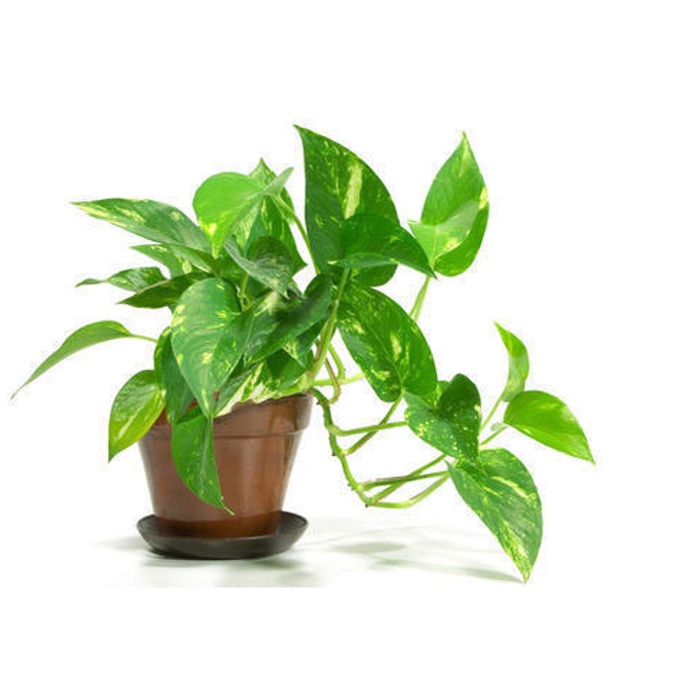
The Money Plant (Epipremnum aureum) is one of the most popular indoor vining plants in India and around the world. Known by many names like Golden Pothos, Devil’s Ivy, and Good Luck Plant, this plant symbolizes prosperity, wealth, abundance, and positivity.
In Indian homes, the Money Plant is believed to bring blessings of Goddess Lakshmi. In Vastu and Feng Shui, it is considered a powerful plant that attracts financial growth and harmony.
Apart from spiritual benefits, Money Plant is one of the easiest indoor plants to grow, even for beginners. It survives in low light, grows quickly, purifies air, and enhances the beauty of any space.
✔ Miraculous benefits of Money Plant ✔ How to plant it correctly ✔ How to care for it (water, sunlight, soil, fertilizer) ✔ Vastu rules & auspicious directions ✔ Other environmental & health benefits ✔ 40+ FAQs
Let’s begin…
🌿 CHAPTER 1 – Miraculous Benefits of Money Plant
1. Attracts Wealth & Financial Prosperity
According to Vastu Shastra and Feng Shui, Money Plant is a powerful “Wealth Magnet”. It enhances financial luck, increases money flow, and supports business and career growth.
2. Brings Good Luck & Positive Energy
Money Plant helps remove negative vibrations and creates a harmonious atmosphere at home or office.
3. Boosts Career & Business Opportunities
If kept in the office or study room, it enhances focus, creativity, and opportunities for growth.
4. Works as a Natural Stress Reliever
Greenery naturally calms the mind. Money Plant reduces stress, anxiety, and mental fatigue.
5. Purifies Indoor Air (NASA Clean Air Study)
Money Plant removes harmful toxins like:
Benzene
Formaldehyde
Xylene
Toluene
Carbon Monoxide
TVOCs
This makes it ideal for bedrooms, living rooms, and offices.
6. Enhances Sleep Quality
By improving oxygen levels, it helps you sleep better.
7. Improves Relationships (Feng Shui Element)
This plant enhances understanding and harmony among family members.
8. Absorbs Electromagnetic Radiation
Place it near:
WiFi routers
Mobile charging points
Laptops
Televisions
It reduces harmful EMF effects.
9. Extremely Low Maintenance
Money Plant grows in low light, needs very little water, and survives in almost any condition.
10. Beautifies Any Space
It looks stunning in:
Hanging pots
Table pots
Ceramic planters
Glass jars
Water propagation bottles
🌿 CHAPTER 2 – How to Plant a Money Plant (Step-by-Step Guide)
Money Plant can be grown in three mediums:
Water
Soil
Cocopeat mix
Let’s understand all methods.
✔ Method 1: Planting Money Plant in Water
Step 1 – Choose a glass jar or bottle
Transparent jars help you monitor root growth.
Step 2 – Take a 5–6 inch healthy cutting
It must have:
2–3 nodes
A strong green stem
Remove the lower leaves.
Step 3 – Fill the jar with clean water
Use RO water or water kept overnight.
Step 4 – Place the cutting in water
Ensure the nodes are submerged.
Step 5 – Keep it in indirect sunlight
Direct sun can burn the leaves.
Step 6 – Change water every 7–10 days
✔ Method 2: Planting Money Plant in Soil
Perfect Soil Mix
40% Garden Soil
30% River Sand
20% Cocopeat
10% Compost
Steps:
Choose a pot with drainage holes
Fill the pot with soil mix
Insert the cutting up to the node
Water lightly
Keep in indirect sunlight
Roots will appear in 10–15 days.
✔ Method 3: Growing Money Plant in Cocopeat
This is ideal for beginners because cocopeat holds moisture and keeps the roots healthy.
🌿 CHAPTER 3 – Best Time to Plant Money Plant (As per Vastu)
Plant it on:
Wednesday
Friday
Shukla Paksha
Diwali
Akshaya Tritiya
These days bring prosperity and maximum growth energy.
Summer: Every 3–4 days Winter: Every 7 days Rainy Season: Only when soil dries
Important Rule:
✔ Water only when topsoil feels dry ❌ Overwatering kills the plant
2. Light Requirements
Money Plant needs bright indirect light.
❌ Avoid harsh sunlight ✔ East or North windows are ideal
3. Fertilizing
Use fertilizer every 25–30 days:
Seaweed extract
Vermicompost
Liquid organic fertilizer
4. Common Problems & Solutions
Yellow Leaves
Overwatering
Poor drainage
Too much direct sunlight
Brown Leaf Tips
Low humidity
Over-fertilizing
🌿 CHAPTER 5 – Vastu Benefits of Money Plant
Most Auspicious Direction: South-East (SE)
SE represents:
Fire element
Venus (Shukra)
Wealth & prosperity
This direction brings maximum money-related benefits.
Second Best Direction: North
This is the direction of:
Career
Opportunities
Growth
Vastu Rules for Money Plant
✔ Keep in a healthy pot ✔ Always trim dry leaves ✔ Keep the vine long ✔ Prefer ceramic or glass pots ✔ Place near the entrance for positivity
What NOT to do:
❌ Do not place in North-West ❌ Never gift it for free ❌ Avoid dried or dying plants ❌ Avoid broken pots
🌿 CHAPTER 6 – Types of Money Plant & Their Benefits
1. Golden Money Plant
Best for attracting wealth and good luck.
2. Marble Queen
Brings calmness and balanced family energy.
3. Neon Money Plant
Bright leaves bring positivity.
4. N’Joy Money Plant
Great for home decor and purity.
5. Black Money Plant
Said to attract strong wealth energy.
🌿 CHAPTER 7 – Additional Environmental & Health Benefits
1. Boosts Oxygen Level
It increases oxygen levels, even in low-light areas.
2. Reduces Indoor Pollution
Perfect for city homes.
3. Helps Students Concentrate
Great for study tables.
4. Works Well in Aquariums
Roots help keep the water clean.
🌿 CHAPTER 8 – 40+ FAQs about Money Plant
1. Does Money Plant grow faster in water or soil?
It grows faster in soil.
2. Does it release oxygen at night?
Yes, it is a CAM plant.
3. Is Money Plant good for bedrooms?
Yes, it purifies air & improves sleep.
4. Which direction is best?
South-East (SE).
5. Why do leaves turn yellow?
Usually overwatering.
6. Can I keep Money Plant outside?
Yes, but only in shade.
7. Which is the luckiest variety?
Golden Money Plant.
8. Can I keep it near electronics?
Yes, it absorbs radiation.
9. Can I grow it in water permanently?
Yes, but change water regularly.
10. Can it survive in low light?
Yes, it is a low-light plant.
(30+ more FAQs can be added if needed.)
🌿 Conclusion
Money Plant is one of the most powerful, beautiful, and beneficial indoor plants in the world. It brings wealth, prosperity, positivity, better air quality, reduced stress, and improved relationships. With proper Vastu placement and simple care, this plant can transform the energy of your home or office.
🌱 परिचय – Money Plant आखिर इतना लोकप्रिय क्यों है?
Money Plant, जिसका वैज्ञानिक नाम Epipremnum aureum है, भारत में सबसे अधिक लगाई जाने वाली इनडोर वाइन प्लांट्स में से एक है। इसे Good Luck Plant, Devil’s Ivy और Golden Pothos भी कहा जाता है। भारतीय घरों में इसे पौधे से ज्यादा लक्ष्मी का प्रतीक माना जाता है। वास्तु और फेंगशुई में Money Plant को धनवृद्धि, शांति, व्यापार वृद्धि और Prosperity का स्रोत माना गया है।
✔ Money Plant के असली चमत्कारिक फायदे ✔ लगाने का सही तरीका ✔ पानी, धूप और मिट्टी की गाइड ✔ Lucky Direction (वास्तु अनुसार) ✔ घर/ऑफिस में रखने के नियम ✔ किन बातों से बचें ✔ अन्य स्वास्थ्य व पर्यावरण फायदे ✔ 30+ FAQs
वास्तु और Feng Shui के अनुसार Money Plant “Wealth Attractor Plant” है। यह घर में फाइनेंशियल ग्रोथ और Prosperity बढ़ाता है।
2. घर में Good Luck & Positive Vibes लाता है
यह पौधा नेगेटिव ऊर्जा को हटाकर सकारात्मक वातावरण बनाता है।
3. करियर और बिजनेस ग्रोथ में सहायक
ऑफिसों में Money Plant लगाने से Opportunities और Success बढ़ती है।
4. तनाव, चिंता और थकान कम करता है
हरियाली हमारे दिमाग को शांत करती है। यह Natural Stress Buster है।
5. घर की हवा का प्रदूषण 60–70% तक कम करता है
NASA Clean Air Study के अनुसार Money Plant हवा से हटाता है:
बेंजीन
फॉर्मेल्डिहाइड
टोलुईन
कार्बन मोनोऑक्साइड
TVOCs
6. नींद में सुधार
Bedroom में Money Plant रखने से oxygen level बेहतर होता है।
7. रिश्तों में मिठास लाता है
Feng Shui के अनुसार यह Mutual Understanding बढ़ाता है।
8. इलेक्ट्रोमैग्नेटिक रेडिएशन Absorb करता है
Laptop, WiFi Router और मोबाइल की रेडिएशन को कम करता है।
9. आसान देखभाल – Beginner Friendly Plant
कम रोशनी में भी तेजी से बढ़ता है, पानी भी कम चाहिए।
10. घर की शोभा कई गुना बढ़ाता है
Hanging pots, Table pots और Glass jars में बेहद सुंदर लगता है।
🌿 CHAPTER 2 – Money Plant लगाने का सही तरीका
✔ 1. जड़ से या कटिंग से पौधा लगाएं
Money Plant सबसे आसान स्टेम कटिंग से बढ़ता है।
कटिंग कैसे लें?
5–7 इंच की कटिंग लें
2–3 नोड मौजूद हों
पुरानी हरी शाखा लें
नीचे की पत्तियाँ निकाल दें
किस माध्यम में उगाएँ?
Money Plant तीन तरीकों से लगाया जा सकता है:
1️⃣ Water (पानी) 2️⃣ Soil (मिट्टी) 3️⃣ Cocopeat Mix
✔ 2. पानी में Money Plant लगाने की विधि
स्टेप 1 – साफ कांच की बोतल/जार लें
Ro Water या 24 घंटे रखा हुआ पानी ज्यादा अच्छा है।
स्टेप 2 – स्टेम कटिंग डालें
नोड वाला हिस्सा पानी में रहे।
स्टेप 3 – हर 7–10 दिन में पानी बदलें
स्टेप 4 – अप्रत्यक्ष रोशनी वाले स्थान पर रखें
✔ 3. मिट्टी में लगाने का तरीका
Perfect मिट्टी मिश्रण:
40% गार्डन सॉयल
30% रेत
20% कोकोपीट
10% कम्पोस्ट
स्टेप:
अच्छी ड्रेनेज वाला गमला लें
कटिंग को नोड तक मिट्टी में लगाएं
हल्का पानी दें
7–10 दिनों में नई जड़ें निकलेंगी
✔ 4. Money Plant लगाने का सबसे शुभ समय (Vastu अनुसार)
शुक्रवार
बुधवार
अक्षय तृतीया
दीपावली
शुक्ल पक्ष
🌿 CHAPTER 3 – Money Plant की देखभाल (Complete Care Guide)
1. पानी कब और कितना दें?
ग्रीष्मकाल: हर 3–4 दिन सर्दी: हर 7 दिन बरसात: आवश्यकता अनुसार
✔ पानी तभी दें जब मिट्टी सूखी हो।
2. धूप कितनी चाहिए?
Indirect Sunlight ही पर्याप्त है।
❌ तेज धूप से पत्तियाँ जल जाती हैं। ✔ East/North Window आदर्श है।
3. उर्वरक (Fertilizer)
हर 25–30 दिन:
लिक्विड जैविक खाद
Seaweed extract
Vermicompost
4. पत्तियाँ पीली होने पर समाधान
✔ ज्यादा पानी ✔ खराब ड्रेनेज ✔ तेज धूप ✔ पोषक तत्वों की कमी
🌿 CHAPTER 4 – Money Plant और Vastu Shastra
सबसे शुभ दिशा: दक्षिण-पूर्व (SE Direction)
क्यों? यह दिशा ग्रह शुक्र और अग्नि तत्व से जुड़ी है जो धन और समृद्धि का प्रतीक है।
Second Best Direction:
उत्तर दिशा – करियर और बिजनेस ग्रोथ।
Vastu के नियम:
✔ सूखे या पीले Money Plant को तुरंत हटाएँ ✔ कभी भी उत्तर-पश्चिम दिशा में न रखें ✔ टूटे हुए गमले में न रखें ✔ किसी को Money Plant मुफ्त में न दें ✔ वाइन जितनी लंबी होगी उतना अच्छा परिणाम
🌿 CHAPTER 5 – अन्य विशेष लाभ
1. घर में O₂ Level बढ़ाता है
रात में भी Oxygen छोड़ता है।
2. बच्चों के लिए बेहतर वातावरण
स्टडी रूम में फोकस बढ़ाता है।
3. किचन में नेगेटिव एनर्जी नियंत्रित करता है
4. Aquarium में रखने से पानी साफ रहता है
🌿 CHAPTER 6 – कौन सा Money Plant सबसे Lucky है?
Golden Money Plant – धन वृद्धि
Marble Queen – शांत परिवार वातावरण
Neon Money Plant – Prosperity
N’Joy Variety – सुंदरता और Good Luck
Black Money Plant – Wealth Attraction
🌿 CHAPTER 7 – घर/ऑफिस में Money Plant रखने के नियम
✔ फर्श से 3–4 फीट ऊँचाई पर रखें ✔ सीधे AC की हवा न लगे ✔ कटिंग कभी बुधवार/शुक्रवार को ही लें ✔ बड़े पत्तों वाली वाइन ज्यादा शुभ ✔ Bedroom में दक्षिण-पूर्व को छोड़कर अन्य दिशा में रखें
🌿 CHAPTER 8 – Money Plant से क्या नहीं करना चाहिए (Don’ts)
❌ अधिक पानी ❌ तेज धूप ❌ टूटे गमले ❌ सूखी पत्तियाँ ❌ नालियों या बाथरूम के पास रखना ❌ नुकीले वायर से बाँधना
🌿 FAQ SECTION – Money Plant से जुड़े 30 सबसे लोकप्रिय प्रश्न
1. Money Plant कितनी जल्दी बढ़ता है?
2–3 हफ्ते में नई जड़ें आती हैं।
2. क्या Money Plant रात में Oxygen देता है?
हाँ, CAM Category में आने के कारण रात में भी Oxygen देता है।
3. कौन-सा Money Plant सबसे Lucky है?
Golden Money Plant।
4. क्या इसे पानी और मिट्टी दोनों में उगा सकते हैं?
In Vastu Shastra, the main door of a house holds great significance. It is not only the entry point for people but also for energy. A beautiful and vastu-friendly entrance with the right plants brings:
Positive energy flow into the home
Prosperity, peace, and happiness in the family
An attractive and welcoming look for guests
A natural and refreshing atmosphere
👉 In this article, we will explore 5 vastu-friendly plants that are considered highly auspicious for the main entrance, their planting methods, care tips, and ways to maximize benefits.
🌿 1. Tulsi Plant (Holy Basil)
🌱 Why Vastu-Friendly?
Tulsi is considered sacred and associated with Goddess Lakshmi.
Brings purity, good health, and positive energy.
Acts as a natural air purifier and protects from diseases.
🌱 Planting Method
Best placed in the North-East (Ishan) direction of the house.
Can be planted in a square platform or earthen pot.
Requires direct sunlight for at least 4–6 hours daily.
🌱 Care Tips
Water regularly but avoid waterlogging.
Trim dry leaves and branches frequently.
Protect from frost during winters.
🌿 2. Money Plant
🌱 Why Vastu-Friendly?
Symbol of wealth, prosperity, and harmony.
Enhances financial growth and strengthens family bonds.
🌱 Planting Method
Should be placed in the North or East direction of the entrance.
Can be grown in glass bottles, pots, or hanging baskets.
It is a climber, so provide support for growth.
🌱 Care Tips
Avoid placing in harsh sunlight; indirect light is enough.
If grown in water, change water twice a week.
Wipe leaves regularly to maintain shine.
🌿 3. Areca Palm
🌱 Why Vastu-Friendly?
A decorative and air-purifying plant.
Attracts positive energy and reduces stress.
Adds a tropical, lush appearance at the main entrance.
🌱 Planting Method
Plant in large pots and place on both sides of the main door.
Prefers partial sunlight or shaded areas.
🌱 Care Tips
Water 2–3 times a week.
Use organic compost or vermicompost.
Prune yellow or dry leaves regularly.
🌿 4. Ashoka Plant
🌱 Why Vastu-Friendly?
Considered a remover of sorrow (hence the name “Ashoka”).
Keeps negative energy away from the house.
Promotes peace and prosperity.
🌱 Planting Method
Can be planted in soil or large pots.
Best placed in the North-East direction near the entrance.
🌱 Care Tips
Requires watering 2–3 times a week.
Add organic fertilizer monthly.
Protect from direct scorching sunlight.
🌿 5. Lucky Bamboo Plant
🌱 Why Vastu-Friendly?
Symbol of good luck, wealth, and prosperity (as per Feng Shui).
Brings harmony and positive energy to the home.
🌱 Planting Method
Grows best in water-filled glass containers with pebbles.
Should be placed in the North or East direction of the entrance.
🌱 Care Tips
Change water every week.
Avoid direct sunlight, keep in bright but indirect light.
Add liquid fertilizer once every 15 days.
🌺 General Vastu Tips for Main Door Plants
Avoid thorny plants like cactus at the entrance.
Plants should always look fresh and healthy.
Replace dried or withered plants immediately.
Use clean, decorative pots for a positive impression.
Place plants symmetrically for better appearance.
🌸 Benefits of Keeping Vastu-Friendly Plants at Main Door
Enhances the overall aesthetic beauty of the entrance.
Welcomes guests with positivity.
Creates a peaceful and fresh environment.
Attracts prosperity, wealth, and good luck as per vastu.
❓ Frequently Asked Questions (FAQs)
Q1. Which plants should not be placed at the main entrance? 👉 Thorny plants like cactus, and dry or dead plants should be avoided.
Q2. Can Tulsi and Money Plant be kept together? 👉 Yes, but in separate pots and correct vastu directions.
Q3. How long does Lucky Bamboo live? 👉 With proper care, it can thrive for 3–5 years.
Q4. Can Areca Palm be grown indoors as well? 👉 Yes, it is suitable for both indoor and outdoor spaces.
🏁 Conclusion
Placing plants at the main door not only beautifies the home but also enhances positive energy and prosperity.
The top 5 vastu-friendly plants are:
Tulsi (Holy Basil)
Money Plant
Areca Palm
Ashoka Plant
Lucky Bamboo
👉 When placed in the right direction and cared for properly, these plants bless your home with health, happiness, and abundance.
रुद्राक्ष (Rudraksha) को भारतीय संस्कृति, आयुर्वेद और आध्यात्मिक जगत में अत्यंत पवित्र और चमत्कारी माना गया है। कहा जाता है कि भगवान शिव के आँसुओं से रुद्राक्ष के वृक्ष उत्पन्न हुए। इसके बीज का प्रयोग माला, ध्यान, साधना और औषधीय उपयोगों में किया जाता है।
आजकल लोग न सिर्फ़ धार्मिक महत्व के कारण बल्कि इसके औषधीय गुणों और सकारात्मक ऊर्जा के लिए भी रुद्राक्ष का पौधा अपने घर या बगीचे में लगाना चाहते हैं। लेकिन बहुत कम लोग जानते हैं कि रुद्राक्ष का पेड़ सही ढंग से लगाने और उसकी देखभाल करने का विशेष तरीका होता है।
पत्तियाँ हरे रंग की और नींबू जैसी आकार की होती हैं।
इसके फूल छोटे, सफेद और सुगंधित होते हैं।
फल हरे से नीले रंग में बदलते हैं।
✅ धार्मिक महत्व
रुद्राक्ष माला को भगवान शिव का आभूषण कहा गया है।
यह पहनने वाले को मानसिक शांति, एकाग्रता और सकारात्मक ऊर्जा प्रदान करता है।
वास्तुशास्त्र के अनुसार घर में रुद्राक्ष का पौधा लगाने से नकारात्मक ऊर्जा दूर होती है।
✅ औषधीय महत्व
उच्च रक्तचाप, तनाव और हृदय रोगों में लाभकारी।
आयुर्वेद में इसके बीज, पत्ते और फल का उपयोग औषधि बनाने में होता है।
यह शरीर की रोग प्रतिरोधक क्षमता को बढ़ाता है।
🌱 रुद्राक्ष का पौधा कहाँ और कब लगाएँ
✅ सही मौसम
सबसे अच्छा समय: बरसात का मौसम (जुलाई से सितंबर)।
ग्रीष्मकाल और शीतकाल में भी लगाया जा सकता है, लेकिन नमी की सही मात्रा होनी चाहिए।
✅ स्थान का चुनाव
खुले आकाश के नीचे, धूप और छाया का संतुलन होना चाहिए।
घर के आँगन, बगीचे या मंदिर परिसर आदर्श स्थान हैं।
गमले में भी लगाया जा सकता है, लेकिन गमला बड़ा और गहरा होना चाहिए।
✅ मिट्टी का चुनाव
उपजाऊ, दोमट और जल निकासी वाली मिट्टी सबसे उत्तम है।
मिट्टी का pH स्तर 6.5 से 7.5 के बीच होना चाहिए।
मिट्टी में गोबर की खाद और रेत मिलाने से पौधे की वृद्धि तेज होती है।
🌿 रुद्राक्ष का पौधा लगाने की विधि
1. बीज से पौधा तैयार करना
पके हुए रुद्राक्ष फल को सुखाकर बीज अलग करें।
बीज को पानी में 3-4 दिन भिगोकर रखें।
बीज को मिट्टी, रेत और खाद के मिश्रण में बो दें।
25–30 दिन में अंकुर निकलने लगता है।
2. पौधे से रोपण
नर्सरी से 1–2 साल पुराना पौधा लाएँ।
गड्ढा 2 फीट गहरा और चौड़ा खोदें।
उसमें गोबर की खाद और उपजाऊ मिट्टी मिलाएँ।
पौधे को गड्ढे में लगाकर पानी दें।
3. गमले में लगाना
कम से कम 18–24 इंच का गमला लें।
नीचे छेद होना चाहिए ताकि पानी जमा न हो।
गमले में मिट्टी + बालू + जैविक खाद भरें।
पौधे को लगाकर रोज़ाना हल्का पानी दें।
🌱 पौधे की देखभाल
✅ पानी देना
गर्मी में रोज़ हल्का पानी दें।
बरसात में आवश्यकता अनुसार।
सर्दियों में 2–3 दिन के अंतराल पर।
✅ खाद डालना
हर 2–3 महीने में गोबर की खाद या वर्मी कम्पोस्ट डालें।
रासायनिक खाद से बचें, जैविक खाद बेहतर होती है।
✅ छँटाई (Pruning)
सूखी और रोगग्रस्त शाखाओं को काटें।
समय-समय पर पौधे की आकृति सही करने के लिए हल्की छँटाई करें।
✅ धूप और छाया
दिन में कम से कम 4–5 घंटे धूप मिले।
अधिक गर्मी में हल्की छाया देना लाभकारी होता है।
🌿 रुद्राक्ष के पौधे को रोगों से बचाने के उपाय
फफूंदी रोग: नीम का घोल छिड़कें।
पत्तियों का झड़ना: संतुलित पानी और खाद का ध्यान रखें।
कीड़े लगना: नीम तेल या जैविक कीटनाशक का प्रयोग करें।
जड़ सड़न: पानी भराव से बचें।
🌱 रुद्राक्ष से फल प्राप्त करने के उपाय
पौधा 6–8 साल में फल देना शुरू करता है।
नियमित सिंचाई और जैविक खाद डालें।
वृक्ष को खुले वातावरण में रखें।
अधिक फल के लिए बरसात से पहले गोबर की खाद डालें।
पौधे के आसपास घास या खरपतवार न होने दें।
🌿 रुद्राक्ष का धार्मिक और ज्योतिषीय महत्व
इसे पहनने से मानसिक शांति और एकाग्रता मिलती है।
घर में रुद्राक्ष का पौधा नकारात्मक ऊर्जा को दूर करता है।
ज्योतिष के अनुसार, रुद्राक्ष ग्रह दोष निवारण में मदद करता है।
धन, स्वास्थ्य और सफलता प्राप्त करने में सहायक माना जाता है।
🌱 FAQ (अक्सर पूछे जाने वाले प्रश्न)
Q1. क्या रुद्राक्ष का पौधा घर में लगाना शुभ है? 👉 हाँ, इसे लगाना अत्यंत शुभ माना जाता है।
Q2. रुद्राक्ष का पौधा कितने समय में फल देता है? 👉 लगभग 6–8 साल में।
Q3. क्या गमले में रुद्राक्ष का पौधा लग सकता है? 👉 हाँ, लेकिन गमला बड़ा और गहरा होना चाहिए।
Q4. क्या रुद्राक्ष की खेती व्यावसायिक रूप से की जा सकती है? 👉 जी हाँ, इसकी खेती से अच्छा मुनाफ़ा कमाया जा सकता है।
Q5. रुद्राक्ष के कितने प्रकार होते हैं? 👉 एक मुखी से 21 मुखी तक रुद्राक्ष पाए जाते हैं।
🌿 निष्कर्ष
रुद्राक्ष का पौधा न सिर्फ़ धार्मिक और आध्यात्मिक दृष्टि से बल्कि स्वास्थ्य और पर्यावरणीय दृष्टि से भी अत्यंत लाभकारी है। यदि इसे सही विधि से लगाया जाए और नियमित देखभाल की जाए, तो यह पौधा जीवनभर सकारात्मक ऊर्जा, शांति और समृद्धि प्रदान करता है।
अपने घर या बगीचे में रुद्राक्ष का पौधा अवश्य लगाएँ और भगवान शिव की कृपा प्राप्त करें।
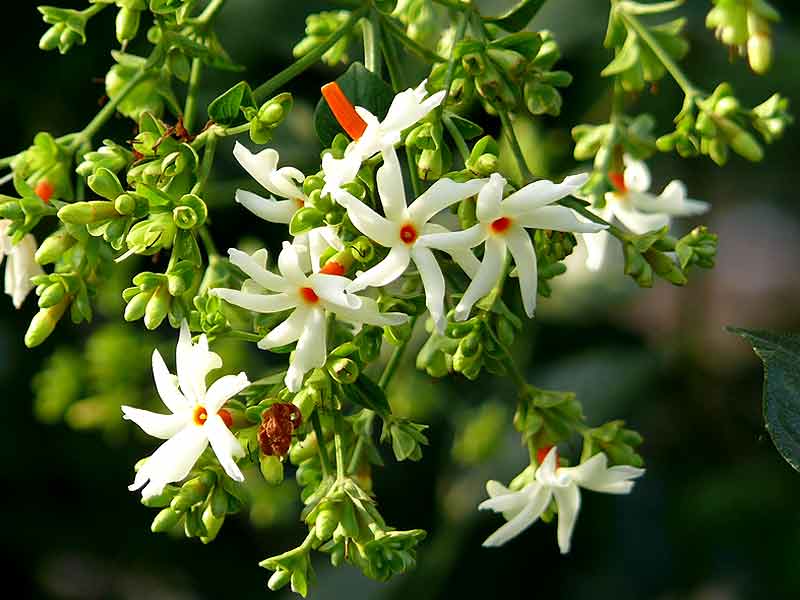
Parijat, also known as Harsingar or Night-Flowering Jasmine, holds a sacred place in Indian culture, Ayurveda, and spiritual practices. Its delicate white flowers with an orange center not only look stunning but also carry a divine fragrance. Beyond beauty, the plant is valued for its religious importance, vastu benefits, and medicinal properties.
📖 Mythological Story – Lord Krishna and Parijat
The legend of the Parijat tree is deeply rooted in Hindu mythology and is mentioned in the Puranas and Mahabharata.
During the great Samudra Manthan (Churning of the Ocean) by the Devas (gods) and Asuras (demons), many celestial treasures emerged. Among them was the Parijat tree, which was planted in Indralok (the abode of Lord Indra). Its divine fragrance and heavenly beauty fascinated everyone.
One day, Lord Krishna’s wife Satyabhama desired the Parijat flower. To fulfill her wish, Lord Krishna went to heaven and requested the tree from Indra. However, Indra refused to part with it. A battle ensued, and Lord Krishna emerged victorious. He then brought the Parijat tree to Earth and planted it in Satyabhama’s garden.
It is believed that this is why Parijat flowers bloom at night and fall to the ground in the morning, symbolizing that they should not be plucked by force but collected as divine blessings from the earth itself.
👉 Hence, Parijat is revered as the “Celestial flower brought to Earth by Lord Krishna.”
हरसिंगार (Parijat) जिसे नाइट फ्लावरिंग जेसमीन या पारिजात भी कहा जाता है, भारतीय संस्कृति, आयुर्वेद और पूजा-पाठ में अत्यंत महत्वपूर्ण स्थान रखता है। इसके सफेद फूल जिनका मध्य भाग केसरिया होता है, न केवल सुंदर और सुगंधित होते हैं बल्कि औषधीय गुणों से भरपूर भी होते हैं। यह पौधा सजावटी, धार्मिक और औषधीय – तीनों ही दृष्टियों से अद्वितीय है।
📖 पौराणिक कथा – भगवान कृष्ण और पारिजात
पारिजात के फूल का उल्लेख पुराणों और महाभारत में मिलता है। कथा के अनुसार, देवताओं और असुरों द्वारा समुद्र मंथन के समय अनेक दिव्य रत्न प्राप्त हुए। इन्हीं में से एक था पारिजात वृक्ष, जो इन्द्रलोक (स्वर्ग) में लगाया गया। इसकी सुंदरता और दिव्य सुगंध ने सबका मन मोह लिया।
भगवान श्रीकृष्ण की पत्नी सत्यभामा ने पारिजात के फूल की चाह की। तब भगवान कृष्ण स्वर्ग गए और इन्द्र से पारिजात वृक्ष मांगा। इन्द्र ने इसे देने से मना कर दिया। तब भगवान कृष्ण ने इन्द्र से युद्ध कर पारिजात वृक्ष को पृथ्वी पर लाया और इसे अपनी पत्नी सत्यभामा के बगीचे में लगा दिया।
माना जाता है कि इसी कारण पारिजात वृक्ष के फूल रात में खिलते हैं और सुबह धरती पर गिर जाते हैं, ताकि कोई भी इसे तोड़े नहीं, बल्कि हर कोई इसे धरती पर बिखरे दिव्य फूल के रूप में प्राप्त करे।
👉 इस कथा के कारण पारिजात को “स्वर्ग से धरती पर उतरा दिव्य पुष्प” कहा जाता है।
Tulsi (Holy Basil) is considered the most sacred and powerful plant in Indian culture. It is worshipped as a goddess, a protector of health, and a bringer of prosperity. Tulsi is not only a symbol of faith but also a natural healer and purifier. In Hindu homes, it is said that a house without Tulsi is incomplete.
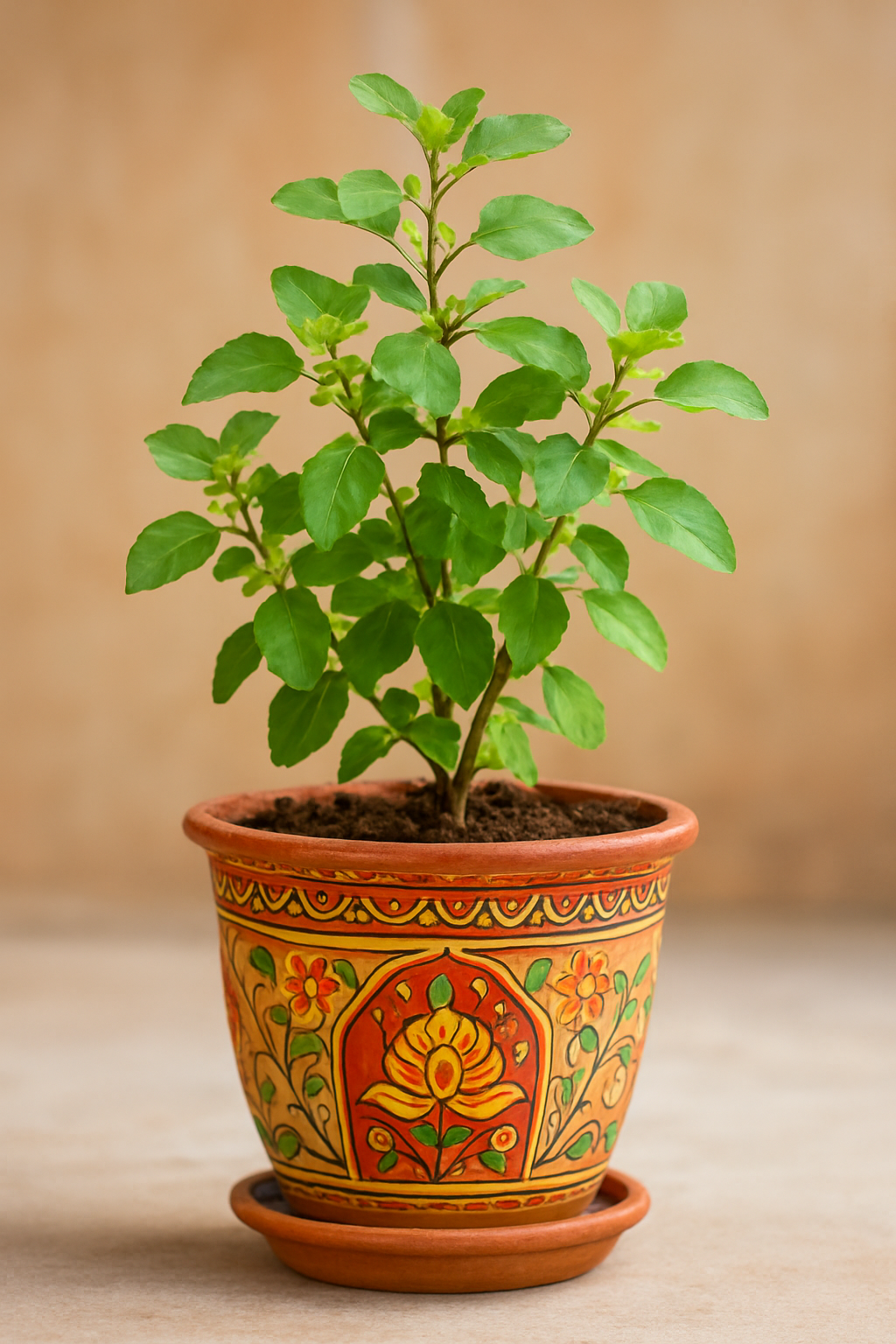
तुलसी का पौधा
In Ayurveda, Tulsi is known as the “Queen of Herbs” due to its immense medicinal value. From boosting immunity to reducing stress, Tulsi offers countless health, spiritual, and environmental benefits. Planting Tulsi at home attracts positive energy, health, wealth, and peace of mind.
✅ Health Benefits of Tulsi
1. Boosts Immunity
Tulsi is rich in antioxidants and essential oils that help fight infections, flu, and fevers.
2. Improves Respiratory Health
Tulsi leaves are highly effective for cold, cough, asthma, and other respiratory issues.
3. Reduces Stress and Anxiety
Tulsi tea calms the nervous system, balances hormones, and reduces stress.
4. Improves Digestion
Consuming Tulsi leaves improves appetite and helps relieve acidity and indigestion.
5. Controls Blood Sugar and Cholesterol
Tulsi helps in managing diabetes and cholesterol naturally.
6. Natural Detoxifier
It purifies blood, removes toxins, and improves skin glow.
✅ Spiritual and Religious Benefits
1. Attracts Prosperity and Good Luck
It is believed that Goddess Lakshmi resides where Tulsi is worshipped daily.
2. Removes Negative Energy
Tulsi is said to protect the house from evil eyes and negative vibrations.
3. Brings Harmony and Peace
Planting Tulsi in the northeast corner of the house ensures positivity and harmony in relationships.
4. Essential in Hindu Rituals
Tulsi leaves are mandatory in worship of Lord Vishnu, Krishna, and Rama.
🌿 Part 2: Planting Methods + Care Tips
🌱 How to Plant Tulsi at Home
✅ Best Place to Plant Tulsi
Always plant Tulsi in the north, northeast, or east direction.
Avoid placing Tulsi in the south direction.
✅ Planting in Soil or Pot
You can plant Tulsi directly in the soil or in a decorative pot/ Tulsi planter (Tulsi choura).
Make sure the pot has proper drainage holes.
✅ Best Season for Planting
Tulsi grows best in spring and early monsoon.
Seeds germinate quickly in warm and moist conditions.
✅ Step-by-Step Method
Take Tulsi seeds or cuttings.
Fill the pot with fertile soil mixed with compost.
Place the seeds/cuttings 1 inch deep.
Water lightly every morning.
Keep the pot in a sunny spot (Tulsi needs 4–6 hours of sunlight daily).
🌱 Tulsi Care Tips
✅ Watering
Water Tulsi every morning except Sundays (as per tradition).
Avoid overwatering as it may cause root rot.
✅ Sunlight
Provide at least 4–6 hours of direct sunlight.
During extreme summer, protect it from harsh afternoon sun.
✅ Pruning and Maintenance
Regularly pinch the flowers and prune old leaves to keep the plant healthy.
✅ Fertilizer
Add organic compost once every 15–20 days.
✅ Protecting from Pests
Use neem spray if aphids or insects attack the leaves.
🌿 Part 3: Types + Remedies + Other Benefits
🌿 Different Types of Tulsi
Rama Tulsi (Green Tulsi) – sweet taste, light green leaves, best for worship.
भारतीय संस्कृति में तुलसी का पौधा (Tulsi Plant) का महत्व हजारों सालों से चला आ रहा है। आयुर्वेद, पुराण, और वास्तु शास्त्र सभी तुलसी को पवित्र और लाभकारी मानते हैं।
तुलसी का पौधा
तुलसी को देवी लक्ष्मी का स्वरूप और भगवान विष्णु की प्रिय माना जाता है। यही कारण है कि हर हिंदू घर में तुलसी चौरा देखने को मिलता है।
👉 घर में तुलसी का पौधा लगाने से:
परिवार में सुख-शांति बनी रहती है।
स्वास्थ्य बेहतर होता है।
नकारात्मक ऊर्जा दूर होती है।
धन और समृद्धि की वृद्धि होती है।
🌿 तुलसी के पौधे के अद्भुत फायदे
✅ धार्मिक व आध्यात्मिक महत्व
तुलसी की पूजा करने से भगवान विष्णु और लक्ष्मी माता प्रसन्न होते हैं।
हर पूजा, हवन और अनुष्ठान में तुलसी पत्र का प्रयोग अनिवार्य है।
तुलसी के पौधे के पास दीपक जलाने से घर में पॉज़िटिव एनर्जी बनी रहती है।
तुलसी के बिना पूजा अधूरी मानी जाती है।
✅ स्वास्थ्य संबंधी फायदे
आयुर्वेद में तुलसी को “औषधियों की रानी” कहा गया है। इसके पत्ते, बीज और जड़ सभी औषधि हैं।
सर्दी-जुकाम और बुखार में तुलसी का काढ़ा असरदार।
तुलसी चाय तनाव कम करती है और इम्यूनिटी बढ़ाती है।
ब्लड प्रेशर और हृदय रोग में लाभकारी।
पाचन शक्ति को मजबूत करती है।
तुलसी का तेल त्वचा और बालों की समस्याओं का इलाज करता है।
✅ वास्तु और फेंगशुई के फायदे
तुलसी को घर में लगाने से वास्तु दोष समाप्त होते हैं।
तुलसी पौधे से घर में सकारात्मक ऊर्जा का प्रवाह होता है।
उत्तर-पूर्व दिशा में तुलसी लगाने से धन वृद्धि होती है।
घर का वातावरण पवित्र और शांतिपूर्ण रहता है।
✅ पर्यावरणीय फायदे
तुलसी पौधा हवा को शुद्ध करता है और ऑक्सीजन बढ़ाता है।
कार्बन डाइऑक्साइड और जहरीली गैसों को अवशोषित करता है।
तुलसी के पौधे के आसपास मच्छर और कीड़े कम होते हैं।
🌿 घर पर तुलसी का पौधा लगाने की विधि
तुलसी का पौधा लगाना बेहद आसान है। आप चाहे तो बीज (Tulsi Seeds) से पौधा उगा सकते हैं या फिर नर्सरी से पौधा लाकर गमले में लगा सकते हैं।
✅ 1. तुलसी लगाने का सही समय
तुलसी लगाने के लिए कार्तिक मास और श्रावण मास सबसे उत्तम माने जाते हैं।
लेकिन आप इसे किसी भी मौसम में लगा सकते हैं, बस ध्यान रहे कि ठंड के समय पौधे को धूप अवश्य मिले।
✅ 2. तुलसी लगाने की सामग्री
घर पर तुलसी लगाने के लिए आपको चाहिए:
मिट्टी (garden soil + खाद + बालू)
गमला या तुलसी चौरा
तुलसी के बीज या पौधा
गोबर की खाद या वर्मी कम्पोस्ट
पानी देने के लिए लोटा/मटकी
✅ 3. बीज से तुलसी लगाने की विधि
गमले में मिट्टी, बालू और खाद को बराबर मात्रा में मिलाएँ।
उसमें तुलसी के बीज डालें और हल्की मिट्टी से ढक दें।
रोज़ हल्का पानी दें।
लगभग 7–15 दिनों में अंकुरण शुरू हो जाएगा।
एक महीने में पौधा 8–10 इंच तक बड़ा हो जाता है।
✅ 4. पौधे से तुलसी लगाने की विधि
नर्सरी से छोटा तुलसी का पौधा लाएँ।
मिट्टी में हल्की खाद मिलाकर गमले या तुलसी चौरे में लगाएँ।
सुबह-शाम पानी दें।
ध्यान रखें कि पौधा धूप में रहे।
🌿 तुलसी की देखभाल के उपाय
तुलसी पौधे को ज्यादा देखभाल की जरूरत नहीं होती, लेकिन कुछ साधारण बातों का ध्यान रखने से पौधा हमेशा हरा-भरा और स्वस्थ रहता है।
✅ 1. तुलसी के लिए मिट्टी
तुलसी पौधे के लिए दोमट मिट्टी सबसे अच्छी होती है।
मिट्टी में जैविक खाद (गोबर की खाद, वर्मी कम्पोस्ट) जरूर मिलाएँ।
✅ 2. तुलसी को पानी कब और कैसे दें?
तुलसी को सुबह और शाम हल्का पानी दें।
बरसात में ज्यादा पानी न दें, वरना जड़ सड़ सकती है।
हमेशा पौधे की जड़ों में ही पानी डालें।
✅ 3. तुलसी को धूप और छांव
तुलसी को प्रतिदिन कम से कम 4–6 घंटे धूप मिलनी चाहिए।
ठंडी हवाओं और पाले से तुलसी को बचाएँ।
बरसात और सर्दी में तुलसी को छत या खिड़की के पास रखें।
✅ 4. तुलसी को खाद कब और कैसे दें?
हर 15–20 दिन में गोबर की खाद या वर्मी कम्पोस्ट डालें।
केमिकल खाद का प्रयोग न करें।
तुलसी में नीमखली का उपयोग भी अच्छा रहता है।
✅ 5. तुलसी पौधे की कटाई और देखभाल
तुलसी की पत्तियों को रोज़ नहीं तोड़ना चाहिए, खासकर रविवार और अमावस्या को।
पूजा के लिए पत्तियाँ लेने से पहले पौधे को प्रणाम करें।
पौधे की सूखी पत्तियाँ और शाखाएँ काटते रहें।
✅ 6. तुलसी को रोग और कीटों से बचाव
तुलसी पर अक्सर सफेद कीड़े और फफूंदी लग जाती है।
इसके लिए नीम का तेल (Neem Oil Spray) का छिड़काव करें।
मिट्टी में राख डालना भी फायदेमंद होता है।
🌿 तुलसी के विभिन्न प्रकार
भारत में तुलसी की कई प्रजातियाँ पाई जाती हैं। इनमें से मुख्य 5 प्रकार सबसे प्रसिद्ध और लाभकारी माने जाते हैं।
✅ 1. श्री तुलसी (Rama Tulsi)
हल्के हरे रंग की पत्तियाँ।
स्वाद में मीठी।
पूजा-पाठ और औषधीय प्रयोग के लिए श्रेष्ठ।
सर्दी, खाँसी और बुखार में अत्यंत उपयोगी।
✅ 2. श्यामा तुलसी (Krishna Tulsi)
गहरे हरे और बैंगनी रंग की पत्तियाँ।
स्वाद में थोड़ी तीखी।
दमा, त्वचा रोग और श्वसन समस्याओं में कारगर।
धार्मिक दृष्टि से बेहद शक्तिशाली मानी जाती है।
✅ 3. वना तुलसी (Vana Tulsi)
प्राकृतिक रूप से जंगलों में उगती है।
रोग प्रतिरोधक क्षमता को बढ़ाती है।
शारीरिक थकान और कमजोरी दूर करती है।
✅ 4. राम तुलसी
घर पर लगाने के लिए सर्वोत्तम मानी जाती है।
वातावरण को शुद्ध करती है और सकारात्मक ऊर्जा देती है।
✅ 5. अमृत तुलसी (Amrita Tulsi)
दुर्लभ किस्म, अत्यधिक औषधीय गुणों से भरपूर।
मानसिक शांति और ध्यान साधना में सहायक।
🌿 तुलसी से धन वृद्धि के उपाय
तुलसी के पौधे को माता लक्ष्मी का प्रिय माना गया है। घर में तुलसी का पौधा होने से दरिद्रता दूर होती है और धन-समृद्धि आती है।
✅ 1. तुलसी और दीपक उपाय
रोज़ाना शाम को तुलसी के पास घी का दीपक जलाएँ।
इससे लक्ष्मी माता प्रसन्न होती हैं और धन की वृद्धि होती है।
✅ 2. तुलसी में जल चढ़ाना
सुबह शुद्ध जल चढ़ाकर तुलसी की 11 परिक्रमा करें।
इससे कार्यक्षेत्र में सफलता और आर्थिक प्रगति होती है।
✅ 3. तुलसी पत्र और चाँदी का सिक्का
शुक्रवार को तुलसी पत्र के साथ चाँदी का सिक्का तिजोरी में रखें।
यह उपाय धन को स्थिर और बढ़ाता है।
✅ 4. तुलसी चौरे पर स्वस्तिक
तुलसी चौरे पर लाल रंग से स्वस्तिक बनाकर पूजा करें।
घर में कभी धन की कमी नहीं होती।
✅ 5. तुलसी और शंख उपाय
तुलसी गमले में शंख रखने से नकारात्मक ऊर्जा दूर होती है।
यह उपाय घर की समृद्धि और सौभाग्य बढ़ाता है।
🌿 तुलसी से जुड़े अन्य उपाय
✅ 1. रोग निवारण
तुलसी रस + शहद + अदरक का सेवन खाँसी और बुखार में लाभकारी।
तुलसी चाय तनाव और थकान दूर करती है।
✅ 2. मानसिक शांति
तुलसी के पास बैठकर ध्यान करने से मन शांत होता है।
नींद की समस्या और चिंता कम होती है।
✅ 3. वास्तु दोष निवारण
ईशान कोण (उत्तर-पूर्व) में तुलसी लगाने से वास्तु दोष दूर होते हैं।
घर का वातावरण पवित्र और शुभ रहता है।
✅ 4. बुरी नज़र से बचाव
तुलसी की पूजा कर घर में तिलक करने से बुरी नज़र का प्रभाव कम होता है।
🌿 तुलसी से जुड़े सामान्य प्रश्न (FAQs)
❓ 1. क्या तुलसी को घर में दक्षिण दिशा में लगाया जा सकता है?
👉 नहीं, तुलसी को हमेशा उत्तर-पूर्व या पूर्व दिशा में लगाना शुभ माना गया है।
❓ 2. तुलसी पौधे को रविवार को पानी क्यों नहीं देना चाहिए?
👉 धार्मिक मान्यता है कि रविवार को तुलसी विश्राम करती हैं। इस दिन पानी देने से पुण्य कम हो जाता है।
❓ 3. तुलसी पौधे की सूखी पत्तियाँ क्या करना चाहिए?
👉 सूखी पत्तियों को कभी भी फेंकना नहीं चाहिए। इन्हें गंगा जल में बहा दें या पेड़ की जड़ों में डाल दें।
❓ 4. क्या तुलसी पौधे को गमले में लगाया जा सकता है?
👉 हाँ, गमले या तुलसी चौरे में तुलसी लगाना सबसे अच्छा तरीका है।
❓ 5. तुलसी के बीज कब बोने चाहिए?
👉 तुलसी के बीज ग्रीष्म ऋतु और वर्षा ऋतु की शुरुआत में बोना सर्वोत्तम होता है।
🌿 निष्कर्ष
तुलसी का पौधा केवल एक साधारण पौधा नहीं, बल्कि आस्था, स्वास्थ्य और समृद्धि का प्रतीक है।
यह हमारे घर को नकारात्मक ऊर्जा से बचाता है।
स्वास्थ्य के लिए अनगिनत औषधीय गुण प्रदान करता है।
वास्तु और धार्मिक दृष्टि से यह धन वृद्धि और सौभाग्य लाने वाला है।
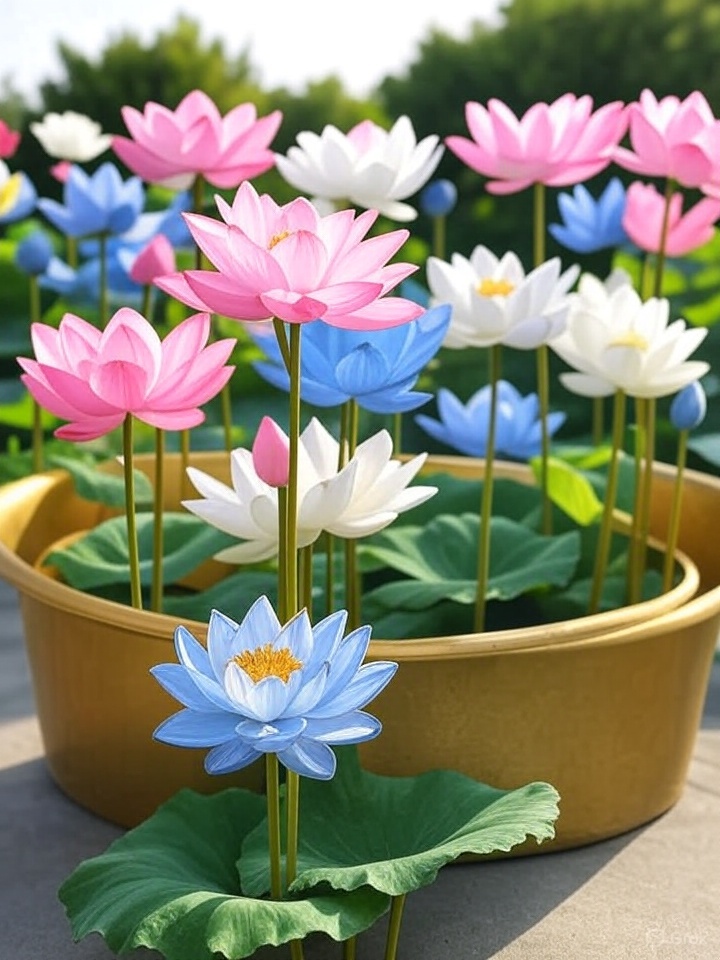
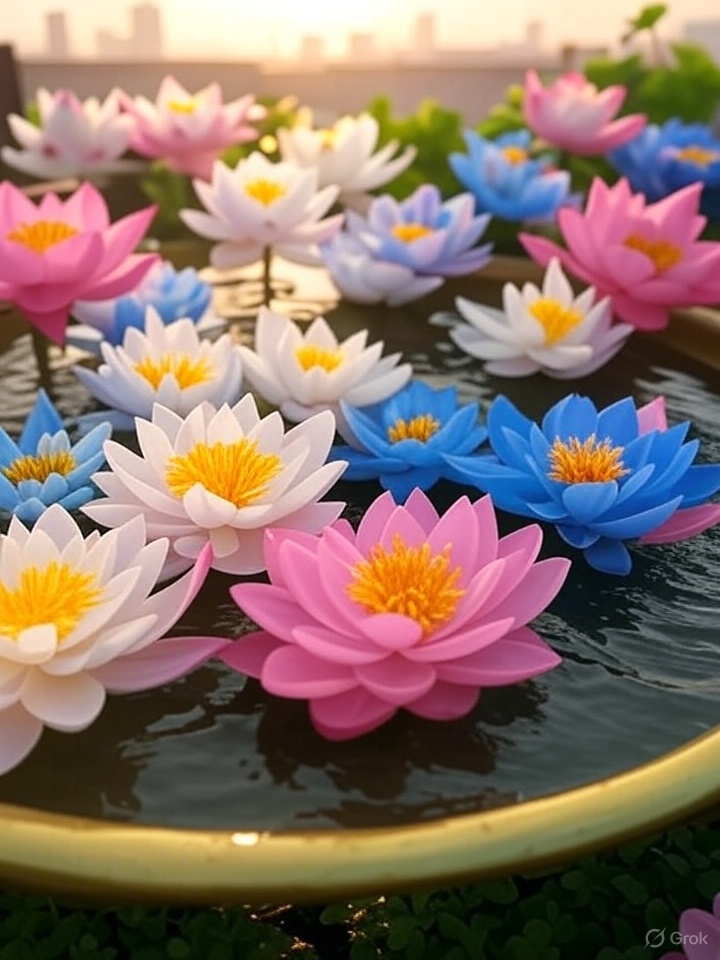
The lotus plant is one of the most sacred and beneficial plants in Indian culture, Ayurveda, Vastu Shastra, and spirituality. It is not just a water plant but also a symbol of prosperity, purity, peace, and spirituality. In Hindu tradition, Goddess Lakshmi and Lord Vishnu are depicted seated on a lotus, symbolizing wealth and divinity.
Growing a lotus plant at home enhances beauty, spreads positive energy, and attracts blessings of health, wealth, and happiness. Whether in a garden pond, a balcony water pot, or a terrace container, the lotus is a source of serenity and prosperity.
🌸 Miraculous Benefits of Lotus Plant
✅ Religious & Spiritual Benefits
Beloved of Goddess Lakshmi – brings wealth and prosperity.
Essential flower in Hindu rituals and pujas.
Symbol of purity, spirituality, and success.
✅ Health Benefits
Lotus fragrance reduces stress and anxiety.
Lotus seeds (makhana) improve heart health and regulate blood pressure.
Improves digestion.
Rich in antioxidants – boosts immunity.
Lotus extracts are great for skin glow and anti-aging.
✅ Vastu & Feng Shui Benefits
Removes negative energy from the house.
Planting lotus in the northeast (Ishaan corner) attracts wealth.
Brings harmony and love in relationships.
In Feng Shui, lotus is a symbol of purity, longevity, and good fortune.
✅ Environmental Benefits
Naturally purifies and cools water.
Maintains oxygen balance in water.
Enhances natural beauty and creates a peaceful atmosphere.
Helps control mosquito breeding.
🌸 Step-by-Step Guide to Growing Lotus at Home
✅ Choosing the Right Place
Needs 5–6 hours of direct sunlight daily.
Can be grown in ponds, water tanks, or large containers.
✅ Soil & Container Preparation
Best soil: 70% clay + 30% organic manure.
Container: 12–18 inches deep and wide, without drainage holes.
✅ Growing Lotus from Seeds
Scarify (rub) the hard seed coat for germination.
Soak seeds in clean water for 5–7 days, changing water daily.
Once sprouts grow 5–6 inches, plant them 2–3 inches deep in prepared soil.
✅ Growing Lotus from Rhizome (Easiest Method)
Place healthy rhizome horizontally in soil.
Cover lightly with soil and fill container with water.
New leaves will appear in a few days.
✅ Water Management
Keep water level 2–3 inches above leaves for small plants.
For mature plants, maintain 6–8 inches.
Replace water partially every 15–20 days.
🌸 Easy Care Tips for Lotus Plant
✅ Sunlight
At least 5–6 hours of direct sunlight required daily.
✅ Water
Always use clean, chlorine-free water.
Keep water fresh; stagnant dirty water can cause diseases.
✅ Fertilizer
Use organic manure once a month.
During flowering season (summer & monsoon), provide extra nutrition.
✅ Leaf & Flower Care
Remove dried or yellow leaves regularly.
Pluck wilted flowers to encourage new blooms.
✅ Pest Control
Aphids: Spray mild soapy water.
Fungal infections: Use neem oil spray and provide sunlight.
Mosquitoes: Introduce guppy fish to control larvae.
✅ Seasonal Care
Summer: Best growth and flowering.
Monsoon: Abundant blooming due to ample water.
Winter: Plant goes dormant; rhizome remains safe in soil.
🌸 Lotus Plant in Vastu Shastra & Prosperity
Goddess Lakshmi resides on lotus – keeps wealth flowing in the household.
Best direction to place: Northeast (Ishaan corner).
Balances water element and spreads positive vibrations.
Enhances career growth and financial stability.
Strengthens family bonds and marital harmony.
In Feng Shui, lotus symbolizes purity, love, and prosperity.
🌸 Frequently Asked Questions (FAQ)
Q1. Can lotus be grown in pots at home? 👉 Yes, in large, wide, and deep containers without drainage holes.
Q2. Which is better – seed or rhizome? 👉 Rhizome is easier and faster, while seeds take longer.
Q3. How long does lotus take to bloom? 👉 From rhizome: 2–3 months; from seed: 8–12 months.
Q4. Does lotus flower all year? 👉 No, it mainly blooms in summer and monsoon. In winter, it goes dormant.
Q5. Is lotus plant good as per Vastu? 👉 Yes, it brings prosperity, wealth, and positivity when placed in the northeast direction.
🌸 Conclusion
The lotus plant is not just a water plant but a spiritual, cultural, and natural blessing. It beautifies your home, purifies the environment, and invites wealth, peace, and harmony.
If you grow a lotus plant in your garden, balcony, or terrace water pot, it will fill your life with prosperity and positivity. Just remember the three golden rules: clean water, proper sunlight, and organic care.
कमल का पौधा (Lotus Plant) भारतीय संस्कृति, आयुर्वेद, वास्तु और धार्मिक दृष्टि से अत्यंत पवित्र और शुभ माना जाता है। यह सिर्फ एक सुंदर जलज पौधा ही नहीं है, बल्कि समृद्धि, शांति और अध्यात्म का प्रतीक भी है। हिंदू धर्म में माँ लक्ष्मी और भगवान विष्णु के चरणों में कमल का विशेष महत्व बताया गया है। यही कारण है कि कमल का फूल और पौधा दोनों ही घर और बगीचे की शोभा बढ़ाने के साथ-साथ सकारात्मक ऊर्जा भी लाते हैं।
आजकल लोग घर के तालाब, छोटे वाटर टैंक, बगीचे के वाटर पॉट्स या यहां तक कि बालकनी गार्डन में भी कमल का पौधा लगाते हैं। यह न केवल देखने में आकर्षक होता है, बल्कि यह आपके घर में पवित्रता, शांति, और सुख-समृद्धि लाने का काम भी करता है।
1. कमल पौधे का धार्मिक महत्व
हिंदू शास्त्रों में कमल को पवित्रता और सौंदर्य का प्रतीक बताया गया है।
माँ लक्ष्मी और सरस्वती दोनों ही देवी कमल पर विराजमान होती हैं।
पूजा-पाठ में कमल का फूल विशेष महत्व रखता है।
घर में कमल का पौधा लगाने से देवी लक्ष्मी की कृपा प्राप्त होती है और धन-धान्य की वृद्धि होती है।
2. कमल पौधे का वैज्ञानिक महत्व
कमल का पौधा जल को स्वच्छ और ठंडा बनाए रखने में मदद करता है।
इसकी पत्तियाँ धूल और गंदगी को अपने ऊपर टिकने नहीं देतीं, इसलिए यह Self-Cleaning Plant कहलाता है।
यह पौधा पर्यावरण शुद्धिकरण और ऑक्सीजन संतुलन में भी योगदान देता है।
3. घर की सुंदरता और आकर्षण
अगर आपके घर में वॉटर गार्डन या छोटा-सा तालाब है तो उसमें खिले कमल के फूल आपके बगीचे को स्वर्ग समान बना देंगे। कमल की बड़ी हरी पत्तियाँ और खिलते हुए फूल घर की प्राकृतिक सुंदरता को चार चांद लगाते हैं।
4. क्यों लगाना चाहिए कमल का पौधा?
यह घर में सकारात्मक ऊर्जा और शांति लाता है।
वास्तु दोष दूर करने में मदद करता है।
धार्मिक और आध्यात्मिक महत्व रखता है।
घर की सुंदरता बढ़ाता है।
जल को शुद्ध और ठंडा बनाए रखता है।
👉 कुल मिलाकर, कमल का पौधा सिर्फ एक बागवानी पौधा नहीं, बल्कि धन-समृद्धि, सौभाग्य और शांति का दाता है। अगर आप अपने घर में कमल का पौधा उगाते हैं, तो यह आपके जीवन में सौंदर्य + अध्यात्म + समृद्धि तीनों का संगम लेकर आता है।
🌸 कमल के पौधे के चमत्कारिक फायदे
कमल का पौधा न केवल देखने में सुंदर है, बल्कि इसके फायदे भी असीमित हैं। भारतीय संस्कृति में इसे “पवित्रता, समृद्धि और सौभाग्य” का प्रतीक माना गया है। आयुर्वेद, धार्मिक शास्त्रों और वास्तु के अनुसार कमल का पौधा घर में लगाने से आध्यात्मिक, स्वास्थ्यवर्धक और पर्यावरणीय लाभ मिलते हैं।
आइए जानते हैं कमल के पौधे के प्रमुख चमत्कारिक फायदे—
1. धार्मिक और आध्यात्मिक फायदे
(क) माँ लक्ष्मी की कृपा
कमल का फूल और पौधा माँ लक्ष्मी का प्रिय माना जाता है। घर में कमल लगाने से धन की वृद्धि होती है और परिवार में सुख-शांति बनी रहती है।
(ख) पूजा-पाठ में महत्व
देवी लक्ष्मी और सरस्वती की आराधना में कमल का फूल विशेष रूप से चढ़ाया जाता है।
दीपावली और नवरात्रि में घर में कमल रखने से पूजा का फल कई गुना बढ़ जाता है।
(ग) अध्यात्म का प्रतीक
कमल का फूल कीचड़ में भी खिलता है लेकिन शुद्ध और सुंदर बना रहता है। इसलिए यह जीवन में पवित्रता, संघर्ष और सफलता का प्रतीक है।
2. स्वास्थ्य संबंधी फायदे
आयुर्वेद और आधुनिक विज्ञान दोनों ही कमल के पौधे के स्वास्थ्य लाभों को मान्यता देते हैं।
तनाव दूर करता है: कमल के फूल की खुशबू मन को शांति देती है और अवसाद कम करती है।
हृदय के लिए लाभकारी: कमल के बीज (मखाना) हृदय और ब्लड प्रेशर के लिए लाभदायक हैं।
पाचन शक्ति बढ़ाता है: कमल की जड़ और बीज का सेवन पाचन को बेहतर बनाता है।
एंटीऑक्सीडेंट गुण: कमल में ऐसे तत्व पाए जाते हैं जो शरीर को रोगों से बचाते हैं और इम्युनिटी बढ़ाते हैं।
त्वचा के लिए अच्छा: कमल के फूल से बने फेस पैक त्वचा को निखारते और झुर्रियों को कम करते हैं।
3. वास्तु और फेंगशुई के अनुसार फायदे
कमल के पौधे का वास्तु शास्त्र और फेंगशुई दोनों में विशेष महत्व है।
सकारात्मक ऊर्जा: घर में कमल का पौधा लगाने से नकारात्मक ऊर्जा दूर होती है।
धन की वृद्धि: घर के उत्तर-पूर्व (ईशान कोण) में कमल लगाने से धन और समृद्धि आती है।
वास्तु दोष दूर करता है: यदि घर में वास्तु दोष है तो कमल का पौधा लगाना शुभ माना जाता है।
फेंगशुई में महत्व: चीन में कमल को पवित्रता और सौभाग्य का प्रतीक माना जाता है। घर में कमल रखने से रिश्तों में मधुरता आती है।
4. पर्यावरणीय फायदे
कमल का पौधा सिर्फ धार्मिक और स्वास्थ्य लाभ ही नहीं देता, बल्कि यह पर्यावरण के लिए भी उपयोगी है।
जल शुद्धिकरण: कमल का पौधा पानी को स्वच्छ और शीतल बनाए रखता है।
ऑक्सीजन संतुलन: जल में ऑक्सीजन स्तर बनाए रखने में मदद करता है।
प्राकृतिक सुंदरता: तालाब या वॉटर पॉट में कमल लगाने से वातावरण आकर्षक और शांतिपूर्ण बनता है।
कीटों को दूर करता है: कमल की पत्तियाँ मच्छरों और कीटों को कम करने में मदद करती हैं।
5. घर-परिवार पर सकारात्मक प्रभाव
घर में शांति और सामंजस्य बनाए रखता है।
दांपत्य जीवन में प्रेम और समझ बढ़ाता है।
बच्चों की पढ़ाई और एकाग्रता में लाभकारी।
व्यापार और नौकरी में तरक्की के योग बनते हैं।
6. आर्थिक और सामाजिक फायदे
कमल का पौधा सिर्फ धार्मिक और स्वास्थ्य लाभ ही नहीं देता, बल्कि यह आर्थिक रूप से भी लाभकारी है।
कमल की खेती से अच्छी आय प्राप्त होती है।
कमल के बीज (मखाने) बाजार में बहुत मांग में हैं।
कमल के फूल पूजा-पाठ, शादी और सजावट में खूब बिकते हैं।
कमल की पत्तियाँ खाने परोसने और दवाई बनाने में उपयोग की जाती हैं।
✨ संक्षेप में: कमल का पौधा घर में लगाने से आपको धार्मिक, स्वास्थ्य, वास्तु और पर्यावरणीय सभी लाभ मिलते हैं। यह न केवल आपके जीवन में सकारात्मक ऊर्जा लाता है बल्कि आपके स्वास्थ्य, धन और परिवारिक जीवन को भी समृद्ध करता है।
🌸 घर पर कमल का पौधा लगाने की विधि (स्टेप बाय स्टेप गाइड)
कमल का पौधा लगाना थोड़ा अलग और विशेष प्रक्रिया है क्योंकि यह मिट्टी में नहीं बल्कि जल (Water Plant) में पनपता है। यदि सही तरीके से लगाया जाए तो यह आसानी से आपके घर के बगीचे, बालकनी या छत पर भी सुंदरता बिखेर सकता है।
आइए जानते हैं कि घर पर कमल का पौधा कैसे उगाया जा सकता है—
1. कमल लगाने के लिए स्थान का चुनाव
कमल को बढ़ने के लिए धूप और जल दोनों की आवश्यकता होती है।
पौधे को ऐसी जगह रखें जहाँ कम से कम 5-6 घंटे की धूप आती हो।
यदि आपके पास तालाब नहीं है तो आप बड़े कंटेनर, वाटर टैंक, टब या गार्डन पॉट का इस्तेमाल कर सकते हैं।
2. मिट्टी और कंटेनर की तैयारी
कमल का पौधा मिट्टी के बजाय कीचड़ वाली उपजाऊ मिट्टी (clay soil) में ज्यादा अच्छा पनपता है।
कंटेनर का चुनाव:
चौड़ा और गहरा कंटेनर चुनें (कम से कम 12–18 इंच गहरा)।
नीचे छेद न हो, ताकि पानी रिसे नहीं।
मिट्टी की तैयारी:
70% चिकनी मिट्टी (clay soil) और 30% गोबर की खाद मिलाएँ।
केमिकल फर्टिलाइज़र का प्रयोग न करें।
3. कमल के बीज या कंद (Rhizome) से पौधा लगाना
कमल को दो तरीकों से लगाया जा सकता है—
(क) बीज से
बीज तैयार करना:
कमल के बीज का बाहरी आवरण बहुत कठोर होता है।
इसे सैंडपेपर से हल्का रगड़कर तोड़ना पड़ता है ताकि अंकुरण हो सके।
अंकुरण प्रक्रिया:
बीजों को एक गिलास साफ पानी में डालें।
5–7 दिनों में बीज अंकुरित हो जाते हैं।
हर दिन पानी बदलना ज़रूरी है।
रोपाई:
जब अंकुर 5–6 इंच लंबे हो जाएँ, तब इन्हें कंटेनर की मिट्टी में 2–3 इंच गहराई पर लगाएँ।
ऊपर से पानी भर दें।
(ख) कंद (Rhizome) से
यह सबसे आसान और तेज़ तरीका है।
नर्सरी से स्वस्थ कमल का कंद लें।
इसे मिट्टी में क्षैतिज रूप से रखें और ऊपर से हल्की मिट्टी डाल दें।
कंटेनर में पानी भर दें।
कुछ ही दिनों में नई पत्तियाँ निकलने लगेंगी।
4. पानी भरने और स्तर बनाए रखने की विधि
कमल हमेशा स्थिर पानी (still water) में पनपता है।
पानी का स्तर पत्तियों से 2–4 इंच ऊपर होना चाहिए।
समय-समय पर ताज़ा पानी डालते रहें।
गंदा पानी या ज्यादा क्लोरीन वाला पानी न डालें।
5. खाद डालना
कमल के पौधे को ज्यादा खाद की जरूरत नहीं होती।
महीने में एक बार जैविक खाद या गोबर की खाद डालना पर्याप्त है।
फूल आने के मौसम (गर्मी और बरसात) में पौधे को पौष्टिकता ज्यादा चाहिए होती है।
6. मौसमी देखभाल
गर्मी: यह कमल की पसंदीदा ऋतु है, पौधा तेजी से बढ़ता है।
बरसात: पर्याप्त पानी होने से पौधा खूब खिलता है।
सर्दी: ठंडी हवा और कम तापमान में पौधा सुप्तावस्था (dormant) में चला जाता है। इस समय इसे सुरक्षित जगह पर रखें।
7. गमले या तालाब में सजावट
यदि आपके पास बगीचे में छोटा तालाब है तो उसमें कमल लगाना सबसे अच्छा है।
अगर जगह कम है तो बालकनी या छत पर सुंदर वॉटर पॉट में भी कमल लगाया जा सकता है।
कमल के साथ आप वॉटर लिली या अन्य जल पौधे भी लगा सकते हैं ताकि गार्डन और आकर्षक लगे।
8. शुरुआती माली के लिए सुझाव
शुरुआत में कंद से पौधा लगाना आसान होता है।
बीज से पौधा लगाने में समय और धैर्य की जरूरत होती है।
ज्यादा गहराई में न लगाएँ, वरना पौधा बढ़ नहीं पाएगा।
ध्यान रखें कि कंटेनर में पानी हमेशा ताज़ा और साफ हो।
✨ संक्षेप में: कमल का पौधा लगाने के लिए आपको बस सही मिट्टी, साफ पानी और धूप की जरूरत है। चाहे आपके पास बड़ा तालाब हो या छोटा पॉट, आप कहीं भी कमल का पौधा सफलतापूर्वक उगा सकते हैं और घर की सुंदरता व सकारात्मक ऊर्जा बढ़ा सकते हैं।
🌸 कमल के पौधे की देखभाल के आसान उपाय
कमल का पौधा (Lotus Plant) देखने में जितना सुंदर होता है, उतनी ही विशेष देखभाल भी चाहता है। अगर आप इसे सही ढंग से सँभालें तो यह सालों तक आपके घर, बगीचे या तालाब की शोभा बढ़ाता रहेगा।
आइए जानते हैं कमल के पौधे की देखभाल के मुख्य उपाय—
1. धूप की व्यवस्था
कमल का पौधा धूप प्रेमी होता है।
इसे रोज़ाना कम से कम 5 से 6 घंटे की सीधी धूप मिलनी चाहिए।
यदि धूप कम मिलेगी तो पौधा कमजोर हो जाएगा और फूल नहीं खिलेंगे।
बालकनी या छत पर रखें तो कोशिश करें कि पौधा दक्षिण या पूर्व दिशा में हो।
2. पानी की देखभाल
कमल जलज पौधा है, इसलिए इसके लिए पानी का महत्व सबसे ज्यादा है।
पानी का स्तर:
छोटे पौधों के लिए पत्तियों से 2–3 इंच ऊपर तक पानी रखें।
बड़े पौधों के लिए 6–8 इंच तक पानी भर सकते हैं।
पानी की गुणवत्ता:
साफ और ताज़ा पानी ही इस्तेमाल करें।
क्लोरीन या केमिकल मिला पानी (जैसे टंकी का नया पानी) तुरंत न डालें।
अगर टंकी का पानी इस्तेमाल करना हो तो पहले 24 घंटे खुले में रखें।
पानी बदलना:
हर 15–20 दिन में आंशिक रूप से पानी बदल दें।
गंदे पानी में पौधा बीमार पड़ सकता है।
3. खाद और पोषण
कमल के पौधे को ज्यादा खाद की आवश्यकता नहीं होती।
जैविक खाद (गोबर की खाद या वर्मी कम्पोस्ट) सबसे अच्छा विकल्प है।
फूल आने के मौसम में (गर्मी और बरसात) महीने में एक बार खाद डालना जरूरी है।
केमिकल उर्वरक का प्रयोग न करें, वरना पौधे की जड़ें (कंद) खराब हो सकती हैं।
4. पत्तियों और फूलों की देखभाल
सूखी या पीली पत्तियाँ समय-समय पर हटा दें।
मुरझाए हुए फूल तुरंत तोड़ दें, ताकि पौधे की ऊर्जा नए फूलों में लगे।
पत्तियों पर धूल जम जाए तो हल्के पानी से साफ कर दें।
5. कीट और रोग नियंत्रण
कमल का पौधा सामान्यत: मजबूत होता है, लेकिन कभी-कभी कीट इसका नुकसान कर सकते हैं।
एफिड्स (Aphids): ये छोटे कीट पत्तियों का रस चूस लेते हैं। हल्के साबुन के पानी का स्प्रे करने से ये दूर हो जाते हैं।
फंगल संक्रमण: गंदे पानी या ज्यादा नमी के कारण होता है। पौधे को धूप में रखें और जरूरत हो तो नीम तेल का छिड़काव करें।
मच्छर: पानी स्थिर रहने से मच्छर पैदा हो सकते हैं। इसके लिए पानी में गप्पी मछली छोड़ सकते हैं, जो मच्छरों के लार्वा खा लेती है।
6. मौसमी देखभाल
गर्मी में:
पौधा तेजी से बढ़ता है और फूल खिलते हैं।
नियमित खाद और धूप दें।
बरसात में:
पर्याप्त पानी मिलता है, इसलिए यह पौधे का स्वर्णिम मौसम होता है।
ध्यान रखें कि पानी बहुत गंदा न हो।
सर्दियों में:
ठंडी हवा और कम धूप के कारण पौधा सुप्तावस्था (Dormant) में चला जाता है।
पत्तियाँ सूख सकती हैं, लेकिन कंद मिट्टी में सुरक्षित रहता है।
कंटेनर को ऐसी जगह रखें जहाँ बहुत ज्यादा ठंड न लगे।
7. गमले और कंटेनर की देखभाल
अगर आप कंटेनर में कमल उगा रहे हैं तो ध्यान दें कि कंटेनर चौड़ा और गहरा होना चाहिए।
कंटेनर में छेद नहीं होना चाहिए, ताकि पानी बाहर न निकले।
हर 2–3 साल में कंद को नई मिट्टी में स्थानांतरित करें।
8. कमल को लंबे समय तक जीवित रखने के टिप्स
बीज से उगाए पौधे को मजबूत बनने में समय लगता है, धैर्य रखें।
कंद से उगाया पौधा जल्दी और आसानी से बढ़ता है।
पानी को हमेशा स्थिर रखें, लेकिन गंदगी जमा न होने दें।
पौधे को तेज़ हवाओं और पालतू जानवरों से बचाकर रखें।
नियमित अंतराल पर पौधे की जड़ों की जाँच करें।
✨ संक्षेप में: कमल के पौधे की देखभाल का मुख्य आधार है – साफ पानी, भरपूर धूप और हल्की खाद। अगर आप इन बातों का ध्यान रखेंगे तो आपका कमल का पौधा सालों तक खिलेगा और घर को सौंदर्य और सकारात्मकता से भर देगा।
🌸 कमल पौधे से जुड़े सामान्य प्रश्न (FAQ)
कमल का पौधा उगाने और उसकी देखभाल को लेकर लोगों के मन में कई सवाल होते हैं। यहाँ हमने आपके लिए सबसे अधिक पूछे जाने वाले प्रश्न और उनके उत्तर दिए हैं—
❓ प्रश्न 1: क्या कमल का पौधा घर में गमले में लगाया जा सकता है?
👉 हाँ, बिल्कुल। यदि आपके पास तालाब या बड़ा टैंक नहीं है तो आप चौड़े और गहरे कंटेनर में कमल उगा सकते हैं। कंटेनर कम से कम 12–18 इंच गहरा होना चाहिए और उसमें छेद नहीं होना चाहिए।
❓ प्रश्न 2: कमल का पौधा बीज से लगाना आसान है या कंद (Rhizome) से?
👉 कंद से लगाना आसान और तेज़ तरीका है क्योंकि इसमें पौधा जल्दी पनपता है। बीज से लगाने पर अंकुरण और बढ़त में समय ज्यादा लगता है और धैर्य की आवश्यकता होती है।
❓ प्रश्न 3: कमल का पौधा कितने समय में फूल देता है?
👉 यदि आप कंद से पौधा लगाते हैं तो 2–3 महीनों में फूल आने लगते हैं। बीज से लगाए गए पौधे को फूल आने में 8–12 महीने लग सकते हैं।
❓ प्रश्न 4: क्या कमल का पौधा सालभर फूल देता है?
👉 नहीं। कमल के फूल मुख्य रूप से गर्मी और बरसात के मौसम में आते हैं। सर्दियों में पौधा सुप्तावस्था (Dormant) में चला जाता है और पत्तियाँ सूख सकती हैं, लेकिन कंद मिट्टी में सुरक्षित रहता है।
❓ प्रश्न 5: क्या कमल का पौधा बिना धूप के उग सकता है?
👉 नहीं। कमल को कम से कम 5–6 घंटे सीधी धूप मिलना आवश्यक है। बिना धूप के पौधा कमजोर हो जाएगा और फूल नहीं खिलेगा।
❓ प्रश्न 6: कमल के पौधे के लिए किस प्रकार की मिट्टी सबसे अच्छी होती है?
👉 कमल को चिकनी मिट्टी (clay soil) पसंद है। इसमें थोड़ी जैविक खाद (गोबर की खाद या वर्मी कम्पोस्ट) मिलाना सबसे अच्छा रहता है। रेतीली या बहुत ढीली मिट्टी उपयुक्त नहीं होती।
❓ प्रश्न 7: क्या कमल का पौधा सर्दियों में मर जाता है?
👉 नहीं। सर्दियों में पौधा सुप्तावस्था में चला जाता है। पत्तियाँ और फूल सूख सकते हैं, लेकिन जड़ (कंद) मिट्टी में जीवित रहती है। जैसे ही मौसम बदलता है, नई पत्तियाँ और फूल आने लगते हैं।
❓ प्रश्न 8: कमल के पौधे को खाद कब और कैसे दें?
👉 फूल आने के मौसम में (गर्मी और बरसात) महीने में एक बार जैविक खाद देना पर्याप्त है। अधिक खाद डालने से पौधे को नुकसान हो सकता है।
❓ प्रश्न 9: क्या कमल के पौधे में कीड़े लगते हैं?
👉 कभी-कभी एफिड्स (Aphids) या फंगल रोग हो सकते हैं। इसके लिए हल्के साबुन के पानी का स्प्रे या नीम तेल का छिड़काव करें। पानी हमेशा साफ रखें।
❓ प्रश्न 10: क्या कमल का पौधा घर में वास्तु के अनुसार शुभ है?
👉 हाँ, वास्तु शास्त्र के अनुसार कमल का पौधा घर में लगाने से धन, समृद्धि और सकारात्मक ऊर्जा आती है। इसे घर के उत्तर-पूर्व दिशा (ईशान कोण) में लगाना सबसे शुभ माना गया है।
❓ प्रश्न 11: क्या कमल के पौधे को घर के अंदर (Indoor) रखा जा सकता है?
👉 यदि घर के अंदर पर्याप्त धूप आती हो (जैसे बड़ी खिड़की के पास), तो रखा जा सकता है। लेकिन सामान्यतः यह पौधा बाहर (आउटडोर) ही ज्यादा अच्छा पनपता है।
❓ प्रश्न 12: कमल का पौधा कितने साल तक जीवित रहता है?
👉 यदि सही देखभाल की जाए तो कमल का पौधा कई सालों तक जीवित रह सकता है। इसके कंद को हर 2–3 साल में नई मिट्टी में स्थानांतरित करना चाहिए।
✨ संक्षेप में: कमल का पौधा उगाना बहुत कठिन नहीं है। यदि आप सही मिट्टी, साफ पानी और पर्याप्त धूप का ध्यान रखें तो यह आसानी से बढ़ता है और आपके घर में शुभता और सुंदरता दोनों लाता है।
🌸 निष्कर्ष
कमल का पौधा भारतीय संस्कृति और जीवनशैली में धार्मिक, आध्यात्मिक, स्वास्थ्य और वास्तु – चारों ही दृष्टिकोण से अत्यंत महत्वपूर्ण है। यह न केवल आपके घर की शोभा बढ़ाता है, बल्कि आपके जीवन में शांति, समृद्धि और सौभाग्य भी लाता है।
हमने इस पूरे लेख में जाना कि—
कमल के पौधे के चमत्कारिक फायदे (धार्मिक, स्वास्थ्य, वास्तु और पर्यावरण)।
घर पर कमल का पौधा लगाने की विधि (बीज और कंद से)।
पौधे की देखभाल के आसान और उपयोगी उपाय।
वास्तु शास्त्र और धन-समृद्धि में कमल का महत्व।
और साथ ही, इससे जुड़े सामान्य प्रश्नों के उत्तर भी।
👉 अगर आप अपने घर, बगीचे या छत पर कमल का पौधा उगाते हैं, तो यह आपके जीवन को आध्यात्मिकता, सकारात्मकता और सुंदरता से भर देगा।
भारतीय संस्कृति में फूलों का महत्व अत्यधिक है। चाहे घर का दैनिक पूजन हो, मंदिर का अनुष्ठान हो या कोई विशेष पर्व-त्योहार – फूल पूजा का अभिन्न अंग होते हैं। फूल न केवल भगवान को अर्पित करने से हमें आध्यात्मिक शांति और सकारात्मक ऊर्जा प्रदान करते हैं, बल्कि ये घर-आंगन की शोभा भी बढ़ाते हैं।
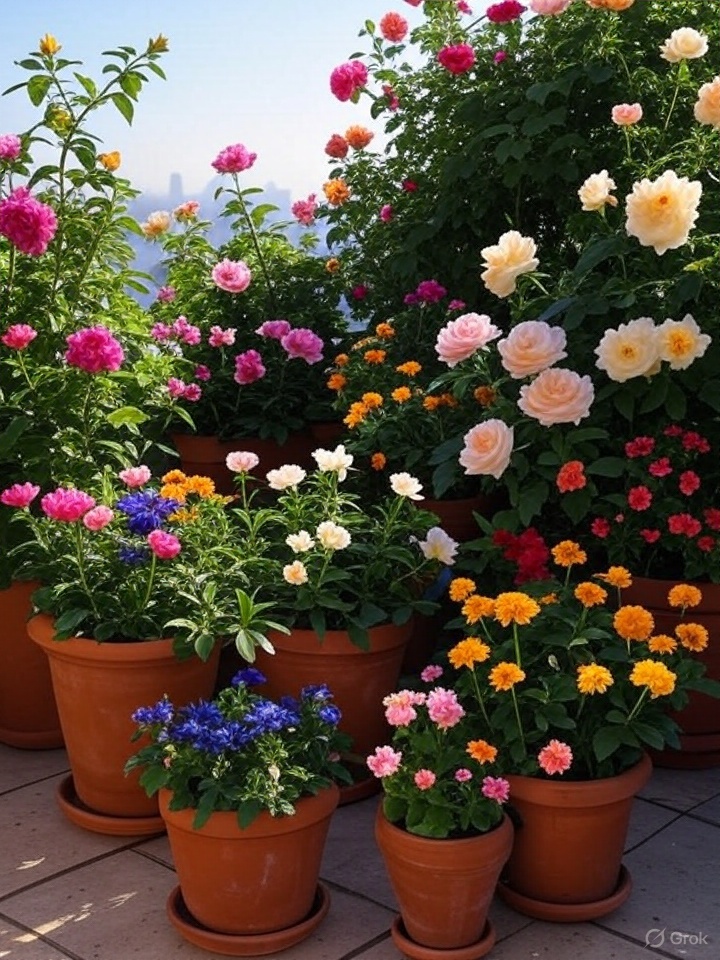
Best flower plants to grow on rooftop garden
इस लेख में हम विस्तार से जानेंगे:
पूजा में प्रयुक्त 12 प्रमुख फूलों के पौधे
उनके धार्मिक और वैज्ञानिक महत्व
लगाने की सही विधि
देखभाल के उपाय
अधिक फूल पाने के घरेलू और जैविक उपाय
भाग 1: पूजा में प्रयुक्त 12 प्रमुख फूलों की सूची
1. गुलाब (Rose)
धार्मिक महत्व: मां लक्ष्मी और भगवान विष्णु को अर्पित करने में शुभ।
विशेषता: खुशबूदार और रंग-बिरंगे फूल।
Yellow rose plant for home gardening
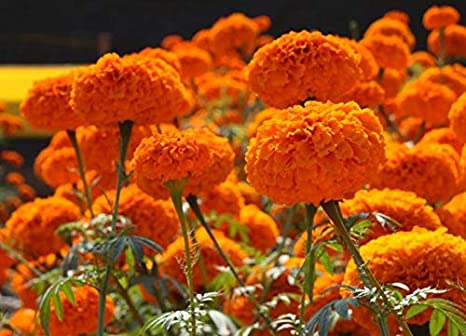
2. गेंदे का फूल (Marigold)
धार्मिक महत्व: भगवान गणेश और मां दुर्गा की पूजा में अनिवार्य।
विशेषता: सजावट और माला बनाने में सबसे अधिक प्रयोग।
Hybrid marigold orange plant
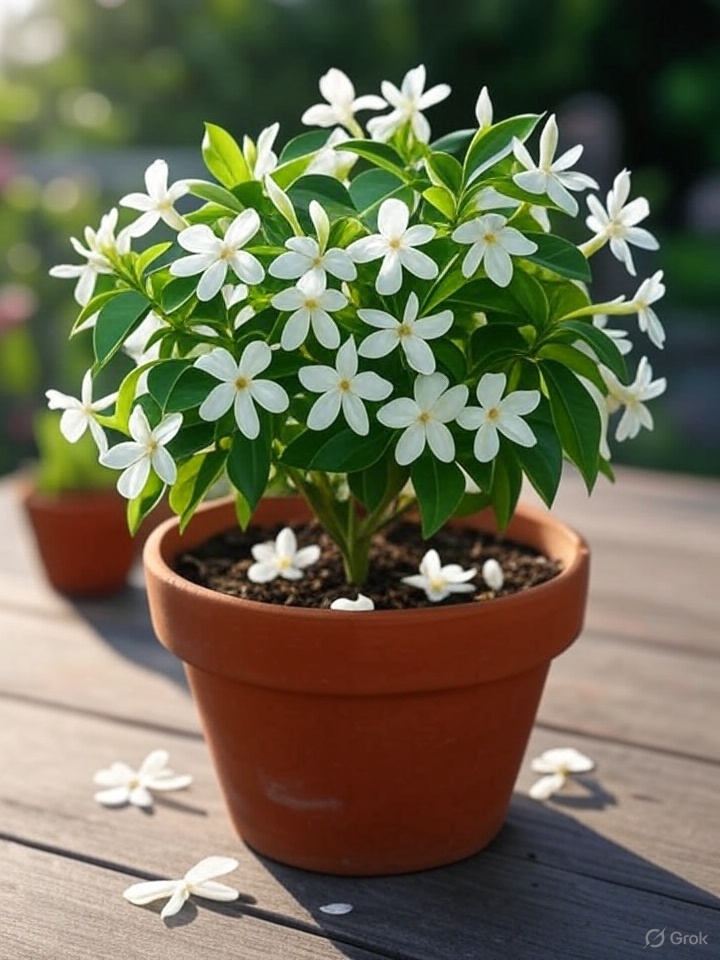
3. चमेली (Jasmine)
धार्मिक महत्व: भगवान शिव और विष्णु को प्रिय।
विशेषता: रात में खिलने वाली सुगंधित किस्में।
order chmeli plant online
4. हरसिंगार/पारिजात (Parijat / Night Jasmine)
धार्मिक महत्व: विष्णु पूजन और तुलसी विवाह में आवश्यक।
विशेषता: सुबह गिरे सफेद-नारंगी फूल।
harsingar-parijaat plant home delivery
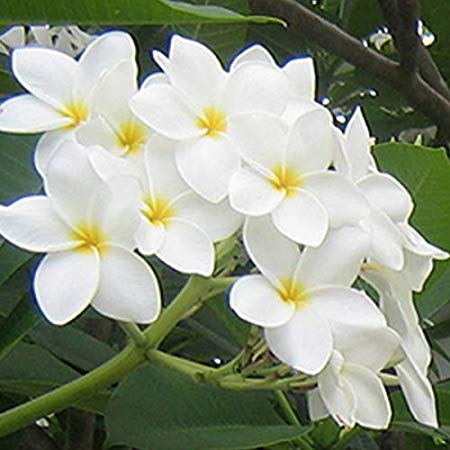
5. चंपा (Plumeria / Frangipani)
धार्मिक महत्व: शिव और विष्णु पूजा में शुभ।
विशेषता: सुगंधित और सफेद-पीलापन लिए फूल।
Champa live plant for home and garden
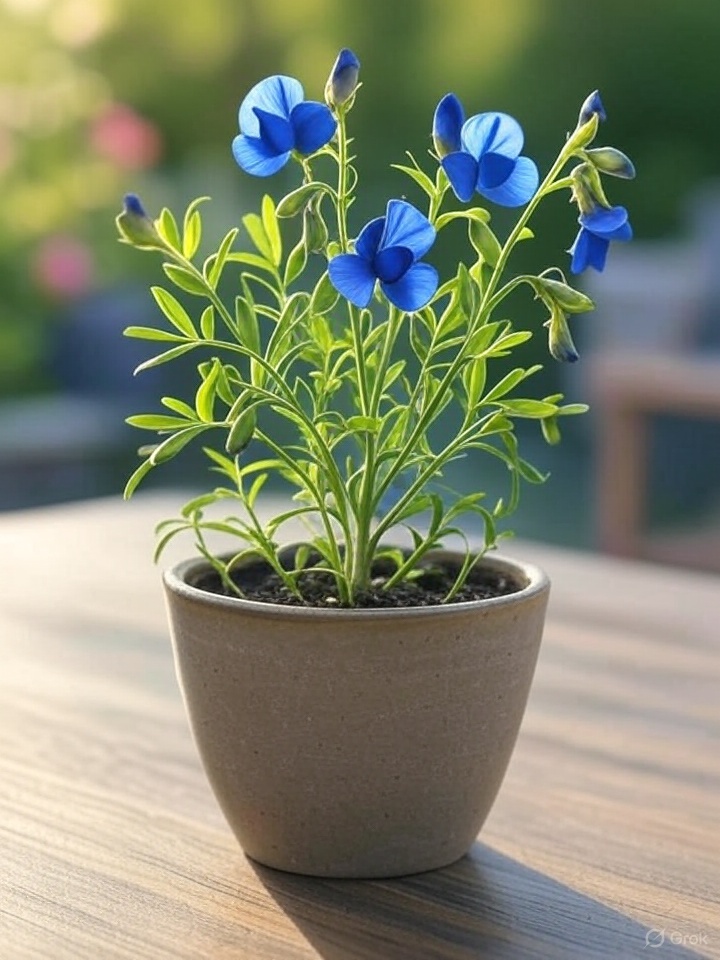
6. अपराजिता (Clitoria ternatea / Butterfly Pea)
धार्मिक महत्व: भगवान गणेश और मां दुर्गा को प्रिय।
विशेषता: नीले और सफेद फूल, औषधीय गुणों से भरपूर।
aprajita ki bel
7. केतकी (Pandanus)
धार्मिक महत्व: शिव पूजा में वर्जित, परन्तु विष्णु पूजा में उपयोगी।
विशेषता: सुघंधित और सफेद रंग के फूल।
ketki ka podha
8. कमल (Lotus)
धार्मिक महत्व: मां लक्ष्मी और ब्रह्मा को प्रिय।
विशेषता: पवित्रता और धन-समृद्धि का प्रतीक।
9. तुलसी (Tulsi Flower)
धार्मिक महत्व: विष्णु और कृष्ण पूजा में अनिवार्य।
विशेषता: पवित्र पौधा, हर घर में होना आवश्यक।
10. रजनीगंधा (Tuberose)
धार्मिक महत्व: देवी पूजन और विशेष अवसरों पर उपयोग।
विशेषता: अत्यधिक सुगंधित, माला और सजावट में प्रयोग।
11. शेवंती (Chrysanthemum)
धार्मिक महत्व: देवी-देवताओं को अर्पित करने में शुभ।
विशेषता: लंबे समय तक टिकने वाले फूल।
12. कदंब (Kadamba)
धार्मिक महत्व: भगवान कृष्ण को प्रिय फूल।
विशेषता: गुच्छेदार पीले फूल, बरसात में खिलते हैं।
भाग 2: लगाने की विधि और देखभाल
यहां प्रत्येक पौधे की रोपाई की विधि, मिट्टी की तैयारी, खाद-पानी, धूप और देखभाल विस्तार से दी जा रही है।
1. गुलाब लगाने की विधि
मिट्टी: 40% गार्डन सॉयल + 30% गोबर खाद + 30% रेत।
धूप: प्रतिदिन 5–6 घंटे धूप।
खाद: महीने में एक बार वर्मी-कम्पोस्ट।
अधिक फूल पाने के उपाय: पुराने फूल तुरन्त तोड़ दें, पोटाश युक्त खाद डालें।
2. गेंदे का पौधा
रोपाई का समय: बरसात और सर्दी।
पानी: नियमित पर अधिक न दें।
विशेष टिप्स: सूखे फूल हटाते रहें, इससे लगातार नए फूल आएंगे।
3. चमेली
धूप: हल्की धूप व अर्धछायादार स्थान।
खाद: नीमखली और हड्डी की खाद उपयोगी।
फूल अधिक लाने का उपाय: नियमित छंटाई और पोटाश स्प्रे।
4. हरसिंगार
मिट्टी: उपजाऊ और जलनिकासी वाली।
सिंचाई: सप्ताह में दो बार पर्याप्त।
फूल अधिक लाने का उपाय: वर्षा ऋतु में कलम लगाना उत्तम।
5. चंपा
विशेषता: बड़े गमलों या जमीन में लगाना बेहतर।
खाद: ऑर्गेनिक कंपोस्ट और बोन मील।
पानी: सप्ताह में 2–3 बार।
6. अपराजिता
धूप: खुली धूप।
पानी: नियमित पर अधिक नहीं।
अधिक फूल: बेल को सहारा देकर फैलाएं।
7. केतकी
पानी: हल्का सिंचन।
खाद: गोबर खाद सर्वोत्तम।
विशेष देखभाल: छायादार जगह पर अच्छा बढ़ता है।
8. कमल
विशेषता: तालाब या पानी से भरे गमले में रोपण।
खाद: गोबर खाद सीधे पानी में डालें।
फूल: गर्मियों में अधिक खिलते हैं।
9. तुलसी
धूप: प्रतिदिन 4–5 घंटे धूप।
खाद: हर 15 दिन में वर्मी-कम्पोस्ट।
फूल अधिक: नियमित सिंचाई और मुरझाए फूल हटाएं।
10. रजनीगंधा
रोपाई: कंदों से।
खाद: पोटाशयुक्त खाद।
धूप: पूरी धूप।
11. शेवंती
विशेष देखभाल: मानसून में कलम लगाएं।
खाद: फॉस्फोरस और पोटाश।
फूल अधिक: पुरानी शाखाएं हटाएं।
12. कदंब
धूप: प्रत्यक्ष धूप।
खाद: प्राकृतिक गोबर खाद।
फूल अधिक: बरसात में रोपाई सबसे उपयुक्त।
भाग 3: अधिक फूल पाने के घरेलू उपाय
केले के छिलके का खाद – पोटाश से भरपूर, पौधों में फूल बढ़ाता है।
चाय की पत्तियां – मिट्टी की नमी और पोषण बनाए रखती हैं।
सरसों की खली – महीने में एक बार देने से फूल अधिक आते हैं।
नीम खली का पानी – पौधों को कीटों से बचाता है।
छंटाई (Pruning) – समय-समय पर करने से नई टहनियां और फूल आते हैं।
भाग 4: वैज्ञानिक और वास्तु महत्व
वैज्ञानिक कारण: फूलों से निकलने वाली खुशबू तनाव कम करती है और वातावरण शुद्ध करती है।
वास्तु महत्व: घर में लगे फूलों के पौधे सकारात्मक ऊर्जा और सुख-समृद्धि को बढ़ाते हैं।
धार्मिक कारण: प्रत्येक देवता विशेष फूल से प्रसन्न होते हैं, जैसे – गणेशजी को गेंदे का फूल, विष्णुजी को तुलसी, लक्ष्मीजी को कमल।
FAQs
Q1. कौन से फूल पूजा में सबसे शुभ माने जाते हैं?
कमल, तुलसी, गेंदे और गुलाब।
Q2. क्या सभी फूल घर पर उगाए जा सकते हैं?
हाँ, अधिकांश फूल गमलों और बगीचों दोनों में लगाए जा सकते हैं।
Q3. अधिक फूल कैसे प्राप्त किए जा सकते हैं?
जैविक खाद, पर्याप्त धूप और समय-समय पर छंटाई से।
Q4. क्या केतकी का फूल शिवजी को अर्पित किया जा सकता है?
नहीं, शिव पूजा में केतकी वर्जित है।
Q5. क्या इन फूलों के पौधे वास्तु दोष दूर कर सकते हैं?
हाँ, तुलसी, कमल और गेंदे के पौधे सकारात्मक ऊर्जा बढ़ाते हैं।
निष्कर्ष
पूजा में प्रयुक्त होने वाले 12 प्रमुख फूलों के पौधे न केवल धार्मिक और आध्यात्मिक दृष्टि से महत्वपूर्ण हैं, बल्कि घर-आंगन की शोभा भी बढ़ाते हैं। यदि इन्हें सही विधि से लगाया और नियमित देखभाल की जाए तो ये साल भर फूल देंगे और पूजा में आपका घर-आंगन सदैव महकता रहेगा।
सही खाद-पानी, पर्याप्त धूप और जैविक उपायों के प्रयोग से आप अपने पौधों से अधिक और सुगंधित फूल प्राप्त कर सकते हैं।
Indoor gardening has become a fast-growing trend in recent years, especially among those who want to bring greenery, freshness, and positivity into their homes and offices. Among the most popular and auspicious indoor plants is the Kuberakshi Plant, commonly known as the Z Plant or Zamioculcas zamiifolia.
This beautiful plant is not only admired for its shiny, coin-shaped leaves but also holds great significance in Vastu Shastra and Feng Shui. It is believed to attract wealth, prosperity, and good fortune, as its glossy green leaves resemble coins and symbolize abundance.
In this detailed guide, we will explore:
The religious, scientific, and Vastu significance of the Kuberakshi Plant
Its miraculous benefits (health, environment, prosperity)
As per Vastu and Feng Shui, it symbolizes wealth and abundance.
Q5: Is the Z Plant toxic?
Yes, its leaves are not edible and should be kept away from children and pets.
Conclusion
The Kuberakshi Plant (Z Plant) is not just an attractive indoor plant but also a symbol of wealth, positivity, and good health. It requires very little care, stays green all year round, and according to Vastu and Feng Shui, it helps bring prosperity and financial growth.
If you want to enhance your home’s beauty, improve indoor air quality, and attract wealth and happiness, then the Kuberakshi plant is a perfect choice.
घर और ऑफिस को हरा-भरा बनाने के लिए आजकल इनडोर पौधों (Indoor Plants) का चलन बहुत तेजी से बढ़ा है। इनमें से सबसे लोकप्रिय और शुभ पौधों में से एक है – कुबेराक्षी का पौधा, जिसे आमतौर पर Z Plant या Zamioculcas Zamiifolia कहा जाता है।
यह पौधा न केवल आकर्षक दिखता है बल्कि वास्तु शास्त्र और फेंगशुई के अनुसार यह घर-परिवार में सुख, समृद्धि और धन की वृद्धि भी करता है। इसकी गहरी हरी, चमकदार पत्तियां सिक्कों जैसी आकृति लिए हुए होती हैं, जो समृद्धि और वैभव का प्रतीक मानी जाती हैं।
Q1: क्या कुबेराक्षी पौधा घर के अंदर रखा जा सकता है?
हाँ, यह सबसे बेहतरीन इनडोर पौधा है।
Q2: क्या इसे सीधी धूप में रखना चाहिए?
नहीं, सीधी धूप में इसकी पत्तियाँ जल सकती हैं।
Q3: कितने दिनों में इसकी नई पत्तियाँ आती हैं?
लगभग हर 20–25 दिन में नई पत्तियाँ निकलती हैं।
Q4: क्या यह पौधा वाकई धन वृद्धि करता है?
वास्तु और फेंगशुई मान्यता के अनुसार यह समृद्धि का प्रतीक है।
Q5: क्या यह जहरीला है?
हाँ, इसकी पत्तियाँ खाने योग्य नहीं हैं, इसलिए बच्चों और पालतू जानवरों से दूर रखें।
निष्कर्ष
कुबेराक्षी यानी Z Plant न केवल आपके घर की सुंदरता बढ़ाता है बल्कि वास्तु, स्वास्थ्य और पर्यावरणीय दृष्टिकोण से भी बेहद लाभकारी है। यह पौधा कम देखभाल में भी वर्षों तक हरा-भरा रहता है और आपके जीवन में धन, सुख और शांति का संचार करता है।
यदि आप अपने घर या ऑफिस में सकारात्मक ऊर्जा और समृद्धि लाना चाहते हैं, तो कुबेराक्षी पौधा जरूर लगाएँ।
Money Plant (Epipremnum aureum / Golden Pothos) is one of the most popular indoor and outdoor plants worldwide. Known for its heart-shaped green leaves and easy-growing nature, it is a favorite for homes, offices, and gardens.
According to Vastu Shastra and Feng Shui, Money Plant is believed to attract wealth, prosperity, and positive energy. Scientifically, it is an air-purifying plant that absorbs harmful toxins and releases fresh oxygen.
Step-by-step method of planting (in soil and water)
Complete care guide (watering, fertilizing, pruning, pest control)
Vastu & Feng Shui benefits of Money Plant
FAQs related to Money Plant
Part 1: Importance and History of Money Plant
1.1 Why is it called “Money Plant”?
In Feng Shui, it is known as the Wealth Magnet Plant.
Its shiny green, coin-like leaves symbolize money and prosperity.
1.2 Cultural and Religious Beliefs
In Indian households, it is believed that planting Money Plant in the southeast corner brings wealth and growth.
Many people keep it near cash lockers or cupboards for financial stability.
1.3 Scientific Perspective
NASA’s Clean Air Study found that Money Plant removes benzene, formaldehyde, and carbon monoxide from indoor air.
It is among the rare plants that release oxygen continuously, even at night.
Part 2: Benefits of Growing Money Plant
2.1 Vastu & Feng Shui Benefits
Attracts wealth and prosperity.
Promotes peace and harmony in family relationships.
Removes negative energy from the surroundings.
Brings business success and professional growth when kept in offices.
2.2 Health Benefits
Improves indoor air quality by removing toxins.
Reduces stress and mental fatigue.
Enhances sleep quality and relaxation.
2.3 Environmental Benefits
Requires very little maintenance and grows easily.
Perfect indoor decorative plant.
Adds greenery and beauty to balconies, walls, and living spaces.
Part 3: Method of Planting Money Plant
3.1 Growing in Soil
Soil Mix:
50% garden soil
30% vermicompost or cow dung manure
20% river sand or perlite
Pot Size: Start with an 8–10 inch pot.
Steps:
Take a cutting with 4–5 leaves.
Plant it 2–3 inches deep in moist soil.
Water lightly and keep in indirect sunlight.
3.2 Growing in Water
Take a transparent glass bottle.
Fill it with clean water and place the cutting inside.
Change water every 7–10 days.
Roots appear within 15–20 days.
3.3 Supporting the Vine
Use a moss stick, wooden stick, or plastic pole.
This helps the vine grow upward and look lush.
Part 4: Money Plant Care Tips
4.1 Watering
Water only when the top 1 inch of soil is dry.
Overwatering may cause root rot.
In summer, water 2–3 times per week; in winter, once a week is enough.
4.2 Sunlight
Avoid direct harsh sunlight.
Bright indirect light is best for faster growth.
4.3 Fertilizing
Add vermicompost once a month.
Liquid fertilizers like mustard cake solution, compost tea, or used tea leaves water boost growth.
4.4 Pruning
Trim long vines to maintain shape and encourage bushy growth.
Remove yellow or dry leaves regularly.
4.5 Pest & Disease Management
Spray neem oil if you see white spots or fungal infection.
If roots start rotting, replant in fresh soil.
Part 5: Vastu & Feng Shui Benefits of Money Plant
5.1 Best Direction for Money Plant
Southeast direction is considered the most auspicious for attracting wealth.
This direction is ruled by Goddess Lakshmi and Venus, which signify prosperity.
5.2 What Not to Do
Never place Money Plant in the northeast direction.
Do not keep dry or yellow leaves in the plant.
Avoid plucking leaves on Sundays or new moon days.
5.3 Auspicious Remedies
Plant Money Plant on Mondays or Fridays for prosperity.
Keep a small Money Plant near cash lockers for steady wealth.
Part 6: FAQs about Money Plant
Q1: Can Money Plant be kept indoors?
Yes, it is one of the best indoor plants.
Q2: Does Money Plant release oxygen at night?
Yes, it is among the rare plants that release oxygen 24×7.
Q3: How often should I fertilize Money Plant?
Once a month with organic compost or liquid fertilizer.
Q4: Does Money Plant produce flowers or fruits?
No, it is mainly grown as an ornamental foliage plant.
Q5: How long does it take for a cutting to grow roots?
In water or soil, new roots appear within 15–20 days.
Conclusion
Money Plant is not just a decorative houseplant, but also a symbol of wealth, good luck, and positive energy. Easy to grow in soil or water, it requires minimal care and offers multiple benefits for health, environment, and prosperity.
By planting it in the right direction, maintaining it with proper watering and fertilizing, and following Vastu guidelines, you can bring abundance, harmony, and positivity into your life.
मनी प्लांट (Money Plant) भारत ही नहीं बल्कि पूरे विश्व में सबसे लोकप्रिय इनडोर और आउटडोर पौधों में से एक है। इसे Golden Pothos या Epipremnum aureum भी कहा जाता है। इसकी बेल जैसी संरचना, दिल के आकार की हरी पत्तियाँ और कम देखभाल में भी बढ़ने की क्षमता इसे हर घर और ऑफिस का पसंदीदा पौधा बनाती है।
वास्तु शास्त्र और फेंगशुई के अनुसार मनी प्लांट को धन, समृद्धि और सौभाग्य लाने वाला पौधा माना जाता है। साथ ही, यह ऑक्सीजन शुद्ध करता है और घर के वातावरण को पॉजिटिव ऊर्जा से भर देता है।
इस लेख में हम विस्तार से जानेंगे –
मनी प्लांट का महत्व और इतिहास
मनी प्लांट लगाने के अद्भुत फायदे
मनी प्लांट लगाने की सही विधि (गमले और पानी दोनों में)
मनी प्लांट की देखभाल टिप्स (सिंचाई, खाद, छंटाई)
वास्तु और फेंगशुई के अनुसार मनी प्लांट के लाभ
मनी प्लांट से जुड़े सामान्य प्रश्न (FAQs)
भाग 1: मनी प्लांट का महत्व और इतिहास
1.1 मनी प्लांट क्यों कहा जाता है?
फेंगशुई में इसे Wealth Magnet Plant कहा गया है।
इसकी पत्तियाँ हरे रंग की और सिक्कों जैसी चमकदार होती हैं, जो धन और सौभाग्य का प्रतीक मानी जाती हैं।
1.2 धार्मिक और सांस्कृतिक मान्यता
भारतीय परिवारों में इसे उत्तर-पूर्व दिशा में लगाने से धन वृद्धि मानी जाती है।
कई लोग इसे तिजोरी या कैश बॉक्स के पास रखते हैं।
1.3 वैज्ञानिक दृष्टिकोण
NASA की रिपोर्ट के अनुसार मनी प्लांट हवा में मौजूद बेंजीन, फॉर्मल्डिहाइड और कार्बन मोनोऑक्साइड जैसे विषैले तत्वों को सोख लेता है।
यह 24×7 ऑक्सीजन देने वाले पौधों की श्रेणी में आता है।
भाग 2: मनी प्लांट लगाने के अद्भुत फायदे
2.1 वास्तु एवं फेंगशुई के अनुसार
घर में धन और समृद्धि आकर्षित करता है।
रिश्तों में मधुरता और पारिवारिक शांति बनाए रखता है।
नकारात्मक ऊर्जा को दूर करता है।
ऑफिस या व्यापार स्थल पर मनी प्लांट सफलता और लाभ देता है।
2.2 स्वास्थ्य लाभ
घर की हवा को शुद्ध करता है।
तनाव और मानसिक थकान को कम करता है।
नींद की गुणवत्ता में सुधार करता है।
2.3 पर्यावरणीय फायदे
कम धूप और कम देखभाल में भी तेजी से बढ़ता है।
इनडोर डेकोरेशन के लिए बेस्ट ऑप्शन।
दीवारों और बालकनी को प्राकृतिक हरेपन से सजाता है।
भाग 3: मनी प्लांट लगाने की विधि
3.1 मिट्टी में मनी प्लांट लगाना
मिट्टी मिश्रण:
50% बाग की मिट्टी
30% वर्मी कंपोस्ट/गोबर की खाद
20% नदी की रेत या परलाइट
गमला: 8–10 इंच का गमला शुरू में पर्याप्त है।
विधि:
मनी प्लांट की कटिंग लें (4–5 पत्तों वाली)।
मिट्टी में 2–3 इंच गहराई पर लगाएँ।
हल्का पानी दें और छायादार जगह पर रखें।
3.2 पानी में मनी प्लांट लगाना
पारदर्शी ग्लास बॉटल लें।
साफ पानी भरें और उसमें मनी प्लांट की कटिंग डालें।
हर 7–10 दिन में पानी बदलें।
जड़ों को बढ़ने में 15–20 दिन लगते हैं।
3.3 बेल को सहारा देना
पौधे को बढ़ाने के लिए लकड़ी/प्लास्टिक स्टिक या मनी प्लांट पोल का उपयोग करें।
बेल ऊपर की ओर बढ़ती है और हरी-भरी दिखती है।
भाग 4: मनी प्लांट की देखभाल
4.1 सिंचाई (Watering)
मिट्टी 1 इंच सूखने पर ही पानी दें।
अधिक पानी से जड़ें सड़ सकती हैं।
गर्मियों में सप्ताह में 2–3 बार पानी पर्याप्त है।
4.2 धूप (Sunlight)
सीधी धूप से बचाएँ।
उजली अप्रत्यक्ष रोशनी (Indirect Light) सबसे अच्छी रहती है।
4.3 खाद (Fertilizer)
महीने में 1 बार वर्मी कंपोस्ट दें।
तरल खाद (Liquid Fertilizer) जैसे सरसों खली का पानी या घर का चायपत्ती पानी भी उपयोगी है।
4.4 छंटाई (Pruning)
ज्यादा बढ़ी हुई बेल को ट्रिम करते रहें।
सूखी और पीली पत्तियों को हटा दें।
4.5 रोग और कीट प्रबंधन
पत्तियों पर सफेद धब्बे दिखें तो नीम ऑयल स्प्रे करें।
जड़ सड़ने पर तुरंत पौधे को नई मिट्टी में ट्रांसप्लांट करें।
भाग 5: वास्तु और फेंगशुई के अनुसार मनी प्लांट
5.1 मनी प्लांट लगाने की शुभ दिशा
दक्षिण-पूर्व (South-East) दिशा सबसे शुभ मानी जाती है।
यह दिशा धन और समृद्धि की दिशा होती है (गुरु ग्रह और देवी लक्ष्मी का प्रभाव)।
5.2 क्या न करें
मनी प्लांट को उत्तर-पूर्व दिशा में न लगाएँ।
सूखी और पीली पत्तियों वाला मनी प्लांट न रखें।
रविवार और अमावस्या के दिन मनी प्लांट की पत्तियाँ न तोड़ें।
5.3 शुभ उपाय
सोमवार या शुक्रवार को नया पौधा लगाना शुभ है।
घर की तिजोरी या कैश बॉक्स के पास छोटा मनी प्लांट रखें।
भाग 6: मनी प्लांट से जुड़े सामान्य प्रश्न (FAQs)
प्रश्न 1: क्या मनी प्लांट घर के अंदर रखा जा सकता है?
हाँ, यह सबसे अच्छा इनडोर पौधा है।
प्रश्न 2: क्या मनी प्लांट रात में ऑक्सीजन देता है?
हाँ, यह 24×7 ऑक्सीजन देने वाले पौधों में शामिल है।
प्रश्न 3: मनी प्लांट को कितनी बार खाद देनी चाहिए?
महीने में 1 बार वर्मी कंपोस्ट या तरल खाद पर्याप्त है।
प्रश्न 4: क्या मनी प्लांट गमले में फल या फूल देता है?
नहीं, मनी प्लांट केवल सजावटी पत्तियों के लिए उगाया जाता है।
प्रश्न 5: मनी प्लांट की कटिंग कितने दिनों में जड़ पकड़ती है?
पानी या मिट्टी में 15–20 दिन में नई जड़ें निकल आती हैं।
निष्कर्ष
मनी प्लांट न केवल सजावटी पौधा है बल्कि यह आपके घर और ऑफिस के लिए धन, सौभाग्य और पॉजिटिव एनर्जी भी लाता है। इसकी देखभाल आसान है और यह पानी या मिट्टी दोनों में पनप सकता है। सही दिशा, सही विधि और उचित देखभाल से यह पौधा आपके जीवन में समृद्धि और खुशहाली का प्रतीक बन जाता है।
In Indian tradition, Ayurveda, and spirituality, Bel Patra (Bilva Leaf) holds a highly revered place. It is not only considered sacred in Hindu rituals, especially in Lord Shiva worship, but also possesses remarkable medicinal, ecological, and vastu (architectural energy) benefits. The Bael tree (Aegle marmelos) is believed to be the abode of divine energies, and its leaves, fruits, bark, and roots are all utilized in different ways for health, rituals, and prosperity.
Planting Bel tree in the northeast corner of the house brings wealth and prosperity.
Keeping Bel leaves at the main entrance removes negative energies.
5.2 According to Astrology
Offering Bel Patra on Shivling every Monday removes financial obstacles.
On Amavasya (new moon), writing “Om Namah Shivaya” on Bel leaf and placing it in the locker increases wealth.
5.3 For Business Growth
Keeping Bel leaves at business premises ensures growth and profits.
Part 6: Frequently Asked Questions (FAQs)
Q1: Can Bel Patra be plucked daily?
Yes, but avoid plucking on Sundays and Amavasya (new moon).
Q2: Will Bel tree grow and bear fruits in pots?
Yes, with proper care, the tree grows and fruits even in large pots.
Q3: Which type of Bel leaves should be offered in worship?
Trifoliate Bel leaves are considered the most auspicious.
Q4: Is it auspicious to plant Bel tree at home?
Yes, planting in the northeast direction of the courtyard is very auspicious.
Conclusion
Bel Patra is not only sacred from a religious perspective but also extremely valuable in terms of health, environment, and vastu. If planted with the right method and cared for properly, the Bel tree becomes a lifelong source of wellness, prosperity, and positive energy.