In Vastu Shastra, the main door of a house holds great significance. It is not only the entry point for people but also for energy. A beautiful and vastu-friendly entrance with the right plants brings:
Positive energy flow into the home
Prosperity, peace, and happiness in the family
An attractive and welcoming look for guests
A natural and refreshing atmosphere
ЁЯСЙ In this article, we will explore 5 vastu-friendly plants that are considered highly auspicious for the main entrance, their planting methods, care tips, and ways to maximize benefits.
ЁЯМ┐ 1. Tulsi Plant (Holy Basil)
ЁЯМ▒ Why Vastu-Friendly?
Tulsi is considered sacred and associated with Goddess Lakshmi.
Brings purity, good health, and positive energy.
Acts as a natural air purifier and protects from diseases.
ЁЯМ▒ Planting Method
Best placed in the North-East (Ishan) direction of the house.
Can be planted in a square platform or earthen pot.
Requires direct sunlight for at least 4тАУ6 hours daily.
ЁЯМ▒ Care Tips
Water regularly but avoid waterlogging.
Trim dry leaves and branches frequently.
Protect from frost during winters.
ЁЯМ┐ 2. Money Plant
ЁЯМ▒ Why Vastu-Friendly?
Symbol of wealth, prosperity, and harmony.
Enhances financial growth and strengthens family bonds.
ЁЯМ▒ Planting Method
Should be placed in the North or East direction of the entrance.
Can be grown in glass bottles, pots, or hanging baskets.
It is a climber, so provide support for growth.
ЁЯМ▒ Care Tips
Avoid placing in harsh sunlight; indirect light is enough.
If grown in water, change water twice a week.
Wipe leaves regularly to maintain shine.
ЁЯМ┐ 3. Areca Palm
ЁЯМ▒ Why Vastu-Friendly?
A decorative and air-purifying plant.
Attracts positive energy and reduces stress.
Adds a tropical, lush appearance at the main entrance.
ЁЯМ▒ Planting Method
Plant in large pots and place on both sides of the main door.
Prefers partial sunlight or shaded areas.
ЁЯМ▒ Care Tips
Water 2тАУ3 times a week.
Use organic compost or vermicompost.
Prune yellow or dry leaves regularly.
ЁЯМ┐ 4. Ashoka Plant
ЁЯМ▒ Why Vastu-Friendly?
Considered a remover of sorrow (hence the name тАЬAshokaтАЭ).
Keeps negative energy away from the house.
Promotes peace and prosperity.
ЁЯМ▒ Planting Method
Can be planted in soil or large pots.
Best placed in the North-East direction near the entrance.
ЁЯМ▒ Care Tips
Requires watering 2тАУ3 times a week.
Add organic fertilizer monthly.
Protect from direct scorching sunlight.
ЁЯМ┐ 5. Lucky Bamboo Plant
ЁЯМ▒ Why Vastu-Friendly?
Symbol of good luck, wealth, and prosperity (as per Feng Shui).
Brings harmony and positive energy to the home.
ЁЯМ▒ Planting Method
Grows best in water-filled glass containers with pebbles.
Should be placed in the North or East direction of the entrance.
ЁЯМ▒ Care Tips
Change water every week.
Avoid direct sunlight, keep in bright but indirect light.
Add liquid fertilizer once every 15 days.
ЁЯМ║ General Vastu Tips for Main Door Plants
Avoid thorny plants like cactus at the entrance.
Plants should always look fresh and healthy.
Replace dried or withered plants immediately.
Use clean, decorative pots for a positive impression.
Place plants symmetrically for better appearance.
ЁЯМ╕ Benefits of Keeping Vastu-Friendly Plants at Main Door
Enhances the overall aesthetic beauty of the entrance.
Welcomes guests with positivity.
Creates a peaceful and fresh environment.
Attracts prosperity, wealth, and good luck as per vastu.
тЭУ Frequently Asked Questions (FAQs)
Q1. Which plants should not be placed at the main entrance? ЁЯСЙ Thorny plants like cactus, and dry or dead plants should be avoided.
Q2. Can Tulsi and Money Plant be kept together? ЁЯСЙ Yes, but in separate pots and correct vastu directions.
Q3. How long does Lucky Bamboo live? ЁЯСЙ With proper care, it can thrive for 3тАУ5 years.
Q4. Can Areca Palm be grown indoors as well? ЁЯСЙ Yes, it is suitable for both indoor and outdoor spaces.
ЁЯПБ Conclusion
Placing plants at the main door not only beautifies the home but also enhances positive energy and prosperity.
The top 5 vastu-friendly plants are:
Tulsi (Holy Basil)
Money Plant
Areca Palm
Ashoka Plant
Lucky Bamboo
ЁЯСЙ When placed in the right direction and cared for properly, these plants bless your home with health, happiness, and abundance.
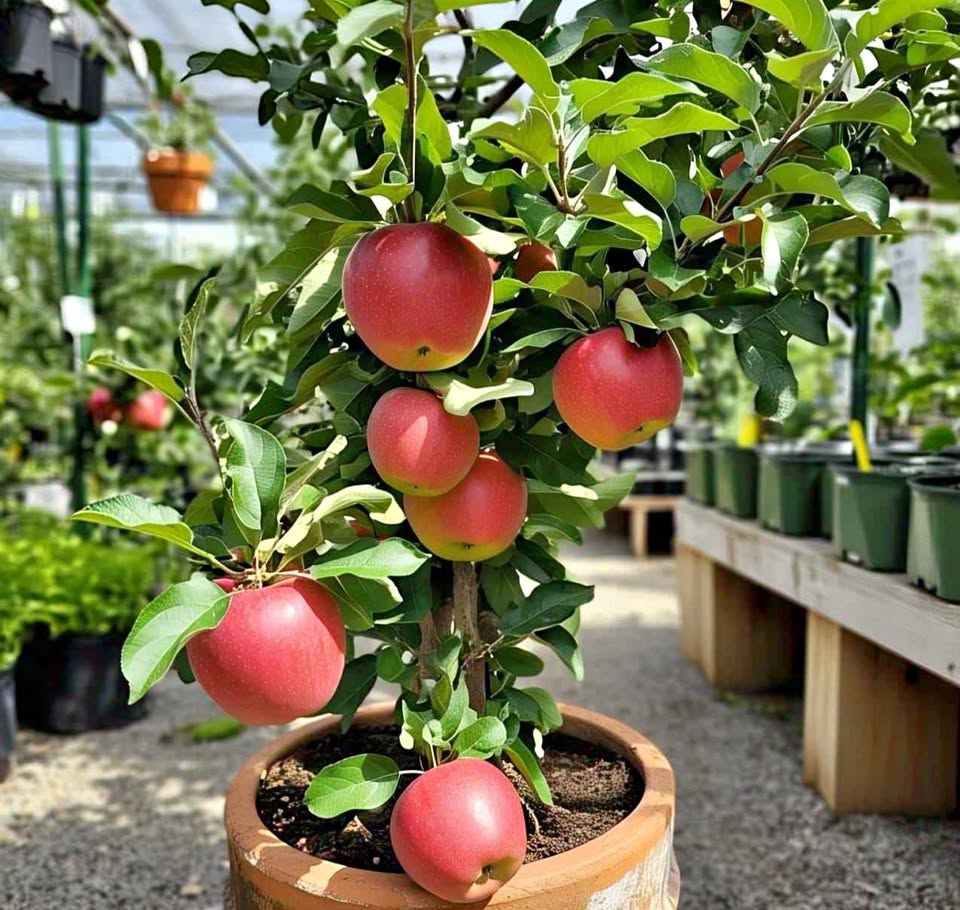
ЁЯМ▒ Introduction тАУ What is Hariman 99 Summer Zone Apple?
Traditionally, apple cultivation in India was limited to the cold regions like Himachal Pradesh, Jammu & Kashmir, and Uttarakhand. But now, with the development of Hariman 99 (Hot Climate Apple), apple farming is possible even in the plains and hot regions of India.
This is a low-chill apple variety, meaning it requires fewer chilling hours to initiate flowering and fruiting.
It can grow well in tropical and subtropical climates like Uttar Pradesh, Rajasthan, Madhya Pradesh, Maharashtra, Gujarat, and even parts of South India.
With proper care and management, this apple tree starts bearing fruits within 3тАУ4 years.
ЁЯСЙ Hariman 99 Apple is therefore considered a revolutionary variety for both farmers and home gardeners.
ЁЯМдя╕П 1. Suitable Climate for Hariman 99 Apple
Thrives in warm and subtropical climates.
Ideal temperature: 15┬░C to 35┬░C.
Can tolerate up to 40┬░C heat with proper irrigation and mulching.
Protect young plants from frost and cold winds.
ЁЯМН 2. Choosing the Right Location
Requires 6тАУ7 hours of direct sunlight daily.
For field cultivation, choose elevated land to avoid waterlogging.
For home gardening, place pots in balconies, terraces, or open sunny areas.
ЁЯМ▒ 3. Soil Preparation for Hariman 99 Apple
Grows best in loamy or sandy-loam soil.
Soil pH should be between 6.0тАУ7.5.
Soil must be well-drained to prevent root rot.
Potting Mix for Containers:
40% garden soil
30% cow dung compost or vermicompost
20% river sand
10% cocopeat
ЁЯМ│ 4. Planting Methods for Hariman 99 Apple
(A) Field Plantation
Dig a pit of 2 ft ├Ч 2 ft ├Ч 2 ft.
Mix topsoil with compost and neem cake.
Place the sapling upright and fill the pit.
Water immediately after planting.
Maintain 12тАУ15 feet spacing between plants.
(B) Container Plantation
Select pots of 18тАУ20 inches depth.
Place broken bricks or pebbles at the bottom.
Fill with potting mix and plant the sapling.
Keep in a sunny spot.
ЁЯТз 5. Irrigation (Watering)
Water lightly after planting.
In summer: every 2тАУ3 days.
In winter: once every 7тАУ10 days.
Avoid overwatering.
Drip irrigation is best for commercial farming.
ЁЯМ┐ 6. Fertilizers and Nutrition Management
Organic Fertilizers
10тАУ15 kg cow dung compost per plant (twice a year).
Vermicompost.
Neem cake.
Chemical Fertilizers (If Needed)
NPK 10:10:10 twice a year.
During fruiting, increase phosphorus and potassium.
Foliar spray of zinc, iron, and boron improves fruit quality.
тЬВя╕П 7. Pruning and Training
Light pruning during the first year to shape the plant.
Remove diseased, dry, or weak branches.
Best time: after the rainy season.
Proper pruning ensures better sunlight and airflow.
ЁЯРЫ 8. Pest and Disease Management
Common Diseases:
Powdery mildew (white patches on leaves).
Fruit rot during ripening.
Leaf spot disease.
Pests:
Aphids.
Fruit flies.
Mites.
ЁЯСЙ Solutions:
Spray neem oil (5 ml/litre water).
Use bio-fungicides like Trichoderma.
Remove infected leaves and branches.
ЁЯНП 9. Flowering and Fruiting
Starts fruiting in 3тАУ4 years.
Flowering season: JanuaryтАУFebruary.
Harvest season: JuneтАУJuly.
Yield: 30тАУ50 kg per mature tree (with good care).
ЁЯУИ 10. Tips for Higher Yield of Hariman 99 Apple
Apply balanced fertilizers on time.
Provide light irrigation during flowering.
Encourage pollination by attracting bees.
Mulch with straw or leaves to retain soil moisture.
Regular pruning for sunlight penetration.
Remove diseased flowers and branches.
ЁЯПб 11. Benefits of Growing Hariman 99 Apple at Home
Fresh, organic fruits at home.
Grows well in terraces and home gardens.
Enhances greenery and aesthetics.
Eco-friendly fruit tree for warm regions.
Educational and fun for children.
ЁЯТк 12. Health Benefits of Eating Apples
Rich in Vitamin C and antioxidants.
Boosts immunity and digestion.
Controls cholesterol and blood pressure.
Supports weight management.
Strengthens bones and teeth.
тЭУ 13. Frequently Asked Questions (FAQs)
Q1. How many years does Hariman 99 Apple take to bear fruits? ЁЯСЙ Around 3тАУ4 years.
Q2. Can it grow in hot climates? ЁЯСЙ Yes, it tolerates up to 40┬░C if properly managed.
Q3. How much yield from one tree? ЁЯСЙ On average 30тАУ50 kg fruits per tree.
Q4. Can it be grown in pots? ЁЯСЙ Yes, with large containers (18тАУ20 inches deep) and proper care.
ЁЯПБ Conclusion
The Hariman 99 Summer Zone Apple (Hot Climate Apple) is a breakthrough variety that allows apple cultivation in plains and warmer regions where traditional apples cannot grow.
By following the correct:
Soil preparation,
Irrigation and fertilization,
Pruning and pest control,
Mulching and pollination techniques
ЁЯСЙ You can achieve a high yield of quality apples in your garden or farm.
This variety is not only profitable for farmers but also perfect for home gardeners who dream of growing apples in warm climates.
Lychee (Litchi chinensis) is one of the most delicious and juicy tropical fruits in India and worldwide. Known for its unique sweet flavor, refreshing juice, and nutritional benefits, it is highly popular during summer.
India is one of the largest producers of lychee.
Bihar is often called the тАЬLychee Capital of IndiaтАЭ because it contributes the maximum production.
With proper planting and care techniques, lychee trees can also be grown in home gardens and large containers.
ЁЯСЙ In this detailed guide, you will learn everything from planting a lychee tree to proper care, pest management, and methods to boost fruit production.
FebruaryтАУMarch and AugustтАУSeptember are the best months for planting lychee.
These months provide moderate temperatures which help young plants establish well.
In containers, planting can be done in any season with controlled environment care.
2. Suitable Climate for Lychee Trees
Lychee thrives in tropical and subtropical climates.
Ideal temperature: 20тАУ35┬░C.
Hot and dry winds can cause fruit drop.
Severe frost and extreme cold can damage young plants.
3. Selecting the Right Location
Lychee requires 5тАУ6 hours of direct sunlight daily.
Choose a location with good air circulation.
Avoid waterlogged areas.
For container plantation, place pots in an open sunny spot or terrace.
4. Soil Preparation for Lychee Trees
Lychee trees prefer deep, fertile, and well-drained soil.
Ideal Soil
Loamy or sandy-loam soil is best.
Soil pH should be between 6.0тАУ7.5.
Potting Mix for Containers
40% garden soil
30% well-decomposed cow dung compost or vermicompost
20% river sand
10% cocopeat
ЁЯСЙ Ensure proper drainage holes in pots to avoid water stagnation.
5. Methods of Planting Lychee
(A) From Seeds
Easy to grow, but fruiting takes 7тАУ8 years.
Seeds must be sown immediately after extraction as they lose viability quickly.
Sow seeds 2тАУ3 cm deep and water lightly.
(B) Grafting or Air Layering (Best Method)
Commercially and domestically preferred method.
Grafted or air-layered plants start fruiting in 3тАУ4 years.
Best time for air layering is FebruaryтАУMarch or AugustтАУSeptember.
(C) Nursery Plants
Buy healthy grafted plants from a certified nursery.
Dig a pit of size 2 ft ├Ч 2 ft ├Ч 2 ft, fill with compost + soil, and plant carefully.
6. Spacing Between Plants
In fields: Maintain 8тАУ10 meters spacing between two plants.
In containers: Use at least 18тАУ20 inch deep pots.
7. Watering System (Irrigation)
Water immediately after planting.
Summer: Irrigate every 2тАУ3 days.
Winter: Once a week is sufficient.
Avoid overwatering as it causes root rot.
ЁЯСЙ Drip irrigation system is best for lychee cultivation.
8. Fertilizer and Nutrition Management
Organic Fertilizers
10тАУ15 kg cow dung manure per plant (twice a year).
Vermicompost.
Neem cake.
Chemical Fertilizers (If Needed)
Apply NPK fertilizer depending on plant age.
During fruiting, increase phosphorus and potassium.
Foliar spray of micronutrients (zinc, iron, boron) improves fruit quality.
9. General Care of Lychee Trees
Apply mulching (straw, dry leaves, or plastic mulch) around the tree base.
Regularly remove weeds.
Spray neem oil (5 ml/litre water) for pest prevention.
Protect young plants from strong winds and frost.
10. Pruning of Lychee Trees
Remove dry, diseased, and weak branches.
Maintain tree height and shape for better sunlight penetration.
Best time for pruning: After the rainy season.
11. Common Pests and Diseases in Lychee
Diseases
Leaf Blight тАУ leaves turn brown and dry.
Fruit Rot тАУ fruits rot before maturity.
Root Rot тАУ due to water stagnation.
Pests
Lychee mites.
Aphids.
Fruit flies.
ЁЯСЙ Solutions:
Spray neem oil or organic fungicides like Trichoderma.
Remove infected leaves and branches.
Maintain proper drainage and spacing.
12. Harvesting and Yield
Grafted plants start bearing fruits in 3тАУ4 years.
Seed-grown plants may take 7тАУ8 years.
Harvesting season: MayтАУJune in India.
An average tree yields 100тАУ150 kg of lychees, while large trees may produce up to 200 kg.
ЁЯСЙ Harvest when fruits turn bright red and soft.
13. Tips to Increase Lychee Fruit Yield
Apply balanced fertilizers at the right stages.
Provide light irrigation during flowering.
Encourage pollination by attracting bees.
Remove diseased flowers and branches.
Prune regularly to maintain plant health.
Apply organic compost after harvesting to restore nutrients.
14. Benefits of Growing Lychee at Home
Fresh and chemical-free fruits.
Provides shade and greenery.
Enhances home garden beauty.
Eco-friendly and beneficial for environment.
A fun and educational activity for children.
15. Health Benefits of Eating Lychee
Rich in Vitamin C тАУ boosts immunity.
Improves digestion.
Good for skin and hair health.
Supports heart health.
Helps in weight management.
16. Frequently Asked Questions (FAQs)
Q1. How long does a lychee tree live? Ans: With proper care, a lychee tree can live and bear fruits for 40тАУ50 years.
Q2. Can lychee be grown in pots? Ans: Yes, but only grafted plants are suitable for containers. Choose large pots (18тАУ20 inches deep).
Q3. How much yield does one tree give? Ans: On average, a tree yields 100тАУ150 kg of fruits; older trees may give up to 200 kg.
Q4. How often should I fertilize a lychee tree? Ans: Apply organic compost 2тАУ3 times a year and supplement with NPK as needed.
Conclusion
Lychee tree cultivation is rewarding if you follow the correct planting method, soil preparation, watering, and care practices. Home-grown lychee trees not only provide tasty fruits but also beautify your garden.
ЁЯСЙ For commercial cultivation, use high-quality grafted plants, maintain proper spacing, apply drip irrigation, and adopt mulching techniques for better yield.
With patience and care, a single lychee tree can serve your family with delicious fruits for decades.
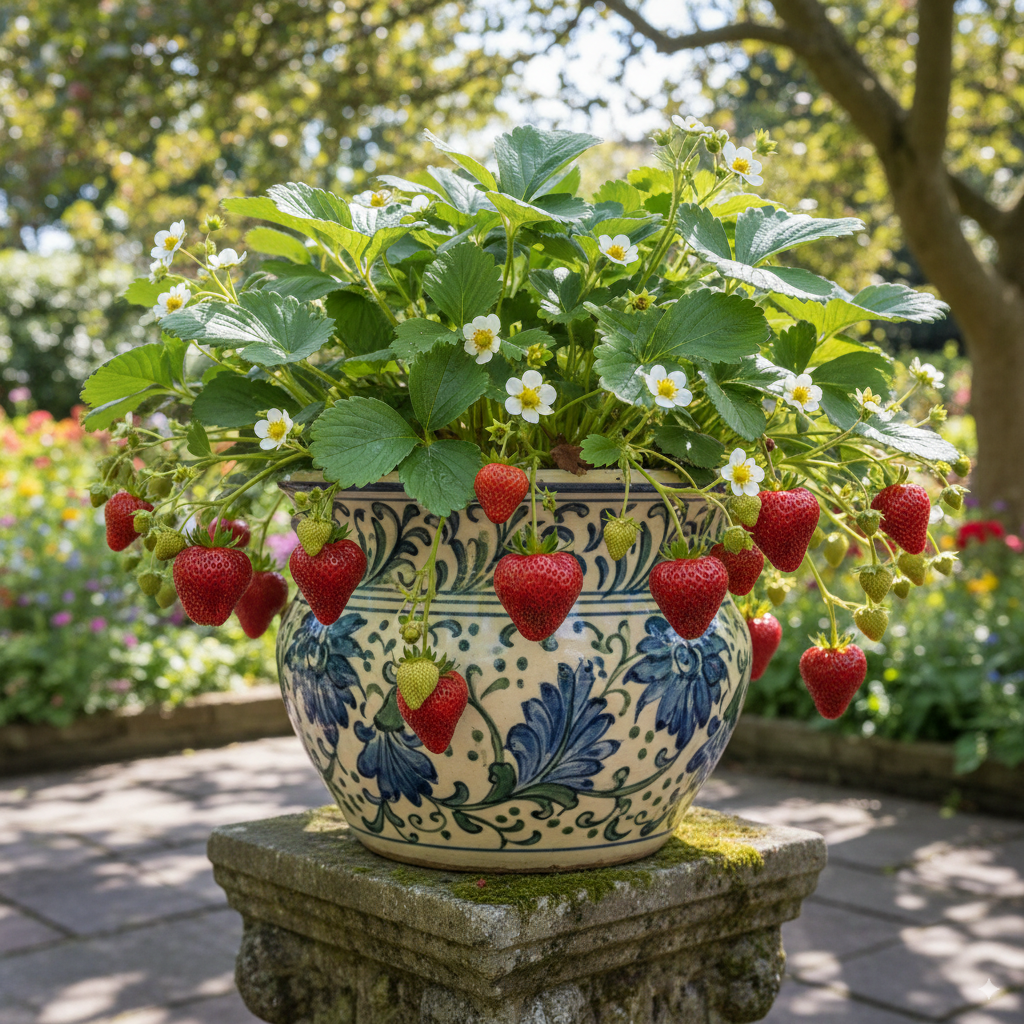
Strawberry (Fragaria ├Ч ananassa) is one of the most popular and attractive fruits in the world. Its bright red color, sweet-sour taste, and health benefits make it loved by children and adults alike.
Strawberries are grown both commercially and in home gardens. In India, states like Himachal Pradesh, Uttarakhand, Jammu & Kashmir, and Maharashtra (Mahabaleshwar) are famous for strawberry cultivation. But with proper care, anyone can grow strawberries in pots, grow bags, balconies, or small gardens.
Key Features of Strawberry Plant
Perennial in nature (lives and fruits for several years).
Grows up to 15тАУ20 cm tall.
Has shallow roots, prefers loose and well-drained soil.
One plant can yield 250тАУ500 grams of fruit, sometimes up to 1 kg with proper care.
1. Best Time to Plant Strawberries
In India, the best planting seasons are October to December and February to March.
Ideal temperature: 15тАУ25┬░C.
Avoid hot summers; provide shade if growing in containers.
2. Choosing the Right Spot
Requires at least 6 hours of sunlight daily.
Good air circulation is necessary.
Avoid waterlogging or heavy rainfall-prone areas.
A semi-shaded spot is best in hot regions.
3. Soil Preparation for Strawberry Plants
Strawberries need light, fertile, and well-drained soil.
Ideal Potting Mix
40% garden soil
30% compost or vermicompost
20% river sand
10% cocopeat or leaf compost
ЁЯСЙ Soil pH should be 5.5тАУ6.5.
4. Methods of Planting Strawberries
(A) Using Runners
Strawberries produce runners (horizontal shoots).
Bury runners lightly in soil; new roots will develop.
Once established, separate and replant them.
(B) Buying Nursery Plants
Buy healthy plants from a nursery.
Plant them so that the crown (central bud) stays above the soil level.
(C) Growing from Seeds
A slow method, usually for hobby growers.
Keep seeds refrigerated for 2тАУ3 weeks before sowing.
Germination may take 3тАУ4 weeks.
5. Plant Spacing
In pots: Use a 12-inch deep pot per plant.
In fields: Keep 2 feet between rows and 1 foot between plants.
6. Watering System
Strawberries require consistent moisture.
In summer: Light watering daily.
In winter: 2тАУ3 times per week is sufficient.
Avoid overwatering; roots may rot.
ЁЯСЙ Best method: Drip irrigation for balanced moisture.
7. Fertilizer and Nutrition Management
Organic Fertilizers
Vermicompost
Cow dung compost
Neem cake
Bone meal
Chemical Fertilizers (if required)
Use NPK 10:10:10 or 19:19:19 every 20тАУ25 days.
During fruiting, increase phosphorus and potassium.
8. Strawberry Plant Care Tips
Mulching with straw, leaves, or plastic helps maintain soil moisture and keeps fruits clean.
Weed regularly to prevent nutrient competition.
Spray neem oil (5 ml/litre water) to prevent pests.
9. Common Diseases and Pests
Powdery Mildew тАУ white powder on leaves.
Leaf Spot тАУ brown/black spots on foliage.
Root Rot тАУ caused by overwatering.
Insects: Aphids, thrips, mites.
ЁЯСЙ Prevention & Cure:
Neem oil spray every 15 days.
Remove infected leaves.
Ensure proper drainage and spacing.
10. Pruning Strawberry Plants
Remove old and dry leaves.
Trim excess runners to focus energy on fruits.
Light pruning after fruiting improves plant health.
11. Harvesting Strawberries
Ready for harvest in 3тАУ4 months after planting.
Pick when fruits turn bright red and shiny.
Harvest in early morning or late evening.
A single plant yields up to 500 grams to 1 kg of fruit.
12. Tips for Higher Strawberry Yield
Provide balanced sunlight and moisture.
Apply organic compost before flowering.
Encourage pollination by attracting bees.
Use mulching to keep soil cool.
Remove diseased leaves and excess runners.
Timely pruning and fertilizer application.
13. Benefits of Growing Strawberries at Home
Fresh, chemical-free fruits.
Decorative and aesthetic plants.
Fun gardening activity for kids and families.
Saves money compared to buying expensive strawberries.
14. Health Benefits of Eating Strawberries
Rich in Vitamin C and antioxidants.
Boosts immunity.
Good for heart health.
Improves skin and hair.
Helps in weight management.
15. Frequently Asked Questions (FAQs)
Q1. Can strawberries grow in hot climates? Yes, but provide shade and maintain soil moisture. Containers make it easier.
Q2. Can strawberries grow well in pots? Absolutely! Use at least a 12-inch deep pot or grow bag.
Q3. How long does a strawberry plant live? Usually 2тАУ3 years of good fruiting. After that, replant new ones.
Q4. How often should I fertilize strawberry plants? Apply light organic fertilizer every 20тАУ25 days.
Conclusion
Growing strawberries is not difficult if you follow the right planting method, soil preparation, watering, and care. With little effort, you can enjoy homegrown fresh strawberries that are tastier and healthier than store-bought ones.
ЁЯСЙ For commercial growers, techniques like mulching, drip irrigation, and selecting high-quality varieties are essential for higher profits.
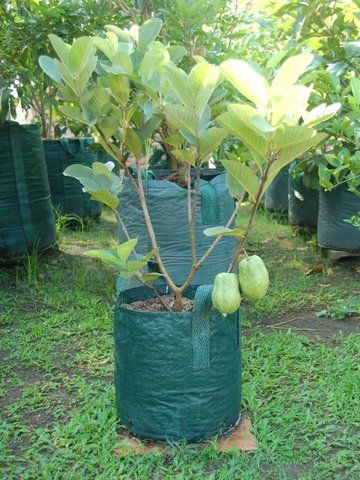
Guava (Psidium guajava), popularly known as Amrud in Hindi, is one of the most loved and beneficial fruits in India. Often called the тАЬapple of the poorтАЭ, guava is loaded with vitamin C, dietary fiber, and antioxidants. It is not only delicious but also extremely healthy.
Guava trees are easy to grow, require less maintenance, and are highly profitable for commercial cultivation. With the right care, a guava tree can bear fruits twice a year and continue to yield for 20тАУ25 years.
In this article, you will learn in detail:
Importance and characteristics of guava
Best time and place to plant guava
Growing methods (from seeds, grafting, and pots)
Soil, water, fertilizers, and pruning tips
Disease and pest control methods
Tips for getting maximum fruit yield
Varieties of guava and their benefits
Nutritional and medicinal values of guava
ЁЯМ┐ Importance and Characteristics of Guava
тЬЕ Scientific Classification
Scientific Name:Psidium guajava
Family: Myrtaceae
тЬЕ Characteristics of Guava Tree
Medium-sized evergreen tree.
Height: 5тАУ10 meters.
Leaves: Broad, green, and leathery.
Flowers: White, fragrant.
Fruits: Green on the outside with white or pink pulp inside.
тЬЕ Nutritional Value
Rich in Vitamin C, Vitamin A, potassium, and antioxidants.
Contains soluble fiber that improves digestion.
Strengthens immunity and improves skin health.
тЬЕ Economic Value
Low-cost and high-profit fruit crop.
Yield: 20тАУ25 tons per hectare.
Export potential due to high demand.
ЁЯМ▒ Best Time and Place for Planting Guava
тЬЕ Best Season
Ideal Time: Rainy season (JulyтАУSeptember).
Can also be planted in FebruaryтАУMarch with proper care.
тЬЕ Suitable Location
Plant in an open sunny area.
Avoid waterlogged places.
Can be grown in gardens, fields, or large pots.
тЬЕ Soil Requirement
Loamy or sandy loam soil is best.
pH: 5.0 to 7.5.
Adding organic compost improves fertility and drainage.
ЁЯМ┐ Methods of Planting Guava
1. Growing from Seeds
Extract seeds from ripe guava fruits.
Dry for 1тАУ2 days and soak in water for 24 hours.
Sow seeds in nursery beds or pots with a soil + sand + compost mix.
Germination takes 15тАУ20 days.
2. Planting Grafted Plants
Grafted plants start fruiting within 2тАУ3 years.
Buy quality grafts from a reliable nursery.
Dig a pit (2├Ч2 feet) and fill with soil + manure mix.
Plant the sapling and water lightly.
3. Growing in Pots
Choose a large pot (18тАУ24 inches).
Ensure drainage holes at the bottom.
Fill with soil + compost + sand mix.
Plant the sapling and water regularly.
ЁЯМ▒ Care of Guava Plant
тЬЕ Watering
Water every 2тАУ3 days in summer.
During monsoon, water only if needed.
In winter, once or twice a week is sufficient.
тЬЕ Fertilization
Add cow dung manure or vermicompost every 2тАУ3 months.
Apply organic fertilizers before flowering and fruiting.
Avoid excess chemical fertilizers.
тЬЕ Pruning
Remove dry and diseased branches.
Prune overcrowded branches for better sunlight penetration.
Proper pruning increases flowering and fruit yield.
тЬЕ Sunlight and Climate
Requires 5тАУ6 hours of direct sunlight daily.
Grows best in tropical and subtropical climates.
Tolerates mild frost but not severe cold.
ЁЯМ┐ Disease and Pest Management
Fruit Fly: Use neem oil spray or organic traps.
Leaf Spot and Fungal Infections: Apply bio-fungicides.
Root Rot: Avoid waterlogging.
Aphids and Thrips: Neem-based organic sprays work well.
ЁЯМ▒ Tips for Getting Maximum Fruit Yield
Use grafted plants instead of seedlings for quicker yield.
Apply organic manure before flowering season.
Keep the base weed-free to ensure proper nutrient absorption.
Practice mulching to retain soil moisture in summer.
Prune regularly to promote healthy growth.
Provide balanced watering тАУ neither too much nor too little.
ЁЯМ┐ Popular Varieties of Guava
Allahabadi Safeda тАУ Sweet, soft pulp.
Lucknow 49 тАУ High yielding and disease resistant.
Banarasi тАУ Juicy, excellent flavor.
Red Fleshed (Lal Falishi) тАУ Attractive pink pulp.
Hybrid Varieties тАУ Taiwan pink, VNR Bihi.
ЁЯМ▒ Benefits of Commercial Guava Farming
A single tree can yield 50тАУ70 kg of fruits per year.
One hectare accommodates 400тАУ500 trees.
Annual earning potential in lakhs with proper care.
High demand in both domestic and international markets.
ЁЯМ┐ Health Benefits of Guava
Boosts immunity due to high Vitamin C.
Controls blood sugar levels.
Improves heart health.
Aids digestion and weight management.
Enhances skin glow and prevents aging.
ЁЯМ▒ FAQ (Frequently Asked Questions)
Q1. How many years does guava take to bear fruits? ЁЯСЙ Seed-grown plants: 4тАУ5 years; Grafted plants: 2тАУ3 years.
Q2. Can guava be grown in pots? ЁЯСЙ Yes, in large pots with proper soil and care.
Q3. How long does a guava tree live? ЁЯСЙ Around 25тАУ30 years with continuous fruiting.
Q4. Which guava variety is the best? ЁЯСЙ Allahabadi Safeda and Lucknow 49 are most popular.
Q5. How to make guava fruits sweeter? ЁЯСЙ Provide timely watering, organic manure, and pruning.
ЁЯМ┐ Conclusion
Guava (Amrud) is not just a tasty fruit but also a powerhouse of nutrition and a source of income for farmers. With proper planting methods, organic care, and disease management, you can get maximum yield from your guava tree for many years.
Whether in your garden, pot, or farmland, growing guava is highly rewarding both for health and wealth.
Start planting guava today and enjoy fresh, organic, and sweet fruits right at home.
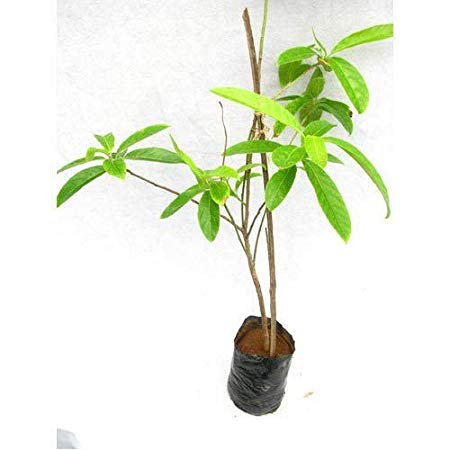
Rudraksha (рд░реБрджреНрд░рд╛рдХреНрд╖) holds a sacred and unique place in Indian culture, Ayurveda, and spirituality. It is believed that Rudraksha trees originated from the tears of Lord Shiva. The seeds are used for making malas, meditation, spiritual practices, and medicines.
In todayтАЩs time, people want to grow Rudraksha not only for religious and spiritual reasons but also for its medicinal value and positive energy. However, very few people know the correct method of planting Rudraksha and taking care of it for better fruit yield.
In this detailed guide, you will learn:
What is the Rudraksha tree and its importance
How and where to plant it
Best soil, fertilizers, and watering methods
Plant care and disease prevention
How to get maximum fruit from Rudraksha tree
Its spiritual, astrological, and medicinal values
ЁЯМ┐ Introduction and Importance of Rudraksha
тЬЕ Scientific Name
Scientific Name:Elaeocarpus ganitrus
Family: Elaeocarpaceae
тЬЕ Characteristics of Rudraksha Tree
Evergreen tree, grows tall and dense.
Height: 50тАУ80 feet.
Leaves: Green, similar to lemon tree leaves.
Flowers: Small, white, and fragrant.
Fruits: Green when raw, turn blue when ripe.
тЬЕ Religious Importance
Considered sacred in Hinduism, associated with Lord Shiva.
Wearing Rudraksha mala increases concentration, peace, and positivity.
Vastu Shastra suggests planting Rudraksha removes negative energies from home.
тЬЕ Medicinal Importance
Helps reduce stress, hypertension, and heart-related diseases.
Used in Ayurveda for strengthening immunity.
Leaves, seeds, and fruits have healing properties.
ЁЯМ▒ Best Place and Season to Plant Rudraksha
тЬЕ Right Season
Best Time: Rainy season (July to September).
Can also be planted in summer and winter with proper moisture management.
тЬЕ Best Location
Open space with balanced sunlight and shade.
Ideal places: Garden, backyard, near temples, or large pots.
Needs open air and fresh environment for healthy growth.
тЬЕ Soil Selection
Fertile loamy soil with good drainage.
Soil pH: 6.5 to 7.5.
Mixture of soil + sand + organic compost works best.
ЁЯМ┐ Planting Methods of Rudraksha
1. Growing from Seeds
Collect fully ripened Rudraksha fruits and dry them.
Remove seeds and soak in water for 3тАУ4 days.
Sow seeds in a mixture of soil + sand + compost.
Germination starts within 25тАУ30 days.
2. Planting from Saplings
Buy a 1тАУ2 year old sapling from nursery.
Dig a pit 2 feet deep and wide.
Mix soil with organic manure and fill half.
Plant the sapling, cover with soil, and water well.
3. Planting in Pots
Choose a large pot (18тАУ24 inches deep).
Ensure drainage holes at the bottom.
Fill with soil + sand + organic compost.
Plant and water regularly.
ЁЯМ▒ Care of Rudraksha Plant
тЬЕ Watering
Daily light watering in summer.
During rainy season тАУ water only if soil is dry.
In winter тАУ water every 2тАУ3 days.
тЬЕ Fertilization
Apply organic manure or vermicompost every 2тАУ3 months.
Avoid excess chemical fertilizers.
тЬЕ Pruning
Cut dry or diseased branches.
Light pruning to maintain shape of the tree.
тЬЕ Sunlight
Needs 4тАУ5 hours of direct sunlight daily.
Partial shade is also beneficial in extreme heat.
ЁЯМ┐ Protection from Diseases
Fungal Infection: Use neem spray.
Leaf Fall Problem: Maintain proper watering and fertilization.
Insects: Use neem oil or organic pesticides.
Root Rot: Avoid waterlogging.
ЁЯМ▒ How to Get More Fruits from Rudraksha
Rudraksha starts fruiting after 6тАУ8 years.
Regular watering and manure ensure healthy growth.
Keep surroundings clean and weed-free.
Apply organic compost before monsoon for better yield.
Expose the tree to open air and sunlight.
ЁЯМ┐ Religious and Astrological Importance
Wearing Rudraksha beads brings peace, health, and prosperity.
Planting Rudraksha in home removes negative energy.
Astrologically, it reduces effects of planetary doshas.
Considered a symbol of divine blessings from Lord Shiva.
ЁЯМ▒ FAQ (Frequently Asked Questions)
Q1. Is it auspicious to plant Rudraksha at home? ЁЯСЙ Yes, it is highly auspicious and beneficial.
Q2. How many years does Rudraksha take to bear fruit? ЁЯСЙ Usually 6тАУ8 years.
Q3. Can Rudraksha be grown in pots? ЁЯСЙ Yes, but the pot should be big and deep.
Q4. Is commercial cultivation of Rudraksha possible? ЁЯСЙ Yes, farmers can earn good income through Rudraksha farming.
Q5. How many types of Rudraksha are there? ЁЯСЙ From 1 Mukhi to 21 Mukhi varieties.
ЁЯМ┐ Conclusion
The Rudraksha tree is not only spiritually significant but also valuable for health and environment. If planted properly and cared for with the right techniques, it provides benefits for a lifetime тАУ peace, positivity, and prosperity.
Plant a Rudraksha tree in your garden or home today and invite divine blessings of Lord Shiva into your life.
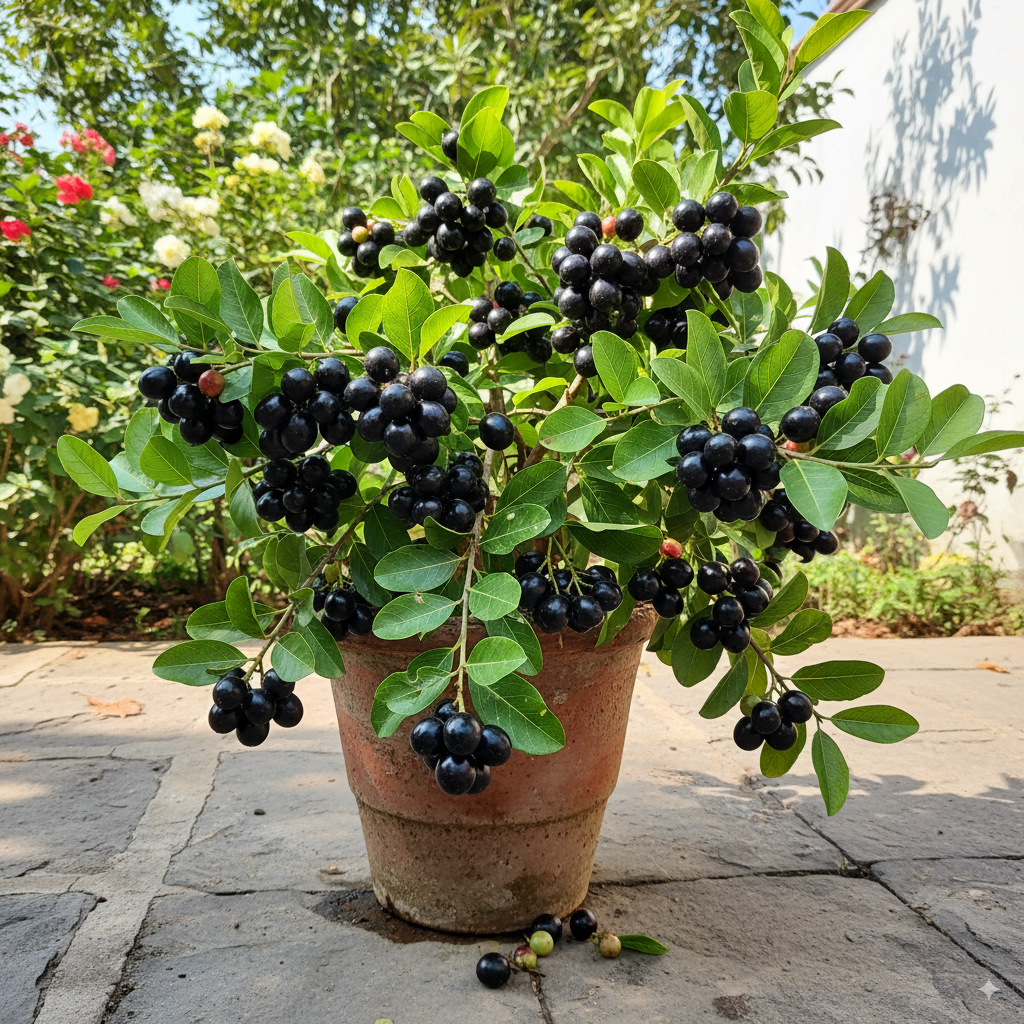
Jamun (Syzygium cumini), also known as Blackberry, Java Plum, Indian Black Plum, or Malabar Plum, is one of the most popular fruits in India. It is valued for its unique tangy-sweet taste, medicinal properties, and cultural importance.
Jamun fruit has been widely used in Ayurveda, Unani, and traditional medicine systems for treating diabetes, digestion issues, blood purification, and heart diseases. The tree is evergreen, long-living, and can grow up to 30тАУ40 meters in height under suitable conditions.
In this article, we will cover in detail:
Ideal climate and soil for Jamun
Plantation techniques in fields and pots
Irrigation, fertilization, and care schedule
Pruning and plant management
Tips for maximizing fruiting and sweetness
Pest and disease control
Medicinal and health benefits
Vastu and cultural significance
ЁЯМ▒ Suitable Climate and Soil for Jamun
Climate: Jamun grows well in tropical and subtropical regions.
Temperature: 25┬░C to 35┬░C is ideal.
Rainfall: Annual rainfall of 500тАУ2500 mm supports healthy growth.
Soil Requirements:
Sandy loam or loamy soil is best.
Soil pH: 6.0тАУ7.5.
Proper drainage is essential to avoid root rot.
ЁЯк┤ Plantation Methods
тЬФ In Garden or Farm
Pit Preparation: Dig pits of 3x3x3 feet.
Soil Mixture: Fill with garden soil + farmyard manure + river sand + neem cake.
Planting: Always use grafted (budded) plants for early fruiting.
Precaution: Avoid waterlogging, especially in pots.
ЁЯМ┐ Fertilizer and Nutrition Schedule
Season
Fertilizer
Quantity
Purpose
Every 3 months
Farmyard manure/Vermicompost
5тАУ10 kg
Improves soil fertility
FebтАУMarch
Nitrogen (Urea)
200 g
Boosts new shoots & leaves
JuneтАУJuly
DAP + Potash
200тАУ250 g
Helps in flowering & fruit set
AugтАУSept
Micronutrients (Zinc, Boron)
Foliar spray
Enhances fruit size & sweetness
ЁЯСЙ Potassium and Zinc are essential for fruit quality and sweetness.
ЁЯМЮ Sunlight and Temperature
Jamun requires 6тАУ8 hours of direct sunlight daily.
Avoid shady places as they reduce fruiting.
Protect young plants from frost in colder regions.
тЬВя╕П Pruning and Maintenance
Remove dry, diseased, or broken branches regularly.
Light pruning helps in giving a balanced shape to the tree.
For potted plants, perform repotting every 2тАУ3 years with fresh soil mix.
ЁЯМ╕ Flowering and Fruiting
Seed-grown plants start fruiting after 6тАУ8 years.
Grafted/budded plants bear fruits within 4тАУ5 years.
Flowering Season: MarchтАУApril.
Harvesting Season: JuneтАУJuly.
Fruits are oval-shaped, purple-black, and have a unique flavor.
ЁЯНЗ Tips to Maximize Fruiting
Always plant grafted plants for early and better yield.
Apply Zinc and Boron sprays during flowering.
Use Potash-rich fertilizers to reduce flower/fruit drop.
Keep the base area weed-free.
Ensure timely irrigation and fertilization.
Thin excess fruits for better quality and size.
ЁЯРЫ Pest and Disease Management
Pest/Disease
Symptoms
Control
Leaf Spot
Yellow/black patches on leaves
Spray Bordeaux mixture
Fruit Drop
Immature fruits falling
Foliar spray of Zinc + Boron
Termites
Weakening of roots
Apply neem cake & neem oil
Fruit Fly
Holes and rotting fruits
Cover fruits with net bags
ЁЯМЯ Medicinal and Health Benefits of Jamun
Diabetes Management: Jamun seeds are used in Ayurvedic medicine for regulating blood sugar levels.
Digestion: Improves gut health and relieves diarrhea.
Bone Health: Rich in calcium and phosphorus.
Heart Health: Maintains blood pressure and cholesterol.
Skin Benefits: Purifies blood and helps in skin disorders.
ЁЯПб Vastu and Cultural Importance
Planting Jamun at home brings positivity, prosperity, and good health.
Considered sacred in Indian traditions and associated with Lord Krishna.
Jamun is also part of Panchavati trees along with Neem, Peepal, and Banyan.
ЁЯУК Quick Care Guide
Stage
Care
Tip
Plantation
Use grafted plants
Keep 8тАУ10 m spacing
Watering
Summer: 7тАУ10 days, Winter: 15тАУ20 days
Avoid waterlogging
Fertilization
Organic compost every 3 months
Increase Potash at fruiting
Sunlight
6тАУ8 hrs daily
Avoid shade
Fruiting
Starts in 4тАУ5 years (grafted)
Spray micronutrients
тЭУ Frequently Asked Questions (FAQ)
Q1: Can Jamun grow in pots? тЬФ Yes, grafted plants can grow well in large pots (20тАУ24 inches).
Q2: How many years does Jamun take to bear fruits? тЬФ Seed-grown: 6тАУ8 years, Grafted: 4тАУ5 years.
Q3: Which fertilizer is best for Jamun? тЬФ Organic compost + Potash + Micronutrient sprays.
Q4: What is the lifespan of Jamun tree? тЬФ A healthy Jamun tree can live and fruit for 50тАУ60 years.
Q5: Is Jamun farming profitable? тЬФ Yes, Jamun is highly valued for its medicinal and commercial demand.
ЁЯОп Conclusion
Jamun is not just a delicious seasonal fruit but also a treasure of health benefits and cultural values. By planting a Jamun tree at home or farm, you can enjoy both its shade and fruits for decades.
With proper planting, irrigation, nutrition management, and pest control, you can ensure heavy harvests of sweet and medicinally rich Jamun fruits. Whether in a large farm or in a pot on your terrace, Jamun is a tree worth growing.
Orange (Santra) is one of the most popular citrus fruits in the world. Known for its tangy-sweet taste and juicy pulp, orange is not only delicious but also a rich source of Vitamin C, antioxidants, fiber, calcium, and potassium.
In India, oranges are mainly cultivated in Maharashtra (Nagpur Oranges), Madhya Pradesh, Punjab, Rajasthan, Assam, Uttarakhand, and Himachal Pradesh.
ЁЯМ▒ Suitable Climate and Soil for Orange Cultivation
Climate: Oranges thrive in tropical and subtropical climates.
Temperature: Ideal range is 15┬░C to 35┬░C.
Protect from frost and extreme cold.
Soil:
Loamy or sandy loam soil is best.
Soil pH: 5.5 to 7.5.
Well-drained soil is essential to avoid root rot.
ЁЯк┤ Plantation Methods
тЬФ In Garden/Farm
Digging: Prepare pits of 2x2x2 feet.
Filling: Mix soil with farmyard manure, sand, and organic compost.
Planting: Use grafted (budded) orange plants for better yield.
Spacing: Maintain 12тАУ15 feet between plants.
Watering: Give light irrigation after planting.
тЬФ In Pots/Containers
Pot Size: Minimum 18тАУ24 inches deep and wide.
Soil Mix:
40% garden soil
30% organic compost/vermicompost
20% river sand
10% cocopeat + neem cake powder
Ensure proper drainage holes in the pot.
ЁЯТз Irrigation (Watering)
Summer: Every 5тАУ7 days.
Winter: Every 10тАУ15 days.
Keep the soil moist during fruiting stages.
Avoid waterlogging at all costs.
ЁЯМ┐ Fertilizer & Nutrition Schedule
Season
Fertilizer
Quantity
Purpose
Every 2тАУ3 months
Farmyard manure/vermicompost
5тАУ10 kg
Plant growth & strength
MarchтАУApril
Nitrogen (Urea)
250 g
New shoots and leaves
JulyтАУAugust
DAP + Potash
200 g
Flowering & fruit setting
OctтАУNov
Micronutrient spray
As directed
Fruit sweetness & quality
ЁЯСЙ Oranges require high potassium and zinc for better yield and taste.
ЁЯМЮ Sunlight & Temperature
Orange plants need 6тАУ8 hours of direct sunlight daily.
Avoid shady locations, as plants become weak and fruiting reduces.
Protect from frost by covering the plant during winters.
тЬВя╕П Pruning & Maintenance
Remove dry, diseased, or broken branches regularly.
After harvesting, prune lightly to maintain shape.
Keep the plant round and balanced.
For potted plants, refresh soil every year and repot into larger containers every 2тАУ3 years.
ЁЯМ╕ Flowering & Fruiting
Orange plants usually start fruiting after 3тАУ4 years (if grafted).
Flowering season: MarchтАУApril.
Harvesting season: October to December.
To ensure heavy fruiting, apply fertilizers on time and maintain proper watering.
ЁЯНК Tips to Maximize Fruiting
Always plant grafted/budded orange plants.
Maintain regular watering schedule.
Spray potassium and zinc during fruit formation.
Keep the base area weed-free.
Perform timely pruning.
For potted plants, shift to bigger pots every 2тАУ3 years.
Remove small fruits early so bigger fruits develop well.
ЁЯРЫ Pest & Disease Management
Pest/Disease
Symptoms
Solution
Leaf spots
Yellow/black patches on leaves
Spray Bordeaux mixture
Fruit drop
Immature fruits falling
Zinc + Boron foliar spray
Termites
Weakening of roots
Apply neem cake in soil
Sap-sucking pests
Curling and drying of leaves
Spray neem oil solution
ЁЯМЯ Health Benefits of Oranges
Rich in Vitamin C тАУ boosts immunity.
Regulates blood pressure.
Improves digestion and metabolism.
Supports heart and bone health.
Provides glowing and fresh skin.
ЁЯПб Vastu & Cultural Significance
Planting an orange tree at home brings positivity and prosperity.
Best placed in the northeast direction.
Oranges symbolize health, happiness, and good fortune.
ЁЯУК Quick Care Guide for Orange Plants
Stage
Care
Key Tip
Plantation
Use grafted plants in pits/containers
Maintain 12тАУ15 ft spacing
Watering
Summer: 5тАУ7 days, Winter: 10тАУ15 days
Avoid waterlogging
Fertilization
Every 2тАУ3 months organic compost
Add potassium & zinc for fruits
Sunlight
6тАУ8 hours daily
Avoid shade
Fruiting
Begins after 3тАУ4 years
Spray nutrients at flowering
тЭУ Frequently Asked Questions
Q1: Can orange plants grow in pots? тЬФ Yes, in large pots (18тАУ24 inches) using grafted plants.
Q2: How many years does it take for an orange tree to bear fruits? тЬФ Grafted plants start fruiting in 3тАУ4 years.
Q3: Which fertilizer is best for oranges? тЬФ Organic compost, potassium, and zinc sprays are highly effective.
Q4: What is the lifespan of an orange tree? тЬФ Around 30тАУ35 years with proper care.
Q5: Is orange cultivation profitable? тЬФ Yes, due to its high demand, orange farming is a profitable venture.
ЁЯОп Conclusion
Orange plants not only provide delicious, juicy fruits but also enhance the beauty of your garden or home. With proper planting, care, timely irrigation, fertilization, and pest management, you can easily enjoy abundant harvests of sweet and tangy oranges even in pots.
ЁЯСЙ Whether you are a farmer or a gardening enthusiast, the orange plant brings taste, health, and prosperity to your life.
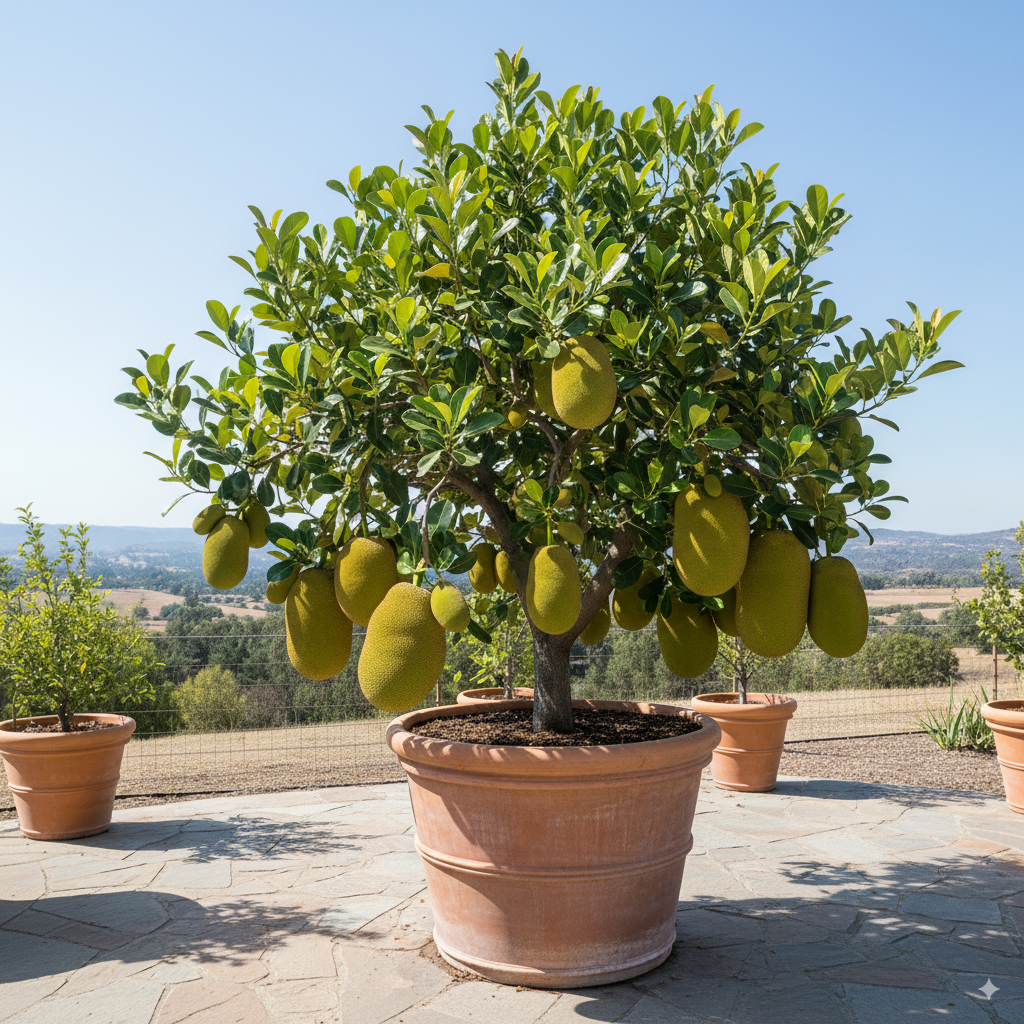
Jackfruit (Artocarpus heterophyllus) is one of the most popular, nutrient-rich tropical fruits of India and Southeast Asia. Known as the тАЬKing of FruitsтАЭ, it is unique for its size, taste, and health benefits. Jackfruit is packed with protein, fiber, vitamin A, vitamin C, potassium, calcium, and antioxidants.
The tree is large, evergreen, and provides heavy shade. With proper care, a jackfruit tree can yield 60тАУ250 fruits per year. Nowadays, people are not only growing jackfruit in farms but also in backyard gardens and large containers (pots).
Jackfruit thrives best in tropical and subtropical climates.
Prefers warm and humid conditions.
Ideal temperature: 20┬░C to 35┬░C (68┬░FтАУ95┬░F).
Requires 6тАУ8 hours of direct sunlight daily.
Not suitable for regions with heavy frost or extreme cold.
ЁЯк┤ Planting Methods (Garden & Pots)
тЬФ Planting in Open Field
Dig a 2.5 ft deep and wide pit.
Fill it with a mixture of soil + organic manure + river sand.
Place the grafted sapling carefully in the center.
Provide support with a bamboo stick.
Water lightly after planting.
ЁЯСЙ Spacing between plants: 8тАУ10 meters.
тЬФ Growing Jackfruit in Pots
Pot Size: At least 24тАУ30 inches deep and wide.
Soil Mix:
40% Garden Soil
30% Organic Manure (Cow dung/ Vermicompost)
20% River Sand
10% Cocopeat + Neem Cake
ЁЯСЙ Ensure the pot has drainage holes to prevent waterlogging.
ЁЯТз Watering Schedule
Young Plants (1тАУ2 years): Light watering every 3тАУ4 days.
Mature Trees: 2тАУ3 times a week during summer, less in winter/rainy season.
During Fruiting: Maintain consistent soil moisture.
тЪа Avoid stagnant water, as it causes root rot.
ЁЯМ┐ Fertilization and Nutrition
Season
Fertilizer/Manure
Quantity
Purpose
Every 2тАУ3 months
Organic manure (cow dung/vermicompost)
5тАУ10 kg
Plant growth
MarchтАУApril
Nitrogen (Urea)
250тАУ500 g
Leaf and branch growth
JulyтАУAugust
DAP + Potash
200тАУ300 g
Flower and fruit set
OctтАУNov
Bone meal + Micronutrients
250 g
Root strength & sweetness
ЁЯСЙ Potassium and Boron sprays are essential for fruit size and sweetness.
ЁЯМЮ Sunlight & Temperature
Needs 6тАУ8 hours of full sun daily.
Shaded areas reduce fruit production.
Protect young plants from frost and strong winds.
тЬВя╕П Pruning and Maintenance
Prune dry, diseased, and weak branches every year.
Best time for pruning: after harvesting season.
Maintain a strong, single main trunk.
Remove excess branches so that nutrients focus on fruits.
ЁЯМ╕ Pollination and Fruiting
Jackfruit trees bear both male and female flowers.
Pollination is mostly by wind and insects.
Keeping beehives near plantations increases fruiting.
In pots, you can use hand pollination with a brush for better results.
ЁЯНИ Tips to Maximize Fruit Production
Always plant a grafted jackfruit sapling (seed-grown trees take longer to fruit).
Provide regular watering and balanced fertilization.
During fruit set, spray Potassium & Boron nutrients.
Keep the area around the plant weed-free.
Do timely pruning to maintain healthy growth.
Thin weaker fruits early so that remaining ones grow bigger.
Protect the plant from termites, fungal infections, and stem borers.
ЁЯРЫ Pest and Disease Management
Pest/Disease
Symptoms
Control
Fruit Borer
Holes in fruits, larvae inside
Spray Neem Oil every 15тАУ20 days
Termites
Weak roots, plant drying
Apply neem cake to soil
Leaf Spot Disease
Yellow or brown patches
Spray Bordeaux mixture
Fruit Drop
Small fruits falling prematurely
Foliar spray of Boron + Zinc
ЁЯМЯ Health Benefits of Jackfruit
Rich in protein тАУ a great vegetarian meat substitute.
High fiber content improves digestion.
Calcium strengthens bones and teeth.
Potassium regulates blood pressure.
Boosts immunity and prevents infections.
Provides instant energy due to natural sugars.
ЁЯПб Vastu and Religious Importance
Planting a jackfruit tree at home is believed to bring prosperity and good health.
Best direction: South or West side of the garden.
Symbol of abundance, nourishment, and strength.
ЁЯУК Quick Jackfruit Care Guide
Stage
Care Requirement
Tips
Planting
2.5 ft deep pit / 24тАУ30 inch pot
Choose grafted sapling
Watering
3тАУ4 days (young), 2тАУ3 times weekly (mature)
Avoid waterlogging
Fertilizer
Organic manure every 2тАУ3 months
Add Potash during fruiting
Sunlight
6тАУ8 hrs daily
Avoid full shade
Fruiting
Starts in 3тАУ4 years (grafted)
Support pollination
тЭУ Frequently Asked Questions (FAQs)
Q1: Can jackfruit be grown in pots? тЬФ Yes, grafted plants grow well in large pots (24тАУ30 inches).
Q2: How many years does it take to fruit? тЬФ Seedlings take 7тАУ8 years, while grafted plants fruit within 3тАУ4 years.
Q3: Which fertilizer is best for jackfruit? тЬФ Organic manure, Potash, and Boron sprays are highly effective.
Q4: How long does a jackfruit tree live? тЬФ A healthy tree can live 40тАУ50 years or more.
Q5: Is jackfruit farming profitable? тЬФ Yes, it is a low-cost, high-profit crop with huge market demand.
ЁЯОп Conclusion
Jackfruit is not just a delicious fruit but also a powerhouse of nutrition. With proper planting methods, regular care, and balanced feeding, you can grow jackfruit successfully in your garden or even in large pots.
Whether you are a farmer or a gardening enthusiast, planting a jackfruit tree will bring taste, health, and prosperity to your life.
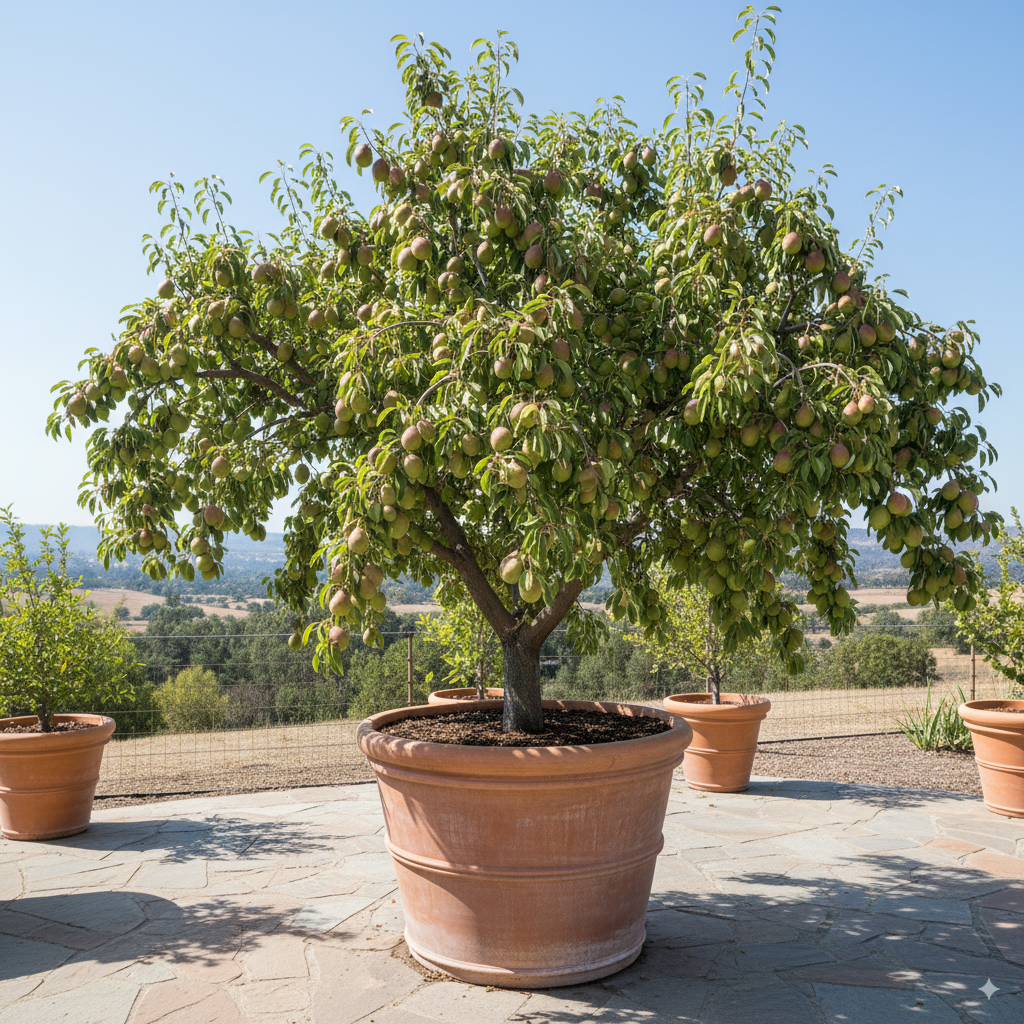
The Pear (Nashpati) is one of the most popular temperate fruits grown worldwide. Known for its sweet, juicy, and refreshing taste, it is also packed with essential nutrients like Vitamin C, potassium, dietary fiber, and antioxidants.
In India, pears are cultivated mostly in Himachal Pradesh, Jammu & Kashmir, Uttarakhand, Arunachal Pradesh, and other cold regions. Nowadays, with modern grafting techniques, pear trees can also be grown successfully in pots, terrace gardens, and backyards.
With proper planting methods and scientific care, you can enjoy abundant and high-quality pears even in limited spaces.
This article covers:
Step-by-step plantation guide for pear plants
Growing in pots vs. garden/fields
Soil, watering, fertilizer, and sunlight needs
Pruning and pollination management
Tips for boosting fruit yield
Pest and disease control
Health and Vastu benefits of pears
ЁЯк┤ Plantation Method for Pear Trees
тЬФ Suitable Climate & Location
Pears grow best in temperate and cold climates.
Ideal temperature: 5┬░C тАУ 25┬░C.
Require chilling hours during winter for proper flowering.
Select a location with 6тАУ8 hours of direct sunlight daily.
тЬФ Choosing Container or Field Space
Pot Plantation: Use a 20тАУ24 inch deep and wide pot/drum with drainage holes.
Field Plantation: Maintain 12тАУ15 feet spacing between plants.
тЬФ Soil Preparation
Pear trees prefer well-drained sandy loam soil.
Soil Mix for Pots:
40% garden soil
30% cow dung compost or vermicompost
20% river sand
10% leaf compost/cocopeat
100 g neem cake powder (to prevent soil pests)
тЬФ Planting Steps
Dig a pit (2├Ч2├Ч2 ft) in the garden or prepare your pot.
Fill with prepared soil mixture.
Place a grafted pear plant (not seedling) in the center.
Cover roots gently, water lightly, and support the plant with a stick.
ЁЯТз Watering Schedule
First Year: Water every 3тАУ4 days.
Established Plant: Water once a week in normal conditions.
During Fruiting: Maintain consistent soil moisture but avoid waterlogging.
тЪа Excess water causes root rot. Ensure proper drainage in pots.
ЁЯМ┐ Fertilization & Nutrition
Season
Fertilizer
Purpose
Every 2 months
2тАУ3 kg compost/vermicompost
Soil fertility
MarchтАУApril
50 g bone meal + neem cake
Root strengthening
JulyтАУAugust
100 g urea + 100 g DAP
Vegetative growth
OctтАУNov
150 g potash + micronutrient spray
Better flowering & fruit set
ЁЯСЙ Potassium and Boron are essential for fruit size, sweetness, and reduced fruit drop.
ЁЯМЮ Sunlight & Temperature
Pear trees require full sun exposure for at least 6тАУ8 hours.
Best suited for regions with cold winters and mild summers.
Can adapt to pots in plains with proper care.
тЬВя╕П Pruning & Maintenance
Prune annually during winter to remove dry, diseased, or weak branches.
Train the tree to an open vase shape for better sunlight and airflow.
Thin extra branches before flowering so energy goes into fruiting.
ЁЯМ╕ Pollination & Fruiting
Pear trees mostly need cross-pollination for better fruit yield.
Plant at least two different varieties nearby.
Honeybees are natural pollinators.
In small gardens/pots, hand pollination using a soft brush ensures fruit set.
ЁЯНО Tips to Maximize Pear Yield
Always plant grafted pear trees (they fruit in 3тАУ4 years).
Re-pot container plants every 2тАУ3 years with fresh soil.
Spray potash and boron during flowering.
Use neem oil spray to control pests.
Perform fruit thinning to ensure larger and sweeter pears.
Provide adequate chilling in winter (or simulate by placing in cooler conditions in plains).
ЁЯРЫ Pest & Disease Management
Problem
Symptoms
Solution
Leaf Spot
Brown/black patches on leaves
Spray copper oxychloride
Aphids
Curled, sticky leaves
Soap water/neem oil spray
Fruit Drop
Flowers/young fruits falling
Boron & zinc sprays
Root Rot
Yellow leaves, weak growth
Improve drainage, apply Trichoderma
ЁЯМЯ Health Benefits of Pears
Boosts immunity due to Vitamin C.
Aids digestion with high fiber content.
Helps regulate blood pressure.
Good for diabetes patients (low GI fruit).
Improves skin glow and hair health.
Prevents heart diseases with antioxidants.
ЁЯПб Vastu Benefits of Pear Tree
Planting pear tree in north or east direction is considered auspicious.
Brings prosperity, health, and harmony to the family.
ЁЯУК Quick Pear Care Guide
Stage
Care
Tips
Plantation
12тАУ15 ft spacing / 20тАУ24 inch pot
Use grafted plant
Watering
3тАУ4 days (young), weekly (mature)
Avoid waterlogging
Fertilization
Compost every 2 months, NPK seasonally
Potash & boron vital
Sunlight
6тАУ8 hrs daily
Open sunny spot
Fruiting
3тАУ4 years (grafted)
Hand pollination in pots
тЭУ FAQs on Pear Plants
Q1: Can pears be grown in pots? тЬФ Yes, with a large pot (20тАУ24 inches), grafted pear plants grow well.
Q2: How long does it take for pears to fruit? тЬФ Grafted plants start fruiting in 3тАУ4 years.
Q3: Which fertilizer is best for pears? тЬФ Organic compost, potash, and boron sprays during flowering.
Q4: How many years do pear trees live? тЬФ With care, pear trees produce fruits for 25тАУ30 years.
Q5: Is pear farming profitable in India? тЬФ Yes, especially in Himachal, Kashmir, and Uttarakhand.
ЁЯОп Conclusion
Pears are a delicious and nutritious fruit that can be grown both in gardens and pots with the right techniques. With proper soil mix, sunlight, pruning, fertilization, and pollination, you can enjoy abundant pear harvests at home.
Whether for commercial farming in cold regions or home gardening in pots, pear trees are rewarding and bring both health and prosperity.
Almonds (Prunus dulcis) are one of the worldтАЩs most popular and expensive dry fruits, widely consumed for their rich taste and high nutritional value. They are packed with protein, vitamin E, calcium, magnesium, and antioxidants, making them a superfood.
California almonds are globally famous for their high yield, quality, and commercial importance. In India, grafted California almond plants are now easily available in nurseries. With the right planting and care, you can successfully grow them both in your garden or large pots and enjoy abundant yields.
In this detailed guide, we will cover:
The correct method of planting grafted almond trees
Soil preparation, watering, sunlight, and fertilization needs
Pruning and plant management techniques
Growing almonds in pots vs. fields
Tips to maximize fruiting and almond quality
Common pests and disease control
Nutritional and health benefits of almonds
ЁЯк┤ Plantation Method for Grafted California Almond Plant
тЬФ Choosing the Right Plant
Always buy a grafted plant, not seed-grown. Grafted plants bear fruit in just 3тАУ4 years, while seed-grown take 7тАУ8 years with poor yield.
Select a healthy 1тАУ2 feet tall sapling from a reputed nursery.
тЬФ Selecting Location: Garden or Pot
Field/Garden Plantation: Keep a spacing of 15├Ч15 feet between plants.
Pot Plantation: Use a minimum 24тАУ30 inch wide and 30 inch deep pot. Ensure good drainage holes.
тЬФ Soil Preparation
The ideal soil for almonds is well-drained sandy loam. Soil mix for pot plantation:
40% garden soil
30% river sand
20% cow dung manure or vermicompost
10% cocopeat or leaf compost
Add 100 g neem cake powder for pest protection
тЬФ Plantation Steps
Dig a pit (2├Ч2├Ч2 ft) in the field or prepare your pot.
Fill it with the prepared soil mixture.
Place the grafted almond plant and cover roots carefully.
Water lightly and place in a full sunlight location.
ЁЯТз Watering Schedule
First Year: Water every 2тАУ3 days in summer, every 5тАУ7 days in winter.
Mature Plant: Once established, water once a week in normal seasons.
During Fruiting: Keep the soil slightly moist, avoid overwatering.
тЪа Overwatering causes root rot тАУ always check soil moisture before watering.
ЁЯМ┐ Fertilization & Nutrition
Time of Year
Fertilizer Type
Purpose
Every 2 months
1тАУ2 kg vermicompost/cow dung compost
Maintains soil fertility
MarchтАУApril
50 g bone meal + neem cake
Strengthens roots
JulyтАУAugust
50 g urea + 50 g DAP
Boosts vegetative growth
OctoberтАУNovember
100 g potash + micronutrients
Enhances flowering & fruit set
ЁЯСЙ Potassium and Boron are the most important nutrients for almond fruiting.
ЁЯМЮ Sunlight & Temperature Needs
Almond plants require 6тАУ8 hours of direct sunlight daily.
Optimum temperature: 15тАУ30┬░C.
Best suited for cold and dry climates (like Himachal, Kashmir, Uttarakhand).
Can also grow well in pots in moderate climates with proper care.
тЬВя╕П Pruning & Maintenance
Prune lightly every 6 months to remove dry, weak, or diseased branches.
Shape the plant after 2тАУ3 years for proper airflow and sunlight penetration.
Before flowering, remove extra shoots so energy goes into fruiting.
ЁЯМ╕ Pollination in Almonds
Almond trees require cross-pollination. Male and female flowers are separate.
Honeybees are the best natural pollinators.
In small gardens, artificial hand pollination can be done for better yield.
ЁЯНО Tips to Maximize Almond Yield
Always grow grafted almond plants.
Re-pot container plants every 3 years with fresh soil and compost.
Spray boron and potassium during the flowering stage.
Use neem oil sprays to keep pests away.
Apply micronutrient sprays to prevent flower drop.
Perform fruit thinning so remaining almonds grow larger and better quality.
ЁЯРЫ Pests & Diseases
Pest/Disease
Symptoms
Control
Mealybug
White cotton-like layer on leaves
Neem oil spray
Aphids
Curled and sticky new leaves
Soap water spray
Leaf Spot
Brown/black spots on leaves
Copper oxychloride spray
Root Rot
Yellowing, weak plant
Improve drainage, use Trichoderma
ЁЯМЯ Health Benefits of Almonds
Boosts brain function and memory.
Strengthens bones and teeth.
Controls blood pressure and diabetes.
Helps in weight management and energy boost.
Reduces risk of heart diseases.
Improves skin glow and hair growth.
ЁЯУК Quick Almond Plant Care Guide
Stage
Care
Tips
Plantation
15├Ч15 ft spacing in field, 24тАУ30 inch pot
Choose grafted plant only
Watering
2тАУ3 days (1st year), weekly later
Avoid overwatering
Fertilization
Compost every 2 months, NPK thrice yearly
Potash & boron essential
Sunlight
6тАУ8 hrs direct sun
Open sunny location
Fruiting
3тАУ4 years in grafted plants
Spray nutrients during flowering
тЭУ FAQs on Grafted Almond Plants
Q1: Can almond plants grow in pots? тЬФ Yes, grafted almond plants can be grown in large pots and yield fruits in 3тАУ4 years.
Q2: How long can almonds survive in pots? тЬФ With proper care, potted almond plants can live 12тАУ15 years.
Q3: Should I grow almonds from seeds? тЬФ No, seed-grown plants take 7тАУ8 years to fruit with poor yield. Always prefer grafted plants.
Q4: How to increase almond fruiting? тЬФ Apply boron and potassium sprays during flowering, and prune excess branches.
Q5: Is almond farming possible in India? тЬФ Yes, especially in colder states like Himachal Pradesh, Jammu & Kashmir, Uttarakhand, and also in pots across India.
ЁЯОп Conclusion
Grafted California almond plants are a valuable addition to any home garden or orchard. With proper soil, watering, sunlight, fertilizers, and pruning, you can enjoy a healthy almond harvest in just 3тАУ4 years.
Growing almonds not only provides nutritious and high-value dry fruits but also enhances the beauty of your garden. Whether in large fields or big pots, with the right care you can get maximum yield and top-quality almonds at home.