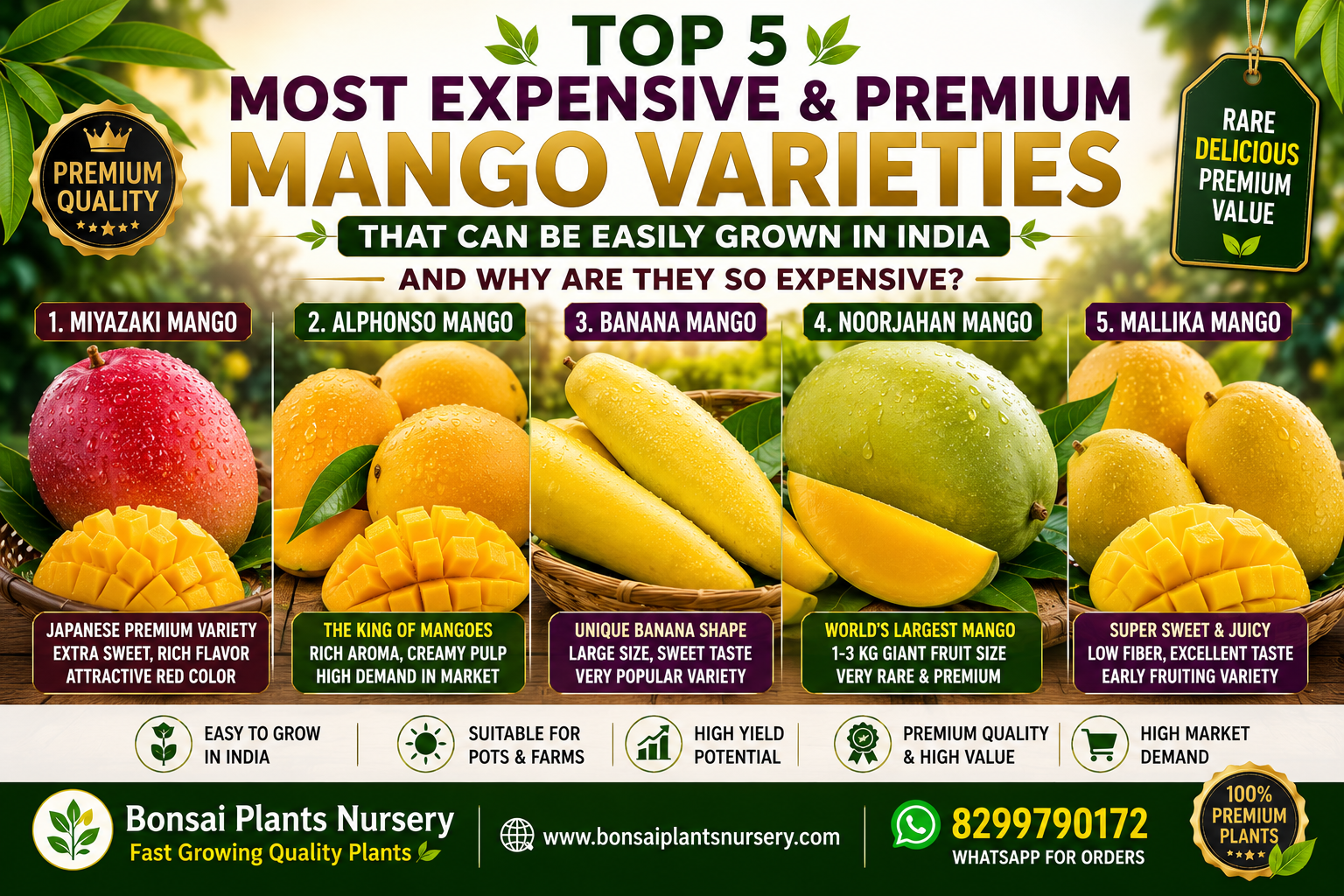
India is known as the land of mangoes and is home to hundreds of mango varieties. However, some mango cultivars stand out because of their exceptional taste, unique appearance, rarity, and high market value.
Today, gardening enthusiasts and fruit growers are increasingly interested in premium mango varieties that not only produce delicious fruits but also add prestige and uniqueness to their gardens.
Some of these mangoes can fetch thousands of rupees per kilogram due to their rarity and superior quality.
top_5_mango
In this article, we will explore the Top 5 most expensive and premium mango varieties that can be grown successfully in India and understand why they are so valuable.
Why Are These Mango Varieties More Expensive Than Ordinary Mangoes?
1. Limited Availability
Premium varieties are produced in smaller quantities.
2. High Demand
Collectors, gardeners, and fruit lovers actively seek these varieties.
3. Superior Taste
Their flavor often surpasses ordinary mango cultivars.
4. Attractive Appearance
Unique color, shape, and presentation increase their market value.
5. Premium Brand Value
Some varieties have developed a strong reputation over time.
Can These Premium Mango Varieties Be Grown in Pots?
Absolutely.
With proper care and large containers such as:
200–500 Liter Drums
Large Grow Bags
24–36 Inch Pots
these varieties can thrive in home gardens and terrace gardens.
Tips for Maximum Fruit Production
To achieve better growth and fruiting:
Provide Adequate Sunlight
At least 6–8 hours of direct sunlight daily.
Apply Organic Fertilizers
Use:
Cow manure
Vermicompost
Neem cake
regularly.
Water Properly
Avoid both waterlogging and drought stress.
Use Potassium During Flowering
Potassium improves fruit development and size.
Prune Regularly
Maintain shape and encourage productive branches.
Use Neem Oil Spray
Helps prevent common pests and diseases.
Frequently Asked Questions (FAQs)
Which mango is considered the most expensive?
Miyazaki Mango.
Can Miyazaki Mango be grown in India?
Yes, it can be successfully grown in many parts of India.
Can Alphonso Mango be grown in pots?
Yes.
Which mango variety is considered the sweetest?
Miyazaki, Alphonso, and Mallika are among the sweetest.
Which mango produces the largest fruits?
Noorjahan Mango.
Can Banana Mango be grown in India?
Yes.
Which mango variety is suitable for terrace gardening?
Miyazaki, Alphonso, Banana Mango, and Mallika Mango.
Which mango variety fruits earlier?
Grafted plants generally fruit earlier than seed-grown trees.
Conclusion
If you want to add something truly special to your garden, Miyazaki Mango, Alphonso Mango, Banana Mango, Noorjahan Mango, and Mallika Mango are outstanding choices.
These varieties are prized not only for their delicious fruits but also for their rarity, beauty, and premium market value.
With proper sunlight, balanced nutrition, regular watering, and good plant care practices, you can successfully grow these premium mango varieties at home and enjoy their exceptional fruits for years.
भारत को आमों का देश कहा जाता है। यहां सैकड़ों किस्मों के आम उगाए जाते हैं, लेकिन कुछ वैरायटी ऐसी हैं जो अपने स्वाद, आकार, रंग, दुर्लभता और बाजार मूल्य के कारण बेहद प्रीमियम मानी जाती हैं।
आजकल बागवानी प्रेमी केवल साधारण आम नहीं बल्कि ऐसी प्रीमियम किस्में लगाना चाहते हैं जो स्वादिष्ट होने के साथ-साथ आकर्षण का केंद्र भी बनें। कुछ किस्मों के फलों की कीमत हजारों रुपये प्रति किलो तक पहुंच जाती है।
top_5_mango
इस लेख में हम उन 5 सबसे महंगी और प्रीमियम आम की किस्मों के बारे में जानेंगे जिन्हें भारत में आसानी से उगाया जा सकता है।
इन आमों की कीमत सामान्य आमों से अधिक क्यों होती है?
1. सीमित उपलब्धता
प्रीमियम किस्में बड़े पैमाने पर उपलब्ध नहीं होतीं।
2. उच्च मांग
बागवानी प्रेमी और संग्रहकर्ता इनकी तलाश में रहते हैं।
3. बेहतर स्वाद
इनका स्वाद सामान्य किस्मों से बेहतर होता है।
4. आकर्षक रूप
रंग, आकार और प्रस्तुति इन्हें विशेष बनाते हैं।
5. प्रीमियम ब्रांड वैल्यू
कुछ किस्में अपनी पहचान के कारण महंगी बिकती हैं।
क्या इन किस्मों को गमले में उगाया जा सकता है?
हाँ।
यदि आप 200–500 लीटर ड्रम, बड़े ग्रो बैग या 24–36 इंच के कंटेनर का उपयोग करें तो ये किस्में सफलतापूर्वक उगाई जा सकती हैं।
अधिक फल प्राप्त करने के उपाय
प्रतिदिन 6–8 घंटे धूप दें
नियमित जैविक खाद डालें
समय पर सिंचाई करें
फूल आने पर पोटाश दें
उचित छंटाई करें
नीम तेल का उपयोग करें
FAQs
कौन सा आम सबसे महंगा है?
मियाजाकी आम।
क्या मियाजाकी आम भारत में उग सकता है?
हाँ।
क्या अल्फांसो आम गमले में उग सकता है?
हाँ।
कौन सा आम सबसे मीठा माना जाता है?
मियाजाकी, अल्फांसो और मल्लिका।
कौन सा आम सबसे बड़ा होता है?
नूरजहां आम।
क्या बनाना मैंगो भारत में उगाया जा सकता है?
हाँ।
कौन सा आम घर की छत पर उगाया जा सकता है?
मियाजाकी, अल्फांसो, मल्लिका और बनाना मैंगो।
कौन सी किस्म जल्दी फल देती है?
ग्राफ्टेड पौधे जल्दी फल देते हैं।
निष्कर्ष
यदि आप अपने बगीचे में कुछ खास और प्रीमियम लगाना चाहते हैं तो मियाजाकी आम, अल्फांसो आम, बनाना मैंगो, नूरजहां आम और मल्लिका आम बेहतरीन विकल्प हैं। ये किस्में केवल स्वाद और उत्पादन के लिए ही नहीं बल्कि अपनी दुर्लभता और आकर्षण के कारण भी विशेष मानी जाती हैं।
सही देखभाल, पर्याप्त धूप और संतुलित पोषण के साथ आप इन प्रीमियम आमों का आनंद अपने घर पर ही ले सकते हैं।
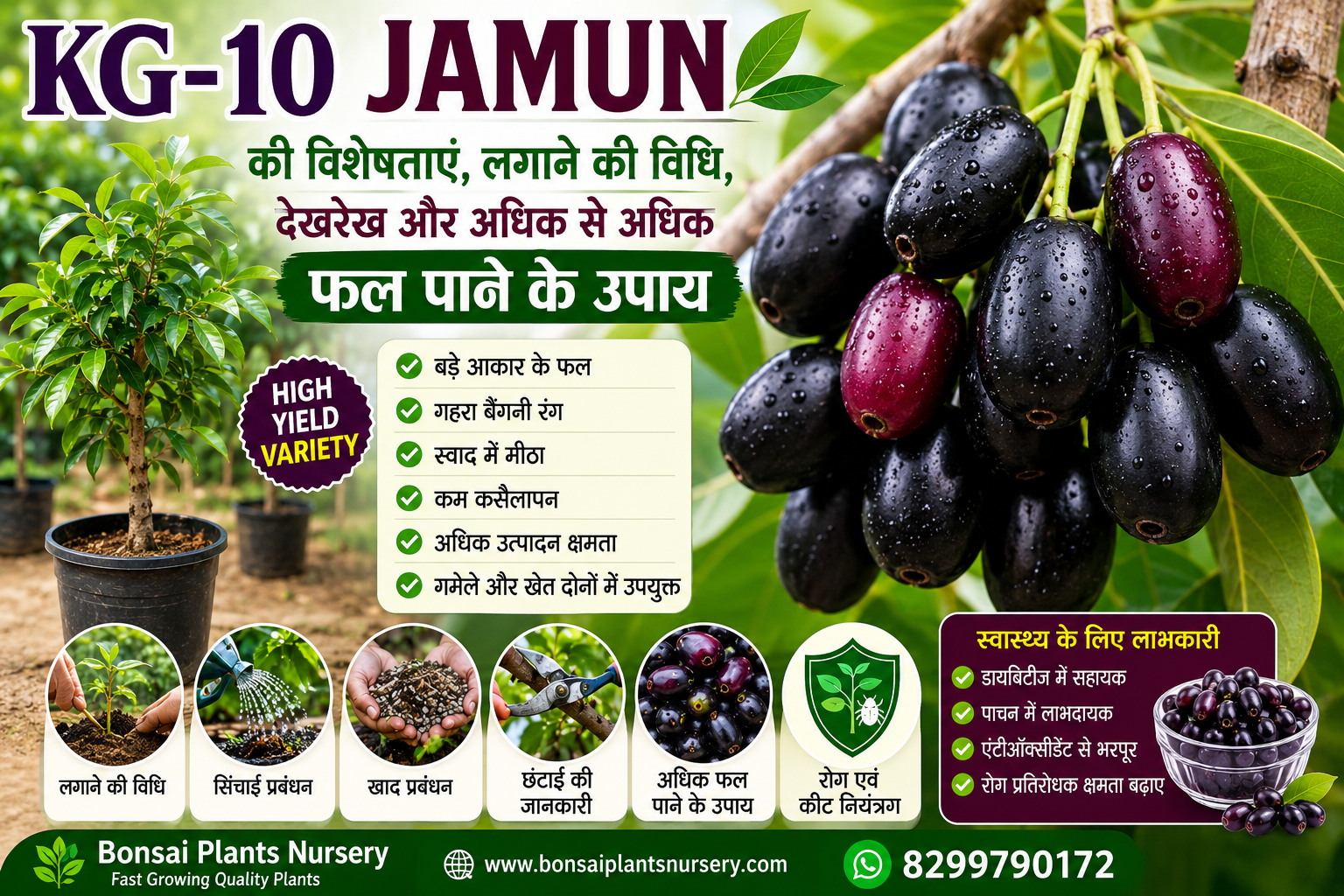
Jamun (Indian Blackberry) is one of the most popular fruit trees in India. Its fruits are not only delicious but are also valued for their nutritional benefits. Jamun has been traditionally appreciated for its role in supporting a healthy lifestyle and is especially popular among health-conscious consumers.
Among the improved jamun varieties available today, KG-10 Jamun has gained significant popularity due to its large fruit size, superior taste, attractive appearance, and excellent yield potential.
Whether you want to grow fruit trees in your home garden, farm, orchard, or terrace garden, KG-10 Jamun is an excellent choice.
What is KG-10 Jamun?
KG-10 Jamun is an improved and selected variety known for producing larger fruits and better yields compared to many traditional jamun varieties.
One of the biggest attractions of KG-10 Jamun is its larger fruit size.
The fruits are noticeably bigger than those of ordinary jamun trees.
2. Excellent Taste
The fruits are sweeter and less astringent, making them highly appealing to consumers.
3. High Yield Potential
With proper care and management, KG-10 Jamun can produce abundant harvests year after year.
4. Strong Market Demand
Because of its attractive fruits and superior taste, KG-10 Jamun is highly suitable for commercial cultivation.
5. Nutritional Benefits
Jamun fruits contain:
Iron
Calcium
Potassium
Vitamin C
Antioxidants
Best Time to Plant KG-10 Jamun
Although jamun trees can be planted throughout much of the year, some seasons are more favorable.
Ideal Planting Season
July to September
The monsoon season is considered the best time for planting.
February to March
Spring planting is also successful in many regions.
How to Select a Healthy Jamun Plant
Choosing a healthy plant is the first step toward success.
Always Choose a Grafted Plant
Grafted plants:
Produce fruits earlier
Maintain true varietal characteristics
Offer better productivity
Signs of a Healthy Plant
Strong stem
Green leaves
Disease-free growth
Healthy root system
How to Grow KG-10 Jamun in Pots
Modern terrace gardening has made it possible to grow fruit trees successfully in containers.
KG-10 Jamun can perform very well in large pots or drums.
Recommended Container Size
24–36 inch container
200–300 liter drum
Best Potting Mix
For healthy growth, use:
40% Garden soil
30% Well-rotted cow manure
20% Vermicompost
10% Sand
This mixture provides excellent drainage and nutrition.
Field Planting Method
Pit Size
Prepare pits measuring:
3 ft × 3 ft × 3 ft
Pit Preparation
Mix the excavated soil with:
Organic manure
Neem cake
Vermicompost
Before planting.
Plant Spacing
Maintain a spacing of:
20–25 feet between plants.
Irrigation Management
Immediately After Planting
Water thoroughly after planting.
During the First Year
Water 2–3 times per week during summer.
Established Trees
Irrigate according to weather and soil moisture conditions.
Sunlight Requirement
KG-10 Jamun requires sufficient sunlight for healthy growth and fruit production.
Ideal Sunlight
6–8 hours of direct sunlight daily.
Fertilizer Management
Balanced nutrition is essential for higher yields.
Monthly Feeding
Apply:
2–5 kg cow manure
1 kg vermicompost
200 grams neem cake
Before Flowering
Apply fertilizers rich in:
Phosphorus
Potassium
to encourage flowering and fruit set.
15 Proven Ways to Increase Fruit Production
1. Use Grafted Plants
Grafted plants begin fruiting earlier and provide better yields.
2. Ensure Full Sunlight
At least 6–8 hours of sunlight daily.
3. Apply Organic Fertilizers Regularly
Use:
Cow manure
Vermicompost
Neem cake
on a regular schedule.
4. Water Properly
Avoid both drought stress and overwatering.
5. Apply Potassium During Flowering
Potassium improves fruit development and size.
6. Use Mulching
Benefits include:
Moisture conservation
Reduced weed growth
Better root protection
7. Maintain Orchard Hygiene
Remove fallen leaves and diseased plant parts regularly.
8. Prune Properly
Pruning improves air circulation and sunlight penetration.
9. Supply Micronutrients
Periodic application of:
Zinc
Boron
Magnesium
helps improve flowering and fruiting.
10. Prevent Diseases Early
Prevention is always better than treatment.
11. Use Neem Oil Spray
Spray neem oil every 15–20 days as a preventive measure.
12. Prevent Flower Drop
Avoid moisture stress during flowering.
13. Reduce Plant Stress
Avoid sudden changes in watering, fertilization, or pruning.
14. Improve Soil Health
Add organic matter regularly.
15. Monitor Plants Frequently
Early detection of pests and diseases prevents major losses.
Pruning KG-10 Jamun Trees
Pruning plays an important role in maintaining plant health and productivity.
Benefits of Pruning
Encourages new growth
Improves fruit production
Maintains tree shape
Enhances air circulation
Best Time for Pruning
Immediately after harvesting.
Common Diseases of KG-10 Jamun
Leaf Spot Disease
Symptoms
Brown or black spots on leaves.
Management
Remove infected leaves
Use organic neem-based sprays
Root Rot
Cause
Poor drainage and excessive watering.
Management
Improve drainage
Reduce irrigation
Yellowing Leaves
Causes
Nutrient deficiency
Excess moisture
Solution
Apply balanced fertilizer and improve drainage.
Common Pests
Aphids
Feed on tender new growth.
Mealybugs
Appear as white cotton-like masses on stems and leaves.
Scale Insects
Often found attached to branches and stems.
Organic Pest Control Methods
Neem Oil Spray
Mix:
5 ml neem oil per liter of water.
Garlic-Ginger Extract
A natural and effective organic pest control solution.
Soap Spray
Useful for mild infestations.
When Does KG-10 Jamun Start Fruiting?
A healthy grafted plant may start producing fruits within:
2–4 Years
depending on climate and growing conditions.
Seed-grown plants generally take much longer.
Yield Potential
A mature and healthy KG-10 Jamun tree can produce substantial quantities of fruit annually.
Actual production depends on:
Tree age
Climate
Soil fertility
Management practices
Harvesting
How to Identify Ripe Fruits
Fruits are ready for harvesting when:
They develop a deep purple color
Reach full size
Taste sweet and flavorful
Health Benefits of Jamun
KG-10 Jamun is valued not only for its taste but also for its nutritional benefits.
Benefits
Rich in antioxidants
Supports digestive health
Provides essential minerals
Helps strengthen immunity
Refreshing summer fruit
Advantages of Growing Jamun in Pots
Suitable for limited spaces
Easy maintenance
Ideal for terrace gardening
Fresh fruits at home
Attractive ornamental value
Frequently Asked Questions (FAQs)
1. What is KG-10 Jamun?
An improved, high-quality jamun variety.
2. Can KG-10 Jamun be grown in pots?
Yes, successfully in large containers.
3. What pot size is recommended?
At least 24–36 inches.
4. When should it be planted?
July–September is ideal.
5. How much sunlight does it need?
6–8 hours daily.
6. Does it fruit early?
Grafted plants fruit relatively early.
7. What is the best fertilizer?
Cow manure and vermicompost.
8. Is neem cake beneficial?
Yes.
9. Is pruning necessary?
Yes.
10. Can it grow in North India?
Yes.
11. Can it grow in South India?
Yes.
12. Can it be grown organically?
Absolutely.
13. When does Jamun ripen?
Generally during summer.
14. Is there market demand for Jamun?
Yes, strong demand exists.
15. Is KG-10 Jamun suitable for commercial farming?
Yes, it is considered an excellent commercial variety.
Conclusion
KG-10 Jamun is an outstanding fruit variety known for its large fruits, superior taste, and high yield potential. Whether grown in a home garden, orchard, terrace garden, or farm, it can provide years of productive harvests when managed properly.
For maximum fruit production, focus on adequate sunlight, balanced nutrition, timely irrigation, regular pruning, and organic pest management. A healthy grafted KG-10 Jamun plant can become one of the most rewarding fruit trees in your collection.
भारत में जामुन एक अत्यंत लोकप्रिय फलदार वृक्ष है। इसके फल स्वादिष्ट होने के साथ-साथ स्वास्थ्य के लिए भी बहुत लाभकारी माने जाते हैं। मधुमेह (डायबिटीज) के रोगियों के लिए जामुन विशेष रूप से उपयोगी माना जाता है।
पिछले कुछ वर्षों में जामुन की उन्नत किस्मों में KG-10 जामुन ने किसानों और बागवानी प्रेमियों के बीच विशेष पहचान बनाई है। यह किस्म अपने बड़े आकार के फलों, अधिक उत्पादन और उत्कृष्ट स्वाद के कारण तेजी से लोकप्रिय हो रही है।
यदि आप अपने घर, बगीचे, फार्महाउस या खेत में एक उच्च गुणवत्ता वाला जामुन का पौधा लगाना चाहते हैं, तो KG-10 जामुन एक बेहतरीन विकल्प है।
KG-10 जामुन क्या है?
KG-10 जामुन एक उन्नत और चयनित किस्म है जिसे बेहतर उत्पादन, बड़े फलों और बेहतर गुणवत्ता के लिए पसंद किया जाता है।
आजकल बहुत से लोग टैरेस गार्डनिंग और कंटेनर गार्डनिंग कर रहे हैं।
KG-10 जामुन को बड़े कंटेनर में सफलतापूर्वक उगाया जा सकता है।
गमले का आकार
कम से कम:
24–36 इंच
200–300 लीटर ड्रम
मिट्टी का मिश्रण
सर्वश्रेष्ठ मिश्रण:
40% गार्डन मिट्टी
30% गोबर खाद
20% वर्मीकम्पोस्ट
10% रेत
खेत में लगाने की विधि
गड्ढे का आकार
3 फीट × 3 फीट × 3 फीट
गड्ढे की तैयारी
भरें:
उपजाऊ मिट्टी
गोबर खाद
नीम खली
पौधे से पौधे की दूरी
20–25 फीट
सिंचाई प्रबंधन
पौधा लगाने के बाद
तुरंत पानी दें।
पहले वर्ष
गर्मियों में सप्ताह में 2–3 बार
स्थापित पौधे
आवश्यकता अनुसार सिंचाई करें।
जामुन के पौधे को कितनी धूप चाहिए?
KG-10 जामुन को अच्छी वृद्धि और फलन के लिए भरपूर धूप चाहिए।
आदर्श धूप
6–8 घंटे प्रतिदिन
खाद प्रबंधन
उत्पादन बढ़ाने के लिए संतुलित खाद आवश्यक है।
हर महीने
2–5 किलो गोबर खाद
1 किलो वर्मीकम्पोस्ट
200 ग्राम नीम खली
फूल आने से पहले
फास्फोरस और पोटाश युक्त खाद उपयोग करें।
KG-10 जामुन से अधिक फल प्राप्त करने के 15 प्रभावी उपाय
यदि आप चाहते हैं कि आपका KG-10 जामुन का पौधा हर वर्ष भरपूर फल दे, तो निम्न बातों का विशेष ध्यान रखें।
1. हमेशा ग्राफ्टेड पौधा लगाएं
ग्राफ्टेड पौधे जल्दी फल देते हैं और उनकी गुणवत्ता भी बेहतर होती है।
2. पर्याप्त धूप दें
जामुन को प्रतिदिन कम से कम 6–8 घंटे सीधी धूप चाहिए।
धूप की कमी से फूल और फल कम आते हैं।
3. जैविक खाद का नियमित उपयोग करें
प्रत्येक महीने:
गोबर खाद
वर्मीकम्पोस्ट
नीम खली
देने से पौधा स्वस्थ रहता है।
4. समय पर सिंचाई करें
अत्यधिक पानी और पानी की कमी दोनों ही नुकसानदायक हैं।
5. फूल आने के समय पोटाश दें
पोटाश फल बनने और उनके आकार को बढ़ाने में मदद करता है।
6. मल्चिंग करें
सूखी पत्तियों या भूसे से मल्चिंग करने पर:
नमी बनी रहती है
खरपतवार कम होते हैं
जड़ों को सुरक्षा मिलती है
7. पौधे के आसपास सफाई रखें
गिरे हुए पत्ते और संक्रमित भाग समय-समय पर हटाते रहें।
8. संतुलित छंटाई करें
अधिक घनी शाखाओं को हटाने से धूप और हवा का प्रवाह बेहतर होता है।
9. सूक्ष्म पोषक तत्व दें
समय-समय पर जिंक, बोरॉन और मैग्नीशियम देने से उत्पादन बढ़ता है।
10. रोगों की रोकथाम करें
रोग लगने के बाद उपचार करने की अपेक्षा रोकथाम बेहतर होती है।
11. नीम तेल का उपयोग करें
15–20 दिन के अंतराल पर नीम तेल का स्प्रे करें।
12. फूल गिरने से बचाएं
फूल आने के समय पानी की कमी न होने दें।
13. पौधे को तनाव से बचाएं
अचानक अत्यधिक पानी, खाद या छंटाई से बचें।
14. अच्छी गुणवत्ता वाली मिट्टी रखें
हर 1–2 वर्ष में मिट्टी में जैविक खाद मिलाएं।
15. नियमित निरीक्षण करें
कीट और रोगों की पहचान शुरुआती अवस्था में करें।
KG-10 जामुन की छंटाई (Pruning)
छंटाई से पौधा स्वस्थ और उत्पादक बना रहता है।
छंटाई के लाभ
नई शाखाएं निकलती हैं
पौधे का आकार नियंत्रित रहता है
अधिक फूल आते हैं
फल उत्पादन बढ़ता है
छंटाई का सही समय
फल तुड़ाई के बाद छंटाई करना सबसे अच्छा माना जाता है।
KG-10 जामुन के प्रमुख रोग
1. पत्ती धब्बा रोग
लक्षण
पत्तियों पर भूरे या काले धब्बे दिखाई देना।
समाधान
संक्रमित पत्तियां हटाएं
नीम आधारित जैविक स्प्रे करें
2. जड़ सड़न
कारण
जलभराव
समाधान
अच्छी जल निकासी
सिंचाई नियंत्रित करें
3. पत्तियां पीली पड़ना
कारण
पोषण की कमी
अधिक पानी
समाधान
संतुलित खाद दें
जल निकासी सुधारें
प्रमुख कीट
एफिड्स
नई पत्तियों का रस चूसते हैं।
मिलीबग
सफेद रूई जैसे दिखाई देते हैं।
स्केल कीट
शाखाओं और तनों पर दिखाई देते हैं।
जैविक कीट नियंत्रण
नीम तेल स्प्रे
5 मिली नीम तेल प्रति लीटर पानी।
लहसुन-अदरक घोल
प्राकृतिक कीटनाशक के रूप में उपयोगी।
साबुन घोल
हल्के संक्रमण में प्रभावी।
KG-10 जामुन कब फल देना शुरू करता है?
यदि पौधा ग्राफ्टेड है तो सामान्यतः:
2–4 वर्ष
में फल देना शुरू कर सकता है।
बीज से उगाए गए पौधों को फल आने में अधिक समय लग सकता है।
उत्पादन क्षमता
सही देखभाल मिलने पर परिपक्व वृक्ष से अच्छी मात्रा में फल प्राप्त किए जा सकते हैं।
उत्पादन जलवायु, आयु, मिट्टी और देखभाल पर निर्भर करता है।
फल तुड़ाई (Harvesting)
पहचान
जब फल:
गहरे बैंगनी रंग के हो जाएं
पूर्ण आकार प्राप्त कर लें
स्वाद में मीठे हो जाएं
तब तुड़ाई की जा सकती है।
जामुन के स्वास्थ्य लाभ
KG-10 जामुन केवल स्वादिष्ट ही नहीं बल्कि स्वास्थ्यवर्धक भी है।
लाभ
पाचन में सहायक
एंटीऑक्सीडेंट से भरपूर
रोग प्रतिरोधक क्षमता बढ़ाने में सहायक
शरीर को ठंडक प्रदान करता है
पोषक तत्वों से भरपूर
गमले में जामुन उगाने के फायदे
कम जगह में खेती
आसान देखभाल
टैरेस गार्डनिंग के लिए उपयुक्त
घर पर ताजे फल
अक्सर पूछे जाने वाले प्रश्न (FAQs)
1. KG-10 जामुन क्या है?
जामुन की एक उन्नत और उच्च गुणवत्ता वाली किस्म।
2. क्या KG-10 जामुन गमले में उग सकता है?
हाँ, बड़े कंटेनर में सफलतापूर्वक उगाया जा सकता है।
3. कितना बड़ा गमला चाहिए?
कम से कम 24–36 इंच।
4. पौधा कब लगाना चाहिए?
जुलाई–सितंबर सबसे अच्छा समय है।
5. कितनी धूप चाहिए?
6–8 घंटे प्रतिदिन।
6. क्या यह जल्दी फल देता है?
ग्राफ्टेड पौधे अपेक्षाकृत जल्दी फल देते हैं।
7. कौन सी खाद सबसे अच्छी है?
गोबर खाद और वर्मीकम्पोस्ट।
8. क्या नीम खली उपयोगी है?
हाँ।
9. क्या जामुन की छंटाई जरूरी है?
हाँ।
10. क्या यह उत्तर भारत में उग सकता है?
हाँ।
11. क्या यह दक्षिण भारत में भी उग सकता है?
हाँ।
12. क्या इसे जैविक तरीके से उगाया जा सकता है?
बिल्कुल।
13. जामुन कब पकता है?
आमतौर पर गर्मियों में।
14. क्या यह मधुमेह रोगियों के लिए उपयोगी माना जाता है?
जामुन पारंपरिक रूप से इस संदर्भ में लोकप्रिय है।
15. क्या जामुन की बाजार में मांग है?
हाँ, अच्छी मांग रहती है।
निष्कर्ष
KG-10 जामुन एक उत्कृष्ट फलदार पौधा है जो बड़े आकार के फल, बेहतर स्वाद और अधिक उत्पादन के कारण तेजी से लोकप्रिय हो रहा है। चाहे आप इसे अपने घर, बगीचे, फार्महाउस या खेत में लगाएं, सही देखभाल के साथ यह कई वर्षों तक स्वादिष्ट और पौष्टिक फल प्रदान कर सकता है।
यदि आप अधिक उत्पादन चाहते हैं, तो पर्याप्त धूप, संतुलित खाद, समय पर सिंचाई, नियमित छंटाई और जैविक कीट नियंत्रण पर विशेष ध्यान दें। एक स्वस्थ ग्राफ्टेड KG-10 जामुन का पौधा आपके बगीचे की शोभा बढ़ाने के साथ-साथ फल उत्पादन का भी बेहतरीन स्रोत बन सकता है।
Bonsai is an ancient Japanese art form that involves growing and training trees in containers to create miniature versions of mature trees found in nature.
A bonsai is not a genetically dwarf plant. Instead, it is a regular tree that is carefully pruned, wired, and maintained to stay small while retaining the appearance of a full-sized tree.
The word Bonsai comes from:
Bon = Tray or Pot
Sai = Plant or Tree
Together, Bonsai means “a tree grown in a container.”
Today, bonsai gardening has become extremely popular in India among plant enthusiasts, home gardeners, and collectors.
Why Are Bonsai Plants Becoming Popular in India?
1. Perfect for Small Spaces
Bonsai plants can be grown in apartments, balconies, terraces, and small gardens.
2. Enhance Home Décor
Their artistic appearance adds elegance and sophistication to any space.
3. Stress Relief
Many people find caring for bonsai trees relaxing and therapeutic.
4. Premium Gift Option
Bonsai plants are increasingly being gifted on birthdays, anniversaries, and corporate occasions.
5. Valuable Living Art
Well-trained bonsai trees often appreciate in value over time.
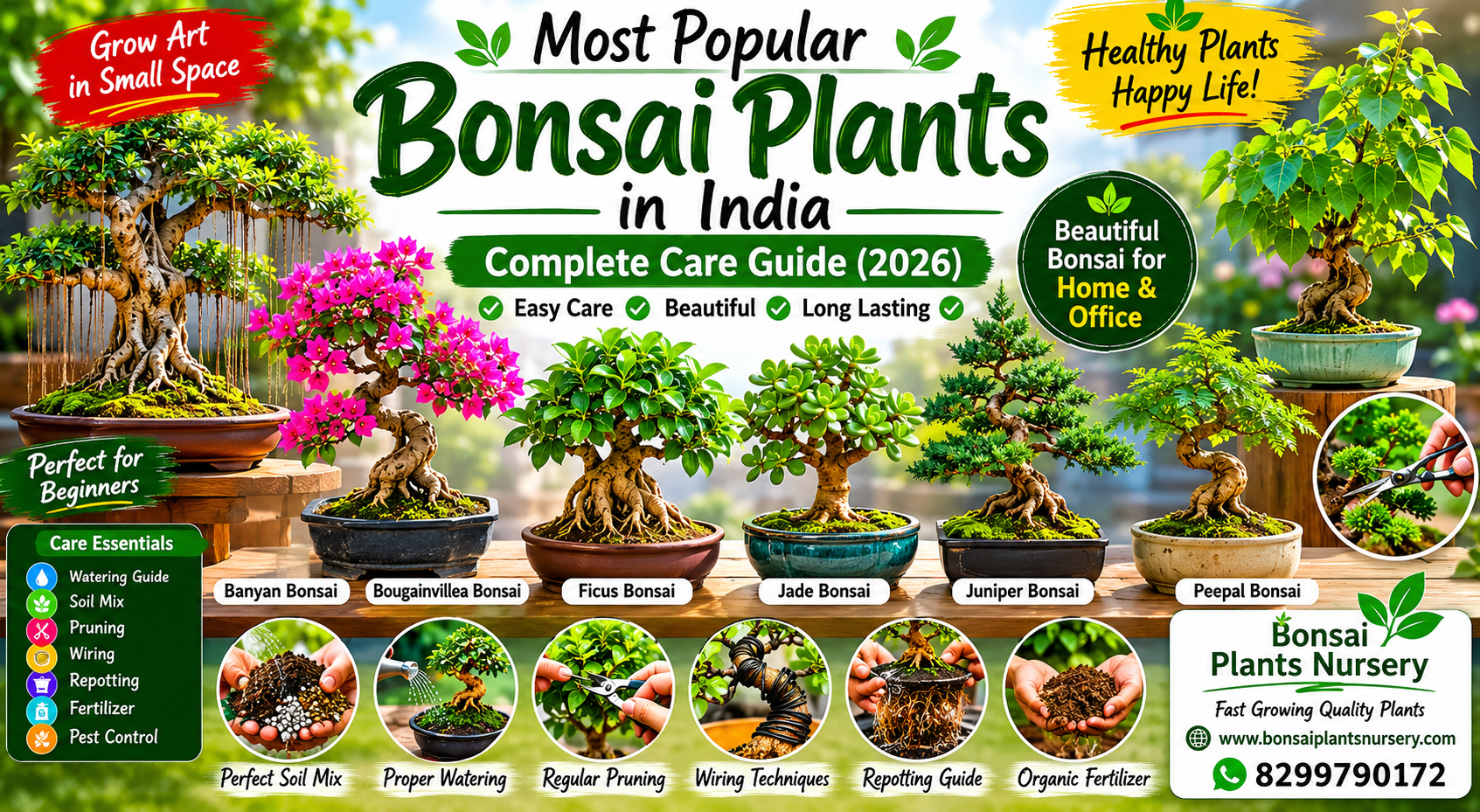
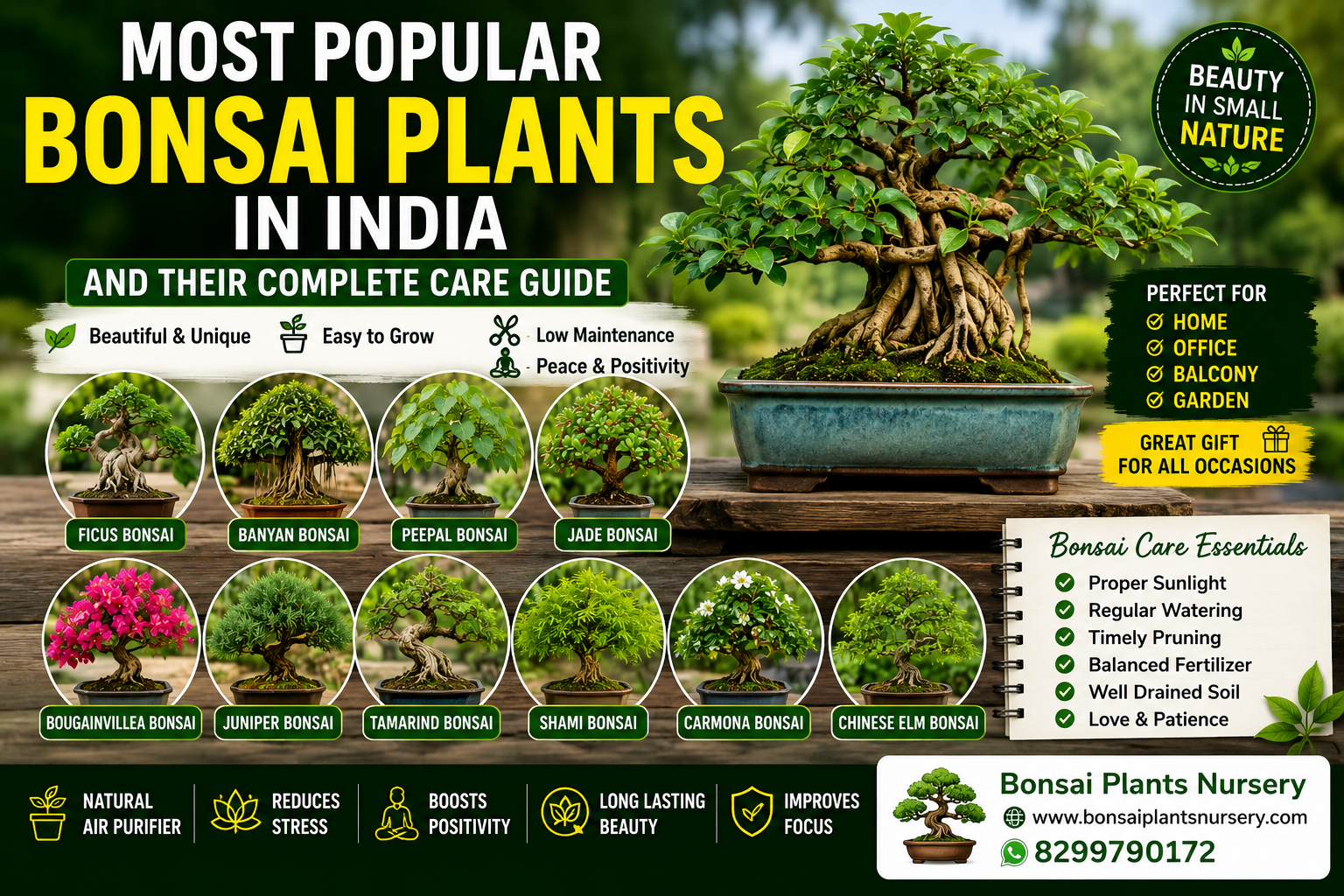
Most Popular Bonsai Plants in India
Most_Popular_Bonsai_Plants
1. Ficus Bonsai
Ficus Bonsai is considered the most popular bonsai species in India.
Why It Is Popular
Fast growing
Easy to maintain
Tolerates Indian climate well
Develops attractive aerial roots
Care Requirements
Sunlight
4–6 hours of sunlight daily
Watering
Water when the soil begins to dry
Fertilizer
Apply organic fertilizer once every month
Special Advantage
Ficus adapts extremely well to Indian weather conditions and is ideal for beginners.
2. Banyan Bonsai
The Banyan tree is India’s national tree and one of the most admired bonsai species.
Features
Beautiful aerial roots
Ancient tree appearance
Extremely long lifespan
Care Requirements
Full sunlight
Regular pruning
Organic fertilizers
Why Gardeners Love It
Banyan Bonsai reflects Indian heritage and creates a majestic appearance.
3. Peepal Bonsai
Peepal Bonsai is highly valued because of its cultural and spiritual significance.
Benefits
Fast growth
Attractive foliage
Easy to train
Care
Adequate sunlight
Regular watering
Periodic pruning
Popularity
Peepal Bonsai is one of the most sought-after native bonsai species in India.
4. Jade Bonsai
Jade Bonsai is a succulent plant known for its thick trunk and fleshy leaves.
Features
Thick stem
Compact growth
Requires less water
Easy maintenance
Ideal for Beginners
Jade Bonsai is one of the easiest bonsai plants to grow.
Watering
Avoid overwatering.
Allow the soil to dry slightly between waterings.
5. Bougainvillea Bonsai
Bougainvillea Bonsai is famous for its colorful flowers and dramatic appearance.
Features
Vibrant flowers
Available in many colors
Strong and hardy plant
Care Requirements
Sunlight
Full sunlight is essential.
Watering
Moderate watering
Pruning
Regular pruning encourages flowering and shape development.
Why It Is Popular
It combines beautiful blooms with classic bonsai aesthetics.
Best Soil Mix for Bonsai Plants
A proper bonsai soil mix is crucial for healthy root development.
Recommended Soil Mix
40% Garden Soil
30% River Sand
20% Vermicompost
10% Cocopeat
This mixture provides:
Excellent drainage
Healthy root growth
Good moisture retention
Adequate nutrition
How Often Should You Water a Bonsai?
One of the most common questions among bonsai beginners.
During Summer
Water daily or whenever required.
During Winter
Water every 2–3 days depending on soil moisture.
Important Tip
Overwatering is the biggest cause of bonsai problems.
Always check soil moisture before watering.
Fertilizer Management for Bonsai
Apply the following every month:
Vermicompost
Well-rotted cow manure
Neem cake
During Active Growth
Liquid organic fertilizers can promote vigorous growth.
Importance of Pruning
Pruning is one of the most important aspects of bonsai cultivation.
Benefits
Maintains tree shape
Encourages branching
Improves aesthetics
Controls growth
Creates dense foliage
6. Juniper Bonsai
Juniper is one of the most iconic bonsai species in the world and is frequently featured in international bonsai exhibitions.
Features
Evergreen foliage
Needle-like leaves
Naturally elegant shape
Long lifespan
Care Requirements
Sunlight
5–6 hours of direct sunlight daily
Watering
Water when the soil becomes slightly dry
Fertilizer
Organic fertilizer every 30–45 days
Special Advantage
Juniper responds exceptionally well to wiring and artistic shaping.
7. Tamarind Bonsai
Tamarind Bonsai is becoming increasingly popular among Indian bonsai enthusiasts.
Features
Small leaves
Thick trunk development
Ancient tree appearance
Care Requirements
Sunlight
Full sunlight
Watering
Regular but moderate
Pruning
Frequent pruning encourages dense branching.
Why It Is Popular
Its natural appearance closely resembles a mature tree in miniature form.
8. Shami Bonsai
Shami Bonsai holds special cultural and religious significance in India.
Features
Drought tolerant
Low maintenance
Attractive structure
Care Requirements
Sunlight
Full sunlight
Watering
Minimal watering
Fertilizer
Moderate feeding
Special Advantage
Perfect for busy people who want a low-maintenance bonsai.
9. Carmona Bonsai (Fukien Tea Bonsai)
Carmona Bonsai is known for its glossy leaves and delicate flowers.
Features
Small shiny leaves
White flowers
Decorative appearance
Care Requirements
Light
Bright light
Watering
Keep soil slightly moist
Fertilizer
Monthly feeding
Advantage
Suitable for both indoor and outdoor environments.
10. Chinese Elm Bonsai
Chinese Elm is considered one of the most beautiful bonsai species worldwide.
Features
Fine branching structure
Dense foliage
Attractive bark
Care Requirements
Sunlight
Bright sunlight
Watering
Regular watering
Pruning
Frequent pruning maintains shape.
What is Bonsai Wiring?
Wiring is one of the most important bonsai training techniques.
By wrapping branches with wire, growers can guide their growth and create artistic designs.
Benefits of Wiring
Controls branch direction
Creates natural tree forms
Improves aesthetics
Enhances artistic expression
Best Time for Wiring
During active growing seasons when branches are flexible.
Bonsai Repotting Guide
Repotting is essential for maintaining healthy roots and long-term growth.
Why Repot Bonsai?
Refreshes soil
Improves root health
Prevents root congestion
Promotes vigorous growth
Repotting Frequency
Young Bonsai
Every 1–2 years
Mature Bonsai
Every 3–5 years
Root Pruning in Bonsai
Root pruning is a key technique used to maintain the miniature size of bonsai trees.
Benefits
Controls growth
Encourages fine roots
Improves balance between roots and foliage
Common Bonsai Diseases
1. Root Rot
Causes
Overwatering and poor drainage.
Solution
Improve drainage
Remove damaged roots
2. Yellow Leaves
Causes
Nutrient deficiency
Excess watering
Solution
Apply balanced fertilizer
Adjust watering practices
3. Leaf Drop
Causes
Sudden temperature changes
Insufficient light
Solution
Move the bonsai to a more suitable location.
Common Bonsai Pests
Aphids
Small insects that attack tender new growth.
Mealybugs
White cotton-like pests commonly found on stems and leaves.
Spider Mites
Tiny pests that weaken foliage.
Organic Pest Control
Neem Oil Spray
One of the safest and most effective organic pest control methods.
Usage
Mix 5 ml neem oil per liter of water.
Soap Solution
Useful for mild pest infestations.
Garlic Spray
A natural homemade insect repellent.
Ideal Placement for Bonsai Plants
Outdoor Bonsai
Ficus Bonsai
Banyan Bonsai
Peepal Bonsai
Bougainvillea Bonsai
Shami Bonsai
Indoor-Friendly Bonsai
Jade Bonsai
Carmona Bonsai
Some Ficus varieties
Best Bonsai Plants for Beginners
If you are starting your bonsai journey, choose:
1. Ficus Bonsai
Most beginner-friendly species.
2. Jade Bonsai
Very low maintenance.
3. Bougainvillea Bonsai
Beautiful flowering bonsai.
4. Shami Bonsai
Requires little water.
5. Peepal Bonsai
Fast-growing and easy to shape.
What to Look for When Buying a Bonsai?
Trunk
Should be thick and healthy.
Roots
Well-balanced and strong.
Leaves
Green and disease-free.
Branch Structure
Balanced and aesthetically pleasing.
Pot
Good-quality bonsai container with proper drainage.
The Growing Trend of Bonsai Gifting
Bonsai plants are increasingly popular gifts for:
Birthdays
Anniversaries
Housewarming ceremonies
Corporate events
Festivals
A bonsai is a living gift that can be enjoyed for many years.
The Most Expensive and Premium Bonsai Plants in India
Bonsai is not just a plant—it is a living work of art. As a bonsai tree ages and receives years of training and care, its value increases significantly.
Most_Popular_Bonsai_Plants
Some premium bonsai specimens in India can be worth thousands or even lakhs of rupees.
1. Banyan Bonsai
One of the most admired bonsai trees in India.
Price Range: ₹10,000 to ₹2,00,000+ depending on age and training.
2. Juniper Bonsai
A classic bonsai species used in international bonsai exhibitions.
3. Ficus Microcarpa Bonsai
Known for its dramatic aerial roots and impressive trunk structure.
4. Bougainvillea Bonsai
Highly valued for its colorful flowers and artistic appearance.
5. Peepal Bonsai
Popular due to its cultural and spiritual significance in India.
How to Earn Money from Bonsai Plants
Today, bonsai gardening has evolved beyond a hobby into a profitable business opportunity.
1. Selling Bonsai Plants
Young bonsai plants can sell for ₹500–₹5,000 or more.
Well-trained mature bonsai trees can command significantly higher prices.
2. Online Sales
You can sell bonsai plants through:
Personal website
Facebook Page
Instagram
WhatsApp Business
YouTube Channel
3. Bonsai Workshops
Many people are willing to pay to learn bonsai techniques and care.
4. Corporate Gifting
Bonsai plants are increasingly popular as premium corporate gifts.
If you plan to establish a bonsai nursery, follow these steps:
Step 1: Select the Right Species
Start with beginner-friendly and fast-growing varieties:
Ficus Bonsai
Jade Bonsai
Banyan Bonsai
Peepal Bonsai
Bougainvillea Bonsai
Step 2: Learn Bonsai Techniques
Master essential skills such as:
Pruning
Wiring
Repotting
Root Pruning
Step 3: Build Your Social Media Presence
Create:
Facebook Page
Instagram Account
YouTube Channel
WhatsApp Business Profile
Step 4: Create a Website
Your website should include:
Product catalog
Blog section
Customer reviews
Contact details
Online ordering options
How Long Do Bonsai Trees Live?
One of the most frequently asked questions among beginners.
With proper care:
Ficus Bonsai
50–100 years or more
Banyan Bonsai
Can survive well beyond 100 years
Juniper Bonsai
Several decades
Peepal Bonsai
Long lifespan with proper maintenance
Many bonsai trees are passed down from one generation to another.
Common Bonsai Care Mistakes
1. Overwatering
The most common reason bonsai trees fail.
2. Insufficient Sunlight
Most bonsai species require adequate sunlight for healthy growth.
3. Ignoring Pruning
Regular pruning is essential to maintain shape and structure.
4. Poor Soil Selection
Improper drainage can damage roots and stunt growth.
5. Excessive Fertilizer Use
Overfertilization can burn roots and weaken the plant.
Essential Bonsai Tools
1. Bonsai Pruning Scissors
Used for trimming branches and leaves.
2. Wire Cutters
For safely removing training wires.
3. Aluminum Bonsai Wire
Used to shape branches and trunks.
4. Root Hook
Helpful during repotting.
5. Spray Bottle
Used for misting and maintaining humidity.
Most Beautiful Bonsai Trees for Home Decoration
If aesthetics are your primary goal, consider:
Ficus Bonsai
Jade Bonsai
Bougainvillea Bonsai
Juniper Bonsai
Carmona Bonsai
These species are admired for their beauty and artistic appeal.
Best Bonsai Plants for Offices
The following bonsai species are relatively easy to maintain indoors:
Jade Bonsai
Ficus Bonsai
Carmona Bonsai
Bonsai and Vastu Beliefs
Many people associate certain bonsai trees with positive symbolism.
Popular beliefs include:
Jade Bonsai symbolizes prosperity
Peepal Bonsai represents spirituality
Banyan Bonsai symbolizes stability and longevity
Shami Bonsai is considered auspicious
These are cultural beliefs rather than scientifically proven effects.
Additional FAQs (26–50)
26. Are bonsai plants expensive?
Prices vary based on age, species, and training.
27. Which is the most popular bonsai plant in India?
Ficus Bonsai.
28. Can Banyan Bonsai be grown at home?
Yes.
29. Should bonsai be watered daily?
It depends on weather, soil, and species.
30. Do bonsai trees flower?
Some species do.
31. Can bonsai trees bear fruits?
Yes, certain species can produce fruits.
32. Is Jade Bonsai considered lucky?
Many people believe so.
33. Do bonsai plants need sunlight?
Yes.
34. Can bonsai be kept in an air-conditioned room?
Some species can, provided they receive enough light.
35. How long can bonsai trees live?
Several decades or even centuries.
36. Is bonsai difficult to learn?
No, with practice and patience.
37. Can children care for bonsai plants?
Yes.
38. Can bonsai become a business?
Absolutely.
39. Can bonsai be sold online?
Yes.
40. Is bonsai a profitable business?
It can be highly profitable with proper management.
41. Which bonsai grows the fastest?
Ficus and Peepal Bonsai.
42. Does Bougainvillea Bonsai flower?
Yes.
43. Does Jade Bonsai require little water?
Yes.
44. Can bonsai stay outside during rain?
Yes, but prolonged waterlogging should be avoided.
45. Is repotting necessary?
Yes.
46. When should wiring be done?
During the active growing season.
47. Is bonsai a good gift?
Yes, it is considered a premium and memorable gift.
48. Can bonsai help reduce stress?
Many people find bonsai care relaxing and therapeutic.
49. Do bonsai plants improve interior décor?
Definitely.
50. Where can I buy bonsai plants?
From a trusted bonsai nursery.
Conclusion
Bonsai is much more than a plant—it is a beautiful combination of patience, creativity, and nature. Whether you want to decorate your home, office, balcony, or garden, bonsai plants offer a unique and elegant solution.
Among the most popular bonsai species in India are:
Ficus Bonsai
Banyan Bonsai
Peepal Bonsai
Jade Bonsai
Bougainvillea Bonsai
Juniper Bonsai
Carmona Bonsai
Shami Bonsai
With proper soil, regular pruning, balanced fertilization, and adequate sunlight, your bonsai can remain healthy and beautiful for many years.
जानिए भारत में सबसे लोकप्रिय बोन्साई पौधों के बारे में। फाइकस बोन्साई, जेड बोन्साई, बोगनवेलिया बोन्साई, जुनिपर बोन्साई, बरगद बोन्साई और अन्य लोकप्रिय बोन्साई पौधों की सम्पूर्ण देखभाल, पानी, खाद, छंटाई और वायरिंग की जानकारी।
बोन्साई पौधे
भारत के लोकप्रिय बोन्साई पौधे
बोन्साई की देखभाल
फाइकस बोन्साई
बरगद बोन्साई
जेड बोन्साई
बोन्साई पौधे खरीदें
Bonsai Plants Nursery
बोन्साई क्या है?
बोन्साई एक जापानी कला है जिसमें बड़े पेड़ों को विशेष तकनीकों की सहायता से छोटे आकार में विकसित किया जाता है। बोन्साई केवल एक पौधा नहीं बल्कि प्रकृति और कला का अद्भुत संगम है।
आज भारत में बोन्साई पौधों की लोकप्रियता तेजी से बढ़ रही है। लोग अपने घर, ऑफिस, बालकनी, टैरेस और गार्डन को सजाने के लिए बोन्साई पौधों का उपयोग कर रहे हैं।
बोन्साई का अर्थ है:
Bon = उथला पात्र (Pot)
Sai = पौधा या वृक्ष
अर्थात् गमले में उगाया गया छोटा वृक्ष।
भारत में बोन्साई पौधे इतने लोकप्रिय क्यों हो रहे हैं?
1. कम जगह में सुंदरता
बोन्साई पौधे छोटे स्थान में भी लगाए जा सकते हैं।
2. घर की सुंदरता बढ़ाते हैं
इनकी कलात्मक आकृति किसी भी स्थान को आकर्षक बना देती है।
3. मानसिक शांति
बोन्साई की देखभाल ध्यान और मानसिक संतुलन में मदद करती है।
4. शानदार गिफ्ट
बोन्साई पौधे आजकल प्रीमियम गिफ्ट के रूप में काफी लोकप्रिय हैं।
5. अच्छी निवेश क्षमता
पुराने और अच्छी तरह प्रशिक्षित बोन्साई पौधों की कीमत हजारों से लाखों रुपये तक हो सकती है।
भारत में सबसे लोकप्रिय बोन्साई पौधे
Most_Popular_Bonsai_Plants
1. फाइकस बोन्साई (Ficus Bonsai)
फाइकस बोन्साई भारत का सबसे लोकप्रिय बोन्साई पौधा माना जाता है।
इसकी लोकप्रियता के कारण
जल्दी बढ़ता है
शुरुआती लोगों के लिए आसान
गर्म मौसम सहन करता है
सुंदर जड़ें विकसित करता है
देखभाल
धूप
4–6 घंटे धूप
पानी
मिट्टी सूखने पर पानी दें
खाद
महीने में एक बार जैविक खाद
विशेष लाभ
भारत की जलवायु में अत्यंत सफल।
2. बरगद बोन्साई (Banyan Bonsai)
बरगद भारत का राष्ट्रीय वृक्ष है और बोन्साई के रूप में अत्यंत लोकप्रिय है।
विशेषताएँ
हवाई जड़ें
प्राचीन वृक्ष जैसा रूप
लंबे समय तक जीवित
देखभाल
भरपूर धूप
नियमित छंटाई
जैविक खाद
क्यों लोकप्रिय?
बरगद बोन्साई भारतीय संस्कृति से जुड़ा हुआ है।
3. पीपल बोन्साई
पीपल का पौधा धार्मिक और आध्यात्मिक महत्व रखता है।
लाभ
तेजी से विकास
आकर्षक पत्तियां
आसान प्रशिक्षण
देखभाल
पर्याप्त धूप
नियमित पानी
समय-समय पर छंटाई
4. जेड बोन्साई (Jade Bonsai)
जेड एक सक्युलेंट पौधा है और कम देखभाल चाहता है।
विशेषताएँ
मोटा तना
छोटे पत्ते
कम पानी की आवश्यकता
शुरुआती लोगों के लिए आदर्श
जो लोग पहली बार बोन्साई उगा रहे हैं उनके लिए जेड सबसे अच्छा विकल्प है।
पानी
अधिक पानी से बचें।
5. बोगनवेलिया बोन्साई
बोगनवेलिया अपने रंगीन फूलों के कारण अत्यंत लोकप्रिय है।
विशेषताएँ
शानदार फूल
विभिन्न रंग
मजबूत पौधा
देखभाल
भरपूर धूप
कम पानी
नियमित छंटाई
लाभ
फूलों वाला आकर्षक बोन्साई।
बोन्साई के लिए सही मिट्टी मिश्रण
एक सफल बोन्साई का आधार उसकी मिट्टी होती है।
आदर्श मिश्रण
40% गार्डन मिट्टी
30% रेत
20% वर्मीकम्पोस्ट
10% कोकोपीट
यह मिश्रण जल निकासी और जड़ों के विकास के लिए उपयुक्त माना जाता है।
बोन्साई को पानी कब दें?
यह बोन्साई प्रेमियों का सबसे सामान्य प्रश्न है।
गर्मियों में
प्रतिदिन या आवश्यकता अनुसार
सर्दियों में
2–3 दिन के अंतराल पर
ध्यान रखें
जलभराव बोन्साई का सबसे बड़ा दुश्मन है।
बोन्साई में खाद प्रबंधन
हर 30 दिन पर:
वर्मीकम्पोस्ट
गोबर खाद
नीम खली
वृद्धि के मौसम में
तरल जैविक खाद उपयोगी रहती है।
बोन्साई में छंटाई का महत्व
छंटाई बोन्साई कला का सबसे महत्वपूर्ण भाग है।
लाभ
आकार नियंत्रित रहता है
नई शाखाएं निकलती हैं
पौधा आकर्षक बनता है
घनत्व बढ़ता है
6. जुनिपर बोन्साई (Juniper Bonsai)
दुनिया भर में यदि किसी बोन्साई पौधे को सबसे अधिक पारंपरिक बोन्साई माना जाता है तो वह जुनिपर है। अधिकांश अंतरराष्ट्रीय बोन्साई प्रदर्शनियों में जुनिपर बोन्साई देखने को मिलते हैं।
विशेषताएँ
सदाबहार पौधा
सुंदर सुई जैसी पत्तियां
प्राकृतिक रूप से आकर्षक आकृति
लंबे समय तक जीवित रहने वाला पौधा
देखभाल
धूप
प्रतिदिन 5–6 घंटे सीधी धूप
पानी
मिट्टी सूखने पर पानी दें
खाद
हर 30–45 दिन पर जैविक खाद
विशेष लाभ
जुनिपर को वायरिंग द्वारा विभिन्न कलात्मक आकार दिए जा सकते हैं।
7. इमली बोन्साई (Tamarind Bonsai)
इमली का बोन्साई भारत में तेजी से लोकप्रिय हो रहा है।
विशेषताएँ
छोटे पत्ते
मोटा तना विकसित करने की क्षमता
पुराना वृक्ष जैसा स्वरूप
देखभाल
धूप
पूर्ण धूप
पानी
नियमित लेकिन सीमित
छंटाई
बार-बार छंटाई से घना स्वरूप विकसित होता है।
क्यों लोकप्रिय?
इमली का प्राकृतिक लुक बोन्साई प्रेमियों को अत्यधिक आकर्षित करता है।
8. शमी बोन्साई (Shami Bonsai)
शमी का पौधा भारतीय संस्कृति और धार्मिक मान्यताओं में विशेष महत्व रखता है।
विशेषताएँ
सूखा सहनशील
कम पानी की आवश्यकता
सुंदर संरचना
देखभाल
धूप
पूर्ण धूप
पानी
बहुत कम
खाद
सीमित मात्रा में
विशेष लाभ
व्यस्त लोगों के लिए आदर्श बोन्साई।
9. कारमोना बोन्साई (Carmona Bonsai)
कारमोना को फुकियन टी बोन्साई भी कहा जाता है।
विशेषताएँ
छोटे चमकदार पत्ते
सफेद फूल
सजावटी रूप
देखभाल
प्रकाश
उज्ज्वल प्रकाश
पानी
मिट्टी को हल्का नम रखें
खाद
मासिक खाद
विशेष लाभ
इंडोर और आउटडोर दोनों जगह रखा जा सकता है।
10. चाइनीज एल्म बोन्साई (Chinese Elm Bonsai)
चाइनीज एल्म दुनिया के सबसे सुंदर बोन्साई वृक्षों में गिना जाता है।
विशेषताएँ
सुंदर शाखाएं
घना विकास
आकर्षक छाल
देखभाल
धूप
अच्छी धूप
पानी
नियमित
छंटाई
नियमित रूप से करें
बोन्साई वायरिंग क्या है?
वायरिंग बोन्साई कला की सबसे महत्वपूर्ण तकनीकों में से एक है।
इस प्रक्रिया में शाखाओं को तार की सहायता से इच्छित दिशा में मोड़ा जाता है।
वायरिंग के लाभ
आकर्षक डिजाइन
प्राकृतिक वृक्ष जैसा स्वरूप
शाखाओं का नियंत्रण
वायरिंग कब करें?
सक्रिय वृद्धि के मौसम में
स्वस्थ पौधों पर
बोन्साई रिपॉटिंग (Repotting) गाइड
बोन्साई पौधों को समय-समय पर नए गमले या नई मिट्टी की आवश्यकता होती है।
रिपॉटिंग क्यों आवश्यक है?
जड़ों को नई जगह मिलती है
मिट्टी की गुणवत्ता सुधरती है
पौधे का स्वास्थ्य बेहतर होता है
रिपॉटिंग कब करें?
युवा पौधे
हर 1–2 वर्ष में
पुराने पौधे
हर 3–5 वर्ष में
बोन्साई में जड़ छंटाई (Root Pruning)
जड़ छंटाई बोन्साई को छोटे आकार में बनाए रखने की महत्वपूर्ण तकनीक है।
लाभ
नियंत्रित वृद्धि
बेहतर जड़ विकास
संतुलित संरचना
बोन्साई में सामान्य रोग
1. जड़ सड़न (Root Rot)
कारण
अधिक पानी
समाधान
जल निकासी सुधारें
प्रभावित जड़ें हटाएं
2. पत्तियां पीली होना
कारण
पोषण की कमी
अधिक पानी
समाधान
संतुलित खाद
पानी नियंत्रित करें
3. पत्ती झड़ना
कारण
तापमान परिवर्तन
कम प्रकाश
समाधान
उचित स्थान चुनें
बोन्साई में सामान्य कीट
एफिड्स (Aphids)
छोटे कीट जो नई पत्तियों को नुकसान पहुंचाते हैं।
मिलीबग (Mealy Bug)
सफेद रूई जैसे कीट।
स्पाइडर माइट
सूक्ष्म कीट जो पत्तियों को कमजोर करते हैं।
जैविक कीट नियंत्रण
नीम तेल स्प्रे
सबसे लोकप्रिय जैविक उपाय।
उपयोग
5 मिली नीम तेल प्रति लीटर पानी
साबुन घोल
हल्के संक्रमण में उपयोगी।
लहसुन स्प्रे
प्राकृतिक कीटनाशक।
बोन्साई के लिए आदर्श स्थान
आउटडोर बोन्साई
फाइकस
बरगद
पीपल
बोगनवेलिया
शमी
इंडोर बोन्साई
जेड
कारमोना
कुछ फाइकस किस्में
शुरुआती लोगों के लिए सर्वश्रेष्ठ बोन्साई
यदि आप पहली बार बोन्साई खरीद रहे हैं तो:
1. फाइकस बोन्साई
सबसे आसान।
2. जेड बोन्साई
कम देखभाल।
3. बोगनवेलिया बोन्साई
फूलों वाला आकर्षक विकल्प।
4. शमी बोन्साई
कम पानी की आवश्यकता।
5. पीपल बोन्साई
तेजी से विकसित होता है।
बोन्साई पौधे खरीदते समय क्या देखें?
तना
मोटा और स्वस्थ होना चाहिए।
जड़ें
संतुलित और मजबूत।
पत्तियां
हरी और स्वस्थ।
शाखाएं
संतुलित संरचना।
गमला
अच्छी गुणवत्ता का होना चाहिए।
बोनसाई गिफ्टिंग का बढ़ता ट्रेंड
आजकल बोन्साई पौधे निम्न अवसरों पर उपहार के रूप में दिए जा रहे हैं:
जन्मदिन
विवाह वर्षगांठ
गृह प्रवेश
कॉर्पोरेट गिफ्ट
त्योहार
बोन्साई एक ऐसा उपहार है जो वर्षों तक यादगार बना रहता है।
FAQs (1–25)
1. बोन्साई क्या होता है?
गमले में विकसित किया गया लघु वृक्ष।
2. क्या कोई भी पौधा बोन्साई बन सकता है?
अधिकांश वृक्ष प्रजातियां बन सकती हैं।
3. शुरुआती लोगों के लिए सबसे अच्छा बोन्साई कौन सा है?
फाइकस बोन्साई।
4. जेड बोन्साई को कितना पानी चाहिए?
बहुत कम।
5. बरगद बोन्साई कितने वर्षों तक जीवित रहता है?
दशकों तक।
6. क्या बोन्साई घर के अंदर रखा जा सकता है?
कुछ प्रजातियां रखी जा सकती हैं।
7. क्या बोन्साई महंगे होते हैं?
आकार और उम्र के अनुसार कीमत बदलती है।
8. क्या बोन्साई को धूप चाहिए?
हाँ।
9. वायरिंग क्या है?
शाखाओं को आकार देने की तकनीक।
10. रिपॉटिंग कब करनी चाहिए?
1–5 वर्ष में, पौधे की आयु अनुसार।
11. क्या बोन्साई को रोज पानी देना चाहिए?
जरूरत के अनुसार।
12. क्या बोन्साई फूल देते हैं?
कुछ प्रजातियां देती हैं।
13. क्या बोन्साई फल दे सकते हैं?
हाँ।
14. क्या पीपल बोन्साई लोकप्रिय है?
हाँ।
15. क्या बोगनवेलिया बोन्साई फूल देता है?
हाँ।
16. क्या शमी बोन्साई कम पानी में चलता है?
हाँ।
17. क्या जेड बोन्साई इंडोर रखा जा सकता है?
हाँ।
18. क्या फाइकस बोन्साई आउटडोर बेहतर रहता है?
हाँ।
19. क्या बोन्साई को खाद चाहिए?
हाँ।
20. कौन सा बोन्साई सबसे मजबूत है?
फाइकस।
21. क्या बोन्साई उपहार में दिया जा सकता है?
हाँ।
22. क्या बोन्साई की कीमत समय के साथ बढ़ती है?
अच्छे प्रशिक्षित पौधों की बढ़ सकती है।
23. क्या भारत में बोन्साई लोकप्रिय हो रहे हैं?
हाँ, तेजी से।
24. क्या बोन्साई बच्चों के लिए सुरक्षित हैं?
अधिकांश सुरक्षित हैं।
25. बोन्साई कहां से खरीदें?
विश्वसनीय नर्सरी से।
भारत के सबसे महंगे और प्रीमियम बोन्साई पौधे
बोन्साई केवल एक पौधा नहीं बल्कि एक जीवित कला (Living Art) है। जैसे-जैसे पौधे की उम्र, प्रशिक्षण और सुंदरता बढ़ती है, उसकी कीमत भी बढ़ती जाती है।
Most_Popular_Bonsai_Plants
भारत में कुछ बोन्साई पौधों की कीमत हजारों से लेकर लाखों रुपये तक हो सकती है।
1. बरगद बोन्साई
पुराने बरगद बोन्साई की कीमत ₹10,000 से ₹2 लाख या उससे अधिक हो सकती है।
2. जुनिपर बोन्साई
अंतरराष्ट्रीय स्तर पर सबसे लोकप्रिय बोन्साई में से एक।
3. फाइकस माइक्रोकार्पा बोन्साई
मोटी जड़ों और आकर्षक संरचना के कारण अत्यधिक मूल्यवान।
4. बोगनवेलिया बोन्साई
फूलों से भरपूर और रंगीन होने के कारण प्रीमियम श्रेणी में आता है।
5. पीपल बोन्साई
भारतीय संस्कृति से जुड़ा होने के कारण इसकी मांग लगातार बढ़ रही है।
बोन्साई से कमाई कैसे करें?
आज बोन्साई केवल शौक नहीं बल्कि एक लाभदायक व्यवसाय भी बन चुका है।
1. बोन्साई पौधों की बिक्री
छोटे बोन्साई पौधे ₹500–₹5000 तक बिकते हैं।
प्रशिक्षित और पुराने बोन्साई की कीमत इससे कई गुना अधिक हो सकती है।
2. ऑनलाइन बिक्री
आप निम्न माध्यमों से बिक्री कर सकते हैं:
वेबसाइट
फेसबुक पेज
इंस्टाग्राम
व्हाट्सएप बिजनेस
यूट्यूब चैनल
3. बोन्साई प्रशिक्षण कार्यशालाएं
लोग बोन्साई सीखने के लिए फीस देकर प्रशिक्षण लेते हैं।
4. कॉर्पोरेट गिफ्टिंग
बोन्साई पौधों की कॉर्पोरेट क्षेत्र में काफी मांग है।
5. होम डेकोर मार्केट
होटल, रेस्टोरेंट, ऑफिस और रिसॉर्ट नियमित रूप से बोन्साई खरीदते हैं।
बोन्साई बिजनेस शुरू करने की गाइड
यदि आप बोन्साई नर्सरी शुरू करना चाहते हैं तो निम्न चरण अपनाएं।
चरण 1: सही प्रजातियां चुनें
शुरुआत करें:
फाइकस
जेड
बरगद
पीपल
बोगनवेलिया
चरण 2: प्रशिक्षण सीखें
Pruning
Wiring
Repotting
Root Pruning
चरण 3: सोशल मीडिया बनाएं
Facebook Page
Instagram
YouTube
WhatsApp Business
चरण 4: वेबसाइट बनाएं
अपनी वेबसाइट पर:
ब्लॉग
उत्पाद
ग्राहक समीक्षा
संपर्क जानकारी
अवश्य शामिल करें।
बोन्साई पौधों की उम्र कितनी होती है?
यह प्रश्न अक्सर पूछा जाता है।
सही देखभाल मिलने पर:
फाइकस बोन्साई
50–100 वर्ष या अधिक
बरगद बोन्साई
100 वर्ष से भी अधिक
जुनिपर बोन्साई
कई दशकों तक
पीपल बोन्साई
लंबे समय तक जीवित
इसलिए बोन्साई एक पीढ़ी से दूसरी पीढ़ी तक दिया जा सकने वाला पौधा माना जाता है।
बोन्साई की देखभाल में सबसे आम गलतियां
1. जरूरत से ज्यादा पानी देना
सबसे बड़ी गलती।
2. धूप की कमी
अधिकांश बोन्साई को पर्याप्त प्रकाश चाहिए।
3. समय पर छंटाई न करना
इससे आकार बिगड़ जाता है।
4. गलत मिट्टी
खराब ड्रेनेज जड़ों को नुकसान पहुंचाता है।
5. खाद का अत्यधिक उपयोग
जड़ों को नुकसान पहुंच सकता है।
बोन्साई प्रेमियों के लिए आवश्यक उपकरण
1. बोन्साई कैंची
छंटाई के लिए।
2. वायर कटर
वायर हटाने के लिए।
3. एल्यूमिनियम वायर
आकार देने के लिए।
4. रूट हुक
रिपॉटिंग में उपयोगी।
5. स्प्रे बोतल
नमी बनाए रखने के लिए।
घर के लिए सबसे सुंदर बोन्साई पौधे
यदि आपका लक्ष्य सजावट है तो निम्न पौधे सबसे अच्छे हैं:
फाइकस बोन्साई
जेड बोन्साई
बोगनवेलिया बोन्साई
जुनिपर बोन्साई
कारमोना बोन्साई
ऑफिस के लिए सर्वश्रेष्ठ बोन्साई
जेड बोन्साई
फाइकस बोन्साई
कारमोना बोन्साई
इनकी देखभाल अपेक्षाकृत आसान होती है।
वास्तु और बोन्साई
कई लोग बोन्साई को वास्तु से जोड़कर देखते हैं।
लोकप्रिय मान्यताएं:
जेड बोन्साई समृद्धि का प्रतीक
पीपल आध्यात्मिकता का प्रतीक
बरगद स्थिरता का प्रतीक
शमी शुभ माना जाता है
अतिरिक्त FAQs (26–50)
26. क्या बोन्साई पौधे महंगे होते हैं?
उम्र और प्रशिक्षण के अनुसार कीमत बदलती है।
27. सबसे लोकप्रिय बोन्साई कौन सा है?
फाइकस बोन्साई।
28. क्या बरगद बोन्साई घर में रखा जा सकता है?
हाँ।
29. क्या बोन्साई को रोज पानी देना चाहिए?
मौसम और मिट्टी पर निर्भर करता है।
30. क्या बोन्साई फूल देता है?
कुछ प्रजातियां देती हैं।
31. क्या बोन्साई फल देता है?
हाँ, कुछ फलदार प्रजातियां देती हैं।
32. क्या जेड बोन्साई शुभ माना जाता है?
कई लोग ऐसा मानते हैं।
33. क्या बोन्साई को धूप चाहिए?
हाँ।
34. क्या बोन्साई को AC कमरे में रखा जा सकता है?
कुछ प्रजातियां रखी जा सकती हैं लेकिन पर्याप्त प्रकाश आवश्यक है।
35. बोन्साई की उम्र कितनी होती है?
दशकों से लेकर सैकड़ों वर्षों तक।
36. क्या बोन्साई बनाना कठिन है?
अभ्यास से आसान हो जाता है।
37. क्या बच्चे बोन्साई की देखभाल कर सकते हैं?
हाँ।
38. क्या बोन्साई से व्यवसाय शुरू किया जा सकता है?
हाँ।
39. क्या ऑनलाइन बोन्साई बेचे जा सकते हैं?
हाँ।
40. क्या बोन्साई लाभदायक व्यवसाय है?
हाँ।
41. कौन सा बोन्साई सबसे तेजी से बढ़ता है?
फाइकस और पीपल।
42. क्या बोगनवेलिया बोन्साई फूल देता है?
हाँ।
43. क्या जेड बोन्साई कम पानी में चल जाता है?
हाँ।
44. क्या बोन्साई को बारिश में रखा जा सकता है?
सीमित समय के लिए।
45. क्या बोन्साई रिपॉटिंग जरूरी है?
हाँ।
46. वायरिंग कब करनी चाहिए?
विकास के मौसम में।
47. क्या बोन्साई उपहार के लिए अच्छा विकल्प है?
बहुत अच्छा विकल्प।
48. क्या बोन्साई तनाव कम करने में मदद करता है?
कई लोगों का ऐसा अनुभव है।
49. क्या बोन्साई घर की सुंदरता बढ़ाता है?
निश्चित रूप से।
50. बोन्साई पौधे कहां से खरीदें?
विश्वसनीय नर्सरी से।
निष्कर्ष
बोन्साई केवल एक पौधा नहीं बल्कि धैर्य, कला और प्रकृति का अद्भुत संगम है। यदि आप अपने घर, ऑफिस, बालकनी या गार्डन को एक अनोखा और प्रीमियम लुक देना चाहते हैं तो बोन्साई पौधे सबसे बेहतरीन विकल्प हैं।
भारत में फाइकस बोन्साई, बरगद बोन्साई, पीपल बोन्साई, जेड बोन्साई, बोगनवेलिया बोन्साई, जुनिपर बोन्साई और कारमोना बोन्साई जैसी प्रजातियां सबसे अधिक लोकप्रिय हैं।
सही मिट्टी, नियमित छंटाई, संतुलित खाद और पर्याप्त धूप के साथ आप वर्षों तक अपने बोन्साई को स्वस्थ और सुंदर बनाए रख सकते हैं।