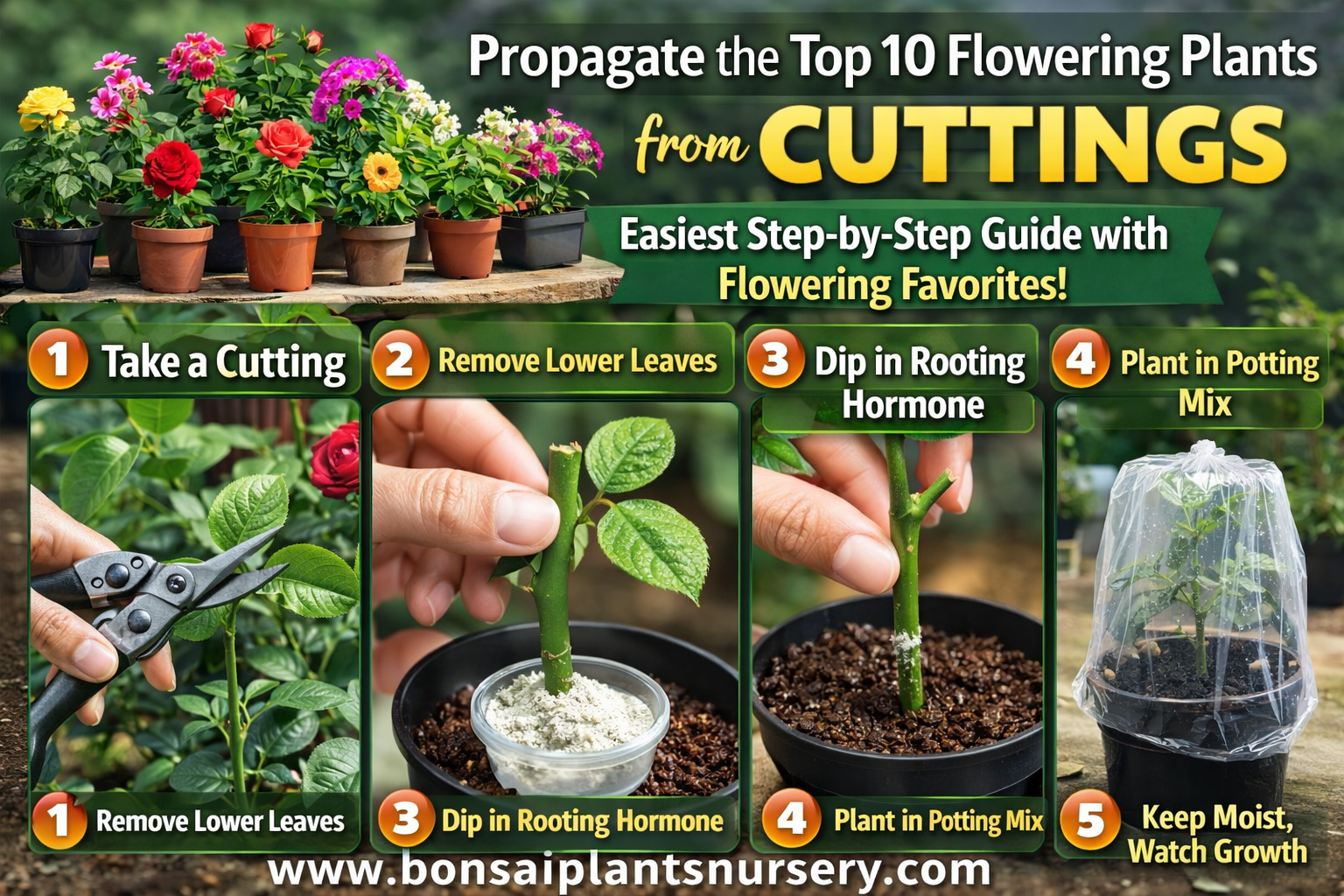
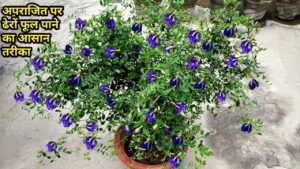
If you want to grow more plants at a very low cost, propagation through cuttings is one of the easiest and most successful methods. With this technique, you can create multiple new plants from a single parent plant—quickly and efficiently.
Flowering_Plants_for_Propagation_from_Cuttings
In this detailed expert-level guide (5200+ words), you will learn:
The best flowering plants for propagation through cuttings
Step-by-step method for successful rooting
Advanced tips to speed up root development
Common mistakes and how to avoid them
🌱 What is Plant Cutting?
Plant cutting is a method of propagation where a piece of a plant (stem, leaf, or root) is cut and grown into a new plant.
👉 Benefits:
Fast results
Exact clone of the parent plant
Very low cost
🌸 10 Best Flowering Plants for Propagation from Cuttings
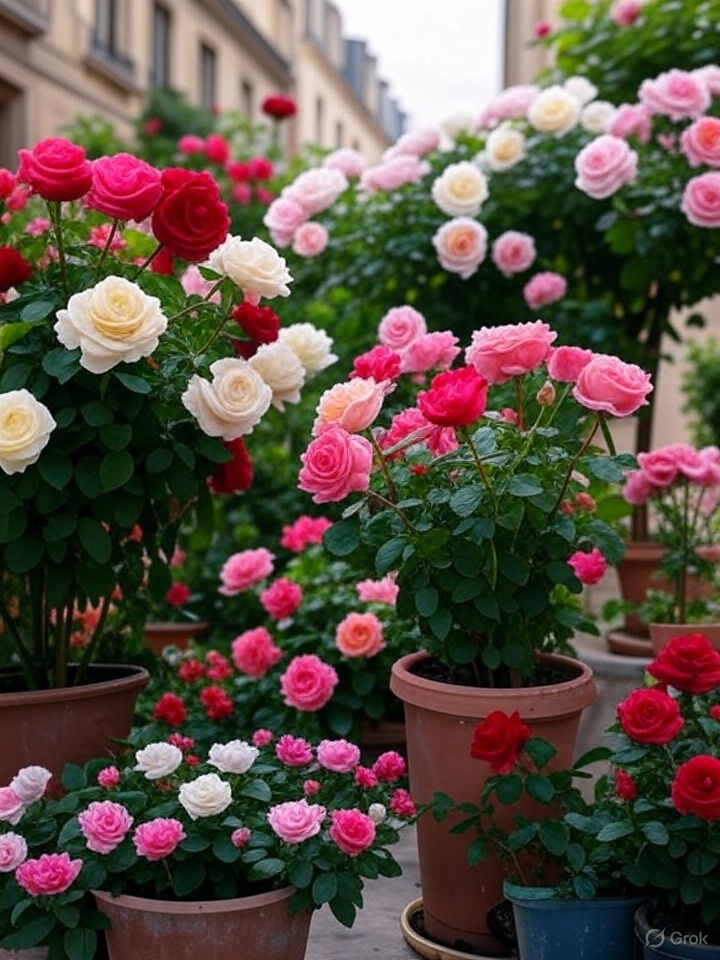
1. Rose (Rosa)
Most popular flowering plant
Grows easily from hardwood cuttings
2. Hibiscus
Large, colorful flowers
Roots quickly from softwood cuttings
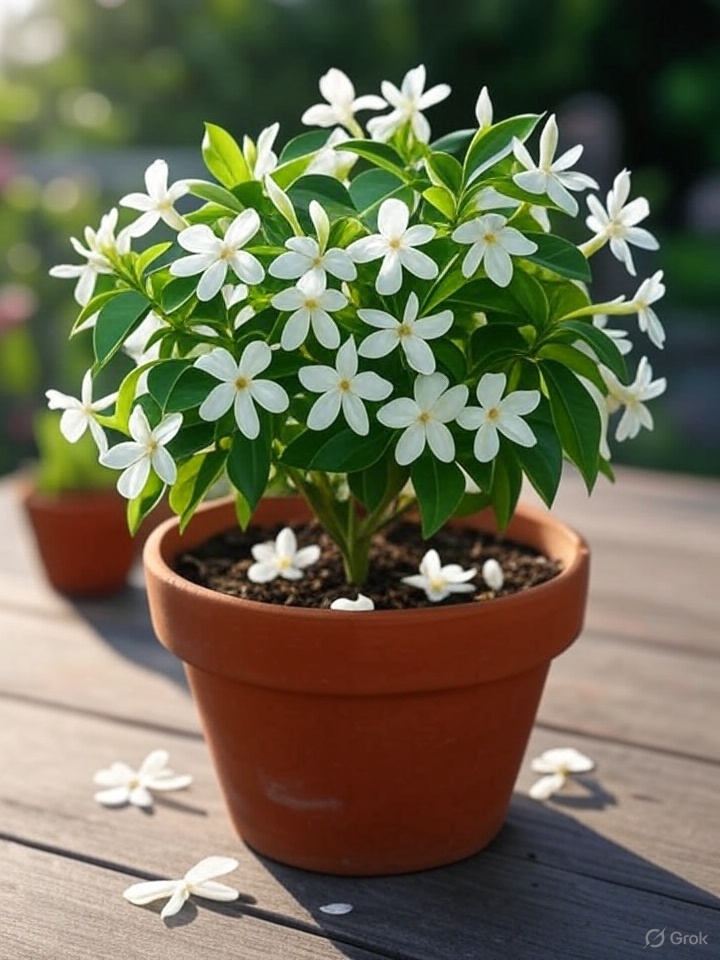
3. Jasmine (Mogra)
Fragrant flowers
Best propagated in warm weather
4. Bougainvillea
Drought-tolerant
Grows well from semi-hardwood cuttings
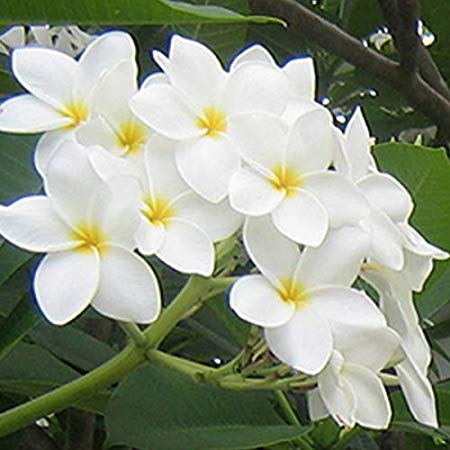
5. Frangipani (Champa)
Thick stems root easily
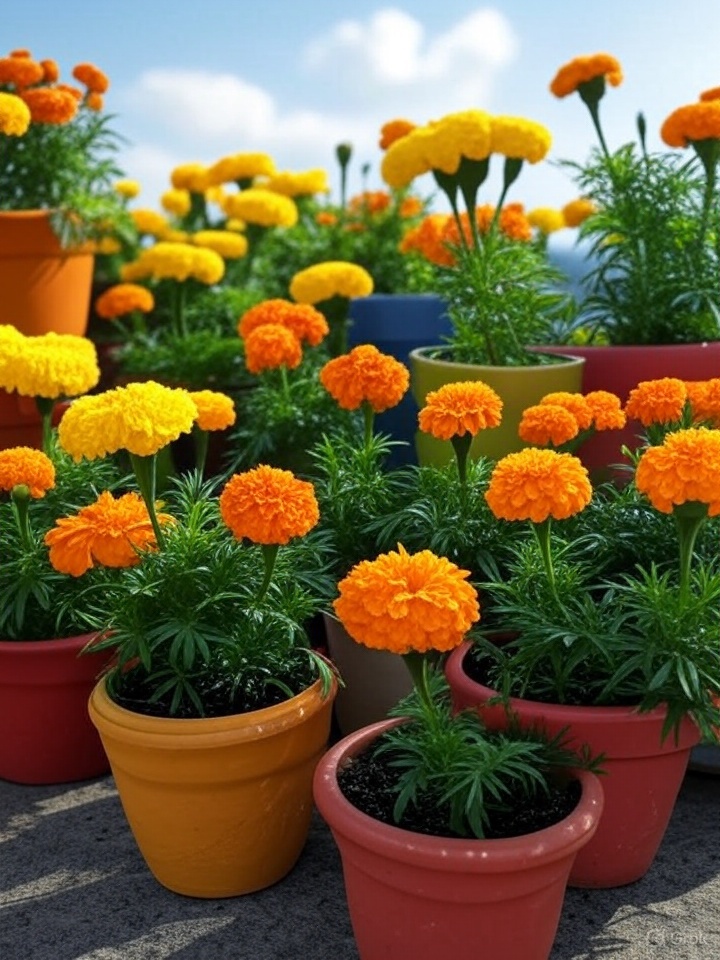
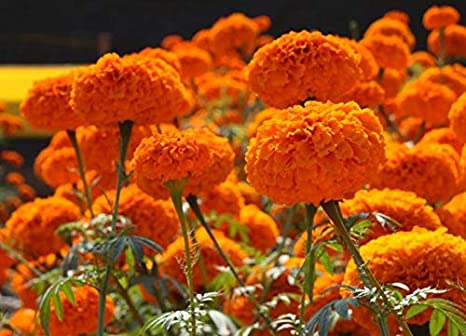
6. Marigold
Some varieties can grow from cuttings
7. Petunia
Fast-growing from soft cuttings
8. Dahlia
Can be grown from both tubers and cuttings
9. Croton (Ornamental)
Decorative foliage plant
10. Coleus
One of the easiest plants to propagate
✂️ How to Take Perfect Cuttings
✔️ Key Points:
Choose a healthy parent plant
Cutting length: 4–6 inches
Must have 2–3 nodes
✔️ Cutting Method:
Use a sharp blade
Cut at a 45° angle
Remove lower leaves
🌿 Best Growing Medium
✔️ Ideal Mix:
50% Sand
50% Cocopeat
👉 Ensures excellent drainage and aeration
🌱 Step-by-Step Planting Method
Fill pot with growing medium
Insert cutting 1–2 inches deep
Press gently
Water lightly
Keep in shade
💧 Watering Tips
Keep soil slightly moist
Avoid overwatering
☀️ Light Requirements
Bright indirect sunlight
Avoid harsh direct sun initially
🌾 Rooting Boost Techniques
Use honey as natural rooting hormone
Apply aloe vera gel
Use commercial rooting powder
⏳ Rooting Time
Usually 10–25 days depending on plant type
🌿 When to Transplant?
When new leaves start appearing
🐛 Problems & Solutions
Problem: Cutting drying out
👉 Cause: Lack of moisture
Problem: Rotting cutting
👉 Cause: Overwatering
⚠️ Common Mistakes
Taking cuttings in wrong season
Too much sunlight
Poor drainage
📅 Best Time for Cuttings
February to April
July to September
❓ FAQ (15 Questions)
Q1: Can all plants grow from cuttings?
No, only specific varieties.
Q2: Easiest plant for beginners?
Coleus
Q3: How long for roots to develop?
10–25 days
Q4: Can cuttings grow in water?
Yes, some plants can
Growing plants from cuttings is simple, cost-effective, and rewarding. By following the right steps, you can create dozens of new plants at home and even turn it into a profitable business.
अगर आप कम खर्च में ज्यादा पौधे उगाना चाहते हैं, तो कटिंग (Cutting Propagation) सबसे आसान और सफल तरीका है। इस विधि में आप एक ही पौधे से कई नए पौधे तैयार कर सकते हैं—वो भी बहुत कम समय में। खास बात यह है कि कई खूबसूरत फूल वाले पौधे कटिंग से बहुत आसानी से उग जाते हैं।
Flowering_Plants_for_Propagation_from_Cuttings
इस 5200+ शब्दों की एक्सपर्ट गाइड में हम जानेंगे:
कटिंग से उगाने के लिए सबसे अच्छे फूल वाले पौधे
स्टेप-बाय-स्टेप सही तरीका
rooting तेजी से कराने की ट्रिक्स
common mistakes और solutions
🌱 कटिंग क्या होती है?
कटिंग का मतलब है किसी पौधे की टहनी (branch) का एक हिस्सा काटकर उसे नई मिट्टी में लगाकर नया पौधा बनाना।
👉 यह विधि सबसे ज्यादा उपयोगी है क्योंकि:
जल्दी रिजल्ट मिलता है
पौधा original जैसा ही होता है
लागत बहुत कम होती है
🌸 कटिंग से उगने वाले 10 सबसे अच्छे फूल वाले पौधे
1. गुलाब (Rose)
सबसे लोकप्रिय फूल
हार्डवुड कटिंग से आसानी से उगता है
2. गुड़हल (Hibiscus)
बड़े और रंग-बिरंगे फूल
softwood कटिंग से तेजी से rooting
3. मोगरा (Jasmine)
खुशबूदार फूल
गर्मियों में कटिंग best
4. बोगनविलिया (Bougainvillea)
कम पानी में भी उगता है
semi-hardwood cutting से उगाएं
5. चंपा (Frangipani)
मोटी शाखाओं से आसानी से उगता है
6. गेंदा (Marigold)
कुछ varieties cutting से भी उगती हैं
7. पेटुनिया (Petunia)
सॉफ्ट कटिंग से जल्दी तैयार
8. डहेलिया (Dahlia)
ट्यूबर के साथ-साथ कटिंग से भी
9. क्रोटन (Croton – ornamental)
decorative foliage plant
10. कोलियस (Coleus)
सबसे आसान और तेजी से rooting
✂️ कटिंग लेने का सही तरीका
✔️ जरूरी बातें:
healthy plant से cutting लें
4–6 इंच लंबी टहनी
2–3 nodes होनी चाहिए
✔️ कटिंग कैसे काटें:
sharp blade से 45° angle पर काटें
नीचे की पत्तियां हटा दें
🌿 मिट्टी और माध्यम (Growing Medium)
✔️ Best mix:
50% रेत
50% कोकोपीट
👉 इससे drainage और rooting दोनों अच्छे होते हैं
🌱 कटिंग लगाने की स्टेप-बाय-स्टेप विधि
गमले में मिट्टी भरें
कटिंग को 1–2 इंच गहराई तक लगाएं
हल्का दबाएं
पानी दें
छाया में रखें
💧 पानी और नमी
मिट्टी हमेशा हल्की नम रखें
ज्यादा पानी न दें
☀️ धूप और स्थान
indirect sunlight
direct धूप से बचाएं (initial stage)
🌾 rooting तेजी से कराने के तरीके
शहद (Honey) का उपयोग
एलोवेरा जेल
rooting hormone powder
⏳ कितने दिन में जड़ें बनती हैं?
10–25 दिन (plant पर depend करता है)
🌿 transplant कब करें?
जब नई पत्तियां आने लगें
🐛 समस्या और समाधान
समस्या: कटिंग सूख रही है
👉 कारण: पानी की कमी
समस्या: सड़ रही है
👉 कारण: ज्यादा पानी
⚠️ आम गलतियां
गलत मौसम में कटिंग लेना
ज्यादा धूप देना
📅 कटिंग के लिए सही समय
फरवरी–अप्रैल
जुलाई–सितंबर
❓ FAQ (15 सवाल)
Q1: क्या सभी पौधे कटिंग से उग सकते हैं?
नहीं, कुछ ही पौधे।
April marks a seasonal transition in India, where winter fully fades and summer begins to set in. During this time, temperatures start rising steadily, which directly impacts plant growth and health. Proper care in April is essential to ensure your plants remain healthy, productive, and vibrant.
In this detailed guide, you’ll learn how to take care of plants in April, especially fruit and flowering plants. Whether you’re a beginner or an experienced gardener, this guide will help you maintain a thriving garden.
🌱 Understanding April Weather and Its Impact on Plants
In April, temperatures can range from 25°C to 40°C. This leads to:
Faster drying of soil
Increased water requirements
Higher chances of pests and diseases
Rapid plant growth
That’s why proper care and attention during this month are crucial.
💧 1. Proper Watering Techniques
Watering is the most important aspect of plant care in April.
✔ How often should you water?
Small potted plants: Daily watering
Larger plants: Every 1–2 days
Best time: Early morning or evening
❌ What to avoid:
Avoid watering during midday heat
Overwatering can cause root rot
Always water slowly and deeply
🌿 2. Soil Care and Mulching
Due to rising heat, soil loses moisture quickly. Maintaining soil moisture is essential.
✔ Benefits of mulching:
Retains soil moisture
Prevents weed growth
Protects plant roots from heat
✔ Mulching materials:
Dry leaves
Coconut husk
Straw
Wood chips
🌼 3. Care for Flowering Plants
April is an important month for flowering plants.
🌸 What should you do?
Remove dried flowers (deadheading)
Ensure adequate sunlight
Apply fertilizer every 10–15 days
🌸 Popular flowering plants to focus on:
Rose
Hibiscus
Marigold
Petunia
🌸 Pro Tip:
Use potassium-rich fertilizers to boost flowering.
🍋 4. Care for Fruit Plants
Fruit plants show active growth and fruiting during this time.
🍊 What should you do?
Water regularly
Apply organic fertilizers
Protect plants from pests
🍊 Common fruit plants:
Lemon
Mango
Guava
Pomegranate
🍊 Pro Tip:
Avoid excessive nitrogen fertilizer, as it promotes leafy growth instead of fruiting.
🧪 5. Fertilizers and Nutrition
Plants need proper nutrition during April.
✔ Best fertilizers:
Cow dung manure
Vermicompost
Neem cake
Bone meal
✔ Frequency:
Once every 15–20 days
❌ Important:
Do not over-fertilize
Always water after applying fertilizer
🐛 6. Pest and Disease Control
Pest activity increases in warmer temperatures.
🐜 Common pests:
Aphids
Mealybugs
Spider mites
✔ Solutions:
Spray neem oil
Use mild soap solution
Remove infected leaves
✂️ 7. Pruning (Trimming)
Light pruning can be done in April.
✔ What to do:
Remove dead or diseased branches
Shape the plant properly
❌ Avoid:
Heavy pruning
Be careful with fruiting plants
🌞 8. Sunlight and Shade Balance
Sunlight becomes intense in April.
✔ Best practices:
Provide morning sunlight
Offer partial shade in the afternoon
Use shade nets if necessary
🪴 9. Care for Potted Plants
Potted plants require extra attention.
✔ Tips:
Ensure proper drainage holes
Keep soil loose and aerated
Repot when necessary
🌾 10. Best Plants to Grow in April
April is suitable for planting certain crops and herbs.
✔ Recommended plants:
Tulsi (Holy Basil)
Chili
Tomato
Eggplant (Brinjal)
📞 Need Help with Gardening?
If you need assistance with plant care, buying plants, or gardening tips, feel free to contact us:
April can be a challenging yet rewarding month for plant care. With the right watering, fertilizing, and protection techniques, your plants can thrive beautifully.
Follow the tips in this guide to keep your garden healthy, green, and full of flowers and fruits.
❓ Frequently Asked Questions (FAQs)
1. How often should I water plants in April?
Most plants require daily watering or watering every alternate day.
2. Is fertilizing necessary in April?
Yes, plants need nutrients during this growth phase.
3. Which fertilizer is best?
Organic fertilizers like cow dung manure and vermicompost are ideal.
4. Should plants be kept in sun or shade?
Morning sunlight with partial afternoon shade is best.
If you found this guide helpful, don’t forget to share it with fellow gardening enthusiasts 🌱
अप्रैल का महीना भारत में मौसम के बदलाव का समय होता है। इस समय ठंड पूरी तरह समाप्त हो चुकी होती है और गर्मी धीरे-धीरे बढ़ने लगती है। ऐसे में पौधों की देखभाल का तरीका भी बदलना जरूरी हो जाता है। यदि आप सही समय पर सही देखभाल नहीं करते हैं, तो पौधे कमजोर पड़ सकते हैं, फूल और फल आना कम हो सकता है, और कई बार पौधे सूख भी जाते हैं।
इस विस्तृत गाइड में हम आपको बताएंगे कि अप्रैल के महीने में पौधों की देखभाल कैसे करें, खासकर फल और फूल वाले पौधों की। यह गाइड शुरुआती और अनुभवी दोनों गार्डनर्स के लिए उपयोगी है।
🌱 अप्रैल का मौसम और पौधों पर इसका प्रभाव
अप्रैल में तापमान 25°C से 40°C तक पहुंच सकता है। इस समय:
मिट्टी जल्दी सूखने लगती है
पौधों में पानी की जरूरत बढ़ जाती है
कीट और बीमारियां बढ़ने लगती हैं
नई ग्रोथ तेज होती है
इसलिए इस महीने में पौधों की सही देखभाल बहुत जरूरी है।
💧 1. पानी देने का सही तरीका
अप्रैल में सबसे जरूरी काम है पौधों को सही मात्रा में पानी देना।
✔ कितनी बार पानी दें?
छोटे गमलों में लगे पौधों को रोज पानी दें
बड़े पौधों को 1-2 दिन के अंतराल में पानी दें
सुबह या शाम के समय ही पानी दें
❌ किन बातों से बचें?
दोपहर में पानी न दें
ज्यादा पानी देने से जड़ें सड़ सकती हैं
पानी हमेशा धीरे-धीरे डालें
🌿 2. मिट्टी की देखभाल और मल्चिंग
गर्मी में मिट्टी जल्दी सूखती है, इसलिए मिट्टी की नमी बनाए रखना जरूरी है।
✔ मल्चिंग क्यों जरूरी है?
मिट्टी की नमी बनी रहती है
खरपतवार कम होते हैं
जड़ें सुरक्षित रहती हैं
✔ मल्चिंग के लिए क्या उपयोग करें?
सूखे पत्ते
नारियल का छिलका
भूसा
लकड़ी का बुरादा
🌼 3. फूल वाले पौधों की देखभाल
अप्रैल फूलों के पौधों के लिए महत्वपूर्ण महीना होता है।
🌸 क्या करें?
सूखे फूलों को हटाएं (डेडहेडिंग)
पौधों को धूप में रखें
हर 10-15 दिन में खाद दें
🌸 किन फूलों पर ध्यान दें?
गुलाब
गुड़हल
गेंदा
पेटुनिया
🌸 खास टिप:
फूलों के पौधों में पोटाश वाली खाद देने से फूल ज्यादा आते हैं।
🍋 4. फल वाले पौधों की देखभाल
फल वाले पौधों में इस समय नई ग्रोथ होती है और कुछ में फल लगने शुरू हो जाते हैं।
🍊 क्या करें?
पौधों को नियमित पानी दें
जैविक खाद डालें
कीटों से बचाव करें
🍊 कौन से पौधे ध्यान दें?
नींबू
आम
अमरूद
अनार
🍊 खास टिप:
फल वाले पौधों में ज्यादा नाइट्रोजन देने से पत्तियां बढ़ती हैं, फल कम आते हैं। इसलिए संतुलित खाद दें।
🧪 5. खाद और उर्वरक
अप्रैल में पौधों को पोषण देना बहुत जरूरी है।
✔ कौन सी खाद दें?
गोबर की खाद
वर्मीकम्पोस्ट
नीम खली
बोन मील
✔ कितनी बार खाद दें?
हर 15-20 दिन में एक बार
❌ ध्यान रखें:
ज्यादा खाद न डालें
खाद डालने के बाद पानी जरूर दें
🐛 6. कीट और रोग नियंत्रण
गर्मी में कीट तेजी से बढ़ते हैं।
🐜 आम कीट:
एफिड्स
मिलीबग
स्पाइडर माइट
✔ समाधान:
नीम तेल स्प्रे करें
साबुन पानी का उपयोग करें
प्रभावित पत्तियों को हटा दें
✂️ 7. प्रूनिंग (कटाई-छंटाई)
अप्रैल में हल्की प्रूनिंग की जा सकती है।
✔ क्या करें?
सूखी और बीमार शाखाएं काटें
पौधे को आकार दें
❌ क्या न करें?
ज्यादा प्रूनिंग न करें
फल वाले पौधों में सावधानी रखें
🌞 8. धूप और छाया का संतुलन
अप्रैल में धूप तेज होती है।
✔ क्या करें?
सुबह की धूप दें
दोपहर में हल्की छाया दें
शेड नेट का उपयोग करें
🪴 9. गमलों की देखभाल
गमलों में लगे पौधों को ज्यादा देखभाल की जरूरत होती है।
✔ ध्यान रखने वाली बातें:
ड्रेनेज होल सही हो
मिट्टी ढीली रखें
समय-समय पर रिपोटिंग करें
🌾 10. नए पौधे लगाने का सही समय
अप्रैल में कुछ पौधे लगाए जा सकते हैं।
✔ कौन से पौधे लगाएं?
तुलसी
मिर्च
टमाटर
बैंगन
📞 पौधों से जुड़ी किसी भी सहायता के लिए
यदि आपको पौधों की देखभाल, पौधे खरीदने या गार्डनिंग से जुड़ी किसी भी जानकारी की जरूरत हो, तो आप हमसे संपर्क कर सकते हैं:
अप्रैल का महीना पौधों के लिए चुनौतीपूर्ण लेकिन सही देखभाल के साथ बहुत फायदेमंद हो सकता है। यदि आप सही समय पर पानी, खाद, और देखभाल करते हैं, तो आपके पौधे स्वस्थ रहेंगे और अच्छे फूल और फल देंगे।
इस गाइड में बताए गए सभी टिप्स को अपनाकर आप अपने गार्डन को हरा-भरा और सुंदर बना सकते हैं।
❓ अक्सर पूछे जाने वाले सवाल (FAQs)
1. अप्रैल में पौधों को कितनी बार पानी देना चाहिए?
ज्यादातर पौधों को रोज या एक दिन छोड़कर पानी देना चाहिए।
2. क्या अप्रैल में खाद देना जरूरी है?
हाँ, इस समय पौधों को पोषण की जरूरत होती है।
3. कौन सी खाद सबसे अच्छी है?
जैविक खाद जैसे गोबर खाद और वर्मीकम्पोस्ट सबसे बेहतर हैं।
4. पौधों को धूप में रखें या छाया में?
सुबह धूप और दोपहर में हल्की छाया सबसे अच्छा विकल्प है।
यदि आपको यह जानकारी उपयोगी लगी हो, तो इसे अपने दोस्तों और गार्डनिंग प्रेमियों के साथ जरूर शेयर करें 🌱
Category: Flowering Plants | Bonsai | Home Gardening Website:www.bonsaiplantsnursery.com WhatsApp: 8299790172 Focus Keywords: Adenium Plant Care, Desert Rose in Hindi, Adenium Bonsai, Adenium FAQ, Adenium Flower Plant
🌿 परिचय – Adenium (Desert Rose) क्या है?
Adenium, जिसे आम भाषा में Desert Rose कहा जाता है, एक अत्यंत सुंदर, आकर्षक और कम देखभाल वाला फूलदार पौधा है। इसकी मोटी जड़ (Caudex), चमकदार पत्तियाँ और गुलाबी, लाल, सफेद रंग के फूल इसे गार्डनिंग और बोन्साई प्रेमियों के बीच बेहद लोकप्रिय बनाते हैं।
Adenium की सबसे बड़ी खासियत यह है कि यह कम पानी, तेज धूप और गर्म मौसम में भी बहुत अच्छे से बढ़ता है। यही कारण है कि यह भारत में गमले, टेरेस गार्डन और बोन्साई के लिए परफेक्ट पौधा माना जाता है।
Adenium यानी Desert Rose एक ऐसा पौधा है जो सुंदरता, मजबूती और कम देखभाल – तीनों का बेहतरीन मेल है। चाहे आप शुरुआती हों या एक्सपर्ट गार्डनर, Adenium आपके गार्डन को एक प्रीमियम लुक देगा।
🌿 Adenium Plants, Bonsai, Pots और Expert Guidance के लिए संपर्क करें: 🌐 www.bonsaiplantsnursery.com 📱 8299790172
Hibiscus (Gudhal) is one of the most popular flowering plants in India. It is admired not only for its large, colorful blooms but also for its medicinal, religious, and ornamental value. Hibiscus flowers are offered to Lord Shiva and Goddess Durga and are widely used in Ayurveda, hair care, and skin care.
Many gardeners often have questions like: ✔ How to grow hibiscus? ✔ Why is my hibiscus not flowering? ✔ Which fertilizer is best? ✔ How much sunlight does it need?
So, here is a complete FAQ guide with 50 most commonly asked questions about the Hibiscus plant, answered simply and clearly.
🌺 50 Frequently Asked Questions About Hibiscus (Gudhal) Plant
1. What is the best time to plant hibiscus?
Answer: The best time to plant hibiscus is from February to April and July to September.
2. Which soil is best for hibiscus plants?
Answer: Hibiscus grows best in well-drained loamy soil.
3. How much sunlight does hibiscus need?
Answer: Hibiscus needs 5–6 hours of direct sunlight daily.
4. Can hibiscus be grown in pots?
Answer: Yes, hibiscus can easily be grown in pots, tubs, and grow bags.
5. Why is my hibiscus not flowering?
Answer:
Lack of sunlight
Improper fertilization
No pruning
Overwatering
6. Which fertilizer is best for hibiscus?
Answer:
Well-rotted cow dung manure
Vermicompost
Mustard cake
Potash-rich fertilizer
7. How often should I water hibiscus?
Answer: In summer daily, and in winter once every 2–3 days.
8. How to grow hibiscus from cuttings?
Answer: Take a healthy stem cutting, plant it in moist soil, and water lightly.
9. When should hibiscus be pruned?
Answer: Best pruning time is February and September.
10. Why are hibiscus leaves turning yellow?
Answer:
Overwatering
Nutrient deficiency
Fungal infection
11. How tall does a hibiscus plant grow?
Answer: It can grow 4 to 8 feet tall.
12. How many types of hibiscus are there?
Answer:
Red hibiscus
Yellow hibiscus
White hibiscus
Double petal
Hybrid varieties
13. How to control pests in hibiscus?
Answer: Spray neem oil regularly.
14. How to identify fungal disease in hibiscus?
Answer: Black, brown, or white spots on leaves indicate fungal disease.
15. When should hibiscus be transplanted?
Answer: During the rainy season or spring.
16. How long does a hibiscus plant live?
Answer: With proper care, it can live 8–10 years.
17. Should hibiscus be watered daily?
Answer: Only if the topsoil is dry; avoid waterlogging.
18. How long does hibiscus take to bloom?
Answer: Usually 45–60 days after planting.
19. What size pot is best for hibiscus?
Answer: A pot with 12–14 inches depth is ideal.
20. How to get more flowers in hibiscus?
Answer:
Proper pruning
Full sunlight
Regular fertilization
Pest control
21. Can hibiscus be grown indoors?
Answer: No, hibiscus needs full outdoor sunlight.
22. Which organic fertilizer is best for hibiscus?
Answer: Vermicompost and cow dung manure.
23. Can hibiscus be grown from seeds?
Answer: Yes, but growing from cuttings is easier and faster.
24. Why is my hibiscus plant drying?
Answer:
Water stress
Root problems
Fungal disease
25. Why do hibiscus buds fall before blooming?
Answer:
Lack of water
Sudden weather changes
Nutrient deficiency
26. Why is white powder appearing on hibiscus leaves?
Answer: This is Powdery Mildew, a fungal disease.
27. How often should fertilizer be applied?
Answer: Every 15 days.
28. Which pesticide is best for hibiscus?
Answer: Neem oil and organic pesticides are best.
29. How much space does hibiscus need?
Answer: Keep 2–3 feet spacing between plants.
30. How to protect hibiscus during rainy season?
Answer: Ensure proper drainage to avoid waterlogging.
31. Which soil is not suitable for hibiscus?
Answer: Heavy clay soil that holds excess water.
32. What are the hair benefits of hibiscus?
Answer: Reduces hair fall and promotes thick hair.
33. What are the skin benefits of hibiscus?
Answer: Makes skin glowing and healthy.
34. Why does root rot occur in hibiscus?
Answer: Due to excess watering.
35. How many times does hibiscus bloom in a year?
Answer: Almost throughout the year in warm climates.
36. Why does hibiscus have no fragrance?
Answer: Most hibiscus varieties are fragrance-less.
Website:www.bonsaiplantsnursery.com WhatsApp: 8299790172 Category: Flower Plants / Gardening / Medicinal Plants Focus Keywords: Gudhal Plant FAQ in Hindi, Hibiscus Care Tips, गुड़हल के प्रश्न उत्तर
🌼 भूमिका (Introduction)
गुड़हल (Hibiscus) भारत के सबसे लोकप्रिय फूलों में से एक है। यह न सिर्फ अपने सुंदर और बड़े फूलों के लिए जाना जाता है बल्कि औषधीय, धार्मिक और सौंदर्यात्मक दृष्टि से भी बेहद उपयोगी पौधा है। भगवान शिव और देवी को अर्पित किए जाने वाले इस फूल का उपयोग आयुर्वेद, हेयर केयर और स्किन केयर में भी किया जाता है।
लेकिन अक्सर लोगों के मन में सवाल होते हैं जैसे – 👉 गुड़हल कैसे लगाएं? 👉 फूल क्यों नहीं आते? 👉 कौन सी खाद दें? 👉 कितनी धूप चाहिए?
इसीलिए आज हम लाए हैं गुड़हल से जुड़े 50 सबसे ज़्यादा पूछे जाने वाले प्रश्न और उनके आसान उत्तर।
🌺 गुड़हल से जुड़े 50 FAQ – प्रश्न और उत्तर
1. गुड़हल का पौधा लगाने का सही समय क्या है?
उत्तर: गुड़हल लगाने का सबसे अच्छा समय फरवरी से अप्रैल और जुलाई से सितंबर तक होता है।
2. गुड़हल किस मिट्टी में अच्छा उगता है?
उत्तर: गुड़हल को दोमट और अच्छी जल निकास वाली मिट्टी पसंद है।
3. गुड़हल को कितनी धूप चाहिए?
उत्तर: रोज़ाना 5–6 घंटे सीधी धूप गुड़हल के लिए जरूरी है।
4. गुड़हल गमले में उगाया जा सकता है?
उत्तर: हाँ, गुड़हल को गमले, टब और ग्रो बैग में आसानी से उगाया जा सकता है।
5. गुड़हल में फूल क्यों नहीं आते?
उत्तर:
धूप की कमी
गलत खाद
छंटाई न करना
अधिक पानी
6. गुड़हल के लिए कौन सी खाद सबसे अच्छी है?
उत्तर:
गोबर की सड़ी खाद
वर्मीकम्पोस्ट
सरसों खली
पोटाश युक्त खाद
7. गुड़हल को कितनी बार पानी देना चाहिए?
उत्तर: गर्मी में रोज और सर्दी में 2–3 दिन में एक बार।
8. गुड़हल की कटिंग से पौधा कैसे बनाएं?
उत्तर: स्वस्थ टहनी काटकर मिट्टी में लगाएं और हल्का पानी दें।
9. गुड़हल की छंटाई कब करें?
उत्तर: फरवरी और सितंबर में छंटाई करना सबसे अच्छा होता है।
10. गुड़हल के पत्ते पीले क्यों हो जाते हैं?
उत्तर:
अधिक पानी
पोषण की कमी
फंगल रोग
11. गुड़हल का पौधा कितना बड़ा होता है?
उत्तर: 4 से 8 फीट तक बढ़ सकता है।
12. गुड़हल कितने प्रकार के होते हैं?
उत्तर:
लाल गुड़हल
पीला गुड़हल
सफेद गुड़हल
डबल पेटल
हाइब्रिड किस्में
13. गुड़हल में कीड़े लग जाएँ तो क्या करें?
उत्तर: नीम तेल का छिड़काव करें।
14. गुड़हल में फंगल रोग कैसे पहचानें?
उत्तर: पत्तों पर काले, भूरे या सफेद धब्बे दिखाई दें तो फंगल रोग है।
15. गुड़हल को कब ट्रांसप्लांट करें?
उत्तर: बरसात या बसंत ऋतु में।
16. गुड़हल का पौधा कितने साल चलता है?
उत्तर: सही देखभाल से 8–10 साल तक।
17. गुड़हल को रोज पानी देना चाहिए?
उत्तर: नहीं, जरूरत अनुसार ही पानी दें।
18. गुड़हल में फूल आने में कितना समय लगता है?
उत्तर: 45–60 दिन।
19. गुड़हल के लिए कैसा गमला सही है?
उत्तर: 12–14 इंच गहराई वाला गमला।
20. गुड़हल में ज्यादा फूल कैसे लाएँ?
उत्तर:
सही छंटाई
धूप
खाद
कीट नियंत्रण
21. गुड़हल घर के अंदर रखा जा सकता है?
उत्तर: नहीं, इसे खुली धूप चाहिए।
22. गुड़हल के लिए जैविक खाद कौन सी है?
उत्तर: वर्मीकम्पोस्ट और गोबर खाद।
23. गुड़हल बीज से उगाया जा सकता है?
उत्तर: हाँ, लेकिन कटिंग से उगाना आसान होता है।
24. गुड़हल का पौधा सूख रहा है तो क्या करें?
उत्तर:
पानी संतुलित करें
मिट्टी बदलें
फंगल उपचार करें
25. गुड़हल की कलियाँ गिर जाती हैं क्यों?
उत्तर:
पानी की कमी
मौसम परिवर्तन
पोषण की कमी
26. गुड़हल की पत्तियों पर सफेद पाउडर क्यों आता है?
🌹 50 Most Frequently Asked Questions About Rose Plants (FAQ) – Complete Rose Growing Guide 2026
Website:www.bonsaiplantsnursery.com WhatsApp: 8299790172 Category: Gardening / Flower Plants / Rose Plant Care Focus Keywords: Rose Plant FAQ, Rose Growing Guide, Rose Care Tips, Rose Plant Questions Answers
🌼 Introduction
Rose is known as the Queen of Flowers. It is admired all over the world for its beauty, fragrance, and versatility. Roses are used for decoration, perfume, medicine, religious offerings, and commercial flower farming.
In India, roses are grown in homes, gardens, terraces, nurseries, and farms. However, many people have common questions such as: ✔ How to grow rose plants? ✔ Why are flowers not blooming? ✔ Why are leaves turning yellow? ✔ Which fertilizer is best for roses?
So today, we bring you a complete FAQ guide on Rose Plants, answering the 50 most commonly asked questions in a simple and practical way.
50_Frequently_Asked_Questions_About_Rose_Plants
🌹 50 Frequently Asked Questions About Rose Plants
1. What is the best time to plant roses?
Answer: The best time to plant roses is from October to February, when the weather is cool and favorable.
2. Which soil is best for rose plants?
Answer: Roses grow best in well-drained loamy soil with pH between 6 to 7.
3. How much sunlight do roses need?
Answer: Roses require at least 5–6 hours of direct sunlight daily.
4. Can roses be grown in pots?
Answer: Yes, roses can easily be grown in pots, tubs, and grow bags.
5. Why is my rose plant not flowering?
Answer: Possible reasons:
Lack of sunlight
Improper pruning
Nutrient deficiency
Pest or disease attack
6. Which fertilizer is best for roses?
Answer:
Well-rotted cow dung manure
Vermicompost
Bone meal
Potash-rich fertilizers
7. How often should I water rose plants?
Answer: In summer, water every alternate day; in winter, once every 2–3 days is sufficient.
8. How to grow rose plant from cuttings?
Answer: Take a healthy stem cutting, plant it in moist soil, and keep it in partial shade.
9. When should roses be pruned?
Answer: The best time for pruning roses is October–November.
10. Why are rose leaves turning yellow?
Answer:
Overwatering
Nutrient deficiency
Fungal diseases
11. What is the average height of a rose plant?
Answer: Generally, rose plants grow between 2 to 5 feet.
12. How many types of roses are there?
Answer:
Desi Roses
Hybrid Tea Roses
Floribunda
Climbers
Miniature Roses
13. How to control pests in roses?
Answer: Use neem oil spray or organic pesticides regularly.
14. How to identify fungal disease in roses?
Answer: Black, white, or brown spots on leaves are signs of fungal infection.
15. When should rose plants be transplanted?
Answer: Winter is the safest time to transplant rose plants.
16. How long does a rose plant live?
Answer: With proper care, a rose plant can live 5 to 10 years.
17. Should roses be watered daily?
Answer: No, water only when the soil feels dry on top.
18. How long does it take for roses to bloom?
Answer: Roses usually bloom within 45–60 days after planting.
19. What size pot is best for roses?
Answer: A pot of at least 10–12 inches depth is recommended.
20. How to get more flowers in roses?
Answer:
Proper pruning
Timely fertilization
Full sunlight
Pest control
21. Can roses be grown indoors?
Answer: No, roses need full sunlight and should be grown outdoors.
22. Which organic fertilizer is best for roses?
Answer: Vermicompost and cow dung manure are best organic fertilizers.
23. How to sow rose seeds?
Answer: Sow seeds about 1 inch deep in moist soil and water lightly.
24. Why is my rose plant drying up?
Answer:
Lack of water
Root rot
Fungal infection
25. Why do rose buds fall before blooming?
Answer:
Sudden temperature changes
Water stress
Nutrient deficiency
26. Why do rose leaves get white powder?
Answer: It is caused by Powdery Mildew, a fungal disease.
27. How often should fertilizer be applied?
Answer: Apply light fertilizer every 15 days.
28. Which pesticide is best for roses?
Answer: Neem oil and organic insecticides are safest.
29. How much space do rose plants need?
Answer: Maintain 1–1.5 feet distance between plants.
30. How to protect roses during the rainy season?
Answer: Ensure proper drainage and avoid waterlogging.
31. Which soil is not suitable for roses?
Answer: Heavy clay soil and extremely sandy soil are not suitable.
32. How to increase fragrance of roses?
Answer: Use organic fertilizers and ensure full sunlight.
33. Why does root rot occur in roses?
Answer: Due to excess watering and poor drainage.
34. How many times do roses bloom in a year?
Answer: Roses can bloom multiple times a year with proper care.
35. When should roses be repotted?
Answer: Once every year is ideal.
36. Can roses grow in shade?
Answer: No, roses need direct sunlight.
37. Best potting mix for roses?
Answer: Soil + compost + sand in 1:1:1 ratio.
38. Why do black spots appear on rose leaves?
Answer: It is caused by Black Spot disease, a fungal infection.
Rose plants are beautiful, profitable, and easy to grow if proper care is taken. Whether you are a home gardener or a commercial grower, understanding rose plant care helps you get more flowers and healthier plants.
For buying rose plants, fertilizers, gardening tips, and online plant delivery, visit:
🌹 गुलाब के पौधे से जुड़े 50 सबसे ज़्यादा पूछे जाने वाले प्रश्न (FAQ) – सम्पूर्ण मार्गदर्शिका 2026
Website:www.bonsaiplantsnursery.com WhatsApp: 8299790172 Category: Gardening / Flower Plants / Rose Plant Care Focus Keyword: गुलाब के बारे में प्रश्न उत्तर, Rose Plant FAQ in Hindi, गुलाब की खेती
🌼 भूमिका (Introduction)
गुलाब को फूलों की रानी कहा जाता है। यह न सिर्फ अपने सौंदर्य और खुशबू के लिए प्रसिद्ध है बल्कि औषधीय, सजावटी और व्यावसायिक दृष्टि से भी बेहद महत्वपूर्ण पौधा है। भारत में लगभग हर घर, गार्डन और नर्सरी में गुलाब का पौधा लगाया जाता है।
लेकिन गुलाब से जुड़ी कई शंकाएँ लोगों के मन में होती हैं जैसे – 👉 गुलाब कैसे लगाएं? 👉 फूल क्यों नहीं आते? 👉 पत्ते पीले क्यों हो रहे हैं? 👉 खाद कौन सी दें?
इसीलिए आज हम आपके लिए लेकर आए हैं – गुलाब के बारे में 50 सबसे ज्यादा पूछे जाने वाले प्रश्न और उनके आसान व सही उत्तर।
50_Frequently_Asked_Questions_About_Rose_Plants
🌹 गुलाब से जुड़े 50 FAQs – सवाल और जवाब
1. गुलाब का पौधा लगाने का सबसे अच्छा समय कौन सा है?
उत्तर: गुलाब लगाने का सबसे अच्छा समय अक्टूबर से फरवरी तक होता है। इस समय मौसम ठंडा और अनुकूल होता है।
2. गुलाब किस मिट्टी में अच्छा उगता है?
उत्तर: गुलाब को दोमट मिट्टी पसंद है जिसमें जल निकास अच्छा हो और pH 6–7 हो।
3. गुलाब को कितनी धूप चाहिए?
उत्तर: गुलाब को रोज़ कम से कम 5–6 घंटे सीधी धूप चाहिए।
4. गमले में गुलाब उगाया जा सकता है?
उत्तर: हाँ, आप गुलाब को गमले, टब या ग्रो बैग में आसानी से उगा सकते हैं।
5. गुलाब में फूल क्यों नहीं आते?
उत्तर: इसके कारण हो सकते हैं:
कम धूप
गलत खाद
छंटाई न करना
कीट रोग
6. गुलाब में कौन सी खाद डालें?
उत्तर:
गोबर की सड़ी खाद
वर्मीकम्पोस्ट
बोन मील
पोटाश युक्त खाद
7. गुलाब को कितनी बार पानी देना चाहिए?
उत्तर: गर्मी में 1 दिन छोड़कर और सर्दी में 2–3 दिन में एक बार पर्याप्त है।
8. गुलाब की कटिंग से पौधा कैसे बनाएं?
उत्तर: स्वस्थ टहनी काटकर मिट्टी में लगाएँ, हल्का पानी दें और छाया में रखें।
9. गुलाब की छंटाई कब करें?
उत्तर: अक्टूबर-नवंबर में छंटाई करना सबसे अच्छा रहता है।
10. गुलाब के पत्ते पीले क्यों हो जाते हैं?
उत्तर:
अधिक पानी
पोषक तत्वों की कमी
फंगल रोग
11. गुलाब के पौधे की ऊँचाई कितनी होती है?
उत्तर: सामान्यतः 2 से 5 फीट तक होती है।
12. गुलाब कितने प्रकार के होते हैं?
उत्तर:
देशी गुलाब
हाइब्रिड टी
फ्लोरीबंडा
क्लाइंबर
मिनिएचर गुलाब
13. गुलाब में कीड़े लग जाएँ तो क्या करें?
उत्तर: नीम तेल या जैविक कीटनाशक का प्रयोग करें।
14. गुलाब में फंगस रोग कैसे पहचानें?
उत्तर: पत्तों पर काले या सफेद धब्बे फंगस के लक्षण हैं।
15. गुलाब को कब ट्रांसप्लांट करें?
उत्तर: सर्दियों के समय ट्रांसप्लांट करना सबसे सुरक्षित होता है।
16. गुलाब का पौधा कितने साल चलता है?
उत्तर: सही देखभाल से 5–10 साल तक।
17. गुलाब को रोज पानी देना चाहिए क्या?
उत्तर: नहीं, जरूरत अनुसार ही पानी दें।
18. गुलाब को फूल आने में कितना समय लगता है?
उत्तर: 45–60 दिन में फूल आने लगते हैं।
19. गुलाब को कौन सा गमला सही रहता है?
उत्तर: कम से कम 10–12 इंच गहराई वाला गमला।
20. गुलाब में ज्यादा फूल कैसे लाएँ?
उत्तर:
सही छंटाई
समय पर खाद
धूप
कीट नियंत्रण
21. गुलाब का पौधा घर के अंदर रखा जा सकता है?
उत्तर: नहीं, गुलाब को खुली धूप चाहिए।
22. गुलाब में कौन सी जैविक खाद सर्वोत्तम है?
उत्तर: वर्मीकम्पोस्ट और गोबर खाद।
23. गुलाब का बीज कैसे बोएं?
उत्तर: बीज को 1 इंच गहराई में बोकर हल्का पानी दें।
गुलाब का फूल दुनिया के सबसे खूबसूरत और प्रिय फूलों में से एक है। यह न केवल बगीचे की शोभा बढ़ाता है, बल्कि घर की सजावट, उपहार और यहां तक कि औषधीय उपयोगों में भी महत्वपूर्ण भूमिका निभाता है। भारत में गुलाब की खेती बहुत प्राचीन है और विभिन्न जलवायु में इसे उगाया जा सकता है। लेकिन क्या आप जानते हैं कि सही देखभाल से आप अपने गुलाब के पौधे से सामान्य से कहीं अधिक फूल प्राप्त कर सकते हैं? इस लेख में हम आपको स्टेप बाय स्टेप बताएंगे कि कैसे आप अपने गुलाब के पौधे को स्वस्थ रखकर ढेर सारे फूल पैदा कर सकते हैं।
गुलाब के पौधे से ढेर सारे फूल प्राप्त करने की स्टेप बाय स्टेप प्रक्रिया
भारत में, गुलाब मुख्य रूप से उत्तर प्रदेश, महाराष्ट्र, कर्नाटक और तमिलनाडु में उगाए जाते हैं, लेकिन घरेलू बगीचों में भी यह लोकप्रिय है। गुलाब के फूल विभिन्न रंगों जैसे लाल, गुलाबी, सफेद, पीले और नारंगी में आते हैं, और इनकी खुशबू मनमोहक होती है।गुलाब के पौधे से अधिक फूल प्राप्त करने के लिए, पौधे को पर्याप्त ऊर्जा प्रदान करनी होती है। फूल उत्पादन पौधे की प्रकाश संश्लेषण प्रक्रिया पर निर्भर करता है, जो सूर्य की रोशनी, पानी, पोषक तत्वों और स्वस्थ जड़ों से जुड़ा है। यदि पौधा बीमार या कमजोर है, तो फूल कम होंगे। सही देखभाल से आप एक मौसम में 50-100 फूल प्रति पौधा प्राप्त कर सकते हैं, विशेष रूप से फ्लोरिबुंडा या इंग्लिश रोज वैरायटी से।इस गाइड में हम कवर करेंगे:
सही वैरायटी का चयन
स्थान और मिट्टी की तैयारी
रोपण की प्रक्रिया
पानी देने की तकनीक
उर्वरक का उपयोग
प्रूनिंग और डेडहेडिंग
कीट और रोग नियंत्रण
मल्चिंग और अन्य देखभाल
मौसमी टिप्स
आइए शुरू करते हैं।
स्टेप 1: सही गुलाब की वैरायटी का चयन (लगभग 600 शब्द)गुलाब के पौधे से अधिक फूल प्राप्त करने की पहली स्टेप है सही वैरायटी चुनना। सभी गुलाब समान नहीं होते; कुछ एक बार फूलते हैं, जबकि कुछ पूरे मौसम में फूल देते रहते हैं। अधिक फूलों के लिए, रीपीट ब्लूमिंग या कंटीन्यूअस ब्लूमिंग वैरायटी चुनें।उपयुक्त वैरायटी के उदाहरण:
फ्लोरिबुंडा रोजेस: ये क्लस्टर में फूल देते हैं और पूरे मौसम में ब्लूम करते हैं। उदाहरण: ‘आइसबर्ग’, ‘सन फ्लेयर’। ये कम रखरखाव वाली हैं और 6-8 घंटे धूप में अच्छे से फूलती हैं।
इंग्लिश रोजेस: डेविड ऑस्टिन द्वारा विकसित, ये पुरानी गुलाब की खुशबू के साथ आधुनिक रीपीट ब्लूमिंग प्रदान करती हैं। उदाहरण: ‘ग्राहम थॉमस’, ‘मैरी रोज’।
नॉक आउट रोजेस: रोग प्रतिरोधी और कंटीन्यूअस ब्लूमिंग। ये भारत की गर्म जलवायु में अच्छी हैं।
हाइब्रिड टी रोजेस: बड़े फूल देते हैं, लेकिन कम संख्या में। अधिक फूलों के लिए इन्हें अवॉइड करें यदि आप मात्रा चाहते हैं।
भारत में, स्थानीय नर्सरी से हाइब्रिड वैरायटी जैसे ‘राजा’, ‘रानी’ या ‘डबल डिलाइट’ चुनें, जो गर्मी सहन कर सकें। ठंडे क्षेत्रों में क्लाइंबिंग रोजेस जैसे ‘गोल्डन शावर’ अच्छे हैं।चयन के टिप्स:
अपनी जलवायु पर विचार करें। उष्णकटिबंधीय क्षेत्रों में, गर्मी सहन करने वाली वैरायटी चुनें।
रोग प्रतिरोधी वैरायटी प्राथमिकता दें, जैसे ब्लैक स्पॉट रेसिस्टेंट।
नर्सरी से स्वस्थ पौधे खरीदें: जड़ें मजबूत हों, पत्तियां हरी और बिना कीटों वाली।
सामान्य गलतियां: गलत वैरायटी चुनना, जैसे वन-टाइम ब्लूमर्स, जो केवल वसंत में फूलते हैं। हमेशा लेबल पढ़ें या विशेषज्ञ से पूछें।
यह स्टेप महत्वपूर्ण है क्योंकि सही शुरुआत से ही फूलों की संख्या बढ़ जाती है। अगले स्टेप में हम स्थान के बारे में बात करेंगे।स्टेप 2: स्थान का चयन और मिट्टी की तैयारी (लगभग 700 शब्द)गुलाब के पौधे को अधिक फूल देने के लिए सही स्थान जरूरी है। गुलाब को पूर्ण सूर्य प्रकाश चाहिए, कम से कम 6-8 घंटे रोजाना। सुबह की धूप सर्वोत्तम है क्योंकि यह पत्तियों को सूखाती है और फंगल रोगों को रोकती है।स्थान चुनने के टिप्स:
दक्षिण या पश्चिम दिशा का सामना करने वाला क्षेत्र चुनें।
हवा का अच्छा संचार हो, लेकिन तेज हवाओं से बचाव हो।
जल निकासी अच्छी हो; अगर पानी जमा होता है, तो उठी हुई क्यारी बनाएं।
परीक्षण: 18 इंच गहरा गड्ढा खोदें, पानी भरें। अगर 2 घंटे में नहीं निकलता, तो स्थान बदलें।
मिट्टी की तैयारी: गुलाब को अच्छी जल निकासी वाली, उपजाऊ मिट्टी चाहिए। pH 5.5-7.0 आदर्श है। भारत की मिट्टी अक्सर क्षारीय होती है, इसलिए एसिडिक बनाने के लिए पीट मॉस मिलाएं।
स्टेप्स:
क्षेत्र साफ करें: घास, खरपतवार हटाएं।
गड्ढा खोदें: 18×18 इंच, गहराई 18 इंच।
मिश्रण बनाएं: 50% बगीचे की मिट्टी + 50% कम्पोस्ट + पीट मॉस। गोबर की खाद मिलाएं (1:1 अनुपात)।
पोषक तत्व जोड़ें: बोन मील (फॉस्फोरस के लिए) और एप्सम सॉल्ट (मैग्नीशियम के लिए)।
pH टेस्ट करें: किट से जांचें, जरूरत पड़ने पर सल्फर मिलाएं।
टिप्स: ऑर्गेनिक मैटर से मिट्टी को समृद्ध करें। हर 6 महीने में कम्पोस्ट मिलाएं।
सामान्य गलतियां: छायादार स्थान चुनना या खराब जल निकासी वाली मिट्टी में रोपण, जो जड़ सड़न का कारण बनता है।स्टेप 3: गुलाब का रोपण (लगभग 500 शब्द)सही रोपण से पौधा मजबूत होता है और अधिक फूल देता है।
समय: वसंत या शरद ऋतु में रोपें। भारत में, अक्टूबर-मार्च आदर्श।
स्टेप्स:
पौधा तैयार करें: अगर कंटेनर में है, तो जड़ों को ढीला करें।
गड्ढा भरें: मिश्रित मिट्टी से आधा भरें।
पौधा रखें: ग्राफ्ट यूनियन (उभार) मिट्टी के स्तर से 1-2 इंच ऊपर हो (ठंडे क्षेत्रों में नीचे)।
मिट्टी भरें और दबाएं: हवा की जेबें न रहें।
पानी दें: अच्छी तरह भिगोएं।
टिप्स: स्पेसिंग: बुश रोजेस के लिए 2-3 फीट। क्लाइंबर्स के लिए सपोर्ट दें।
सामान्य गलतियां: गहरा रोपण, जो सड़न का कारण बनता है।स्टेप 4: पानी देने की तकनीक (लगभग 400 शब्द)पानी फूल उत्पादन के लिए महत्वपूर्ण है।
कितना पानी: सप्ताह में 1-2 इंच, गर्मी में अधिक।
कैसे दें: आधार पर, सुबह के समय। ड्रिप इरिगेशन आदर्श।
टिप्स: मिट्टी सूखने पर दें। अधिक पानी से रोग।
स्टेप 5: उर्वरक का उपयोग (लगभग 500 शब्द)उर्वरक ऊर्जा प्रदान करता है।
स्टेप 6: प्रूनिंग और डेडहेडिंग (लगभग 800 शब्द)प्रूनिंग से नई शाखाएं आती हैं और फूल बढ़ते हैं।कब प्रून करें: देर सर्दी या शुरुआती वसंत।टूल्स: बाईपास शीयर्स, ग्लव्स।स्टेप्स:
पत्तियां हटाएं।
मृत लकड़ी काटें।
केंद्र खोलें।
पतली शाखाएं हटाएं।
बाकी कैन काटें: 45 डिग्री एंगल पर।
कट सील करें।
सफाई करें।
उर्वरक दें।
डेडहेडिंग: फीके फूल काटें, 5 पत्तियों वाली शाखा तक।विभिन्न प्रकारों के लिए: हाइब्रिड टी: कठोर प्रून। क्लाइंबर्स: लेटरल कैन ट्रिम।स्टेप 7: कीट और रोग नियंत्रण (लगभग 500 शब्द)रोग फूल कम करते हैं।
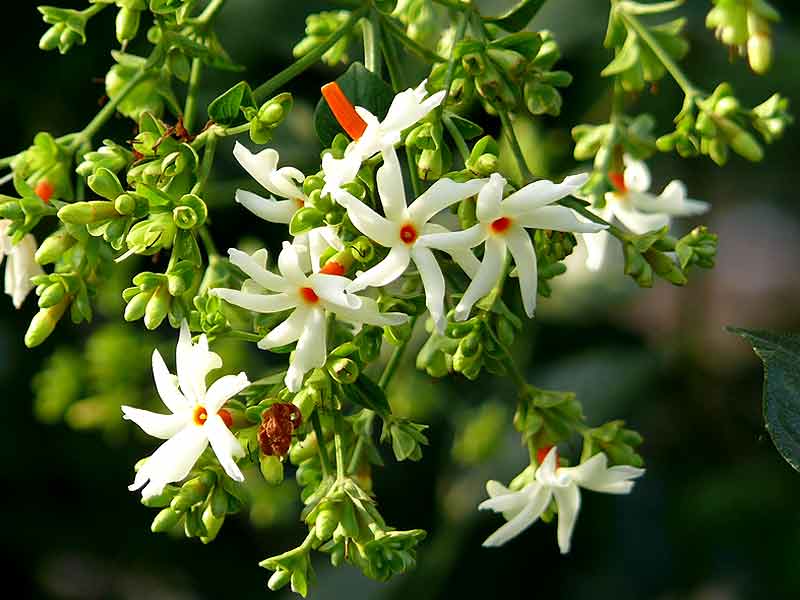
Parijat, also known as Harsingar or Night-Flowering Jasmine, holds a sacred place in Indian culture, Ayurveda, and spiritual practices. Its delicate white flowers with an orange center not only look stunning but also carry a divine fragrance. Beyond beauty, the plant is valued for its religious importance, vastu benefits, and medicinal properties.
📖 Mythological Story – Lord Krishna and Parijat
The legend of the Parijat tree is deeply rooted in Hindu mythology and is mentioned in the Puranas and Mahabharata.
During the great Samudra Manthan (Churning of the Ocean) by the Devas (gods) and Asuras (demons), many celestial treasures emerged. Among them was the Parijat tree, which was planted in Indralok (the abode of Lord Indra). Its divine fragrance and heavenly beauty fascinated everyone.
One day, Lord Krishna’s wife Satyabhama desired the Parijat flower. To fulfill her wish, Lord Krishna went to heaven and requested the tree from Indra. However, Indra refused to part with it. A battle ensued, and Lord Krishna emerged victorious. He then brought the Parijat tree to Earth and planted it in Satyabhama’s garden.
It is believed that this is why Parijat flowers bloom at night and fall to the ground in the morning, symbolizing that they should not be plucked by force but collected as divine blessings from the earth itself.
👉 Hence, Parijat is revered as the “Celestial flower brought to Earth by Lord Krishna.”
हरसिंगार (Parijat) जिसे नाइट फ्लावरिंग जेसमीन या पारिजात भी कहा जाता है, भारतीय संस्कृति, आयुर्वेद और पूजा-पाठ में अत्यंत महत्वपूर्ण स्थान रखता है। इसके सफेद फूल जिनका मध्य भाग केसरिया होता है, न केवल सुंदर और सुगंधित होते हैं बल्कि औषधीय गुणों से भरपूर भी होते हैं। यह पौधा सजावटी, धार्मिक और औषधीय – तीनों ही दृष्टियों से अद्वितीय है।
📖 पौराणिक कथा – भगवान कृष्ण और पारिजात
पारिजात के फूल का उल्लेख पुराणों और महाभारत में मिलता है। कथा के अनुसार, देवताओं और असुरों द्वारा समुद्र मंथन के समय अनेक दिव्य रत्न प्राप्त हुए। इन्हीं में से एक था पारिजात वृक्ष, जो इन्द्रलोक (स्वर्ग) में लगाया गया। इसकी सुंदरता और दिव्य सुगंध ने सबका मन मोह लिया।
भगवान श्रीकृष्ण की पत्नी सत्यभामा ने पारिजात के फूल की चाह की। तब भगवान कृष्ण स्वर्ग गए और इन्द्र से पारिजात वृक्ष मांगा। इन्द्र ने इसे देने से मना कर दिया। तब भगवान कृष्ण ने इन्द्र से युद्ध कर पारिजात वृक्ष को पृथ्वी पर लाया और इसे अपनी पत्नी सत्यभामा के बगीचे में लगा दिया।
माना जाता है कि इसी कारण पारिजात वृक्ष के फूल रात में खिलते हैं और सुबह धरती पर गिर जाते हैं, ताकि कोई भी इसे तोड़े नहीं, बल्कि हर कोई इसे धरती पर बिखरे दिव्य फूल के रूप में प्राप्त करे।
👉 इस कथा के कारण पारिजात को “स्वर्ग से धरती पर उतरा दिव्य पुष्प” कहा जाता है।
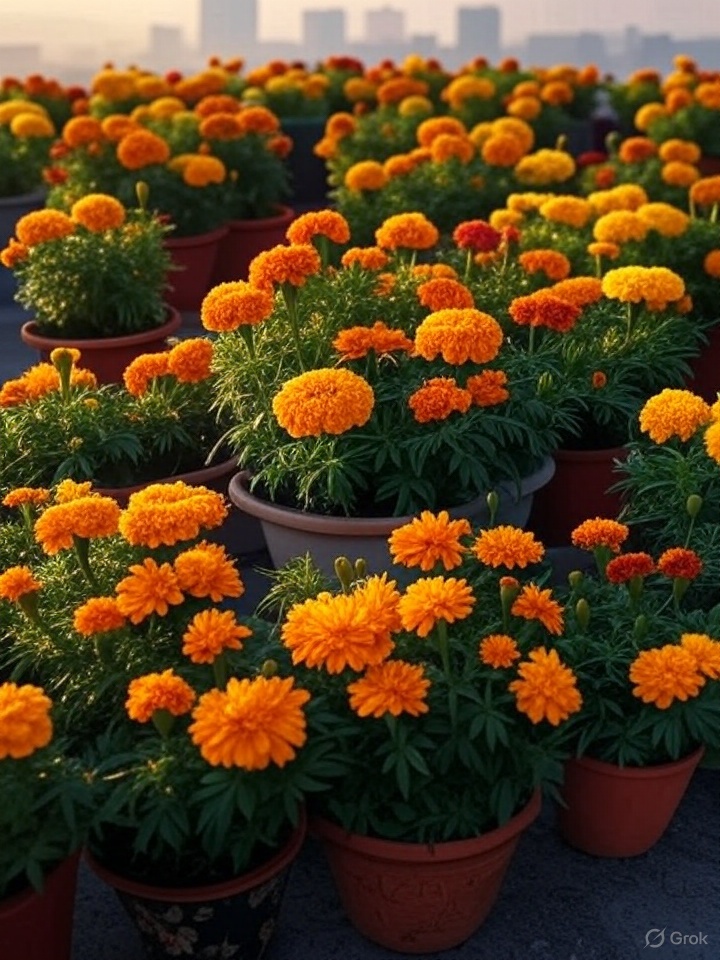
The marigold plant (Tagetes spp.), known as Genda in Hindi, is one of the most popular flowering plants in India and around the world. It is admired not only for its bright and attractive blooms but also for its wide use in decorations, festivals, religious rituals, medicinal remedies, and gardening purposes.
Marigolds are extremely easy to grow, require very little maintenance, and produce flowers continuously once they start blooming. This makes them a favorite for home gardens, balconies, and large landscapes.
French Marigold (Tagetes patula) – Smaller flowers in deep red, yellow, and orange shades, often with a strong fragrance.
From temples and weddings to festivals and gardens, marigolds hold immense importance in Indian culture. Beyond their beauty, they also offer medicinal, environmental, and economic benefits.
🌼 Benefits of Marigold Plant
1. Religious and Cultural Importance
Marigold flowers are considered auspicious in Hinduism.
They are commonly offered to Lord Ganesha and Hanuman during prayers.
Festivals like Diwali, Durga Puja, and Navratri use marigold garlands for decoration and rituals.
In weddings, marigold symbolizes good fortune and prosperity.
2. Ornamental and Gardening Uses
Marigolds bloom continuously once flowering begins.
They are perfect for borders, flower beds, and balcony decoration.
Their bright colors enhance the beauty of any garden space.
3. Medicinal Benefits
Marigolds contain antibacterial, antifungal, and anti-inflammatory properties.
A paste of leaves and flowers helps in skin infections and minor wounds.
Marigold tea reduces stomach issues and inflammation.
4. Environmental Benefits
The strong scent of marigolds repels mosquitoes, aphids, and harmful insects.
Farmers plant marigolds around crop fields as companion plants to reduce pests.
They also improve soil health naturally.
5. Economic Value
Marigold cultivation is low-cost and high-yield, making it profitable for farmers.
It has high demand throughout the year in markets for weddings, temples, and festivals.
🌱 How to Grow Marigold Plant
Marigolds can be grown easily from seeds, cuttings, or nursery saplings in pots and gardens.
1. Growing from Seeds
Prepare loose soil mixed with compost.
Sow seeds about 1–2 cm deep.
Cover lightly with soil and water gently.
Seeds germinate within 5–7 days.
2. Growing from Cuttings
Cut 4–5 inch long healthy stems.
Dip in rooting hormone and place in moist soil.
Roots appear within 10–15 days.
3. Growing in Pots
Use pots at least 8–10 inches deep with drainage holes.
गेंदा का पौधा (Marigold) भारत में सबसे लोकप्रिय फूलों में से एक है। यह न केवल देखने में सुंदर होता है बल्कि सजावट, पूजा-पाठ, औषधीय उपयोग और बागवानी के लिए भी बेहद महत्वपूर्ण है। गेंदा को गाँवों और शहरों में हर जगह आसानी से उगाया जाता है, क्योंकि इसे ज्यादा देखभाल की जरूरत नहीं होती और यह तेजी से बढ़कर ढेरों फूल देता है।
अफ्रीकन मैरीगोल्ड (African Marigold) – इसमें बड़े और चमकदार पीले-नारंगी रंग के फूल आते हैं।
फ्रेंच मैरीगोल्ड (French Marigold) – इसमें छोटे और गहरे लाल-पीले रंग के फूल होते हैं, जिनकी खुशबू हल्की लेकिन खास होती है।
गेंदा का पौधा घर और बगीचे की शोभा बढ़ाने के साथ-साथ धार्मिक, आयुर्वेदिक और पर्यावरणीय दृष्टि से भी लाभकारी है। यही कारण है कि भारत में हर त्यौहार, शादी या धार्मिक अनुष्ठान में गेंदा का फूल जरूर इस्तेमाल होता है।
🌼 गेंदा के पौधे के फायदे
1. धार्मिक और सांस्कृतिक महत्व
पूजा-पाठ में गेंदा के फूलों का विशेष महत्व है।
हनुमान जी और गणेश जी की पूजा में गेंदा का फूल शुभ माना जाता है।
दीपावली, दुर्गा पूजा और शादियों की सजावट में गेंदा की माला का इस्तेमाल शुभता और सौभाग्य लाता है।
2. सजावट और बागवानी में उपयोगी
गेंदा के पौधे में एक बार फूल आने शुरू हो जाएं तो यह लगातार फूल देता रहता है।
गेंदा की खूबसूरत कलियाँ बगीचे और गमले दोनों की शोभा बढ़ाती हैं।
इसे बॉर्डर प्लांट (boundary decoration) के रूप में भी लगाया जाता है।
3. औषधीय फायदे
गेंदा में एंटीबैक्टीरियल और एंटीफंगल गुण पाए जाते हैं।
इसकी पत्तियों और फूलों से बने लेप से घाव और त्वचा संक्रमण में राहत मिलती है।
गेंदा की चाय पीने से पेट से जुड़ी समस्याएं और सूजन कम होती है।
4. पर्यावरणीय फायदे
गेंदा की खुशबू कीड़े-मकोड़ों को दूर रखती है, खासकर मच्छर और कीट पतंगे।
इसे कई किसान अपने खेतों के किनारे लगाते हैं ताकि फसल में कीड़े न लगें।
गेंदा मिट्टी की सेहत सुधारने में मदद करता है और companion plant के रूप में काम करता है।
5. आर्थिक महत्व
गेंदा की खेती किसानों के लिए कम लागत और ज्यादा लाभ वाला व्यवसाय है।
बाजार में इसकी हमेशा मांग रहती है – चाहे धार्मिक आयोजन हों या शादियाँ।
🌱 गेंदा लगाने की विधि
गेंदा का पौधा लगाना बहुत आसान है। इसे आप चाहे तो बीज से, चाहे कटिंग से, और चाहे तो नर्सरी से तैयार पौधा खरीदकर गमले या बगीचे में लगा सकते हैं।
1. बीज से गेंदा लगाना
मिट्टी को अच्छे से भुरभुरी कर लें।
उसमें गोबर की खाद या वर्मी कम्पोस्ट मिला दें।
गेंदा के बीज को हल्के हाथों से 1–2 सेमी गहराई में बो दें।
ऊपर से हल्की मिट्टी डालकर पानी छिड़क दें।
5–7 दिन में अंकुरण (seedlings) निकल आते हैं।
2. कटिंग से गेंदा लगाना
गेंदा की 4–5 इंच लंबी ताजी डंडी काटें।
इसे रूटिंग हार्मोन पाउडर में डुबोकर नम मिट्टी में लगा दें।
10–15 दिन में इसमें जड़ें विकसित हो जाती हैं।
3. गमले में गेंदा लगाना
गेंदा के लिए कम से कम 8–10 इंच का गमला होना चाहिए।
गमले की मिट्टी में 40% गार्डन मिट्टी + 40% गोबर की खाद/वर्मी कम्पोस्ट + 20% रेत मिलाएं।
गमले में हमेशा छेद होना चाहिए ताकि पानी जमा न हो।
4. बगीचे में गेंदा लगाना
बगीचे की मिट्टी को 8–10 इंच तक खोदें।
उसमें जैविक खाद मिलाकर पौधा लगाएं।
पौधों के बीच 30–40 सेमी की दूरी रखें ताकि वे फैल सकें।
🌿 गेंदा की देखरेख के टिप्स
1. धूप (Sunlight)
गेंदा को 6–7 घंटे सीधी धूप चाहिए।
छाँव में फूल कम आते हैं।
2. पानी (Watering)
सप्ताह में 2–3 बार पानी दें।
गर्मियों में रोजाना हल्का पानी दें।
ध्यान रहे कि मिट्टी गीली रहे लेकिन पानी जमा न हो।
3. खाद (Fertilizers)
हर 20–25 दिन में गोबर की खाद या वर्मी कम्पोस्ट डालें।
अधिक फूलों के लिए फॉस्फोरस और पोटाश युक्त खाद उपयोगी होती है।
यूरिया का कम प्रयोग करें, वरना पौधा ज्यादा पत्तियाँ देगा लेकिन फूल कम आएंगे।
4. छंटाई (Pruning)
सूखे पत्ते और मुरझाए हुए फूल नियमित रूप से तोड़ दें।
इससे नए फूलों की कली जल्दी बनती है।
5. रोग और कीट नियंत्रण
गेंदा में अक्सर एफिड्स (aphids) और माइट्स (mites) का अटैक होता है।
इसके लिए नीम तेल का छिड़काव हफ्ते में एक बार करें।
यदि फंगस लगे तो बेकिंग सोडा पानी में मिलाकर छिड़क दें।
🌸 गेंदा से अधिक फूल पाने के आसान उपाय
गेंदा का पौधा वैसे तो आसानी से फूल देता है, लेकिन कुछ खास उपाय अपनाने से आप गमले और बगीचे दोनों में भरपूर फूल पा सकते हैं।
Everyone dreams of having a garden or balcony full of fragrant plants that spread a natural aroma and bloom with colorful flowers. These plants not only enhance the beauty of your home but also bring positivity and peace of mind.
In this article, we’ll explore the 10 most fragrant flowering plants that can be easily grown at home, along with their planting methods, care tips, and tricks to get maximum flowers.
🌿 1. Rose Plant 🌹
🌼 Highlights
Known as the King of Flowers.
Comes in various colors and varieties.
🌱 Planting Method
Choose a sunny spot.
Mix 60% garden soil + 30% compost + 10% sand.
Use nursery plants or stem cuttings.
🌿 Care
Water daily in the morning.
Needs 5–6 hours of sunlight.
Regular pruning is essential.
🌸 More Flowers Tip
Add organic fertilizer every 15–20 days.
Remove dried flowers quickly.
🌿 2. Jasmine Plant
🌼 Highlights
Strong fragrance, especially in the evenings.
Widely used in worship and decoration.
🌱 Planting Method
Can be grown in pots or garden soil.
Loamy soil works best.
🌿 Care
Prefers partial sunlight, not direct harsh sun.
Water 3–4 times a week.
🌸 More Flowers Tip
Apply bone meal or vermicompost before flowering season.
🌿 3. Arabian Jasmine (Mogra)
🌼 Highlights
Among the most aromatic flowers.
Grows easily in pots.
🌱 Planting Method
Well-draining soil is best.
Use nursery plant or stem cutting.
🌿 Care
Needs more water in summer.
Reduce watering in winter.
🌸 More Flowers Tip
Add organic fertilizer monthly.
Use neem spray to protect buds.
🌿 4. Tuberose (Rajnigandha)
🌼 Highlights
White fragrant flowers bloom at night.
Popular for garlands and perfumes.
🌱 Planting Method
Plant bulbs in March–April.
Mix sandy soil with compost.
🌿 Care
Needs full sunlight.
Water regularly.
🌸 More Flowers Tip
Loosen soil around the plant every few weeks.
🌿 5. Bela Plant
🌼 Highlights
Fragrant flowers widely used in religious rituals.
🌱 Planting Method
Can be planted in pots or ground.
Buy from a nursery for best results.
🌿 Care
Water 2–3 times a week.
Grows well in sunlight or partial shade.
🌸 More Flowers Tip
Add bone meal during summer.
🌿 6. Plumeria (Champa / Frangipani)
🌼 Highlights
Big, strongly fragrant flowers.
Common in temples and gardens.
🌱 Planting Method
Grows easily from stem cuttings.
Needs direct sunlight.
🌿 Care
Avoid overwatering.
Full sun is essential.
🌸 More Flowers Tip
Add phosphorus-rich fertilizer.
🌿 7. Night Jasmine (Raat ki Rani)
🌼 Highlights
Famous for its strong night fragrance.
Small clustered flowers.
🌱 Planting Method
Plant in large pots or ground.
Mix sandy soil + compost.
🌿 Care
Water 2–3 times a week.
Reduce watering in winter.
🌸 More Flowers Tip
Prune old branches regularly.
🌿 8. Hibiscus (Gudhal)
🌼 Highlights
Bright red, yellow, and white flowers.
Sacred in Hindu rituals.
🌱 Planting Method
Buy from nursery.
Use organic soil mix with compost.
🌿 Care
Needs 4–5 hours of sunlight.
Water 3–4 times a week.
🌸 More Flowers Tip
Add compost every 20 days.
🌿 9. Chrysanthemum (Guldaudi)
🌼 Highlights
Winter-blooming plant with colorful flowers.
Refreshing fragrance.
🌱 Planting Method
Propagate from cuttings in winter.
Use light soil + compost.
🌿 Care
Provide full sunlight.
Water moderately.
🌸 More Flowers Tip
Deadhead faded flowers immediately.
🌿 10. Marigold (Genda)
🌼 Highlights
Easiest and fastest flowering plant.
Common for worship and decoration.
🌱 Planting Method
Grows easily from seeds.
Choose a sunny spot.
🌿 Care
Water regularly.
Loosen soil every 10–15 days.
🌸 More Flowers Tip
Add phosphorus and potash fertilizer.
🌺 General Tips for More Flowers
Ensure 4–6 hours of sunlight daily.
Use organic compost every 2–3 weeks.
Remove old/dry flowers to encourage new blooms.
Loosen soil for proper root aeration.
Use neem oil spray for pest control.
🌸 Conclusion
If you want your garden or balcony to be filled with fragrance and colorful flowers, then definitely grow these 10 fragrant flowering plants. They are easy to maintain, look beautiful, and bring freshness, positivity, and peace to your home.
हर किसी का सपना होता है कि घर या गार्डन में ऐसे पौधे हों जो सुगंध (fragrance) से वातावरण को महकाएँ और ढेरों फूल दें। ऐसे पौधे न सिर्फ घर को सुंदर बनाते हैं बल्कि मन को शांति और सकारात्मकता भी देते हैं।
आज हम आपको बताएँगे 10 सबसे खुशबूदार फूलों वाले पौधे जिन्हें आप घर के गमले या बगीचे में आसानी से उगा सकते हैं, साथ ही उनकी लगाने की विधि, देखभाल और ज्यादा फूल पाने के टिप्स।
🌿 1. गुलाब (Rose Plant)
🌼 विशेषताएँ
“फूलों का राजा” गुलाब सबसे ज्यादा पसंद किया जाने वाला खुशबूदार पौधा है।
यह अलग-अलग रंग और आकार के फूल देता है।
🌱 लगाने की विधि
अच्छी धूप वाली जगह चुनें।
गमले में 60% मिट्टी, 30% गोबर की खाद और 10% बालू मिलाएँ।
कटिंग या नर्सरी से पौधा लगाएँ।
🌿 देखभाल
रोज़ाना सुबह पानी दें।
धूप कम से कम 5–6 घंटे मिले।
समय-समय पर pruning करें।
🌸 ज्यादा फूल पाने के टिप्स
15–20 दिन में जैविक खाद डालें।
सूखे फूल काटते रहें।
🌿 2. चमेली (Jasmine Plant)
🌼 विशेषताएँ
चमेली की खुशबू शाम को पूरे वातावरण को महका देती है।
पूजा और सजावट में इसका उपयोग होता है।
🌱 लगाने की विधि
गमले या ज़मीन में लगाएँ।
हल्की दोमट मिट्टी सबसे अच्छी रहती है।
🌿 देखभाल
ज्यादा धूप न दें, आंशिक छाया अच्छी रहती है।
हफ्ते में 3–4 बार पानी दें।
🌸 ज्यादा फूल पाने के टिप्स
फूल आने से पहले पौधे में हड्डी की खाद या वर्मी कम्पोस्ट डालें।
🌿 3. मोगरा (Arabian Jasmine)
🌼 विशेषताएँ
मोगरे की खुशबू सबसे मोहक होती है।
गमले में भी आसानी से उग जाता है।
🌱 लगाने की विधि
अच्छी जल निकासी वाली मिट्टी उपयोग करें।
कटिंग या पौधा नर्सरी से लें।
🌿 देखभाल
गर्मियों में ज्यादा पानी दें।
सर्दियों में कम पानी दें।
🌸 ज्यादा फूल पाने के टिप्स
हर महीने जैविक खाद डालें।
कली आने पर पत्तियों पर नीम का स्प्रे करें।
🌿 4. रजनीगंधा (Tuberose Plant)
🌼 विशेषताएँ
इसकी सफेद कलियाँ रात में खुशबू फैलाती हैं।
फूलमाला और इत्र बनाने में प्रयोग होता है।
🌱 लगाने की विधि
इसकी कलियाँ (bulbs) मार्च–अप्रैल में लगाएँ।
मिट्टी में रेत और गोबर की खाद मिलाएँ।
🌿 देखभाल
धूप वाली जगह रखें।
नियमित पानी दें।
🌸 ज्यादा फूल पाने के टिप्स
समय-समय पर पौधे की मिट्टी को ढीला करें।
🌿 5. बेला (Bela Plant)
🌼 विशेषताएँ
बेला के फूल सुगंधित और धार्मिक कार्यों में उपयोगी होते हैं।
🌱 लगाने की विधि
बेलदार पौधा गमले या जमीन दोनों में उग सकता है।
नर्सरी से पौधा लें।
🌿 देखभाल
हफ्ते में 2–3 बार पानी दें।
धूप और हल्की छाया दोनों में अच्छा रहता है।
🌸 ज्यादा फूल पाने के टिप्स
गर्मी में हड्डी की खाद डालें।
🌿 6. चंपा (Plumeria/Frangipani)
🌼 विशेषताएँ
बड़े और सुगंधित फूलों वाला पौधा।
मंदिरों और बगीचों में लोकप्रिय।
🌱 लगाने की विधि
कटिंग से भी आसानी से उग जाता है।
धूप वाली जगह पर लगाएँ।
🌿 देखभाल
पानी जरूरत से ज्यादा न दें।
धूप आवश्यक है।
🌸 ज्यादा फूल पाने के टिप्स
फॉस्फोरस युक्त खाद डालें।
🌿 7. रातरानी (Raat ki Rani – Night Jasmine)
🌼 विशेषताएँ
इसकी खुशबू रात में सबसे ज्यादा फैलती है।
छोटे-छोटे फूल आते हैं।
🌱 लगाने की विधि
बड़ी जगह या बड़े गमले में लगाएँ।
मिट्टी में बालू और खाद मिलाएँ।
🌿 देखभाल
हफ्ते में 2–3 बार पानी दें।
सर्दी में पानी कम करें।
🌸 ज्यादा फूल पाने के टिप्स
पुराने टहनियों की कटाई करें।
🌿 8. हिबिस्कस (Gudhal Plant)
🌼 विशेषताएँ
सुंदर लाल, पीले, और सफेद फूल।
पूजा में विशेष महत्व।
🌱 लगाने की विधि
नर्सरी से पौधा लें।
गमले में जैविक मिट्टी और खाद डालें।
🌿 देखभाल
4–5 घंटे धूप चाहिए।
हफ्ते में 3–4 बार पानी दें।
🌸 ज्यादा फूल पाने के टिप्स
हर 20 दिन में गोबर की खाद डालें।
🌿 9. गुलदाउदी (Chrysanthemum)
🌼 विशेषताएँ
सर्दियों में खूबसूरत रंगीन फूल देता है।
इसकी खुशबू ताजगी देती है।
🌱 लगाने की विधि
सर्दियों में कटिंग से लगाएँ।
हल्की मिट्टी और खाद का मिश्रण डालें।
🌿 देखभाल
रोज़ धूप दें।
पानी संतुलित मात्रा में दें।
🌸 ज्यादा फूल पाने के टिप्स
सूखे फूल तुरंत काट दें।
🌿 10. गेंदा (Marigold)
🌼 विशेषताएँ
सबसे आसान और जल्दी फूलने वाला पौधा।
पूजा और सजावट के लिए उत्तम।
🌱 लगाने की विधि
बीज से भी आसानी से उगता है।
धूप वाली जगह चुनें।
🌿 देखभाल
पानी नियमित दें।
मिट्टी को समय-समय पर ढीला करें।
🌸 ज्यादा फूल पाने के टिप्स
फॉस्फोरस और पोटाश युक्त खाद डालें।
🌺 ज्यादा फूल पाने के सामान्य टिप्स
पौधों को रोज़ाना कम से कम 4–6 घंटे धूप दें।
नियमित रूप से जैविक खाद डालें।
पुराने और सूखे फूल काटते रहें।
पौधे की मिट्टी को ढीला करें ताकि जड़ें सांस ले सकें।
कीटों से बचाने के लिए नीम तेल स्प्रे करें।
🌸 निष्कर्ष
अगर आप चाहते हैं कि आपका गार्डन या बालकनी हमेशा सुगंधित और रंग-बिरंगे फूलों से भरा रहे, तो इन 10 खुशबूदार पौधों को ज़रूर लगाएँ। ये न केवल सुंदर और आसान देखभाल वाले हैं, बल्कि आपके घर के वातावरण को शुद्ध, सकारात्मक और आनंदमय बना देंगे।
कमल का पौधा (Lotus Plant) भारतीय संस्कृति, आयुर्वेद, वास्तु और धार्मिक दृष्टि से अत्यंत पवित्र और शुभ माना जाता है। यह सिर्फ एक सुंदर जलज पौधा ही नहीं है, बल्कि समृद्धि, शांति और अध्यात्म का प्रतीक भी है। हिंदू धर्म में माँ लक्ष्मी और भगवान विष्णु के चरणों में कमल का विशेष महत्व बताया गया है। यही कारण है कि कमल का फूल और पौधा दोनों ही घर और बगीचे की शोभा बढ़ाने के साथ-साथ सकारात्मक ऊर्जा भी लाते हैं।
आजकल लोग घर के तालाब, छोटे वाटर टैंक, बगीचे के वाटर पॉट्स या यहां तक कि बालकनी गार्डन में भी कमल का पौधा लगाते हैं। यह न केवल देखने में आकर्षक होता है, बल्कि यह आपके घर में पवित्रता, शांति, और सुख-समृद्धि लाने का काम भी करता है।
1. कमल पौधे का धार्मिक महत्व
हिंदू शास्त्रों में कमल को पवित्रता और सौंदर्य का प्रतीक बताया गया है।
माँ लक्ष्मी और सरस्वती दोनों ही देवी कमल पर विराजमान होती हैं।
पूजा-पाठ में कमल का फूल विशेष महत्व रखता है।
घर में कमल का पौधा लगाने से देवी लक्ष्मी की कृपा प्राप्त होती है और धन-धान्य की वृद्धि होती है।
2. कमल पौधे का वैज्ञानिक महत्व
कमल का पौधा जल को स्वच्छ और ठंडा बनाए रखने में मदद करता है।
इसकी पत्तियाँ धूल और गंदगी को अपने ऊपर टिकने नहीं देतीं, इसलिए यह Self-Cleaning Plant कहलाता है।
यह पौधा पर्यावरण शुद्धिकरण और ऑक्सीजन संतुलन में भी योगदान देता है।
3. घर की सुंदरता और आकर्षण
अगर आपके घर में वॉटर गार्डन या छोटा-सा तालाब है तो उसमें खिले कमल के फूल आपके बगीचे को स्वर्ग समान बना देंगे। कमल की बड़ी हरी पत्तियाँ और खिलते हुए फूल घर की प्राकृतिक सुंदरता को चार चांद लगाते हैं।
4. क्यों लगाना चाहिए कमल का पौधा?
यह घर में सकारात्मक ऊर्जा और शांति लाता है।
वास्तु दोष दूर करने में मदद करता है।
धार्मिक और आध्यात्मिक महत्व रखता है।
घर की सुंदरता बढ़ाता है।
जल को शुद्ध और ठंडा बनाए रखता है।
👉 कुल मिलाकर, कमल का पौधा सिर्फ एक बागवानी पौधा नहीं, बल्कि धन-समृद्धि, सौभाग्य और शांति का दाता है। अगर आप अपने घर में कमल का पौधा उगाते हैं, तो यह आपके जीवन में सौंदर्य + अध्यात्म + समृद्धि तीनों का संगम लेकर आता है।
🌸 कमल के पौधे के चमत्कारिक फायदे
कमल का पौधा न केवल देखने में सुंदर है, बल्कि इसके फायदे भी असीमित हैं। भारतीय संस्कृति में इसे “पवित्रता, समृद्धि और सौभाग्य” का प्रतीक माना गया है। आयुर्वेद, धार्मिक शास्त्रों और वास्तु के अनुसार कमल का पौधा घर में लगाने से आध्यात्मिक, स्वास्थ्यवर्धक और पर्यावरणीय लाभ मिलते हैं।
आइए जानते हैं कमल के पौधे के प्रमुख चमत्कारिक फायदे—
1. धार्मिक और आध्यात्मिक फायदे
(क) माँ लक्ष्मी की कृपा
कमल का फूल और पौधा माँ लक्ष्मी का प्रिय माना जाता है। घर में कमल लगाने से धन की वृद्धि होती है और परिवार में सुख-शांति बनी रहती है।
(ख) पूजा-पाठ में महत्व
देवी लक्ष्मी और सरस्वती की आराधना में कमल का फूल विशेष रूप से चढ़ाया जाता है।
दीपावली और नवरात्रि में घर में कमल रखने से पूजा का फल कई गुना बढ़ जाता है।
(ग) अध्यात्म का प्रतीक
कमल का फूल कीचड़ में भी खिलता है लेकिन शुद्ध और सुंदर बना रहता है। इसलिए यह जीवन में पवित्रता, संघर्ष और सफलता का प्रतीक है।
2. स्वास्थ्य संबंधी फायदे
आयुर्वेद और आधुनिक विज्ञान दोनों ही कमल के पौधे के स्वास्थ्य लाभों को मान्यता देते हैं।
तनाव दूर करता है: कमल के फूल की खुशबू मन को शांति देती है और अवसाद कम करती है।
हृदय के लिए लाभकारी: कमल के बीज (मखाना) हृदय और ब्लड प्रेशर के लिए लाभदायक हैं।
पाचन शक्ति बढ़ाता है: कमल की जड़ और बीज का सेवन पाचन को बेहतर बनाता है।
एंटीऑक्सीडेंट गुण: कमल में ऐसे तत्व पाए जाते हैं जो शरीर को रोगों से बचाते हैं और इम्युनिटी बढ़ाते हैं।
त्वचा के लिए अच्छा: कमल के फूल से बने फेस पैक त्वचा को निखारते और झुर्रियों को कम करते हैं।
3. वास्तु और फेंगशुई के अनुसार फायदे
कमल के पौधे का वास्तु शास्त्र और फेंगशुई दोनों में विशेष महत्व है।
सकारात्मक ऊर्जा: घर में कमल का पौधा लगाने से नकारात्मक ऊर्जा दूर होती है।
धन की वृद्धि: घर के उत्तर-पूर्व (ईशान कोण) में कमल लगाने से धन और समृद्धि आती है।
वास्तु दोष दूर करता है: यदि घर में वास्तु दोष है तो कमल का पौधा लगाना शुभ माना जाता है।
फेंगशुई में महत्व: चीन में कमल को पवित्रता और सौभाग्य का प्रतीक माना जाता है। घर में कमल रखने से रिश्तों में मधुरता आती है।
4. पर्यावरणीय फायदे
कमल का पौधा सिर्फ धार्मिक और स्वास्थ्य लाभ ही नहीं देता, बल्कि यह पर्यावरण के लिए भी उपयोगी है।
जल शुद्धिकरण: कमल का पौधा पानी को स्वच्छ और शीतल बनाए रखता है।
ऑक्सीजन संतुलन: जल में ऑक्सीजन स्तर बनाए रखने में मदद करता है।
प्राकृतिक सुंदरता: तालाब या वॉटर पॉट में कमल लगाने से वातावरण आकर्षक और शांतिपूर्ण बनता है।
कीटों को दूर करता है: कमल की पत्तियाँ मच्छरों और कीटों को कम करने में मदद करती हैं।
5. घर-परिवार पर सकारात्मक प्रभाव
घर में शांति और सामंजस्य बनाए रखता है।
दांपत्य जीवन में प्रेम और समझ बढ़ाता है।
बच्चों की पढ़ाई और एकाग्रता में लाभकारी।
व्यापार और नौकरी में तरक्की के योग बनते हैं।
6. आर्थिक और सामाजिक फायदे
कमल का पौधा सिर्फ धार्मिक और स्वास्थ्य लाभ ही नहीं देता, बल्कि यह आर्थिक रूप से भी लाभकारी है।
कमल की खेती से अच्छी आय प्राप्त होती है।
कमल के बीज (मखाने) बाजार में बहुत मांग में हैं।
कमल के फूल पूजा-पाठ, शादी और सजावट में खूब बिकते हैं।
कमल की पत्तियाँ खाने परोसने और दवाई बनाने में उपयोग की जाती हैं।
✨ संक्षेप में: कमल का पौधा घर में लगाने से आपको धार्मिक, स्वास्थ्य, वास्तु और पर्यावरणीय सभी लाभ मिलते हैं। यह न केवल आपके जीवन में सकारात्मक ऊर्जा लाता है बल्कि आपके स्वास्थ्य, धन और परिवारिक जीवन को भी समृद्ध करता है।
🌸 घर पर कमल का पौधा लगाने की विधि (स्टेप बाय स्टेप गाइड)
कमल का पौधा लगाना थोड़ा अलग और विशेष प्रक्रिया है क्योंकि यह मिट्टी में नहीं बल्कि जल (Water Plant) में पनपता है। यदि सही तरीके से लगाया जाए तो यह आसानी से आपके घर के बगीचे, बालकनी या छत पर भी सुंदरता बिखेर सकता है।
आइए जानते हैं कि घर पर कमल का पौधा कैसे उगाया जा सकता है—
1. कमल लगाने के लिए स्थान का चुनाव
कमल को बढ़ने के लिए धूप और जल दोनों की आवश्यकता होती है।
पौधे को ऐसी जगह रखें जहाँ कम से कम 5-6 घंटे की धूप आती हो।
यदि आपके पास तालाब नहीं है तो आप बड़े कंटेनर, वाटर टैंक, टब या गार्डन पॉट का इस्तेमाल कर सकते हैं।
2. मिट्टी और कंटेनर की तैयारी
कमल का पौधा मिट्टी के बजाय कीचड़ वाली उपजाऊ मिट्टी (clay soil) में ज्यादा अच्छा पनपता है।
कंटेनर का चुनाव:
चौड़ा और गहरा कंटेनर चुनें (कम से कम 12–18 इंच गहरा)।
नीचे छेद न हो, ताकि पानी रिसे नहीं।
मिट्टी की तैयारी:
70% चिकनी मिट्टी (clay soil) और 30% गोबर की खाद मिलाएँ।
केमिकल फर्टिलाइज़र का प्रयोग न करें।
3. कमल के बीज या कंद (Rhizome) से पौधा लगाना
कमल को दो तरीकों से लगाया जा सकता है—
(क) बीज से
बीज तैयार करना:
कमल के बीज का बाहरी आवरण बहुत कठोर होता है।
इसे सैंडपेपर से हल्का रगड़कर तोड़ना पड़ता है ताकि अंकुरण हो सके।
अंकुरण प्रक्रिया:
बीजों को एक गिलास साफ पानी में डालें।
5–7 दिनों में बीज अंकुरित हो जाते हैं।
हर दिन पानी बदलना ज़रूरी है।
रोपाई:
जब अंकुर 5–6 इंच लंबे हो जाएँ, तब इन्हें कंटेनर की मिट्टी में 2–3 इंच गहराई पर लगाएँ।
ऊपर से पानी भर दें।
(ख) कंद (Rhizome) से
यह सबसे आसान और तेज़ तरीका है।
नर्सरी से स्वस्थ कमल का कंद लें।
इसे मिट्टी में क्षैतिज रूप से रखें और ऊपर से हल्की मिट्टी डाल दें।
कंटेनर में पानी भर दें।
कुछ ही दिनों में नई पत्तियाँ निकलने लगेंगी।
4. पानी भरने और स्तर बनाए रखने की विधि
कमल हमेशा स्थिर पानी (still water) में पनपता है।
पानी का स्तर पत्तियों से 2–4 इंच ऊपर होना चाहिए।
समय-समय पर ताज़ा पानी डालते रहें।
गंदा पानी या ज्यादा क्लोरीन वाला पानी न डालें।
5. खाद डालना
कमल के पौधे को ज्यादा खाद की जरूरत नहीं होती।
महीने में एक बार जैविक खाद या गोबर की खाद डालना पर्याप्त है।
फूल आने के मौसम (गर्मी और बरसात) में पौधे को पौष्टिकता ज्यादा चाहिए होती है।
6. मौसमी देखभाल
गर्मी: यह कमल की पसंदीदा ऋतु है, पौधा तेजी से बढ़ता है।
बरसात: पर्याप्त पानी होने से पौधा खूब खिलता है।
सर्दी: ठंडी हवा और कम तापमान में पौधा सुप्तावस्था (dormant) में चला जाता है। इस समय इसे सुरक्षित जगह पर रखें।
7. गमले या तालाब में सजावट
यदि आपके पास बगीचे में छोटा तालाब है तो उसमें कमल लगाना सबसे अच्छा है।
अगर जगह कम है तो बालकनी या छत पर सुंदर वॉटर पॉट में भी कमल लगाया जा सकता है।
कमल के साथ आप वॉटर लिली या अन्य जल पौधे भी लगा सकते हैं ताकि गार्डन और आकर्षक लगे।
8. शुरुआती माली के लिए सुझाव
शुरुआत में कंद से पौधा लगाना आसान होता है।
बीज से पौधा लगाने में समय और धैर्य की जरूरत होती है।
ज्यादा गहराई में न लगाएँ, वरना पौधा बढ़ नहीं पाएगा।
ध्यान रखें कि कंटेनर में पानी हमेशा ताज़ा और साफ हो।
✨ संक्षेप में: कमल का पौधा लगाने के लिए आपको बस सही मिट्टी, साफ पानी और धूप की जरूरत है। चाहे आपके पास बड़ा तालाब हो या छोटा पॉट, आप कहीं भी कमल का पौधा सफलतापूर्वक उगा सकते हैं और घर की सुंदरता व सकारात्मक ऊर्जा बढ़ा सकते हैं।
🌸 कमल के पौधे की देखभाल के आसान उपाय
कमल का पौधा (Lotus Plant) देखने में जितना सुंदर होता है, उतनी ही विशेष देखभाल भी चाहता है। अगर आप इसे सही ढंग से सँभालें तो यह सालों तक आपके घर, बगीचे या तालाब की शोभा बढ़ाता रहेगा।
आइए जानते हैं कमल के पौधे की देखभाल के मुख्य उपाय—
1. धूप की व्यवस्था
कमल का पौधा धूप प्रेमी होता है।
इसे रोज़ाना कम से कम 5 से 6 घंटे की सीधी धूप मिलनी चाहिए।
यदि धूप कम मिलेगी तो पौधा कमजोर हो जाएगा और फूल नहीं खिलेंगे।
बालकनी या छत पर रखें तो कोशिश करें कि पौधा दक्षिण या पूर्व दिशा में हो।
2. पानी की देखभाल
कमल जलज पौधा है, इसलिए इसके लिए पानी का महत्व सबसे ज्यादा है।
पानी का स्तर:
छोटे पौधों के लिए पत्तियों से 2–3 इंच ऊपर तक पानी रखें।
बड़े पौधों के लिए 6–8 इंच तक पानी भर सकते हैं।
पानी की गुणवत्ता:
साफ और ताज़ा पानी ही इस्तेमाल करें।
क्लोरीन या केमिकल मिला पानी (जैसे टंकी का नया पानी) तुरंत न डालें।
अगर टंकी का पानी इस्तेमाल करना हो तो पहले 24 घंटे खुले में रखें।
पानी बदलना:
हर 15–20 दिन में आंशिक रूप से पानी बदल दें।
गंदे पानी में पौधा बीमार पड़ सकता है।
3. खाद और पोषण
कमल के पौधे को ज्यादा खाद की आवश्यकता नहीं होती।
जैविक खाद (गोबर की खाद या वर्मी कम्पोस्ट) सबसे अच्छा विकल्प है।
फूल आने के मौसम में (गर्मी और बरसात) महीने में एक बार खाद डालना जरूरी है।
केमिकल उर्वरक का प्रयोग न करें, वरना पौधे की जड़ें (कंद) खराब हो सकती हैं।
4. पत्तियों और फूलों की देखभाल
सूखी या पीली पत्तियाँ समय-समय पर हटा दें।
मुरझाए हुए फूल तुरंत तोड़ दें, ताकि पौधे की ऊर्जा नए फूलों में लगे।
पत्तियों पर धूल जम जाए तो हल्के पानी से साफ कर दें।
5. कीट और रोग नियंत्रण
कमल का पौधा सामान्यत: मजबूत होता है, लेकिन कभी-कभी कीट इसका नुकसान कर सकते हैं।
एफिड्स (Aphids): ये छोटे कीट पत्तियों का रस चूस लेते हैं। हल्के साबुन के पानी का स्प्रे करने से ये दूर हो जाते हैं।
फंगल संक्रमण: गंदे पानी या ज्यादा नमी के कारण होता है। पौधे को धूप में रखें और जरूरत हो तो नीम तेल का छिड़काव करें।
मच्छर: पानी स्थिर रहने से मच्छर पैदा हो सकते हैं। इसके लिए पानी में गप्पी मछली छोड़ सकते हैं, जो मच्छरों के लार्वा खा लेती है।
6. मौसमी देखभाल
गर्मी में:
पौधा तेजी से बढ़ता है और फूल खिलते हैं।
नियमित खाद और धूप दें।
बरसात में:
पर्याप्त पानी मिलता है, इसलिए यह पौधे का स्वर्णिम मौसम होता है।
ध्यान रखें कि पानी बहुत गंदा न हो।
सर्दियों में:
ठंडी हवा और कम धूप के कारण पौधा सुप्तावस्था (Dormant) में चला जाता है।
पत्तियाँ सूख सकती हैं, लेकिन कंद मिट्टी में सुरक्षित रहता है।
कंटेनर को ऐसी जगह रखें जहाँ बहुत ज्यादा ठंड न लगे।
7. गमले और कंटेनर की देखभाल
अगर आप कंटेनर में कमल उगा रहे हैं तो ध्यान दें कि कंटेनर चौड़ा और गहरा होना चाहिए।
कंटेनर में छेद नहीं होना चाहिए, ताकि पानी बाहर न निकले।
हर 2–3 साल में कंद को नई मिट्टी में स्थानांतरित करें।
8. कमल को लंबे समय तक जीवित रखने के टिप्स
बीज से उगाए पौधे को मजबूत बनने में समय लगता है, धैर्य रखें।
कंद से उगाया पौधा जल्दी और आसानी से बढ़ता है।
पानी को हमेशा स्थिर रखें, लेकिन गंदगी जमा न होने दें।
पौधे को तेज़ हवाओं और पालतू जानवरों से बचाकर रखें।
नियमित अंतराल पर पौधे की जड़ों की जाँच करें।
✨ संक्षेप में: कमल के पौधे की देखभाल का मुख्य आधार है – साफ पानी, भरपूर धूप और हल्की खाद। अगर आप इन बातों का ध्यान रखेंगे तो आपका कमल का पौधा सालों तक खिलेगा और घर को सौंदर्य और सकारात्मकता से भर देगा।
🌸 कमल पौधे से जुड़े सामान्य प्रश्न (FAQ)
कमल का पौधा उगाने और उसकी देखभाल को लेकर लोगों के मन में कई सवाल होते हैं। यहाँ हमने आपके लिए सबसे अधिक पूछे जाने वाले प्रश्न और उनके उत्तर दिए हैं—
❓ प्रश्न 1: क्या कमल का पौधा घर में गमले में लगाया जा सकता है?
👉 हाँ, बिल्कुल। यदि आपके पास तालाब या बड़ा टैंक नहीं है तो आप चौड़े और गहरे कंटेनर में कमल उगा सकते हैं। कंटेनर कम से कम 12–18 इंच गहरा होना चाहिए और उसमें छेद नहीं होना चाहिए।
❓ प्रश्न 2: कमल का पौधा बीज से लगाना आसान है या कंद (Rhizome) से?
👉 कंद से लगाना आसान और तेज़ तरीका है क्योंकि इसमें पौधा जल्दी पनपता है। बीज से लगाने पर अंकुरण और बढ़त में समय ज्यादा लगता है और धैर्य की आवश्यकता होती है।
❓ प्रश्न 3: कमल का पौधा कितने समय में फूल देता है?
👉 यदि आप कंद से पौधा लगाते हैं तो 2–3 महीनों में फूल आने लगते हैं। बीज से लगाए गए पौधे को फूल आने में 8–12 महीने लग सकते हैं।
❓ प्रश्न 4: क्या कमल का पौधा सालभर फूल देता है?
👉 नहीं। कमल के फूल मुख्य रूप से गर्मी और बरसात के मौसम में आते हैं। सर्दियों में पौधा सुप्तावस्था (Dormant) में चला जाता है और पत्तियाँ सूख सकती हैं, लेकिन कंद मिट्टी में सुरक्षित रहता है।
❓ प्रश्न 5: क्या कमल का पौधा बिना धूप के उग सकता है?
👉 नहीं। कमल को कम से कम 5–6 घंटे सीधी धूप मिलना आवश्यक है। बिना धूप के पौधा कमजोर हो जाएगा और फूल नहीं खिलेगा।
❓ प्रश्न 6: कमल के पौधे के लिए किस प्रकार की मिट्टी सबसे अच्छी होती है?
👉 कमल को चिकनी मिट्टी (clay soil) पसंद है। इसमें थोड़ी जैविक खाद (गोबर की खाद या वर्मी कम्पोस्ट) मिलाना सबसे अच्छा रहता है। रेतीली या बहुत ढीली मिट्टी उपयुक्त नहीं होती।
❓ प्रश्न 7: क्या कमल का पौधा सर्दियों में मर जाता है?
👉 नहीं। सर्दियों में पौधा सुप्तावस्था में चला जाता है। पत्तियाँ और फूल सूख सकते हैं, लेकिन जड़ (कंद) मिट्टी में जीवित रहती है। जैसे ही मौसम बदलता है, नई पत्तियाँ और फूल आने लगते हैं।
❓ प्रश्न 8: कमल के पौधे को खाद कब और कैसे दें?
👉 फूल आने के मौसम में (गर्मी और बरसात) महीने में एक बार जैविक खाद देना पर्याप्त है। अधिक खाद डालने से पौधे को नुकसान हो सकता है।
❓ प्रश्न 9: क्या कमल के पौधे में कीड़े लगते हैं?
👉 कभी-कभी एफिड्स (Aphids) या फंगल रोग हो सकते हैं। इसके लिए हल्के साबुन के पानी का स्प्रे या नीम तेल का छिड़काव करें। पानी हमेशा साफ रखें।
❓ प्रश्न 10: क्या कमल का पौधा घर में वास्तु के अनुसार शुभ है?
👉 हाँ, वास्तु शास्त्र के अनुसार कमल का पौधा घर में लगाने से धन, समृद्धि और सकारात्मक ऊर्जा आती है। इसे घर के उत्तर-पूर्व दिशा (ईशान कोण) में लगाना सबसे शुभ माना गया है।
❓ प्रश्न 11: क्या कमल के पौधे को घर के अंदर (Indoor) रखा जा सकता है?
👉 यदि घर के अंदर पर्याप्त धूप आती हो (जैसे बड़ी खिड़की के पास), तो रखा जा सकता है। लेकिन सामान्यतः यह पौधा बाहर (आउटडोर) ही ज्यादा अच्छा पनपता है।
❓ प्रश्न 12: कमल का पौधा कितने साल तक जीवित रहता है?
👉 यदि सही देखभाल की जाए तो कमल का पौधा कई सालों तक जीवित रह सकता है। इसके कंद को हर 2–3 साल में नई मिट्टी में स्थानांतरित करना चाहिए।
✨ संक्षेप में: कमल का पौधा उगाना बहुत कठिन नहीं है। यदि आप सही मिट्टी, साफ पानी और पर्याप्त धूप का ध्यान रखें तो यह आसानी से बढ़ता है और आपके घर में शुभता और सुंदरता दोनों लाता है।
🌸 निष्कर्ष
कमल का पौधा भारतीय संस्कृति और जीवनशैली में धार्मिक, आध्यात्मिक, स्वास्थ्य और वास्तु – चारों ही दृष्टिकोण से अत्यंत महत्वपूर्ण है। यह न केवल आपके घर की शोभा बढ़ाता है, बल्कि आपके जीवन में शांति, समृद्धि और सौभाग्य भी लाता है।
हमने इस पूरे लेख में जाना कि—
कमल के पौधे के चमत्कारिक फायदे (धार्मिक, स्वास्थ्य, वास्तु और पर्यावरण)।
घर पर कमल का पौधा लगाने की विधि (बीज और कंद से)।
पौधे की देखभाल के आसान और उपयोगी उपाय।
वास्तु शास्त्र और धन-समृद्धि में कमल का महत्व।
और साथ ही, इससे जुड़े सामान्य प्रश्नों के उत्तर भी।
👉 अगर आप अपने घर, बगीचे या छत पर कमल का पौधा उगाते हैं, तो यह आपके जीवन को आध्यात्मिकता, सकारात्मकता और सुंदरता से भर देगा।
भारतीय संस्कृति में फूलों का महत्व अत्यधिक है। चाहे घर का दैनिक पूजन हो, मंदिर का अनुष्ठान हो या कोई विशेष पर्व-त्योहार – फूल पूजा का अभिन्न अंग होते हैं। फूल न केवल भगवान को अर्पित करने से हमें आध्यात्मिक शांति और सकारात्मक ऊर्जा प्रदान करते हैं, बल्कि ये घर-आंगन की शोभा भी बढ़ाते हैं।
Best flower plants to grow on rooftop garden
इस लेख में हम विस्तार से जानेंगे:
पूजा में प्रयुक्त 12 प्रमुख फूलों के पौधे
उनके धार्मिक और वैज्ञानिक महत्व
लगाने की सही विधि
देखभाल के उपाय
अधिक फूल पाने के घरेलू और जैविक उपाय
भाग 1: पूजा में प्रयुक्त 12 प्रमुख फूलों की सूची
1. गुलाब (Rose)
धार्मिक महत्व: मां लक्ष्मी और भगवान विष्णु को अर्पित करने में शुभ।
विशेषता: खुशबूदार और रंग-बिरंगे फूल।
Yellow rose plant for home gardening
2. गेंदे का फूल (Marigold)
धार्मिक महत्व: भगवान गणेश और मां दुर्गा की पूजा में अनिवार्य।
विशेषता: सजावट और माला बनाने में सबसे अधिक प्रयोग।
Hybrid marigold orange plant
3. चमेली (Jasmine)
धार्मिक महत्व: भगवान शिव और विष्णु को प्रिय।
विशेषता: रात में खिलने वाली सुगंधित किस्में।
order chmeli plant online
4. हरसिंगार/पारिजात (Parijat / Night Jasmine)
धार्मिक महत्व: विष्णु पूजन और तुलसी विवाह में आवश्यक।
विशेषता: सुबह गिरे सफेद-नारंगी फूल।
harsingar-parijaat plant home delivery
5. चंपा (Plumeria / Frangipani)
धार्मिक महत्व: शिव और विष्णु पूजा में शुभ।
विशेषता: सुगंधित और सफेद-पीलापन लिए फूल।
Champa live plant for home and garden
6. अपराजिता (Clitoria ternatea / Butterfly Pea)
धार्मिक महत्व: भगवान गणेश और मां दुर्गा को प्रिय।
विशेषता: नीले और सफेद फूल, औषधीय गुणों से भरपूर।
aprajita ki bel
7. केतकी (Pandanus)
धार्मिक महत्व: शिव पूजा में वर्जित, परन्तु विष्णु पूजा में उपयोगी।
विशेषता: सुघंधित और सफेद रंग के फूल।
ketki ka podha
8. कमल (Lotus)
धार्मिक महत्व: मां लक्ष्मी और ब्रह्मा को प्रिय।
विशेषता: पवित्रता और धन-समृद्धि का प्रतीक।
9. तुलसी (Tulsi Flower)
धार्मिक महत्व: विष्णु और कृष्ण पूजा में अनिवार्य।
विशेषता: पवित्र पौधा, हर घर में होना आवश्यक।
10. रजनीगंधा (Tuberose)
धार्मिक महत्व: देवी पूजन और विशेष अवसरों पर उपयोग।
विशेषता: अत्यधिक सुगंधित, माला और सजावट में प्रयोग।
11. शेवंती (Chrysanthemum)
धार्मिक महत्व: देवी-देवताओं को अर्पित करने में शुभ।
विशेषता: लंबे समय तक टिकने वाले फूल।
12. कदंब (Kadamba)
धार्मिक महत्व: भगवान कृष्ण को प्रिय फूल।
विशेषता: गुच्छेदार पीले फूल, बरसात में खिलते हैं।
भाग 2: लगाने की विधि और देखभाल
यहां प्रत्येक पौधे की रोपाई की विधि, मिट्टी की तैयारी, खाद-पानी, धूप और देखभाल विस्तार से दी जा रही है।
1. गुलाब लगाने की विधि
मिट्टी: 40% गार्डन सॉयल + 30% गोबर खाद + 30% रेत।
धूप: प्रतिदिन 5–6 घंटे धूप।
खाद: महीने में एक बार वर्मी-कम्पोस्ट।
अधिक फूल पाने के उपाय: पुराने फूल तुरन्त तोड़ दें, पोटाश युक्त खाद डालें।
2. गेंदे का पौधा
रोपाई का समय: बरसात और सर्दी।
पानी: नियमित पर अधिक न दें।
विशेष टिप्स: सूखे फूल हटाते रहें, इससे लगातार नए फूल आएंगे।
3. चमेली
धूप: हल्की धूप व अर्धछायादार स्थान।
खाद: नीमखली और हड्डी की खाद उपयोगी।
फूल अधिक लाने का उपाय: नियमित छंटाई और पोटाश स्प्रे।
4. हरसिंगार
मिट्टी: उपजाऊ और जलनिकासी वाली।
सिंचाई: सप्ताह में दो बार पर्याप्त।
फूल अधिक लाने का उपाय: वर्षा ऋतु में कलम लगाना उत्तम।
5. चंपा
विशेषता: बड़े गमलों या जमीन में लगाना बेहतर।
खाद: ऑर्गेनिक कंपोस्ट और बोन मील।
पानी: सप्ताह में 2–3 बार।
6. अपराजिता
धूप: खुली धूप।
पानी: नियमित पर अधिक नहीं।
अधिक फूल: बेल को सहारा देकर फैलाएं।
7. केतकी
पानी: हल्का सिंचन।
खाद: गोबर खाद सर्वोत्तम।
विशेष देखभाल: छायादार जगह पर अच्छा बढ़ता है।
8. कमल
विशेषता: तालाब या पानी से भरे गमले में रोपण।
खाद: गोबर खाद सीधे पानी में डालें।
फूल: गर्मियों में अधिक खिलते हैं।
9. तुलसी
धूप: प्रतिदिन 4–5 घंटे धूप।
खाद: हर 15 दिन में वर्मी-कम्पोस्ट।
फूल अधिक: नियमित सिंचाई और मुरझाए फूल हटाएं।
10. रजनीगंधा
रोपाई: कंदों से।
खाद: पोटाशयुक्त खाद।
धूप: पूरी धूप।
11. शेवंती
विशेष देखभाल: मानसून में कलम लगाएं।
खाद: फॉस्फोरस और पोटाश।
फूल अधिक: पुरानी शाखाएं हटाएं।
12. कदंब
धूप: प्रत्यक्ष धूप।
खाद: प्राकृतिक गोबर खाद।
फूल अधिक: बरसात में रोपाई सबसे उपयुक्त।
भाग 3: अधिक फूल पाने के घरेलू उपाय
केले के छिलके का खाद – पोटाश से भरपूर, पौधों में फूल बढ़ाता है।
चाय की पत्तियां – मिट्टी की नमी और पोषण बनाए रखती हैं।
सरसों की खली – महीने में एक बार देने से फूल अधिक आते हैं।
नीम खली का पानी – पौधों को कीटों से बचाता है।
छंटाई (Pruning) – समय-समय पर करने से नई टहनियां और फूल आते हैं।
भाग 4: वैज्ञानिक और वास्तु महत्व
वैज्ञानिक कारण: फूलों से निकलने वाली खुशबू तनाव कम करती है और वातावरण शुद्ध करती है।
वास्तु महत्व: घर में लगे फूलों के पौधे सकारात्मक ऊर्जा और सुख-समृद्धि को बढ़ाते हैं।
धार्मिक कारण: प्रत्येक देवता विशेष फूल से प्रसन्न होते हैं, जैसे – गणेशजी को गेंदे का फूल, विष्णुजी को तुलसी, लक्ष्मीजी को कमल।
FAQs
Q1. कौन से फूल पूजा में सबसे शुभ माने जाते हैं?
कमल, तुलसी, गेंदे और गुलाब।
Q2. क्या सभी फूल घर पर उगाए जा सकते हैं?
हाँ, अधिकांश फूल गमलों और बगीचों दोनों में लगाए जा सकते हैं।
Q3. अधिक फूल कैसे प्राप्त किए जा सकते हैं?
जैविक खाद, पर्याप्त धूप और समय-समय पर छंटाई से।
Q4. क्या केतकी का फूल शिवजी को अर्पित किया जा सकता है?
नहीं, शिव पूजा में केतकी वर्जित है।
Q5. क्या इन फूलों के पौधे वास्तु दोष दूर कर सकते हैं?
हाँ, तुलसी, कमल और गेंदे के पौधे सकारात्मक ऊर्जा बढ़ाते हैं।
निष्कर्ष
पूजा में प्रयुक्त होने वाले 12 प्रमुख फूलों के पौधे न केवल धार्मिक और आध्यात्मिक दृष्टि से महत्वपूर्ण हैं, बल्कि घर-आंगन की शोभा भी बढ़ाते हैं। यदि इन्हें सही विधि से लगाया और नियमित देखभाल की जाए तो ये साल भर फूल देंगे और पूजा में आपका घर-आंगन सदैव महकता रहेगा।
सही खाद-पानी, पर्याप्त धूप और जैविक उपायों के प्रयोग से आप अपने पौधों से अधिक और सुगंधित फूल प्राप्त कर सकते हैं।
🌸 ब्रह्मकमल का परिचय (Introduction to Brahm Kamal)
ब्रह्मकमल (Brahma Kamal) एक ऐसा चमत्कारिक और दुर्लभ पौधा है जिसे भारत में विशेष धार्मिक, सांस्कृतिक और औषधीय महत्व प्राप्त है। इसे आमतौर पर “क्वीन ऑफ नाइट” (Queen of Night) कहा जाता है, क्योंकि यह केवल रात में खिलता है और उसकी सुगंध व खूबसूरती देखते ही बनती है।
यह पौधा मुख्यतः हिमालयी क्षेत्रों और कुछ खास इलाकों में पाया जाता है।
इसके फूल का खिलना एक शुभ संकेत माना जाता है और लोग इसे भगवान ब्रह्मा, विष्णु और शिव से जोड़ते हैं।
ब्रह्मकमल को देखने और उसकी खुशबू महसूस करने का अनुभव जीवन में कुछ ही बार मिलता है क्योंकि यह पौधा बहुत कम समय में और सिर्फ रात को खिलता है।
क्यों इसे “क्वीन ऑफ नाइट” कहा जाता है?
ब्रह्मकमल का फूल सूर्यास्त के बाद कली से धीरे-धीरे खुलना शुरू होता है।
आधी रात तक यह पूरी तरह खिलकर अपनी दिव्य सुंदरता बिखेरता है।
सुबह होने से पहले यह मुरझा जाता है।
इसकी इस अनोखी खूबी की वजह से इसे “रात की रानी” या Queen of Night कहा जाता है।
🌱 ब्रह्मकमल की पहचान (Identification of Brahm Kamal)
🌿 पौधे का स्वरूप
यह पौधा एक तरह का सक्युलेंट (Succulent) है, जिसकी पत्तियाँ मोटी और रसीली होती हैं।
यह आमतौर पर 20–30 सेमी ऊँचा और चौड़ाई में फैलाव लिए होता है।
गमले में यह आसानी से उग सकता है और ज्यादा जगह नहीं लेता।
🌸 फूल की खासियत
ब्रह्मकमल का फूल सफेद रंग का, बड़ा और सुगंधित होता है।
एक फूल का व्यास लगभग 8–10 इंच तक हो सकता है।
फूल की पंखुड़ियाँ मोती जैसी चमकदार होती हैं और चांदनी में बेहद खूबसूरत दिखती हैं।
यह साल में बहुत कम बार खिलता है और कई बार तो एक पौधे में सिर्फ 1–2 फूल ही खिलते हैं।
🔬 वैज्ञानिक नाम और वर्गीकरण
वैज्ञानिक नाम (Scientific Name): Saussurea obvallata
परिवार (Family): Asteraceae
सामान्य नाम (Common Names): Brahma Kamal, Night Blooming Queen, Orchid Cactus
भारतीय भाषाओं में नाम: ब्रह्मकमल (हिंदी), ब्रह्मफूल (कुमाऊँनी), ब्रह्मपुष्प आदि।
🕉️ ब्रह्मकमल का धार्मिक महत्व (Religious Significance)
भारत में ब्रह्मकमल को सिर्फ एक पौधा नहीं बल्कि देवीय पुष्प माना जाता है। इसके धार्मिक महत्व के कारण इसे घर या बगीचे में लगाने को शुभ माना जाता है।
✨ पूजा और धार्मिक उपयोग
मान्यता है कि ब्रह्मकमल का फूल भगवान ब्रह्मा को अर्पित करने पर मनोकामना पूरी होती है।
उत्तराखंड और हिमालयी क्षेत्रों में देवी-देवताओं की पूजा के दौरान इसका इस्तेमाल किया जाता है।
कहा जाता है कि देवी पार्वती ने भगवान शिव को प्रसन्न करने के लिए ब्रह्मकमल चढ़ाया था।
🙏 शुभ संकेत और मान्यताएँ
ब्रह्मकमल का खिलना घर में समृद्धि और सौभाग्य का प्रतीक माना जाता है।
कई लोग मानते हैं कि जिस घर में यह फूल खिलता है वहाँ सकारात्मक ऊर्जा और शांति का वास होता है।
इसकी दुर्लभता के कारण लोग इसे अद्भुत आशीर्वाद के रूप में देखते हैं।
🌌 पौराणिक कथाओं में उल्लेख
पुराणों और पौराणिक कथाओं में ब्रह्मकमल का उल्लेख मिलता है।
मान्यता है कि भगवान विष्णु की नाभि से ब्रह्मा का जन्म हुआ था, और उसी स्थान पर ब्रह्मकमल खिला था।
इसी वजह से इसका नाम “ब्रह्मकमल” पड़ा।
🌱 ब्रह्मकमल लगाने के तरीके (Planting Methods of Brahma Kamal)
ब्रह्मकमल भले ही एक दुर्लभ और दिव्य पौधा माना जाता है, लेकिन इसे घर पर सही तरीके से लगाया जाए तो यह आसानी से बढ़ सकता है। आइए जानें इसके लगाने के आसान तरीके –
🏺 सही मिट्टी और गमला (Soil and Pot)
ब्रह्मकमल एक सक्युलेंट प्रजाति का पौधा है, इसलिए इसे ऐसी मिट्टी चाहिए जिसमें पानी जल्दी निकल जाए।
सबसे अच्छा मिश्रण होगा:
40% बगीचे की मिट्टी
30% रेत या पर्लाइट
20% गोबर की खाद या कम्पोस्ट
10% पत्ती की सड़ी हुई खाद (leaf mold)
गमला चुनते समय ध्यान रखें:
गमला 10–12 इंच गहरा हो।
नीचे ड्रेनेज होल (छेद) ज़रूर हों ताकि पानी जमा न हो।
मिट्टी में नमी बनी रहे, लेकिन पानी रुकना नहीं चाहिए।
☀️ सही स्थान (Right Location)
ब्रह्मकमल को अप्रत्यक्ष धूप (Indirect sunlight) चाहिए।
इसे सीधे धूप में रखने से पत्तियाँ जल सकती हैं।
सबसे अच्छा स्थान – बालकनी, खिड़की के पास या बगीचे में छांव वाली जगह।
ध्यान रखें कि इसे रोज़ाना 4–5 घंटे की हल्की धूप या रोशनी मिले।
🌿 कटिंग से पौधा कैसे तैयार करें (Propagation by Cutting)
ब्रह्मकमल को आसानी से कटिंग (cutting) से लगाया जा सकता है।
तरीका:
एक स्वस्थ पौधे की 5–6 इंच लंबी पत्ती या डंठल काटें।
इसे 1–2 दिन छांव में सुखाकर हल्का सूखने दें।
अब इसे तैयार मिट्टी (soil mix) में 2 इंच गहरा लगाएँ।
हल्का पानी दें और गमले को छांव में रखें।
3–4 हफ्तों में नई जड़ें निकल आती हैं और पौधा बढ़ने लगता है।
🌸 ब्रह्मकमल की देखभाल (Care Tips of Brahma Kamal)
ब्रह्मकमल नाज़ुक और खास पौधा है, इसलिए इसकी देखभाल थोड़ी ध्यान से करनी पड़ती है।
💧 सिंचाई (Watering)
ब्रह्मकमल को कम लेकिन नियमित पानी चाहिए।
गर्मियों में – हर 2–3 दिन में हल्का पानी दें।
सर्दियों में – हफ्ते में 1–2 बार ही पानी दें।
बरसात में – तभी पानी दें जब मिट्टी सूखी लगे।
याद रखें: ओवरवॉटरिंग (ज्यादा पानी) सबसे बड़ा दुश्मन है, इससे जड़ें सड़ सकती हैं।
🌿 खाद और पोषण (Fertilizers and Nutrition)
हर महीने पौधे को हल्की जैविक खाद (organic compost) दें।
फूल आने के मौसम (गर्मी और बरसात) में फॉस्फोरस और पोटाश वाली खाद सबसे अच्छी रहती है।
नाइट्रोजन कम दें, वरना पौधा सिर्फ पत्तियाँ उगाएगा और फूल कम देगा।
🐛 कीट और रोग से बचाव (Pests and Disease Management)
कभी-कभी इस पर मिलीबग्स (mealybugs), एफिड्स (aphids) और फंगस लग जाते हैं।
बचाव के लिए:
महीने में एक बार नीम का तेल (Neem oil spray) छिड़कें।
अगर पत्तियों पर सफेद धब्बे या चिपचिपाहट दिखे तो तुरंत कीटनाशक का हल्का घोल इस्तेमाल करें।
गिरे हुए फूल या पत्तियाँ तुरंत हटा दें ताकि फंगस न पनपे।
🌤️ मौसमी देखभाल (Seasonal Care)
गर्मियों में:
इसे ठंडी और हवादार जगह पर रखें।
तेज़ धूप से बचाएँ।
नियमित लेकिन हल्की सिंचाई करें।
सर्दियों में:
ठंडी हवाओं और पाले से बचाएँ।
पौधे को घर के अंदर धूप वाली जगह पर रखें।
पानी कम दें।
बरसात में:
पौधे को खुले में रखें लेकिन लगातार बारिश से बचाएँ।
मिट्टी में पानी न रुके, इसका ध्यान रखें।
फंगस रोकने के लिए नीम ऑयल स्प्रे ज़रूर करें।
🌸 ब्रह्मकमल से फूल कैसे पाएं? (How to Make Brahma Kamal Bloom)
ब्रह्मकमल की सबसे बड़ी खासियत इसका फूलना है। लेकिन यह पौधा बहुत नाज़ुक होता है और हर साल फूल नहीं देता। अगर सही तरीके अपनाए जाएं तो यह हर साल आपको दिव्य और अद्भुत फूल ज़रूर देगा।
Brahma kamal live plant for indoor garden
⏰ सही समय (Right Season for Blooming)
ब्रह्मकमल आमतौर पर गर्मी के अंत और बरसात (जुलाई–सितंबर) के मौसम में फूल देता है।
यह रात को खिलता है और सुबह होने से पहले मुरझा जाता है।
कई बार पौधा 2–3 साल बाद ही पहला फूल देता है, इसलिए धैर्य रखना बहुत ज़रूरी है।
🌿 फूल लाने के आसान उपाय (Tips to Encourage Flowering)
1. पौधे को सही रोशनी दें
अप्रत्यक्ष लेकिन तेज़ रोशनी ज़रूरी है।
बहुत अंधेरी जगह पर रखने से फूल नहीं आएगा।
2. पानी का सही संतुलन रखें
फूल आने से पहले कम पानी दें, ताकि पौधा “stress” में जाकर कली बनाना शुरू करे।
ओवरवॉटरिंग से सिर्फ पत्तियाँ बढ़ेंगी, फूल नहीं आएगा।
3. सही खाद का इस्तेमाल करें
फूल आने के मौसम में (जून से अगस्त) फॉस्फोरस और पोटाश वाली खाद दें।
जैविक खाद + बोनमील/वर्मी कम्पोस्ट भी बहुत अच्छा असर दिखाते हैं।
4. छँटाई (Pruning) करें
सर्दियों में या फूल झड़ने के बाद सूखी और पीली पत्तियाँ हटा दें।
इससे पौधे की ऊर्जा नई पत्तियों और फूलों पर लगेगी।
5. पौधे को आराम दें (Dormancy Period)
दिसंबर से फरवरी तक पौधे को कम पानी और कम खाद दें।
यह उसका आराम (dormancy) समय है, जिससे अगली बार ज़्यादा फूल आते हैं।
🌿 ब्रह्मकमल के फायदे (Benefits of Brahma Kamal)
ब्रह्मकमल सिर्फ एक सुंदर फूल ही नहीं बल्कि एक चमत्कारिक पौधा है, जिसके कई धार्मिक, औषधीय और मानसिक फायदे माने जाते हैं।
🙏 धार्मिक और आध्यात्मिक फायदे (Religious & Spiritual Benefits)
ब्रह्मकमल का खिलना घर में सौभाग्य और समृद्धि का संकेत है।
पूजा-पाठ में इस फूल को चढ़ाने से मनोकामना पूरी होने की मान्यता है।
इसे घर में रखने से सकारात्मक ऊर्जा और शांति आती है।
बहुत से लोग इसे गुड लक चार्म मानते हैं।
🌱 औषधीय लाभ (Medicinal Benefits)
आयुर्वेद में ब्रह्मकमल की पत्तियाँ और जड़ें कई दवाइयों में प्रयोग होती हैं।
माना जाता है कि इसमें एंटी-इंफ्लेमेटरी, एंटी-फंगल और एंटी-बैक्टीरियल गुण होते हैं।
उत्तराखंड में स्थानीय लोग इसे सर्दी-जुकाम, बुखार और घाव भरने के लिए इस्तेमाल करते हैं।
इसकी पत्तियों का लेप सूजन और चोट पर लगाने से आराम मिलता है।
🏡 मानसिक और पर्यावरणीय लाभ (Mental & Environmental Benefits)
ब्रह्मकमल का खिलना देखने से मन में शांति और प्रसन्नता आती है।
इसकी महक तनाव को कम करती है और मूड बेहतर बनाती है।
घर में यह पौधा लगाने से वातावरण में ऑक्सीजन की मात्रा बढ़ती है और हवा शुद्ध होती है।
🌸 प्रतीकात्मक फायदे (Symbolic Benefits)
ब्रह्मकमल को शुद्धता, दुर्लभता और दिव्यता का प्रतीक माना जाता है।
विवाह और खास अवसरों पर इसे सौभाग्यशाली फूल की तरह देखा जाता है।
यह पौधा किसी भी गार्डन या बालकनी को विशेष और अनोखा बना देता है।
⚠️ ब्रह्मकमल उगाते समय ध्यान रखने योग्य बातें (Precautions While Growing Brahma Kamal)
ब्रह्मकमल एक नाज़ुक और खास पौधा है। इसकी देखभाल करते समय कुछ ज़रूरी बातें ध्यान रखनी चाहिए, वरना पौधा कमजोर हो सकता है या फूल नहीं देगा।
❌ सामान्य गलतियाँ और उनसे बचाव (Common Mistakes and Solutions)
1. ज़्यादा पानी देना (Overwatering)
गलती: पौधे को रोज़ पानी देना।
परिणाम: जड़ें सड़ जाती हैं और पौधा मर सकता है।
समाधान: तभी पानी दें जब मिट्टी सूखी लगे।
2. सीधी धूप में रखना
गलती: पौधे को तेज़ धूप में रखना।
परिणाम: पत्तियाँ जलकर पीली हो जाती हैं।
समाधान: पौधे को छांव या अप्रत्यक्ष धूप वाली जगह पर रखें।
3. बार-बार गमला बदलना
गलती: हर साल गमला बदलना।
परिणाम: पौधा स्ट्रेस में आ जाता है और फूल नहीं देता।
समाधान: गमला तभी बदलें जब पौधा बहुत बड़ा हो जाए।
4. गलत खाद का इस्तेमाल
गलती: ज़्यादा नाइट्रोजन वाली खाद देना।
परिणाम: पौधा सिर्फ पत्तियाँ उगाएगा, फूल नहीं देगा।
समाधान: फूल के मौसम में फॉस्फोरस और पोटाश वाली खाद दें।
5. धैर्य न रखना
गलती: 1–2 साल में फूल न आने पर पौधा फेंक देना।
परिणाम: आप उसकी असली खूबसूरती कभी नहीं देख पाएंगे।
समाधान: धैर्य रखें। ब्रह्मकमल कई बार 2–3 साल बाद ही पहला फूल देता है।
❓ ब्रह्मकमल पर अक्सर पूछे जाने वाले सवाल (FAQ)
Q1. ब्रह्मकमल का फूल कब खिलता है?
👉 यह फूल आमतौर पर जुलाई से सितंबर के बीच, रात को खिलता है और सुबह मुरझा जाता है।
Q2. ब्रह्मकमल को कितनी धूप चाहिए?
👉 इसे अप्रत्यक्ष धूप चाहिए। सीधी धूप पत्तियाँ जला देती है।
Q3. क्या ब्रह्मकमल हर साल फूल देता है?
👉 हाँ, लेकिन सही देखभाल ज़रूरी है। कई बार यह हर साल नहीं बल्कि 2–3 साल में एक बार फूल देता है।
Q4. ब्रह्मकमल को कौन सी मिट्टी चाहिए?
👉 हल्की, पानी निकालने वाली मिट्टी सबसे अच्छी है। (बगीचे की मिट्टी + रेत + कम्पोस्ट का मिश्रण)
Q5. क्या ब्रह्मकमल शुभ माना जाता है?
👉 हाँ, इसे समृद्धि और सौभाग्य का प्रतीक माना जाता है।
Q6. ब्रह्मकमल कितनी उम्र तक जीवित रहता है?
👉 अगर सही देखभाल करें तो यह पौधा 10–15 साल तक जीवित रह सकता है।
अगर आपके अपराजिता के पौधे में फूल नहीं आ रहे हैं या केवल या इक्का दुक्का फूल आ रहे हैं तो आप कुछ नुस्खों को अपना कर अपने अपराजिता को फूलों से भर सकते हैं।
आप अपने पौधे ने आधा चम्मच epsom salt को आधा लीटर पानी मे घोलकर छिडक़ाब कर सकते हैं, साथ ही शेष पानी को जड़ में डाल सकते हैं।
अथवा आप फिटकरी का एक टुकड़ा लीजिए इसे दो घंटे तक 1 लीटर पानी मे डाल कर रखिये फिर इस पानी को अपने अपराजिता के पौधे में डालिये।