Bonsai is an ancient Japanese art form that involves growing and training trees in containers to create miniature versions of mature trees found in nature.
A bonsai is not a genetically dwarf plant. Instead, it is a regular tree that is carefully pruned, wired, and maintained to stay small while retaining the appearance of a full-sized tree.
The word Bonsai comes from:
Bon = Tray or Pot
Sai = Plant or Tree
Together, Bonsai means “a tree grown in a container.”
Today, bonsai gardening has become extremely popular in India among plant enthusiasts, home gardeners, and collectors.
Why Are Bonsai Plants Becoming Popular in India?
1. Perfect for Small Spaces
Bonsai plants can be grown in apartments, balconies, terraces, and small gardens.
2. Enhance Home D├йcor
Their artistic appearance adds elegance and sophistication to any space.
3. Stress Relief
Many people find caring for bonsai trees relaxing and therapeutic.
4. Premium Gift Option
Bonsai plants are increasingly being gifted on birthdays, anniversaries, and corporate occasions.
5. Valuable Living Art
Well-trained bonsai trees often appreciate in value over time.
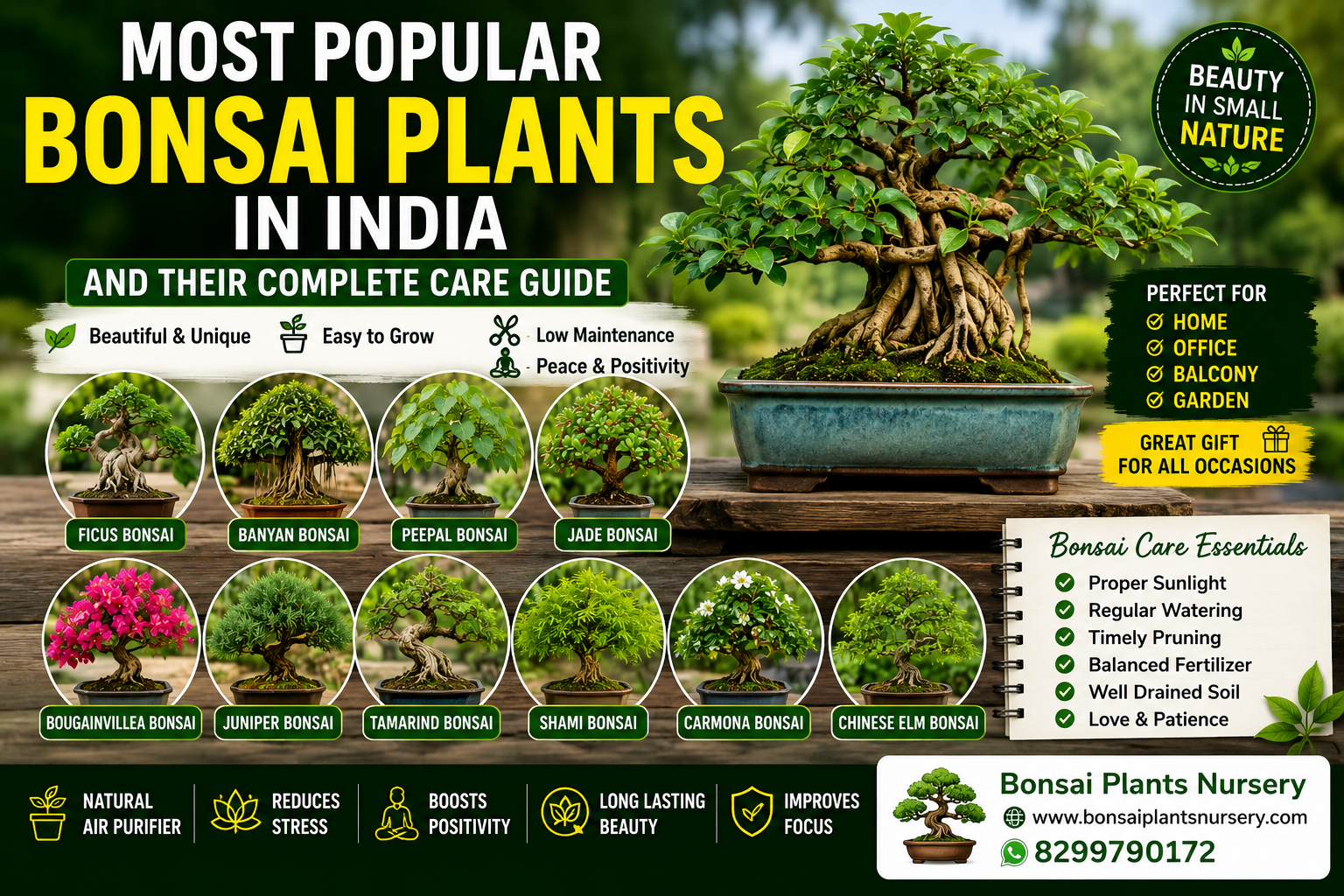
Most Popular Bonsai Plants in India
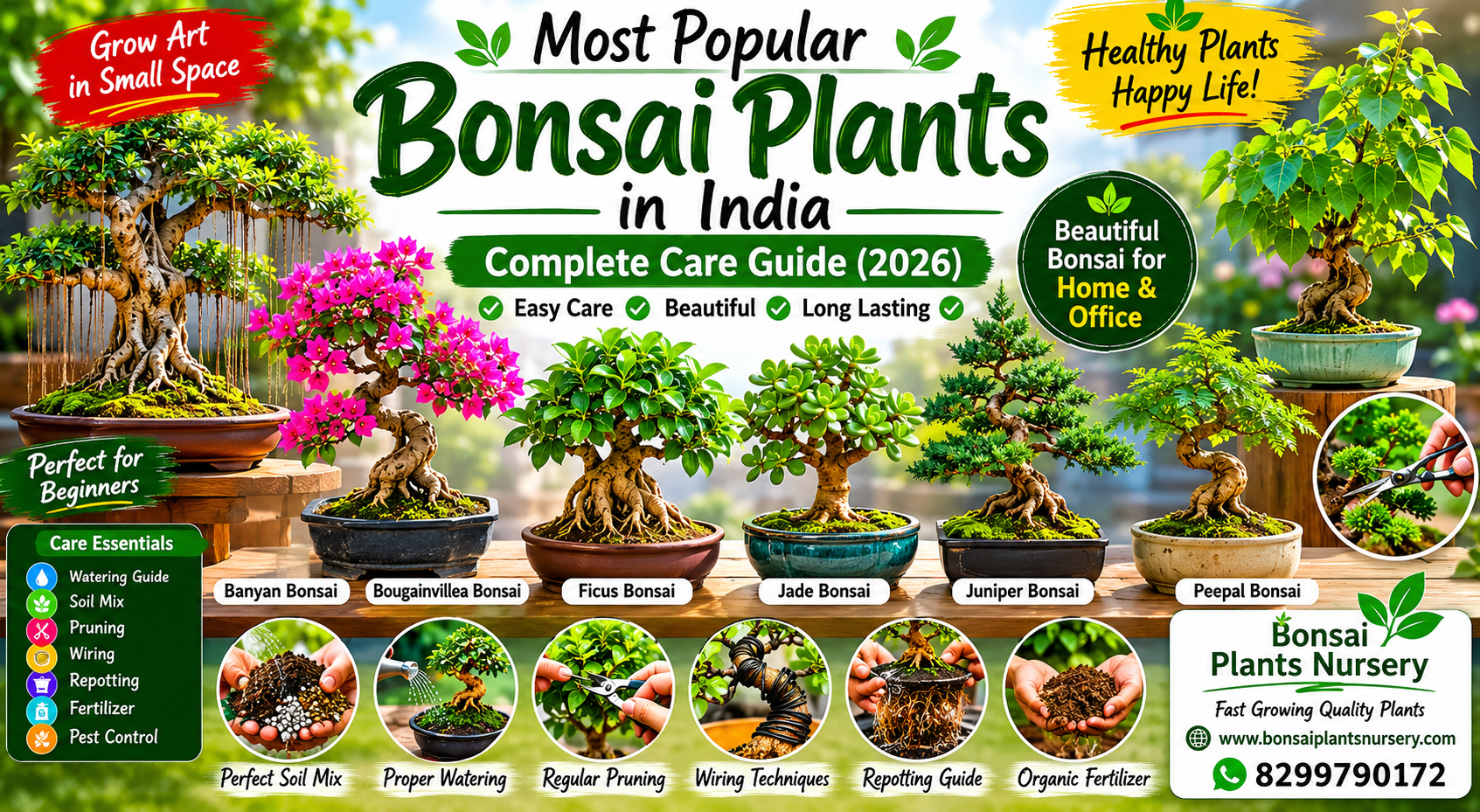
Most_Popular_Bonsai_Plants
1. Ficus Bonsai
Ficus Bonsai is considered the most popular bonsai species in India.
Why It Is Popular
Fast growing
Easy to maintain
Tolerates Indian climate well
Develops attractive aerial roots
Care Requirements
Sunlight
4тАУ6 hours of sunlight daily
Watering
Water when the soil begins to dry
Fertilizer
Apply organic fertilizer once every month
Special Advantage
Ficus adapts extremely well to Indian weather conditions and is ideal for beginners.
2. Banyan Bonsai
The Banyan tree is India’s national tree and one of the most admired bonsai species.
Features
Beautiful aerial roots
Ancient tree appearance
Extremely long lifespan
Care Requirements
Full sunlight
Regular pruning
Organic fertilizers
Why Gardeners Love It
Banyan Bonsai reflects Indian heritage and creates a majestic appearance.
3. Peepal Bonsai
Peepal Bonsai is highly valued because of its cultural and spiritual significance.
Benefits
Fast growth
Attractive foliage
Easy to train
Care
Adequate sunlight
Regular watering
Periodic pruning
Popularity
Peepal Bonsai is one of the most sought-after native bonsai species in India.
4. Jade Bonsai
Jade Bonsai is a succulent plant known for its thick trunk and fleshy leaves.
Features
Thick stem
Compact growth
Requires less water
Easy maintenance
Ideal for Beginners
Jade Bonsai is one of the easiest bonsai plants to grow.
Watering
Avoid overwatering.
Allow the soil to dry slightly between waterings.
5. Bougainvillea Bonsai
Bougainvillea Bonsai is famous for its colorful flowers and dramatic appearance.
Features
Vibrant flowers
Available in many colors
Strong and hardy plant
Care Requirements
Sunlight
Full sunlight is essential.
Watering
Moderate watering
Pruning
Regular pruning encourages flowering and shape development.
Why It Is Popular
It combines beautiful blooms with classic bonsai aesthetics.
Best Soil Mix for Bonsai Plants
A proper bonsai soil mix is crucial for healthy root development.
Recommended Soil Mix
40% Garden Soil
30% River Sand
20% Vermicompost
10% Cocopeat
This mixture provides:
Excellent drainage
Healthy root growth
Good moisture retention
Adequate nutrition
How Often Should You Water a Bonsai?
One of the most common questions among bonsai beginners.
During Summer
Water daily or whenever required.
During Winter
Water every 2тАУ3 days depending on soil moisture.
Important Tip
Overwatering is the biggest cause of bonsai problems.
Always check soil moisture before watering.
Fertilizer Management for Bonsai
Apply the following every month:
Vermicompost
Well-rotted cow manure
Neem cake
During Active Growth
Liquid organic fertilizers can promote vigorous growth.
Importance of Pruning
Pruning is one of the most important aspects of bonsai cultivation.
Benefits
Maintains tree shape
Encourages branching
Improves aesthetics
Controls growth
Creates dense foliage
6. Juniper Bonsai
Juniper is one of the most iconic bonsai species in the world and is frequently featured in international bonsai exhibitions.
Features
Evergreen foliage
Needle-like leaves
Naturally elegant shape
Long lifespan
Care Requirements
Sunlight
5тАУ6 hours of direct sunlight daily
Watering
Water when the soil becomes slightly dry
Fertilizer
Organic fertilizer every 30тАУ45 days
Special Advantage
Juniper responds exceptionally well to wiring and artistic shaping.
7. Tamarind Bonsai
Tamarind Bonsai is becoming increasingly popular among Indian bonsai enthusiasts.
Features
Small leaves
Thick trunk development
Ancient tree appearance
Care Requirements
Sunlight
Full sunlight
Watering
Regular but moderate
Pruning
Frequent pruning encourages dense branching.
Why It Is Popular
Its natural appearance closely resembles a mature tree in miniature form.
8. Shami Bonsai
Shami Bonsai holds special cultural and religious significance in India.
Features
Drought tolerant
Low maintenance
Attractive structure
Care Requirements
Sunlight
Full sunlight
Watering
Minimal watering
Fertilizer
Moderate feeding
Special Advantage
Perfect for busy people who want a low-maintenance bonsai.
9. Carmona Bonsai (Fukien Tea Bonsai)
Carmona Bonsai is known for its glossy leaves and delicate flowers.
Features
Small shiny leaves
White flowers
Decorative appearance
Care Requirements
Light
Bright light
Watering
Keep soil slightly moist
Fertilizer
Monthly feeding
Advantage
Suitable for both indoor and outdoor environments.
10. Chinese Elm Bonsai
Chinese Elm is considered one of the most beautiful bonsai species worldwide.
Features
Fine branching structure
Dense foliage
Attractive bark
Care Requirements
Sunlight
Bright sunlight
Watering
Regular watering
Pruning
Frequent pruning maintains shape.
What is Bonsai Wiring?
Wiring is one of the most important bonsai training techniques.
By wrapping branches with wire, growers can guide their growth and create artistic designs.
Benefits of Wiring
Controls branch direction
Creates natural tree forms
Improves aesthetics
Enhances artistic expression
Best Time for Wiring
During active growing seasons when branches are flexible.
Bonsai Repotting Guide
Repotting is essential for maintaining healthy roots and long-term growth.
Why Repot Bonsai?
Refreshes soil
Improves root health
Prevents root congestion
Promotes vigorous growth
Repotting Frequency
Young Bonsai
Every 1тАУ2 years
Mature Bonsai
Every 3тАУ5 years
Root Pruning in Bonsai
Root pruning is a key technique used to maintain the miniature size of bonsai trees.
Benefits
Controls growth
Encourages fine roots
Improves balance between roots and foliage
Common Bonsai Diseases
1. Root Rot
Causes
Overwatering and poor drainage.
Solution
Improve drainage
Remove damaged roots
2. Yellow Leaves
Causes
Nutrient deficiency
Excess watering
Solution
Apply balanced fertilizer
Adjust watering practices
3. Leaf Drop
Causes
Sudden temperature changes
Insufficient light
Solution
Move the bonsai to a more suitable location.
Common Bonsai Pests
Aphids
Small insects that attack tender new growth.
Mealybugs
White cotton-like pests commonly found on stems and leaves.
Spider Mites
Tiny pests that weaken foliage.
Organic Pest Control
Neem Oil Spray
One of the safest and most effective organic pest control methods.
Usage
Mix 5 ml neem oil per liter of water.
Soap Solution
Useful for mild pest infestations.
Garlic Spray
A natural homemade insect repellent.
Ideal Placement for Bonsai Plants
Outdoor Bonsai
Ficus Bonsai
Banyan Bonsai
Peepal Bonsai
Bougainvillea Bonsai
Shami Bonsai
Indoor-Friendly Bonsai
Jade Bonsai
Carmona Bonsai
Some Ficus varieties
Best Bonsai Plants for Beginners
If you are starting your bonsai journey, choose:
1. Ficus Bonsai
Most beginner-friendly species.
2. Jade Bonsai
Very low maintenance.
3. Bougainvillea Bonsai
Beautiful flowering bonsai.
4. Shami Bonsai
Requires little water.
5. Peepal Bonsai
Fast-growing and easy to shape.
What to Look for When Buying a Bonsai?
Trunk
Should be thick and healthy.
Roots
Well-balanced and strong.
Leaves
Green and disease-free.
Branch Structure
Balanced and aesthetically pleasing.
Pot
Good-quality bonsai container with proper drainage.
The Growing Trend of Bonsai Gifting
Bonsai plants are increasingly popular gifts for:
Birthdays
Anniversaries
Housewarming ceremonies
Corporate events
Festivals
A bonsai is a living gift that can be enjoyed for many years.
The Most Expensive and Premium Bonsai Plants in India
Bonsai is not just a plantтАФit is a living work of art. As a bonsai tree ages and receives years of training and care, its value increases significantly.
Most_Popular_Bonsai_Plants
Some premium bonsai specimens in India can be worth thousands or even lakhs of rupees.
1. Banyan Bonsai
One of the most admired bonsai trees in India.
Price Range: тВ╣10,000 to тВ╣2,00,000+ depending on age and training.
2. Juniper Bonsai
A classic bonsai species used in international bonsai exhibitions.
3. Ficus Microcarpa Bonsai
Known for its dramatic aerial roots and impressive trunk structure.
4. Bougainvillea Bonsai
Highly valued for its colorful flowers and artistic appearance.
5. Peepal Bonsai
Popular due to its cultural and spiritual significance in India.
How to Earn Money from Bonsai Plants
Today, bonsai gardening has evolved beyond a hobby into a profitable business opportunity.
1. Selling Bonsai Plants
Young bonsai plants can sell for тВ╣500тАУтВ╣5,000 or more.
Well-trained mature bonsai trees can command significantly higher prices.
2. Online Sales
You can sell bonsai plants through:
Personal website
Facebook Page
Instagram
WhatsApp Business
YouTube Channel
3. Bonsai Workshops
Many people are willing to pay to learn bonsai techniques and care.
4. Corporate Gifting
Bonsai plants are increasingly popular as premium corporate gifts.
If you plan to establish a bonsai nursery, follow these steps:
Step 1: Select the Right Species
Start with beginner-friendly and fast-growing varieties:
Ficus Bonsai
Jade Bonsai
Banyan Bonsai
Peepal Bonsai
Bougainvillea Bonsai
Step 2: Learn Bonsai Techniques
Master essential skills such as:
Pruning
Wiring
Repotting
Root Pruning
Step 3: Build Your Social Media Presence
Create:
Facebook Page
Instagram Account
YouTube Channel
WhatsApp Business Profile
Step 4: Create a Website
Your website should include:
Product catalog
Blog section
Customer reviews
Contact details
Online ordering options
How Long Do Bonsai Trees Live?
One of the most frequently asked questions among beginners.
With proper care:
Ficus Bonsai
50тАУ100 years or more
Banyan Bonsai
Can survive well beyond 100 years
Juniper Bonsai
Several decades
Peepal Bonsai
Long lifespan with proper maintenance
Many bonsai trees are passed down from one generation to another.
Common Bonsai Care Mistakes
1. Overwatering
The most common reason bonsai trees fail.
2. Insufficient Sunlight
Most bonsai species require adequate sunlight for healthy growth.
3. Ignoring Pruning
Regular pruning is essential to maintain shape and structure.
4. Poor Soil Selection
Improper drainage can damage roots and stunt growth.
5. Excessive Fertilizer Use
Overfertilization can burn roots and weaken the plant.
Essential Bonsai Tools
1. Bonsai Pruning Scissors
Used for trimming branches and leaves.
2. Wire Cutters
For safely removing training wires.
3. Aluminum Bonsai Wire
Used to shape branches and trunks.
4. Root Hook
Helpful during repotting.
5. Spray Bottle
Used for misting and maintaining humidity.
Most Beautiful Bonsai Trees for Home Decoration
If aesthetics are your primary goal, consider:
Ficus Bonsai
Jade Bonsai
Bougainvillea Bonsai
Juniper Bonsai
Carmona Bonsai
These species are admired for their beauty and artistic appeal.
Best Bonsai Plants for Offices
The following bonsai species are relatively easy to maintain indoors:
Jade Bonsai
Ficus Bonsai
Carmona Bonsai
Bonsai and Vastu Beliefs
Many people associate certain bonsai trees with positive symbolism.
Popular beliefs include:
Jade Bonsai symbolizes prosperity
Peepal Bonsai represents spirituality
Banyan Bonsai symbolizes stability and longevity
Shami Bonsai is considered auspicious
These are cultural beliefs rather than scientifically proven effects.
Additional FAQs (26тАУ50)
26. Are bonsai plants expensive?
Prices vary based on age, species, and training.
27. Which is the most popular bonsai plant in India?
Ficus Bonsai.
28. Can Banyan Bonsai be grown at home?
Yes.
29. Should bonsai be watered daily?
It depends on weather, soil, and species.
30. Do bonsai trees flower?
Some species do.
31. Can bonsai trees bear fruits?
Yes, certain species can produce fruits.
32. Is Jade Bonsai considered lucky?
Many people believe so.
33. Do bonsai plants need sunlight?
Yes.
34. Can bonsai be kept in an air-conditioned room?
Some species can, provided they receive enough light.
35. How long can bonsai trees live?
Several decades or even centuries.
36. Is bonsai difficult to learn?
No, with practice and patience.
37. Can children care for bonsai plants?
Yes.
38. Can bonsai become a business?
Absolutely.
39. Can bonsai be sold online?
Yes.
40. Is bonsai a profitable business?
It can be highly profitable with proper management.
41. Which bonsai grows the fastest?
Ficus and Peepal Bonsai.
42. Does Bougainvillea Bonsai flower?
Yes.
43. Does Jade Bonsai require little water?
Yes.
44. Can bonsai stay outside during rain?
Yes, but prolonged waterlogging should be avoided.
45. Is repotting necessary?
Yes.
46. When should wiring be done?
During the active growing season.
47. Is bonsai a good gift?
Yes, it is considered a premium and memorable gift.
48. Can bonsai help reduce stress?
Many people find bonsai care relaxing and therapeutic.
49. Do bonsai plants improve interior d├йcor?
Definitely.
50. Where can I buy bonsai plants?
From a trusted bonsai nursery.
Conclusion
Bonsai is much more than a plantтАФit is a beautiful combination of patience, creativity, and nature. Whether you want to decorate your home, office, balcony, or garden, bonsai plants offer a unique and elegant solution.
Among the most popular bonsai species in India are:
Ficus Bonsai
Banyan Bonsai
Peepal Bonsai
Jade Bonsai
Bougainvillea Bonsai
Juniper Bonsai
Carmona Bonsai
Shami Bonsai
With proper soil, regular pruning, balanced fertilization, and adequate sunlight, your bonsai can remain healthy and beautiful for many years.
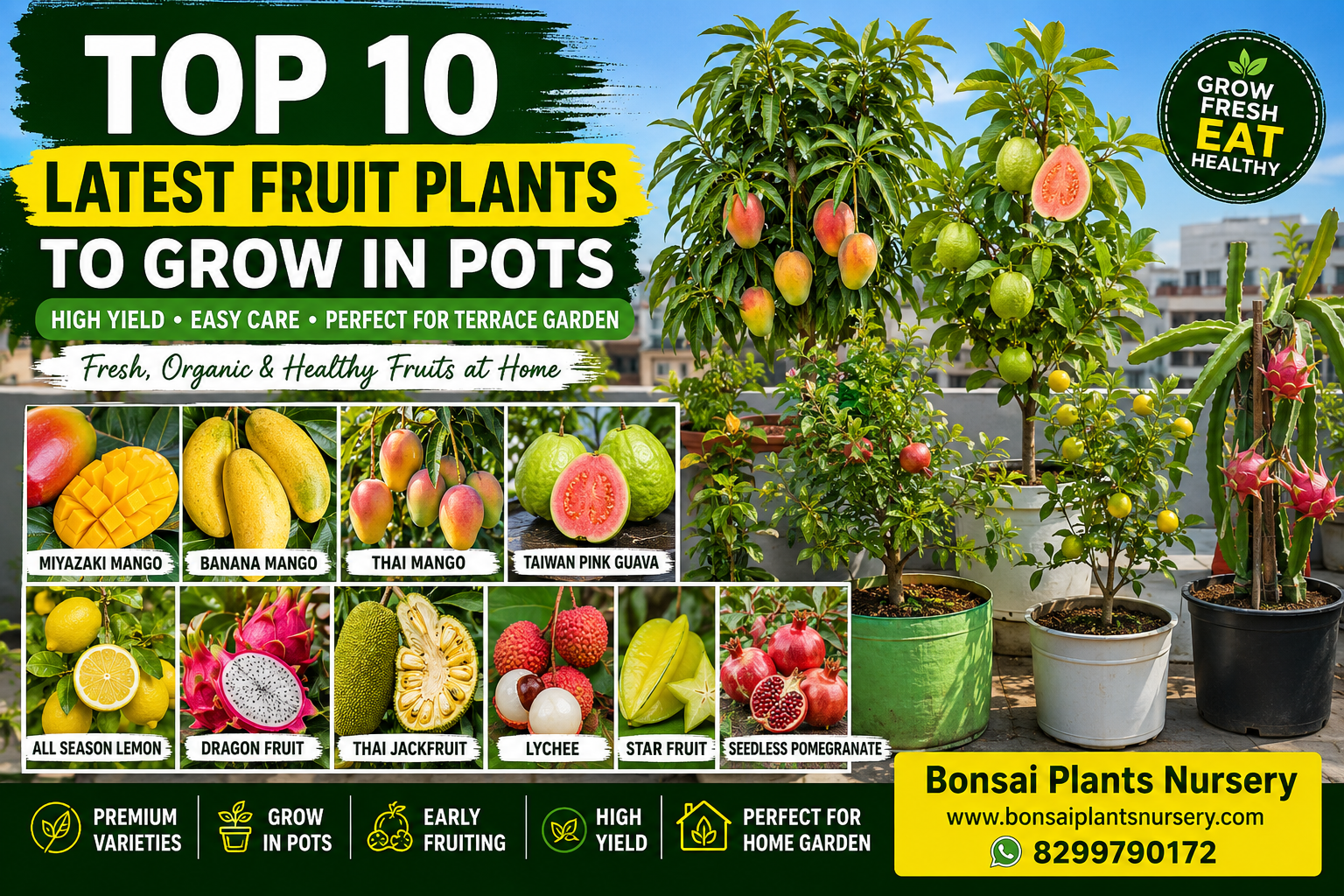
Discover the top 10 latest fruit plants that can be successfully grown in pots, grow bags, and containers. Learn about Miyazaki Mango, Banana Mango, Taiwan Pink Guava, Dragon Fruit, All Season Lemon, and other premium fruit plants for terrace gardening.
Top_10_Latest_Fruit_Plants
Best fruit plants for pots
Fruit plants for terrace gardening
Miyazaki mango plant
Taiwan pink guava plant
Dragon fruit plant
All season lemon plant
Container fruit gardening
Home fruit garden
Introduction
Growing your own fruits at home has become one of the most rewarding gardening trends in recent years. Whether you have a terrace, balcony, rooftop, backyard, or a small garden, modern grafted fruit varieties make it possible to enjoy fresh fruits without owning a large farm.
Many gardeners believe that fruit trees require a lot of space, but today’s improved varieties are specifically developed for container gardening. With proper care, a large pot or grow bag can produce fresh fruits for many years.
Growing fruit plants at home offers several benefits:
Fresh organic fruits
Reduced grocery expenses
Better use of terrace and balcony space
Environment-friendly gardening
Educational experience for children
Potential source of additional income
In this detailed guide, we will discuss the Top 10 Latest Fruit Plants that perform exceptionally well in pots and containers.
Benefits of Growing Fruit Plants in Pots
1. Fresh Organic Fruits
Homegrown fruits are often fresher and healthier than store-bought fruits.
2. Space Efficient Gardening
Even a small terrace can become a productive fruit garden.
3. Better Plant Management
Container-grown plants are easier to prune, fertilize, and maintain.
4. Mobility
Plants can be moved according to weather conditions.
5. Increased Property Beauty
Fruit plants add greenery and beauty to your home.
Things to Consider Before Growing Fruit Plants in Pots
Choose Large Containers
Most fruit plants require pots ranging from 20 to 36 inches.
Ensure Proper Drainage
Waterlogging can damage roots and reduce productivity.
Provide Adequate Sunlight
Most fruit plants require 6тАУ8 hours of direct sunlight daily.
Select Grafted Plants
Grafted plants produce fruits much earlier than seed-grown plants.
1. Miyazaki Mango
What is Miyazaki Mango?
Miyazaki Mango is one of the world’s most premium mango varieties, originally popularized in Japan. It is famous for its deep red color, excellent sweetness, and high market value.
This variety has gained tremendous popularity among terrace gardeners and fruit plant collectors.
Key Features
Premium red-colored fruits
Exceptional sweetness
Low fiber content
Attractive appearance
Suitable for container gardening
Recommended Container Size
At least a 300-liter drum or large grow bag.
Fruiting Time
Generally starts producing fruits within 2тАУ3 years if grafted.
Care Tips
Full sunlight
Organic fertilizers
Regular pruning
Good drainage
Why Grow Miyazaki Mango?
It is an excellent choice for gardeners who want a premium and highly attractive fruit tree.
2. Banana Mango
Introduction
Banana Mango is an exciting new mango variety known for its elongated fruit shape resembling a banana.
Features
Large fruits
Sweet flavor
Low fiber
Attractive appearance
Container Suitability
Performs very well in large pots and grow bags.
Fruiting
Produces excellent yields under proper care.
Advantages
Unique appearance
High consumer interest
Suitable for home gardens
3. Thai All Season Mango
Introduction
Thai All Season Mango is one of the most productive mango varieties for container gardening.
Unlike traditional mango trees, this variety can flower and fruit multiple times under favorable conditions.
Features
Multiple flowering cycles
Compact growth
Early fruiting
Suitable for terraces
Pot Size
24тАУ30 inches minimum.
Benefits
Ideal for small gardens
Consistent fruit production
Beginner-friendly variety
4. Taiwan Pink Guava
Why is Taiwan Pink Guava Popular?
Taiwan Pink Guava has become one of the most sought-after fruit plants due to its large fruits, pink flesh, and excellent sweetness.
Features
Large fruit size
Attractive pink flesh
Sweet flavor
Early fruiting
Fruiting Time
Can start fruiting within 6тАУ12 months.
Container Performance
One of the best-performing fruit plants for pots.
Care Requirements
Full sunlight
Regular feeding
Periodic pruning
Why Grow It?
Fast growth and heavy production make it ideal for home gardeners.
5. All Season Lemon
A Must-Have Plant for Every Home
Lemon is one of the most useful fruit plants for everyday household use.
All Season Lemon varieties can produce fruits throughout the year.
Features
Continuous fruit production
Easy maintenance
Excellent container performance
Disease tolerant
Pot Size
20тАУ24 inches.
Advantages
Daily household use
Easy for beginners
Productive year-round
Best Potting Mix for Fruit Plants
A well-draining soil mix is essential for successful fruit production.
Recommended mix:
40% garden soil
30% well-rotted cow manure
20% vermicompost
10% river sand or cocopeat
This mixture promotes strong root development and healthy growth.
6. Dragon Fruit
Introduction
Dragon Fruit has become one of the fastest-growing fruit crops in India and many other countries. Due to its attractive appearance, excellent nutritional value, and high market demand, it is a favorite among terrace gardeners.
Dragon Fruit belongs to the cactus family, which means it requires less water compared to many traditional fruit plants.
Key Features
Drought tolerant
Low maintenance
High market value
Excellent for container gardening
Long productive lifespan
Recommended Pot Size
Use a container at least 24тАУ30 inches wide and deep.
Support System
Dragon Fruit requires a strong support structure such as:
Cement pole
Concrete pillar
Metal support
Trellis system
Fruiting Time
Under proper growing conditions, grafted or established plants may begin fruiting within 12тАУ18 months.
Care Requirements
Full sunlight
Well-draining soil
Moderate watering
Strong support structure
Why Grow Dragon Fruit?
It is one of the most profitable fruit plants for home gardeners and commercial growers alike.
7. Thai All Season Jackfruit
Introduction
Most people think jackfruit trees require huge spaces, but modern grafted Thai All Season Jackfruit varieties can successfully grow and fruit in large containers.
Features
Early fruiting
Compact growth habit
High productivity
Excellent taste
Suitable for terrace gardens
Advantages
Produces fruits earlier than traditional trees
Can be managed through pruning
Ideal for home fruit gardens
Pot Requirements
Large drums or containers with good drainage.
Care Tips
Full sunlight
Monthly organic feeding
Proper pruning
Consistent watering
8. Perennial Lychee
Introduction
Lychee is one of the most loved tropical fruits due to its sweet, juicy flavor.
Improved grafted lychee varieties are now available that can be maintained successfully in containers.
Features
Delicious fruits
Attractive foliage
Suitable for container gardening
High ornamental value
Recommended Container Size
30тАУ36 inch container.
Care Requirements
Regular watering during summer
Organic fertilizers
Light pruning after harvest
Benefits
A lychee tree not only provides fruits but also adds beauty to your terrace garden.
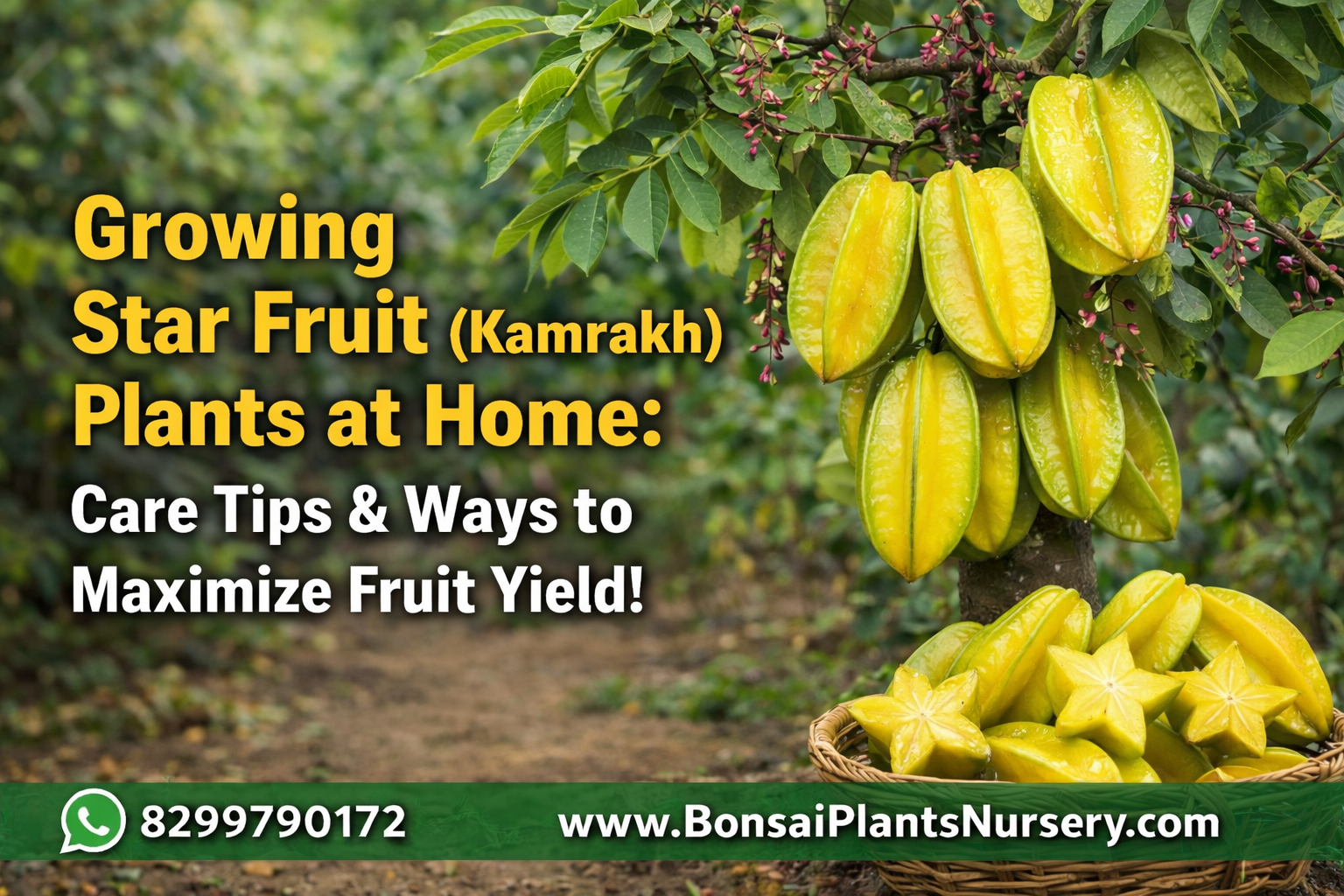
9. Star Fruit (Carambola)
Introduction
Star Fruit, also known as Carambola, is gaining popularity among fruit lovers due to its unique star-shaped slices and nutritional benefits.
Health Benefits
Rich in Vitamin C
Contains antioxidants
Supports immune health
Features
Easy to grow
Suitable for containers
Attractive fruits
Regular fruit production
Fruiting
Can produce fruits multiple times a year under favorable conditions.
Why Grow Star Fruit?
It is a unique fruit that adds diversity to your home fruit garden.
10. Seedless Pomegranate
Introduction
Pomegranate has always been one of the most popular fruit crops worldwide.
Modern seedless or soft-seeded varieties are especially suitable for container gardening.
Features
Soft edible seeds
Sweet flavor
Attractive red fruits
Excellent productivity
Recommended Pot Size
20тАУ24 inches.
Advantages
Compact growth
Suitable for terraces
Easy maintenance
High nutritional value
Fertilizer Management for Fruit Plants
Proper nutrition plays a crucial role in fruit production.
Monthly Feeding Schedule
Every 30 days:
2тАУ3 kg well-rotted cow manure
500 grams vermicompost
100 grams neem cake
Every 60 days:
Bone meal
Mustard cake fertilizer
Before Flowering
Apply:
Phosphorus-rich organic fertilizer
Organic potash sources
During Fruit Development
Use:
Vermicompost
Banana peel fertilizer
Organic potassium supplements
Proper Watering Techniques
One of the most common mistakes gardeners make is overwatering.
Summer
Water daily or as required depending on weather conditions.
Winter
Reduce watering frequency.
Rainy Season
Ensure proper drainage to prevent root rot.
Why Pruning is Important
Pruning helps maintain plant health and productivity.
Benefits of Pruning
Encourages new growth
Improves fruit production
Controls plant size
Enhances air circulation
Reduces disease risk
Best Time to Prune
After harvesting fruits.
10 Proven Ways to Increase Fruit Production
1. Use Grafted Plants
Grafted plants fruit much earlier than seed-grown plants.
2. Provide Full Sunlight
At least 6тАУ8 hours daily.
3. Feed Plants Regularly
Consistent nutrition improves flowering and fruiting.
4. Use Large Containers
Root restriction reduces productivity.
5. Prune Regularly
Maintains productive branches.
6. Apply Mulch
Helps retain soil moisture.
7. Monitor Pests Early
Early intervention prevents major damage.
8. Avoid Overwatering
Excess water can reduce flowering.
9. Use Organic Pest Control
Neem oil is highly effective.
10. Be Patient
Fruit plants need time to establish themselves.
Common Problems and Solutions
Yellow Leaves
Causes
Nutrient deficiency
Waterlogging
Solutions
Apply vermicompost
Improve drainage
Flower Drop
Causes
Water stress
Temperature fluctuations
Solutions
Maintain consistent moisture
Apply potassium-rich fertilizers
Small Fruit Size
Causes
Nutrient deficiency
Poor pollination
Solutions
Balanced feeding
Improve pollination conditions
How Terrace Gardening Can Generate Income
Many gardeners are now earning additional income through terrace fruit gardening.
Income Opportunities
Selling Fresh Fruits
Premium fruits often command higher prices.
Selling Plants
Healthy grafted fruit plants are always in demand.
Content Creation
YouTube, blogging, and social media can generate income.
Gardening Consultation
Experienced gardeners can offer guidance to others.
Additional FAQs (25тАУ50)
25. Can Dragon Fruit be grown in pots?
Yes, very successfully.
26. How much sunlight does Dragon Fruit need?
6тАУ8 hours daily.
27. Can Jackfruit produce fruits in containers?
Yes, grafted varieties can.
28. How often should Lychee be watered?
Regularly during hot weather.
29. Can Pomegranate grow on terraces?
Yes.
30. What is the best fertilizer for fruit plants?
Cow manure and vermicompost.
31. Are grow bags suitable for fruit plants?
Yes.
32. What is the best soil for fruit plants?
Well-draining fertile loam soil.
33. Can Mango trees remain small in pots?
Yes, with proper pruning.
34. Does Taiwan Pink Guava fruit quickly?
Yes.
35. Can fruit plants be grown organically?
Absolutely.
36. Can 10тАУ15 fruit plants be grown on a terrace?
Yes.
37. When does Dragon Fruit start producing?
Usually within 1тАУ2 years.
38. Which fruit plant requires the least maintenance?
Dragon Fruit.
39. Does All Season Lemon produce year-round?
Yes.
40. Can Pomegranate tolerate heat?
Yes.
41. Is Jackfruit suitable for North India?
Yes.
42. Can Lychee be grown in containers?
Yes.
43. Which fruit plant is the most profitable?
Miyazaki Mango is among the most valuable.
44. Which plant is best for beginners?
All Season Lemon.
45. Can these plants be grown on rooftops?
Yes.
46. Do fruit plants require regular pruning?
Yes.
47. Do fruit plants improve home aesthetics?
Absolutely.
48. What should I look for when buying plants?
Healthy grafted plants.
49. Are large containers better?
Yes.
50. Where should fruit plants be purchased?
From a trusted nursery.
Top 10 Latest Fruit Plants to Grow in Pots for High Yield at Home (Part 3)
Fruit Plant Comparison Table
Choosing the right fruit plant depends on your available space, climate, maintenance capacity, and production goals. The table below provides a quick comparison of the top fruit plants discussed in this guide.
Fruit Plant
Fruiting Time
Recommended Pot Size
Maintenance Level
Yield Potential
Miyazaki Mango
2тАУ3 Years
300 Liter Drum
Medium
Very High
Banana Mango
2тАУ3 Years
Large Container
Medium
High
Thai All Season Mango
1.5тАУ2 Years
24тАУ30 Inch Pot
Easy
Very High
Taiwan Pink Guava
6тАУ12 Months
20тАУ24 Inch Pot
Easy
Excellent
All Season Lemon
8тАУ12 Months
20тАУ24 Inch Pot
Easy
Excellent
Dragon Fruit
12тАУ18 Months
24тАУ30 Inch Pot
Easy
Very High
Thai All Season Jackfruit
2тАУ3 Years
Large Container
Medium
High
Perennial Lychee
2тАУ4 Years
30тАУ36 Inch Pot
Medium
Good
Star Fruit
1тАУ2 Years
24 Inch Pot
Easy
Good
Seedless Pomegranate
1тАУ2 Years
20тАУ24 Inch Pot
Easy
Excellent
Top 5 Fruit Plants for Beginners
If you are new to fruit gardening, start with plants that are easy to maintain and highly productive.
1. All Season Lemon
Fast-growing
Productive throughout the year
Easy care requirements
2. Taiwan Pink Guava
Quick fruiting
Excellent yield
Adaptable to various climates
3. Dragon Fruit
Requires less water
Disease resistant
High market demand
4. Seedless Pomegranate
Compact growth habit
Beautiful fruits
Easy maintenance
5. Star Fruit
Unique appearance
Consistent fruiting
Suitable for container gardening
Best Fruit Plants for North India
Gardeners in Uttar Pradesh, Delhi, Haryana, Punjab, Rajasthan, Bihar, and Uttarakhand can successfully grow:
Miyazaki Mango
Banana Mango
Thai All Season Mango
Taiwan Pink Guava
All Season Lemon
Dragon Fruit
Seedless Pomegranate
Thai Jackfruit
These plants perform well under North Indian climatic conditions when given proper care.
Best Fruit Plants for South India
South India’s warm and humid climate supports excellent growth of:
Dragon Fruit
Miyazaki Mango
Banana Mango
Taiwan Pink Guava
Lychee
Lemon
Jackfruit
Many gardeners in South India report exceptional fruit production from these varieties.
Ideal Terrace Fruit Garden Layout
Proper planning can significantly improve productivity.
Place Sun-Loving Plants Together
The following plants require maximum sunlight:
Mango
Guava
Lemon
Pomegranate
Dragon Fruit
Position them where they receive at least 6тАУ8 hours of direct sunlight.
Plants That Tolerate Partial Shade
Lychee
Star Fruit
These can be placed in areas with slightly reduced sunlight.
How to Build a Successful Terrace Fruit Garden
Step 1: Select the Right Location
Choose an area receiving sufficient sunlight and proper air circulation.
Step 2: Arrange Containers Efficiently
Place larger plants at the back and smaller plants at the front.
Step 3: Install an Irrigation System
A drip irrigation system saves water and reduces maintenance.
Step 4: Follow a Fertilization Schedule
Regular feeding ensures healthy growth and consistent fruiting.
Step 5: Monitor Plant Health
Inspect plants weekly for pests, diseases, and nutrient deficiencies.
Organic Pest Control Methods
One of the biggest advantages of home fruit gardening is the ability to grow fruits organically.
Neem Oil Spray
Neem oil is one of the most effective organic pest control solutions.
Application
Mix 5 ml neem oil per liter of water and spray every 10тАУ15 days.
Garlic and Ginger Extract
Natural insect deterrent that helps control soft-bodied pests.
Cow Urine-Based Organic Sprays
Widely used in organic farming for pest management.
How to Increase Flowering and Fruiting
Many gardeners grow healthy plants but struggle to achieve heavy fruit production.
Apply Potassium-Rich Fertilizers
Potassium improves fruit quality and quantity.
Maintain Consistent Moisture
Avoid sudden drying and overwatering.
Use Micronutrient Sprays
Micronutrients such as:
Zinc
Boron
Magnesium
help improve flowering and fruit set.
Prune at the Right Time
Proper pruning encourages productive new branches.
Why Premium Mango Varieties Are Becoming Popular
Traditional mango trees can become extremely large and difficult to manage.
Modern grafted mango varieties such as:
Miyazaki Mango
Banana Mango
Thai All Season Mango
offer several advantages:
Compact growth
Earlier fruiting
Better suitability for containers
Easier harvesting
Premium market value
As a result, these varieties are increasingly popular among terrace gardeners and commercial growers.
Future of Container Fruit Gardening
Container fruit gardening is expected to grow significantly in the coming years.
Unique fruits such as Miyazaki Mango and Dragon Fruit continue to attract attention.
Home-Based Income Opportunities
Many gardeners are generating income through:
Fruit sales
Plant sales
Gardening content creation
Nursery businesses
Additional Frequently Asked Questions (51тАУ75)
51. Can Miyazaki Mango really produce fruits in pots?
Yes, when grown in a large container and properly maintained.
52. Which mango variety is considered premium?
Miyazaki Mango is among the most premium varieties.
53. Can Dragon Fruit be grown on rooftops?
Yes, it is one of the best rooftop fruit plants.
54. How often should Dragon Fruit be watered?
Water when the soil begins to dry.
55. Does Taiwan Pink Guava fruit multiple times per year?
Yes, under favorable conditions.
56. Does All Season Lemon produce fruits throughout the year?
Yes.
57. Can Pomegranate tolerate drought?
Yes, relatively well.
58. Can Jackfruit grow in large containers?
Yes, grafted varieties can.
59. Does Lychee require more water than other fruit plants?
Yes, especially during hot weather.
60. Is it safe to keep fruit plants on rooftops?
Yes, if the structure can support the weight.
61. Can container-grown fruit plants produce as much as field-grown trees?
Not usually, but they can still produce substantial yields.
62. Which fruit plant fruits the fastest?
Taiwan Pink Guava is among the fastest.
63. Does Dragon Fruit require pollination?
Some varieties benefit from pollination assistance.
64. Are organic fertilizers sufficient?
Yes, in most home gardening situations.
65. Can I grow 20 fruit plants on a terrace?
Yes, depending on available space.
66. Do fruit plants need special winter care?
Watering frequency should be reduced during winter.
67. Is mulching beneficial?
Yes, it conserves moisture and improves soil health.
68. Are grow bags as good as drums?
High-quality grow bags can perform very well.
69. Should potting soil be replaced periodically?
Partial soil replacement every 1тАУ2 years is beneficial.
70. Is pruning necessary for mango trees?
Yes.
71. Can Dragon Fruit be commercially profitable?
Yes.
72. Do fruit plants enhance home beauty?
Absolutely.
73. Is Taiwan Pink Guava suitable for children?
Yes, children generally enjoy its sweet taste.
74. Can Lemon be grown in balconies?
Yes, provided sufficient sunlight is available.
75. Can fruit plants become a long-term investment?
Premium fruit varieties can offer significant long-term value.
Final Conclusion
Growing fruit plants in pots is no longer just a hobbyтАФit has become a practical, productive, and rewarding lifestyle choice. Modern grafted varieties allow gardeners to enjoy premium fruits even in limited spaces such as terraces, balconies, rooftops, and small home gardens.
Among the best fruit plants for container gardening in 2026 are:
Miyazaki Mango
Banana Mango
Thai All Season Mango
Taiwan Pink Guava
All Season Lemon
Dragon Fruit
Thai All Season Jackfruit
Perennial Lychee
Star Fruit
Seedless Pomegranate
With proper sunlight, quality soil, organic nutrition, and regular care, these plants can provide years of fresh, healthy, and delicious fruits.
Whether your goal is family consumption, organic gardening, terrace beautification, or even additional income, these modern fruit varieties can help transform your space into a productive fruit garden.
тЬФ Miyazaki Mango
тЬФ Banana Mango
тЬФ Taiwan Pink Guava
тЬФ Thai All Season Mango
тЬФ All Season Lemon
тЬФ Dragon Fruit
тЬФ Premium Fruit Plants
тЬФ Terrace Gardening Plants
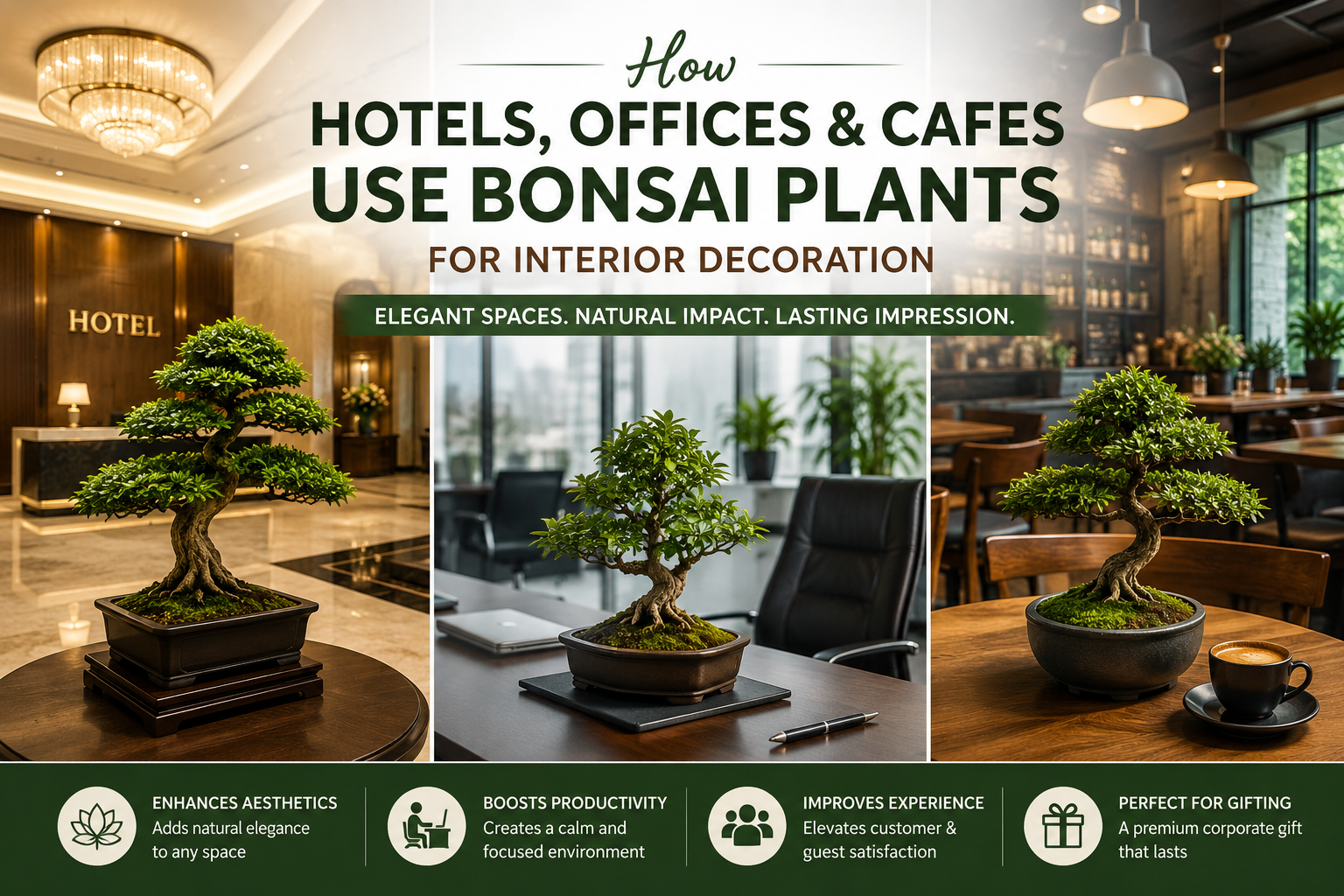
In todayтАЩs world of luxury interiors and experience-driven businesses, interior design is no longer limited to furniture, lighting, and wall d├йcor. Premium spaces such as 5-star hotels, corporate offices, and high-end caf├йs are now integrating nature into their design language through living d├йcor elements.
Among all natural d├йcor options, one stands out as timeless, elegant, and highly premium: Bonsai Plants.
Bonsai is not just a plant. It is a living art form, a symbol of discipline and beauty, and a powerful interior branding tool that enhances the emotional and visual experience of any space.
тЬФ рд╣рдореЗрд╢рд╛ healthy plants рджреЗрдВ тЬФ packaging рдЕрдЪреНрдЫрд╛ рд░рдЦреЗрдВ тЬФ customer support рджреЗрдВ тЬФ social media use рдХрд░реЗрдВ
тЬФ Housewives тЬФ Gardening lovers тЬФ Students тЬФ Part-time income рдЪрд╛рд╣рдиреЗ рд╡рд╛рд▓реЗ тЬФ Small business рд╢реБрд░реВ рдХрд░рдиреЗ рд╡рд╛рд▓реЗ
Summer (April to June in India) is one of the most challenging seasons for plants. During this time, high temperatures, strong sunlight, hot winds (loo), and water loss can severely affect plant growth.
Many gardeners face common issues such as:
тАв Plants drying out тАв Yellowing leaves тАв Flower drop тАв Stunted growth
However, with the right techniques and proper care, you can keep your plants healthy, green, and thriving even in extreme summer conditions.
summer_plant_care
ЁЯМ┐ Why Plants Suffer Most in Summer
Plants face multiple stress factors during summer:
тШАя╕П 1. Intense Sunlight
Direct sunlight can burn leaves.
ЁЯТи 2. Hot Winds
Hot air removes moisture from plants quickly.
ЁЯТз 3. Water Loss
Soil dries out much faster.
ЁЯМ▒ 4. Nutrient Deficiency
Dry soil reduces nutrient availability.
ЁЯМ▒ 15 Essential Summer Plant Care Tips
1я╕ПтГг Water at the Right Time
Watering timing is crucial in summer.
тЬФ Early morning (6тАУ8 AM) тЬФ Evening (6тАУ7 PM)
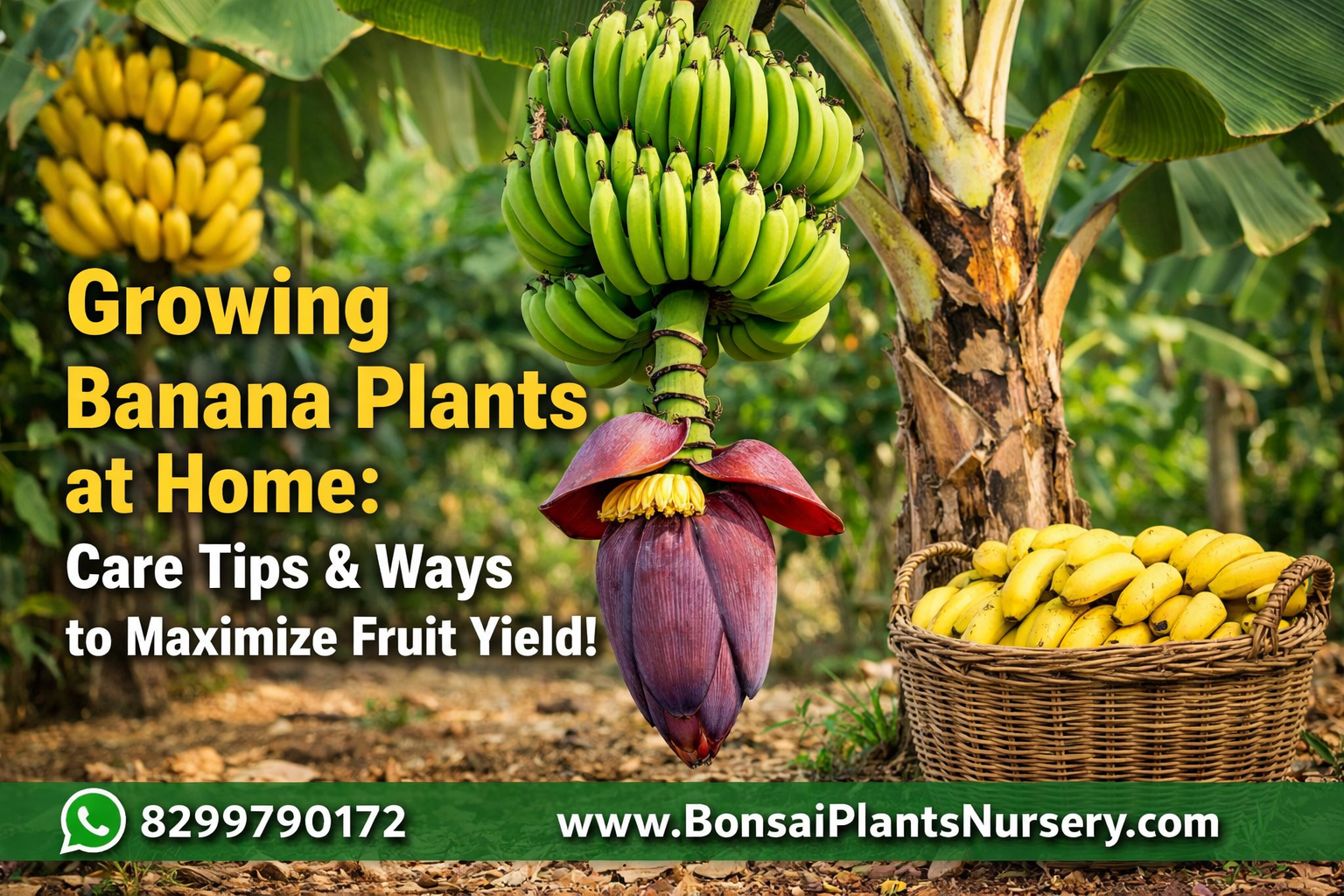
Banana is one of the most popular and widely grown fruits in India. It is not only delicious but also highly nutritious. The best part is that you can easily grow a banana plant at homeтАФin your garden, terrace, or even in a large pot.
With the right techniques, a single plant can produce a heavy bunch of large, healthy bananas. In this detailed guide, youтАЩll learn how to grow banana plants at home, how to care for them properly, and how to maximize fruit production.
However, if you are growing in pots, you can plant anytime except during extreme cold or frost conditions.
Best Banana Varieties for Home Growing
Grand Naine
Dwarf Cavendish
Rajeli
Malbhog
Elaichi Banana
ЁЯСЙ Dwarf varieties are best for container gardening.
How to Plant a Banana Plant (Step-by-Step)
1. Selecting the Right Location
Requires 6тАУ8 hours of direct sunlight
Good drainage is essential
Protect from strong winds
2. Soil Preparation
Ideal soil mix:
40% garden soil
30% cow dung compost
20% sand
10% vermicompost
3. Preparing Pit or Pot
In ground: 2x2x2 feet pit
Pot: Minimum 18тАУ24 inches wide and deep
4. Planting Process
Choose a healthy sucker (plant shoot)
Plant it upright
Fill soil and press gently
Water immediately after planting
Watering Guide
Banana is a water-loving plant:
Summer: Daily or alternate day
Winter: Every 3тАУ4 days
Avoid waterlogging
ЁЯСЙ Drip irrigation is ideal for best growth.
Fertilizer Guide for Maximum Yield
Organic Fertilizers
Cow dung compost тАУ once a month
Vermicompost тАУ every 15 days
Neem cake тАУ for pest prevention
Liquid Fertilizers
Mustard cake solution
Banana peel fertilizer
Buttermilk spray
Banana Plant Care Tips
1. Mulching
Use dry leaves or grass
Helps retain soil moisture
2. Providing Support
Plant may bend during fruiting
Use bamboo or wooden support
3. Removing Extra Shoots
Keep only 1тАУ2 suckers per plant
15 Proven Tips to Get Maximum Fruits
Choose high-yield variety
Ensure full sunlight
Maintain regular watering
Apply fertilizers on time
Remove weeds regularly
Prune dry leaves
Use mulching
Add potassium-rich fertilizers
Take special care during flowering stage
Do periodic pruning
Control pests
Provide plant support
Use organic sprays
Keep soil loose and aerated
Adjust care according to seasons
Common Problems and Solutions
1. Yellow Leaves
Cause: Lack of water or nutrients
Solution: Improve watering and add nitrogen fertilizer
2. Small Fruits
Cause: Nutrient deficiency
Solution: Increase potassium and organic feeding
3. Pests and Diseases
Common issues:
Aphids
Leaf spot
Solutions:
Neem oil spray
Baking soda spray
Growing Banana in Pots
Choose a large pot (minimum 20 inches)
Ensure drainage holes
Use fertile and light soil mix
Regular feeding and watering is essential
When Does Banana Plant Bear Fruit?
8тАУ12 months after planting
Fruits develop 3тАУ4 months after flowering
Harvesting and Storage
Harvest when fruits are light green
Keep in a shaded place
They will ripen naturally
Conclusion
Growing banana at home is easy if you follow the right methods. This guide will help you successfully grow healthy plants and achieve maximum fruit production.
In todayтАЩs gardening world, if there is one mango variety that stands out due to its unique shape, premium appeal, and high productivity, it is the Banana Mango ЁЯМ┐ЁЯен
This exotic mango variety is gaining huge popularity among:
тЬФ Home gardeners тЬФ Terrace garden lovers тЬФ Nursery business owners тЬФ Commercial fruit growers
The biggest attraction of Banana Mango is its long, banana-like shape, sweet taste, and high market value.
If you want: тЬФ A unique fruit plant at home тЬФ High fruit production in limited space тЬФ Early fruiting plants тЬФ A profitable plant for business
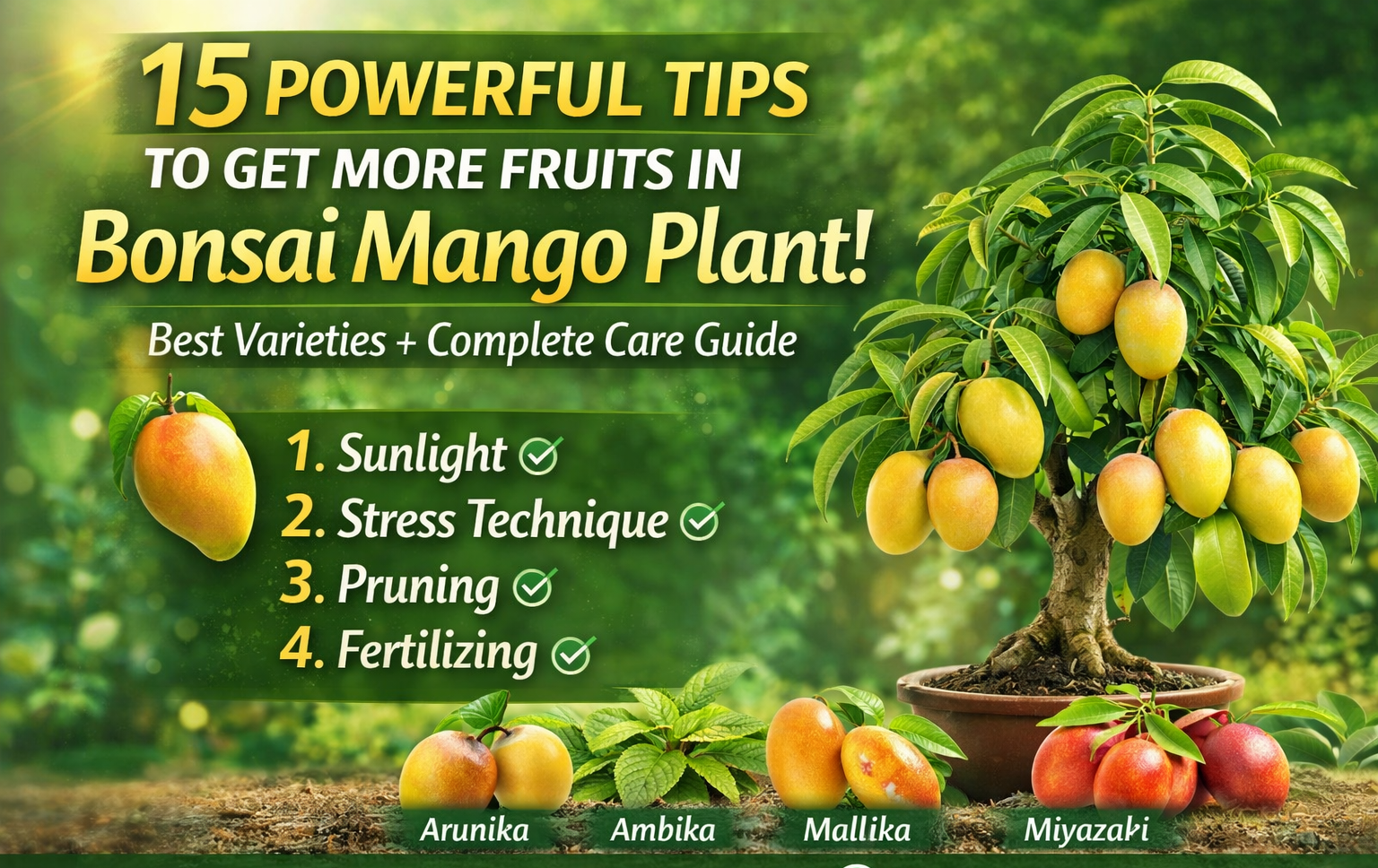
In recent years, Bonsai Mango Plants have become one of the most popular choices among gardening lovers. The idea of growing a mango tree in a small pot and still getting fruits feels almost magical ЁЯМ┐тЬи
However, many people face common problems like:
тАЬMy mango bonsai is not fruitingтАЭ
тАЬFlowers appear but fall offтАЭ
тАЬPlant growth is good but no mangoesтАЭ
If you are facing these issues, then this ultimate guide will help you achieve successful fruiting.
In this detailed article, you will learn:
тЬФ 15 powerful techniques to increase fruiting тЬФ Best Mango Bonsai varieties (Arunika, Ambika, Mallika, Miyazaki) тЬФ Step-by-step planting and care guide тЬФ From flowering to fruiting complete roadmap
ЁЯСЙ Due to overwatering, lack of nutrients, or poor pollination.
Q5. Which variety is best for beginners?
ЁЯСЙ Arunika and Mallika are great options.
ЁЯМЯ Final Conclusion
If you choose the right varieties like Arunika, Ambika, Mallika, and Miyazaki and follow the above 15 powerful techniques, your Bonsai Mango Plant can produce abundant fruits even in a small pot.
ЁЯМ┐ Right knowledge + proper care = More fruits + More satisfaction + More profit
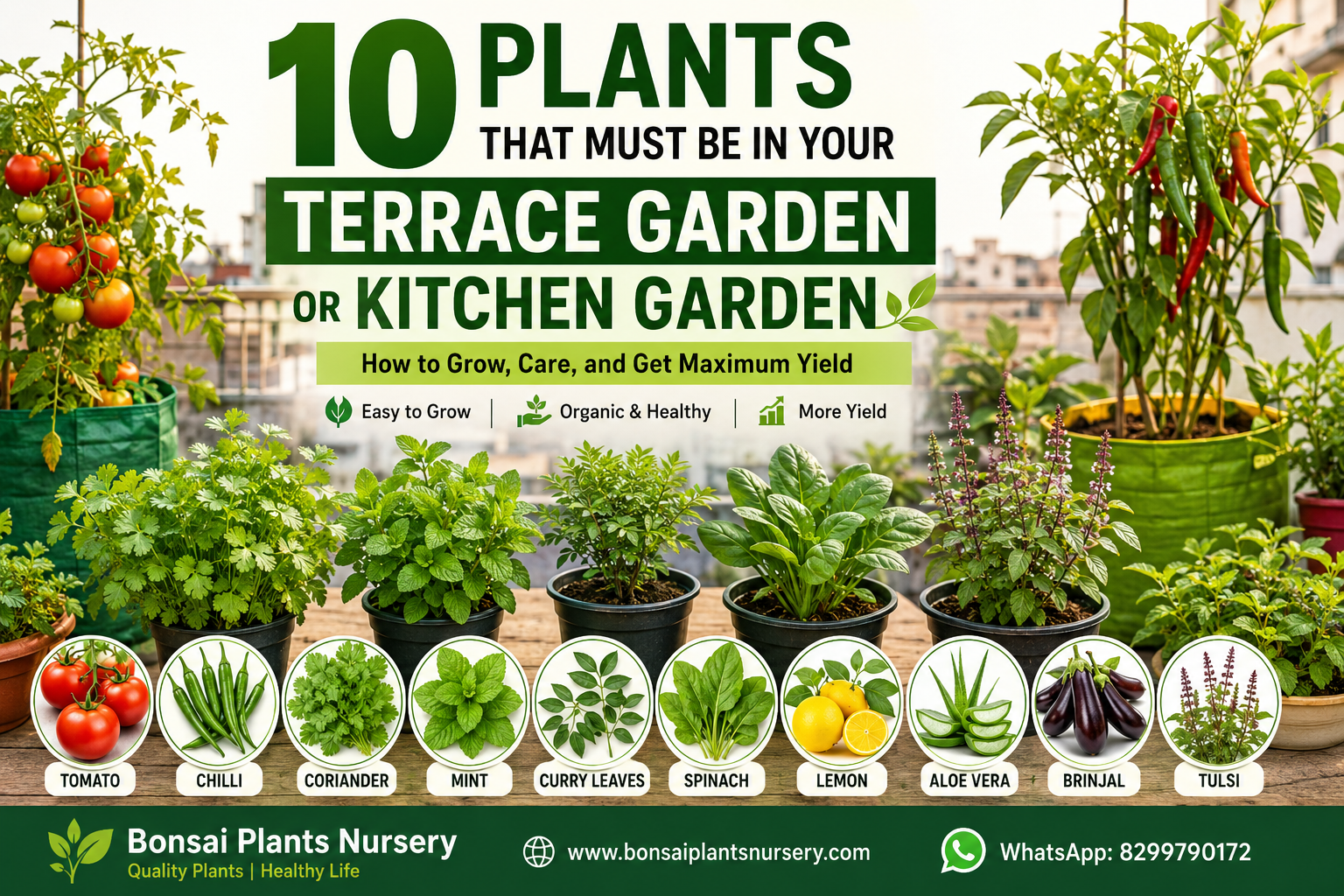
Summer in India brings intense heat, dehydration, and fatigue. The smartest way to stay naturally refreshed is to grow your own cooling, nutrient-rich plants at home. Whether you have a terrace, balcony, or a small kitchen garden, you can easily grow a variety of vegetables and herbs that help keep your body cool and energized.
This complete guide covers 10 easy-to-grow summer plants along with detailed methods for sowing, care, nutrition, pest control, and expert techniques to maximize yield.
easy_to_grow_summer_plants
Benefits of Growing Summer Plants at Home
Fresh, chemical-free produce
Natural cooling and hydration
Saves money
Encourages healthy lifestyle
Productive use of small spaces
Pre-Planting Preparation
1. Location Selection
6тАУ8 hours of direct sunlight required
Terrace or south-facing balcony is ideal
2. Soil Preparation
Ideal Mix:
40% garden soil
30% compost (vermicompost or cow dung)
30% cocopeat or sand
3. Container Selection
12тАУ18 inch deep pots
Grow bags are highly recommended
Top 10 Summer Plants to Grow at Home
1. Cucumber (Kheera)
Benefits
90% water content
Excellent for hydration
How to Grow
Sow seeds 1 inch deep in 12тАУ15 inch pots
Germination in 4тАУ7 days
Care
Regular watering
Provide trellis support
Pro Tips
Hand pollination increases yield
Remove excess male flowers
2. Kakdi (Indian Cucumber)
Benefits
Strong cooling effect
Growing Method
Direct sowing in well-drained soil
Expert Tip
Performs best in sandy soil
3. Mint (Pudina)
Benefits
Improves digestion
Provides cooling effect
Growing Method
Grow from cuttings
Care
Partial shade is sufficient
Tip
Regular harvesting promotes bushy growth
4. Coriander (Dhaniya)
Benefits
Essential kitchen herb
Growing Method
Crush seeds slightly before sowing
Tip
Sow every 15 days for continuous harvest
5. Bottle Gourd (Lauki)
Benefits
Cooling vegetable
Helps in weight management
Growing Method
Use large containers
Provide strong support
Yield Tip
Add phosphorus-rich fertilizer during flowering
6. Ridge Gourd (Torai)
Benefits
Light and easy to digest
Growing Method
Train vines on trellis
7. Bitter Gourd (Karela)
Benefits
Helps control blood sugar
Tip
Use neem oil spray regularly
8. Tomato
Benefits
Rich in Vitamin C
Care
Provide staking support
9. Green Chili
Benefits
Enhances taste
Tip
Needs sunlight and light feeding
10. Spinach (Palak)
Benefits
Rich in iron and vitamins
Growing Method
Direct sowing
Watering Guide
Water in morning or evening
Avoid overwatering
Fertilizer & Nutrition (Advanced)
Feed every 10тАУ15 days:
Vermicompost
Mustard cake liquid fertilizer
Banana peel fertilizer
Pest & Disease Control (Organic)
Neem oil spray (weekly)
Garlic-ginger spray
Baking soda solution
Tips for Higher Yield
Regular pruning
Companion planting
Mulching
Terrace Gardening Tips
Use lightweight containers
Protect from strong winds
Kitchen Garden Layout Tips
Place climbers at the back
Keep small plants in front
Common Mistakes & Solutions
Mistake
Solution
Overwatering
Let soil dry slightly
Low sunlight
Shift to sunny spot
Poor soil
Use proper mix
Frequently Asked Questions (FAQ)
Q1. Which plant grows fastest in summer?
Answer: Coriander and spinach grow very quickly.
Q2. Can I grow vegetables in a balcony?
Answer: Yes, if you get at least 6 hours of sunlight.
Q3. Which plant gives highest yield?
Answer: Bottle gourd, cucumber, and ridge gourd.
Conclusion
By growing these 10 plants at home, you can stay cool, healthy, and self-sufficient during summer. With the right care and techniques, even a small space can produce abundant fresh food.
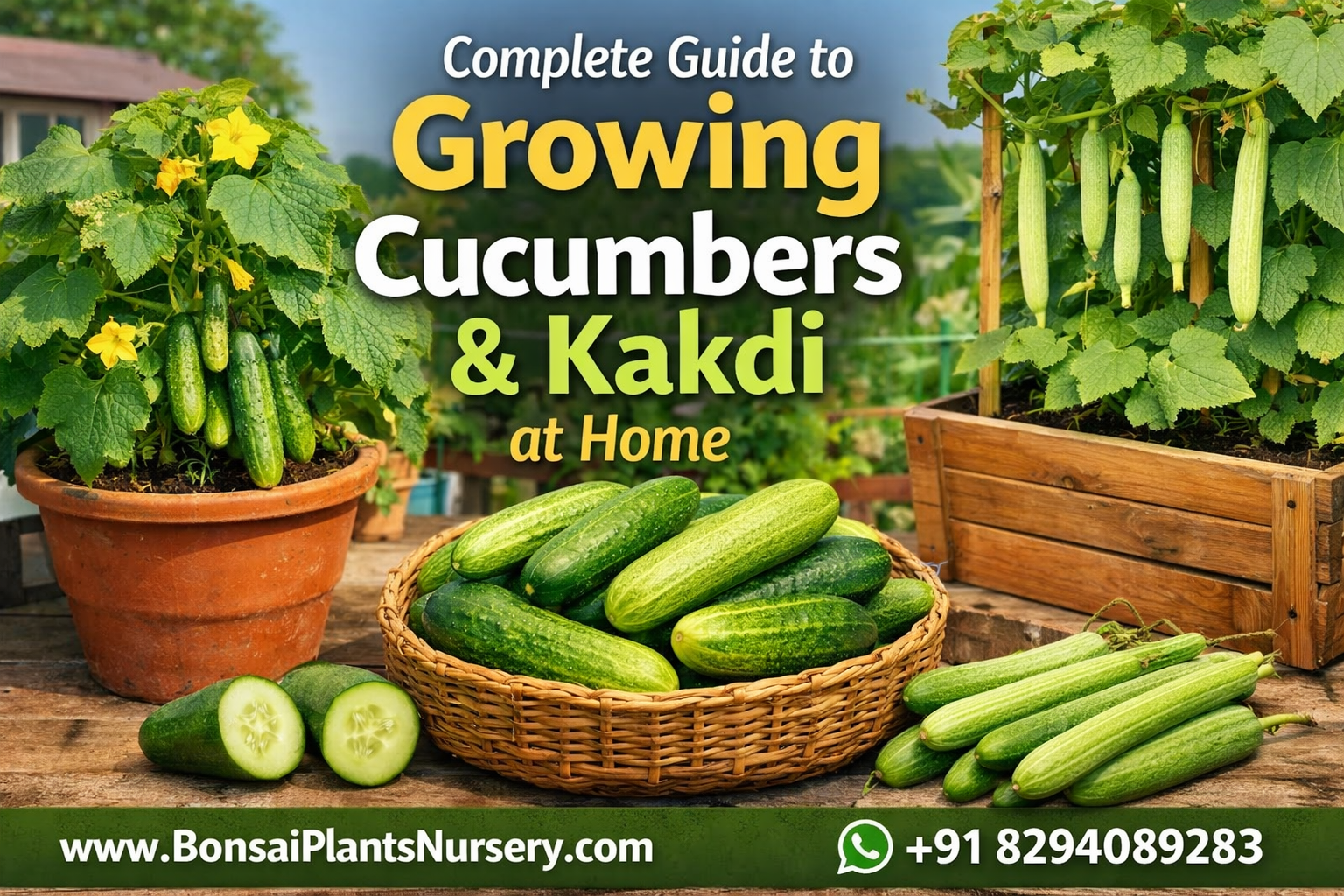
Cucumber (Kheera) and Kakdi are among the most popular summer vegetables in India. They are refreshing, hydrating, and packed with nutrients. The best part isтАФyou can easily grow them at home, whether you have a terrace, balcony, or a small kitchen garden.
In this complete guide, you will learn everything from seed sowing to harvesting, along with expert tips to get maximum production.
Growing_Cucumber_and_Kakdi
Difference Between Cucumber and Kakdi
Many people think cucumber and kakdi are the same, but there are slight differences:
Cucumber: Long, smooth, and green in color
Kakdi: Thicker, lighter in color, and more crunchy
Kakdi is considered more cooling during summer
Their growing method is almost identical.
Benefits of Growing at Home
Fresh and chemical-free produce
Saves money
Great activity for families and kids
High yield in small space
Best Season to Grow
Cucumber and kakdi are warm-season crops:
Best sowing time (North India): February to June
Can be grown year-round in warm climates
Ideal Location
Requires 6тАУ8 hours of direct sunlight
Best for terrace, balcony, or open garden
Container Selection
For pot growing:
Minimum 12тАУ15 inch deep pot
Grow bags work well
Ensure proper drainage holes
Soil Preparation
Well-draining soil is essential:
Ideal Soil Mix:
40% garden soil
30% compost (vermicompost or cow dung)
30% sand or cocopeat
Seed Selection and Preparation
Use high-quality seeds
Hybrid or desi both work
Soak seeds for 6тАУ8 hours before sowing (optional)
Sowing Method
Fill pot with prepared soil
Sow seeds 1тАУ1.5 inch deep
Water lightly
Germination occurs in 4тАУ7 days
Plant Care
Watering
Keep soil moist, not soggy
Overwatering can cause root rot
Sunlight
Minimum 6 hours sunlight required
Support (Trellis)
Provide support for vines
Use ropes, net, or bamboo structure
Fertilizer and Nutrition
Feed every 10тАУ15 days:
Vermicompost
Mustard cake liquid fertilizer
Banana peel fertilizer
Flowering and Fruiting
Flowers appear in 25тАУ30 days
Fruits ready in 35тАУ50 days
Pollination
Bees help in natural pollination
Hand pollination can improve yield if needed
Pest and Disease Control
Common Problems:
Aphids
Powdery mildew
Solutions:
Neem oil spray
Baking soda spray
Harvesting
Harvest at the right size
Overripe fruits lose taste
Tips for Higher Yield
Regular pruning
Timely feeding
Proper spacing
Growing in Kitchen Garden
Maintain 1тАУ2 feet spacing
Allow vines to spread or climb
Terrace Gardening Tips
Use lightweight containers
Protect from strong winds
Common Mistakes to Avoid
Overwatering
Lack of sunlight
Poor soil quality
Conclusion
Growing cucumber and kakdi at home is easy and highly rewarding. With the right care and techniques, you can enjoy fresh, healthy produce right from your garden.