Posted on Leave a comment

गर्मियों में पौधों की देखभाल कैसे करें? – सम्पूर्ण 5000+ शब्दों की गाइड (Summer Plant Care Guide in Hindi)

प्रस्तावना

भारत में गर्मियों का मौसम पौधों के लिए सबसे चुनौतीपूर्ण समय होता है। तेज धूप, लू, कम नमी और अधिक तापमान के कारण पौधे जल्दी मुरझा जाते हैं, पत्तियां पीली पड़ने लगती हैं और फूल-फल गिरने लगते हैं। यदि सही देखभाल न की जाए तो स्वस्थ पौधे भी कुछ ही दिनों में कमजोर हो सकते हैं।

इस विस्तृत गाइड में हम जानेंगे:

  • गर्मियों में पानी देने का सही समय और मात्रा
  • गमले की मिट्टी को ठंडा और नम कैसे रखें
  • मल्चिंग, छाया और स्प्रे के सही तरीके
  • फलदार, इंडोर और बोन्साई पौधों की विशेष देखभाल
  • टैरेस गार्डन और ग्राउंड गार्डन के अलग-अलग उपाय
  • पौधों में झुलसन (Sunburn) की पहचान और उपचार
  • हीटवेव (लू) के दौरान इमरजेंसी केयर प्लान
  • जैविक घोल, टॉनिक और माइक्रो न्यूट्रिएंट की पूरी जानकारी
  • गर्मियों में रिपॉटिंग करनी चाहिए या नहीं?
  • प्रोफेशनल नर्सरी वाले कौन‑सी तकनीक अपनाते हैं?

यदि आप अपने पौधों को स्वस्थ, हरा‑भरा और फल‑फूल से भरपूर रखना चाहते हैं, तो यह सम्पूर्ण 5000+ शब्दों की समर केयर गाइड आपके लिए है।

How_to_Take_ Care_of_Plants_in_Summer

1A. हीटवेव (लू) के दौरान इमरजेंसी प्लांट केयर प्लान

जब तापमान 42°C से ऊपर चला जाए तो सामान्य देखभाल पर्याप्त नहीं होती। ऐसे समय में यह विशेष योजना अपनाएं:

✔ सुबह बहुत जल्दी (4:30–6:30) गहरा पानी दें
✔ शाम को हल्का फोलियर स्प्रे (सादा पानी) करें
✔ शेड नेट या कपड़े से अस्थायी छाया बनाएं
✔ गमलों को सीधे फर्श पर न रखें – नीचे लकड़ी या स्टैंड रखें
✔ पौधों को आपस में पास रखें ताकि माइक्रो-क्लाइमेट बने

हीटवेव में पौधों को “कम स्ट्रेस, ज्यादा नमी, कम खाद” का नियम अपनाएं।


2A. मिट्टी की नमी जांचने का वैज्ञानिक तरीका

अक्सर लोग अंदाज़े से पानी देते हैं जिससे या तो ओवरवॉटरिंग हो जाती है या अंडरवॉटरिंग। सही तरीका:

  1. उंगली 2 इंच मिट्टी में डालें
  2. यदि मिट्टी सूखी लगे तो पानी दें
  3. यदि हल्की नमी है तो 1 दिन रुकें

लकड़ी की स्टिक टेस्ट

एक पतली लकड़ी की स्टिक मिट्टी में डालें। बाहर निकालने पर यदि मिट्टी चिपकी है तो नमी पर्याप्त है।


3A. समर स्पेशल मिट्टी मिश्रण (Soil Mix Formula)

गर्मियों में हल्की, जल निकासी वाली मिट्टी सबसे बेहतर रहती है।

आदर्श मिश्रण:

  • 40% गार्डन सॉइल
  • 30% वर्मी कम्पोस्ट
  • 20% कोकोपीट
  • 10% रेत या परलाइट

यह मिश्रण जड़ों को ठंडा रखता है और पानी का जमाव रोकता है।


4A. झुलसन (Leaf Burn) की पहचान और इलाज

पहचान:

  • पत्तियों के किनारे भूरे होना
  • सफेद या पीले धब्बे
  • नई पत्तियां सिकुड़ना

उपचार:

  • पौधे को तुरंत आंशिक छाया में रखें
  • जली पत्तियां काट दें
  • समुद्री शैवाल (Seaweed) टॉनिक स्प्रे करें

5A. जैविक टॉनिक और ग्रोथ बूस्टर

(1) छाछ स्प्रे

1 भाग छाछ + 2 भाग पानी – फंगल रोग रोकने में सहायक

(2) गुड़ घोल

10 ग्राम गुड़ + 1 लीटर पानी – माइक्रोबियल एक्टिविटी बढ़ाता है

(3) केले के छिलके का घोल

पोटाश का अच्छा स्रोत – फूल और फल के लिए उपयोगी

हर 15 दिन में हल्का प्रयोग करें।


6A. टैरेस गार्डन vs जमीन में लगे पौधों की देखभाल

टैरेस गार्डन:

  • ज्यादा गर्मी लगती है
  • रोज नमी जांचें
  • शेड नेट आवश्यक

जमीन में पौधे:

  • गहरी सिंचाई करें
  • मोटी मल्चिंग करें
  • सप्ताह में 2–3 बार पर्याप्त पानी

7A. क्या गर्मियों में रिपॉटिंग करनी चाहिए?

सामान्यतः नहीं।
रिपॉटिंग से जड़ों को स्ट्रेस होता है। यदि बहुत जरूरी हो तो:

✔ शाम के समय करें
✔ 3–4 दिन छाया में रखें
✔ हल्का सीवीड स्प्रे करें


8A. प्रोफेशनल नर्सरी की समर केयर तकनीक

  • माइक्रो स्प्रिंकलर सिस्टम
  • शेड हाउस संरचना
  • ड्रिप इरिगेशन
  • मल्च शीट

आप छोटे स्तर पर भी इन तकनीकों को अपनाकर अपने पौधों की सुरक्षा कर सकते हैं।


9A. अलग‑अलग पौधों के लिए समर केयर चार्ट

बोन्साई:

दिन में 2 बार पानी + 50% शेड

फलदार पौधे:

गहरी सिंचाई + पोटाश खाद

फूलदार पौधे:

सुबह धूप, दोपहर छाया

इंडोर पौधे:

अप्रत्यक्ष रोशनी + कम पानी


10A. गर्मियों में पौधों के लिए Do’s & Don’ts (विस्तृत)

Do’s:

✔ मल्चिंग करें
✔ सुबह पानी दें
✔ ड्रेनेज जांचें
✔ नीम तेल स्प्रे करें

Don’ts:

❌ दोपहर में खाद न डालें
❌ पत्तियों पर धूप में स्प्रे न करें
❌ गमले में पानी जमा न होने दें


11A. समर केयर कैलेंडर (अप्रैल–जून)

अप्रैल:

  • मल्चिंग शुरू करें
  • शेड नेट लगाएं

मई:

  • पानी की मात्रा बढ़ाएं
  • साप्ताहिक नीम स्प्रे

जून:

  • मानसून की तैयारी
  • फंगल प्रिवेंशन स्प्रे

विस्तृत निष्कर्ष

गर्मियों में पौधों की देखभाल केवल पानी देने तक सीमित नहीं है। यह एक सम्पूर्ण प्रबंधन प्रक्रिया है जिसमें सही मिट्टी, संतुलित खाद, धूप से सुरक्षा, मल्चिंग और नियमित निरीक्षण शामिल है। यदि आप इन सभी चरणों का पालन करते हैं, तो आपके पौधे भीषण गर्मी में भी स्वस्थ रहेंगे और फल‑फूल देते रहेंगे।

🌿 उच्च गुणवत्ता वाले बोन्साई, फलदार और सजावटी पौधों के लिए विजिट करें:
www.bonsaiplantsnursery.com
📞 WhatsApp ऑर्डर: +91 8299790172

अपने गार्डन को इस गर्मी में भी हरा‑भरा और जीवन से भरपूर रखें!

1. गर्मियों में पौधों को सबसे ज्यादा खतरा क्यों होता है?

गर्मियों में तापमान 35°C से 48°C तक पहुंच सकता है। इस दौरान:

  • मिट्टी जल्दी सूख जाती है
  • जड़ें गर्म होकर क्षतिग्रस्त हो सकती हैं
  • पौधे का ट्रांसपिरेशन बढ़ जाता है
  • फूल और कली झड़ने लगती है

उच्च तापमान पौधों की कोशिकाओं को प्रभावित करता है। यदि पानी की कमी हो जाए तो पत्तियां झुलस सकती हैं।


2. गर्मियों में पानी देने का सही तरीका

(A) पानी देने का सही समय

✔ सुबह 5 बजे से 8 बजे के बीच
✔ शाम 6 बजे के बाद

दोपहर में पानी देने से बचें क्योंकि तेज धूप में पानी जल्दी वाष्पित हो जाता है।

(B) कितनी मात्रा में पानी दें?

  • छोटे गमले: रोजाना हल्का पानी
  • बड़े गमले: 1–2 दिन में गहराई तक पानी
  • फलदार पौधे: जड़ों तक गहरा सिंचन

महत्वपूर्ण टिप:

पानी हमेशा गमले के नीचे से निकलने तक दें।


3. मिट्टी को ठंडा रखने के उपाय (Mulching Guide)

मल्चिंग गर्मियों में सबसे प्रभावी तकनीक है।

मल्चिंग के लिए सामग्री:

  • सूखी पत्तियां
  • भूसा
  • नारियल की भूसी
  • लकड़ी का बुरादा

मल्चिंग के फायदे:

  • मिट्टी में नमी बरकरार रहती है
  • जड़ें ठंडी रहती हैं
  • खरपतवार कम उगते हैं

4. पौधों को तेज धूप से कैसे बचाएं?

(A) ग्रीन शेड नेट का उपयोग

50% ग्रीन नेट छत और टैरेस गार्डन के लिए उपयुक्त है।

(B) पौधों की जगह बदलना

गमलों को दीवार की छाया में रखें।

(C) डबल पॉट तकनीक

छोटे गमले को बड़े गमले में रखें ताकि गर्मी कम लगे।


5. गर्मियों में खाद कब और कैसे दें?

गर्मी में भारी रासायनिक खाद से बचें।

उपयोग करें:

  • वर्मी कम्पोस्ट
  • गोबर खाद
  • तरल जैविक खाद

हर 20–25 दिन में हल्की मात्रा दें।


6. पत्तियां पीली होने की समस्या

कारण:

  • अधिक पानी
  • कम पानी
  • पोषक तत्वों की कमी
  • धूप से झुलसना

समाधान:

  • ड्रेनेज सुधारें
  • नीम तेल स्प्रे करें
  • माइक्रो न्यूट्रिएंट स्प्रे करें

7. फलदार पौधों की विशेष देखभाल

आम, नींबू, अमरूद के लिए टिप्स:

  • फूल आने पर ज्यादा पानी न दें
  • पोटाश युक्त खाद दें
  • दोपहर की धूप से बचाएं

8. इंडोर पौधों की गर्मियों में देखभाल

  • सीधे धूप से दूर रखें
  • सप्ताह में 1–2 बार पानी
  • पत्तियों पर पानी का हल्का स्प्रे

9. बोन्साई पौधों की समर केयर

बोन्साई छोटे गमले में होते हैं, इसलिए जल्दी सूखते हैं।

✔ दिन में 2 बार पानी
✔ ट्रे में पानी भरकर रखें
✔ 50% शेड में रखें


10. कीड़ों और फंगस से बचाव

नीम तेल स्प्रे (हर 7 दिन में)

5ml नीम तेल + 1 लीटर पानी

छाछ स्प्रे

1 भाग छाछ + 2 भाग पानी


11. गर्मियों में लगाने योग्य पौधे

  • तुलसी
  • गेंदा
  • पुदीना
  • मिर्च
  • भिंडी

12. सामान्य गलतियां जो लोग करते हैं

❌ दोपहर में पानी देना
❌ ज्यादा खाद डालना
❌ ड्रेनेज होल बंद होना
❌ गमले को कंक्रीट पर सीधे रखना


13. टैरेस गार्डन समर केयर प्लान

  • सुबह गहरा पानी
  • मल्चिंग
  • शेड नेट
  • सप्ताह में एक बार जैविक स्प्रे

14. अक्सर पूछे जाने वाले प्रश्न (FAQ)

Q1. क्या गर्मियों में रोज पानी देना जरूरी है?

हाँ, लेकिन मिट्टी की नमी देखकर दें।

Q2. पत्तियां जल क्यों जाती हैं?

तेज धूप और पानी की कमी के कारण।

Q3. क्या दोपहर में स्प्रे कर सकते हैं?

नहीं, केवल सुबह या शाम।


निष्कर्ष

गर्मियों में पौधों की देखभाल थोड़ी अतिरिक्त मेहनत मांगती है, लेकिन सही तकनीक अपनाने से आपके पौधे पूरे सीजन हरे-भरे रहेंगे। नियमित पानी, मल्चिंग, हल्की खाद और धूप से सुरक्षा ही सफलता की कुंजी है।

यदि आप उच्च गुणवत्ता वाले बोन्साई, फलदार और सजावटी पौधे खरीदना चाहते हैं, तो विजिट करें:

🌿 www.bonsaiplantsnursery.com
📞 WhatsApp ऑर्डर: +91 8299790172

अपने गार्डन को इस गर्मी में भी हरा-भरा रखें!

Posted on Leave a comment

🌿 5 Powerful Plants That Help You Stay Young and Beautiful Naturally | Planting Method, Care & Usage Guide

In today’s fast-paced lifestyle, everyone wants to look young, energetic, and naturally beautiful for a long time. People spend thousands of rupees on cosmetic products, chemical creams, and expensive treatments. However, nature has already gifted us powerful medicinal plants that help maintain glowing skin, strong hair, and overall wellness naturally.

By growing the right plants at home — on your balcony, terrace, or garden — you can improve not only your surroundings but also your health and beauty from the inside out.

In this detailed guide, you will learn:

  • 5 plants that help you stay young and beautiful

  • Step-by-step planting method

  • Care instructions

  • How to use them effectively

  • Why growing them at home is beneficial

If you want to grow these plants at home, visit:
🌐 www.bonsaiplantsnursery.com
Or WhatsApp directly: 📲 8299790172


🌱 1️⃣ Aloe Vera – The Natural Skin Healer

Aloe Vera is widely known as the “Plant of Immortality” and one of the best natural beauty enhancers. It is rich in Vitamins A, C, and E, antioxidants, and anti-inflammatory properties.

🌟 Benefits of Aloe Vera

  • Reduces wrinkles and fine lines

  • Adds natural glow to skin

  • Helps reduce acne and blemishes

  • Soothes sunburn

  • Strengthens hair and reduces dandruff

  • Promotes collagen production

Regular use of Aloe Vera keeps your skin hydrated and youthful.


🌿 How to Plant Aloe Vera

  1. Take an 8–10 inch pot with drainage holes.

  2. Prepare soil mix: Garden soil + Sand + Organic compost (50:30:20 ratio).

  3. Plant a small Aloe Vera sapling.

  4. Water lightly after planting.

Place the pot where it receives 4–5 hours of sunlight daily.


💧 Aloe Vera Care Tips

  • Water once or twice a week.

  • Avoid overwatering (roots may rot).

  • Add organic compost every 2 months.

  • Keep in bright sunlight for best growth.


🧴 How to Use Aloe Vera

  • Cut a fresh leaf.

  • Extract the gel.

  • Apply directly on face for 20 minutes.

  • Wash with normal water.

For hair care: Mix Aloe gel with coconut oil and apply to scalp.


🌿 2️⃣ Tulsi (Holy Basil) – Immunity Booster & Anti-Aging Herb

Tulsi is not only a sacred plant in Indian homes but also a powerful medicinal herb. It purifies blood, improves immunity, and supports healthy glowing skin.

🌟 Benefits of Tulsi

  • Detoxifies the body

  • Improves skin clarity

  • Reduces hair fall

  • Boosts immunity

  • Fights infections

  • Reduces stress and aging signs

Healthy internal system = naturally youthful appearance.


🌱 How to Plant Tulsi

  • Use a 6–8 inch pot.

  • Fill with normal garden soil mixed with compost.

  • Place in an area with 3–4 hours of sunlight.

  • Water lightly daily.

Tulsi can easily grow from seeds or small saplings.


💧 Tulsi Care Guide

  • Water regularly but avoid waterlogging.

  • Remove dry leaves regularly.

  • Add compost every 15–20 days.


☕ How to Use Tulsi

  • Chew 5–7 fresh leaves daily in the morning.

  • Prepare Tulsi tea.

  • Apply Tulsi paste on acne-prone skin.


🌿 3️⃣ Lemongrass – Natural Detox & Skin Glow Enhancer

Lemongrass is a powerful detox plant that cleanses toxins from the body, which directly improves skin health and overall freshness.

🌼 Benefits of Lemongrass

  • Flushes toxins

  • Helps weight control

  • Reduces stress

  • Improves digestion

  • Enhances natural skin glow

  • Acts as anti-aging herbal tea


🌱 How to Plant Lemongrass

  • Use a 10–12 inch pot.

  • Well-draining soil is essential.

  • Requires 5–6 hours of sunlight daily.


💧 Lemongrass Care

  • Water daily in summer.

  • Water every 2–3 days in winter.

  • Trim regularly for fresh growth.

  • Add organic compost monthly.


🍵 How to Use Lemongrass

  • Cut fresh leaves.

  • Boil in water for 5 minutes.

  • Strain and drink warm.

Drinking Lemongrass tea daily improves skin texture and body metabolism.


🌿 4️⃣ Giloy – The Ayurvedic Anti-Aging Vine

Giloy is known as “Amrita” in Ayurveda, meaning the root of immortality. It strengthens immunity and keeps the body internally young.

🌿 Benefits of Giloy

  • Boosts immunity

  • Purifies blood

  • Improves skin disorders

  • Supports liver health

  • Slows down aging

  • Increases stamina

When your body is healthy internally, your skin reflects youthfulness naturally.


🌱 How to Plant Giloy

  • Use a large pot with support (it is a climbing vine).

  • Keep in partial to full sunlight.

  • Ensure proper drainage.


💧 Giloy Care

  • Water regularly.

  • Provide support structure.

  • Prune occasionally.

  • Add organic fertilizer every month.


🍵 How to Use Giloy

  • Cut a small stem piece.

  • Boil in water.

  • Drink as herbal decoction.


🌿 5️⃣ Mint (Pudina) – Freshness & Natural Skin Cooling

Mint is one of the easiest herbs to grow and is excellent for digestion, skin freshness, and overall vitality.

🌿 Benefits of Mint

  • Improves digestion

  • Refreshes skin

  • Reduces acne

  • Provides cooling effect

  • Improves breath freshness

  • Adds glow to face


🌱 How to Plant Mint

  • Use an 8–10 inch pot.

  • Moist soil works best.

  • Partial sunlight is ideal.

Mint grows easily from stem cuttings.


💧 Mint Care

  • Water lightly daily.

  • Trim frequently for bushy growth.

  • Add compost monthly.


🧴 How to Use Mint

  • Mint face pack (Mint paste + Multani mitti).

  • Mint detox water.

  • Mint chutney for digestion.


🌸 Why You Should Grow These Plants at Home

✔ Natural beauty without chemicals
✔ Fresh air purification
✔ Boosts positive energy
✔ Cost-effective skincare
✔ Safe for family use
✔ Encourages healthy lifestyle

Growing these plants at home gives long-term beauty benefits without side effects.


🛒 Where to Buy These Plants?

You can easily order healthy, nursery-grown plants from:

🌐 www.bonsaiplantsnursery.com
📲 WhatsApp Orders: 8299790172

We provide safe packaging and deliver across India.

Bulk orders and combo kits also available.


❓ Frequently Asked Questions (FAQ)

Q1. Can these plants grow in balcony pots?

Yes, all of them grow well in pots and containers.

Q2. How long before I see results?

Visible skin improvements can be seen within 3–4 weeks of regular use.

Q3. Are these plants safe for daily use?

Yes, when used in moderate quantities.

Q4. Do they require full sunlight?

Tulsi and Lemongrass need good sunlight; Aloe and Mint tolerate partial sunlight.

Q5. Can beginners grow them?

Absolutely. These plants are beginner-friendly.


🌟 Final Thoughts

Nature provides the best anti-aging solution. Instead of depending completely on chemical products, start growing these five powerful plants at home and experience natural beauty from within.

Youthfulness is not just about appearance — it is about health, immunity, and positivity.

Start your natural beauty garden today.

🌐 Visit: www.bonsaiplantsnursery.com
📲 WhatsApp: 8299790172

Posted on Leave a comment

🌿 5 ऐसे पौधे जो आपको जवान और सुंदर बनाए रखने में मदद करते हैं | लगाने की विधि, देखभाल और उपयोग की पूरी जानकारी

आज की तेज़ भागदौड़ भरी जिंदगी में हर कोई चाहता है कि वह लंबे समय तक जवान, स्वस्थ और सुंदर दिखे। लोग महंगे कॉस्मेटिक्स, क्रीम और ट्रीटमेंट्स पर हजारों रुपये खर्च करते हैं, लेकिन प्रकृति ने हमें ऐसे कई पौधे दिए हैं जो प्राकृतिक तरीके से त्वचा, बाल और शरीर को स्वस्थ रखते हैं।

अगर आप अपने घर की बालकनी, छत या गार्डन में सही पौधे लगा लें, तो ये न केवल वातावरण को शुद्ध करेंगे बल्कि आपकी त्वचा को चमकदार, बालों को मजबूत और शरीर को अंदर से स्वस्थ बनाए रखने में भी मदद करेंगे।

इस लेख में हम जानेंगे:

  • 5 ऐसे पौधे जो आपको जवान और सुंदर बनाए रखते हैं

  • लगाने की सही विधि

  • देखभाल कैसे करें

  • उपयोग करने का सही तरीका

  • और घर पर उगाने के फायदे

अगर आप इनमें से कोई भी पौधा अपने घर पर लगाना चाहते हैं तो विजिट करें:
🌐 www.bonsaiplantsnursery.com
या सीधे WhatsApp करें: 📲 8299790172


🌱 1️⃣ एलोवेरा (Aloe Vera) – प्राकृतिक सौंदर्य का खजाना

एलोवेरा क्यों है खास?

एलोवेरा को “Skin Healer Plant” भी कहा जाता है। इसमें मौजूद विटामिन A, C, E और एंटीऑक्सीडेंट त्वचा को जवां बनाए रखने में मदद करते हैं।

🔥 फायदे:

  • झुर्रियों को कम करता है

  • चेहरे पर प्राकृतिक ग्लो लाता है

  • मुंहासों को कम करता है

  • सनबर्न ठीक करता है

  • बालों को मजबूत बनाता है


🌿 लगाने की विधि

  1. 8–10 इंच का गमला लें

  2. मिट्टी + रेत + गोबर की खाद (50:30:20) मिलाएं

  3. एलोवेरा का छोटा पौधा लगाएं

  4. हल्की सिंचाई करें

धूप वाली जगह रखें (4–5 घंटे धूप जरूरी)


💧 देखभाल

  • सप्ताह में 1–2 बार पानी

  • ज्यादा पानी से जड़ सड़ सकती है

  • हर 2 महीने में जैविक खाद दें


🧴 उपयोग की विधि

  • पत्ती काटें

  • अंदर का जेल निकालें

  • सीधे चेहरे पर लगाएं

  • 20 मिनट बाद धो लें

बालों में लगाने के लिए जेल को नारियल तेल में मिलाएं।


🌿 2️⃣ तुलसी (Tulsi Plant) – रोग प्रतिरोधक और एंटी एजिंग पौधा

तुलसी सिर्फ धार्मिक पौधा नहीं है, बल्कि यह इम्युनिटी बूस्टर और एंटी एजिंग हर्ब है।

🌟 फायदे:

  • खून साफ करता है

  • त्वचा को अंदर से साफ करता है

  • बाल झड़ना कम करता है

  • शरीर की रोग प्रतिरोधक क्षमता बढ़ाता है


🌱 लगाने की विधि

  • 6–8 इंच का गमला

  • सामान्य बगीचे की मिट्टी

  • रोज 3–4 घंटे धूप

बीज या छोटे पौधे से आसानी से उगाया जा सकता है।


💧 देखभाल

  • रोज हल्का पानी

  • सूखी पत्तियाँ हटाते रहें

  • 15 दिन में एक बार जैविक खाद


☕ उपयोग की विधि

  • 5–7 पत्तियाँ रोज सुबह चबाएं

  • तुलसी की चाय बनाएं

  • पत्तियों का पेस्ट चेहरे पर लगाएं


🌿 3️⃣ लेमनग्रास (Lemongrass) – डिटॉक्स और ग्लो के लिए

लेमनग्रास शरीर को डिटॉक्स करता है जिससे त्वचा पर प्राकृतिक चमक आती है।

🌼 फायदे:

  • शरीर से टॉक्सिन बाहर करता है

  • वजन नियंत्रण में मदद

  • त्वचा साफ करता है

  • तनाव कम करता है


🌱 लगाने की विधि

  • 10–12 इंच का गमला

  • अच्छी जल निकासी वाली मिट्टी

  • रोज 5–6 घंटे धूप


💧 देखभाल

  • गर्मियों में रोज पानी

  • सर्दियों में 2–3 दिन में

  • समय-समय पर कटिंग करें


🍵 उपयोग की विधि

  • पत्तियाँ काटें

  • 1 कप पानी में उबालें

  • 5 मिनट बाद छान लें

  • रोज सुबह पीएं


🌿 4️⃣ गिलोय (Giloy) – प्राकृतिक इम्युनिटी और एंटी एजिंग बेल

गिलोय को आयुर्वेद में अमृत माना गया है।

🌿 फायदे:

  • इम्युनिटी बढ़ाता है

  • त्वचा रोग कम करता है

  • खून साफ करता है

  • शरीर को अंदर से युवा बनाए रखता है


🌱 लगाने की विधि

  • बड़े गमले में लगाएं

  • सहारा (Support) दें

  • धूप वाली जगह रखें


💧 देखभाल

  • नियमित पानी

  • बेल को ट्रिम करें

  • जैविक खाद दें


🍵 उपयोग की विधि

  • डंठल का छोटा टुकड़ा लें

  • पानी में उबालें

  • काढ़ा बनाकर पिएं


🌿 5️⃣ पुदीना (Mint Plant) – ताजगी और सुंदरता का साथी

पुदीना त्वचा और पाचन दोनों के लिए लाभकारी है।

🌿 फायदे:

  • त्वचा को ठंडक देता है

  • पाचन सुधारता है

  • मुंह की बदबू दूर करता है

  • चेहरे की चमक बढ़ाता है


🌱 लगाने की विधि

  • 8–10 इंच गमला

  • नमीयुक्त मिट्टी

  • आंशिक धूप


💧 देखभाल

  • रोज हल्का पानी

  • हर महीने खाद

  • नियमित कटिंग


🧴 उपयोग की विधि

  • पुदीना पेस्ट फेस पैक

  • पुदीना चटनी

  • डिटॉक्स पानी


🌸 इन पौधों को घर में लगाने के अतिरिक्त फायदे

✔ घर की हवा शुद्ध होती है
✔ सकारात्मक ऊर्जा बढ़ती है
✔ बच्चों के लिए प्राकृतिक शिक्षा
✔ रसायन मुक्त सौंदर्य


🛒 कहां से खरीदें?

अगर आप ये पौधे अपने घर में लगाना चाहते हैं तो:

🌐 विजिट करें: www.bonsaiplantsnursery.com
📲 WhatsApp ऑर्डर करें: 8299790172

हम सुरक्षित पैकेजिंग के साथ पूरे भारत में डिलीवरी करते हैं।


❓ अक्सर पूछे जाने वाले प्रश्न (FAQ)

Q1. क्या ये पौधे बालकनी में उग सकते हैं?

हाँ, सभी पौधे गमले में आसानी से उगते हैं।

Q2. क्या रोज उपयोग करना सुरक्षित है?

सामान्य मात्रा में उपयोग सुरक्षित है।

Q3. क्या ये पौधे कम धूप में उग सकते हैं?

तुलसी और लेमनग्रास को धूप चाहिए, एलोवेरा आंशिक धूप में भी चलता है।

Q4. क्या जैविक खाद जरूरी है?

हाँ, अच्छी ग्रोथ के लिए जरूरी है।

Q5. क्या बच्चे भी इनका उपयोग कर सकते हैं?

हाँ, लेकिन मात्रा संतुलित हो।


🌟 निष्कर्ष

प्राकृतिक पौधे सिर्फ सजावट के लिए नहीं होते, बल्कि ये हमारे स्वास्थ्य और सुंदरता के सच्चे साथी हैं। अगर आप लंबे समय तक जवान और आकर्षक दिखना चाहते हैं तो इन 5 पौधों को आज ही अपने घर में लगाएं।

🌿 प्राकृतिक सौंदर्य का रहस्य आपके गार्डन में छिपा है।

ऑर्डर के लिए:
🌐 www.bonsaiplantsnursery.com
📲 WhatsApp: 8299790172

Posted on Leave a comment

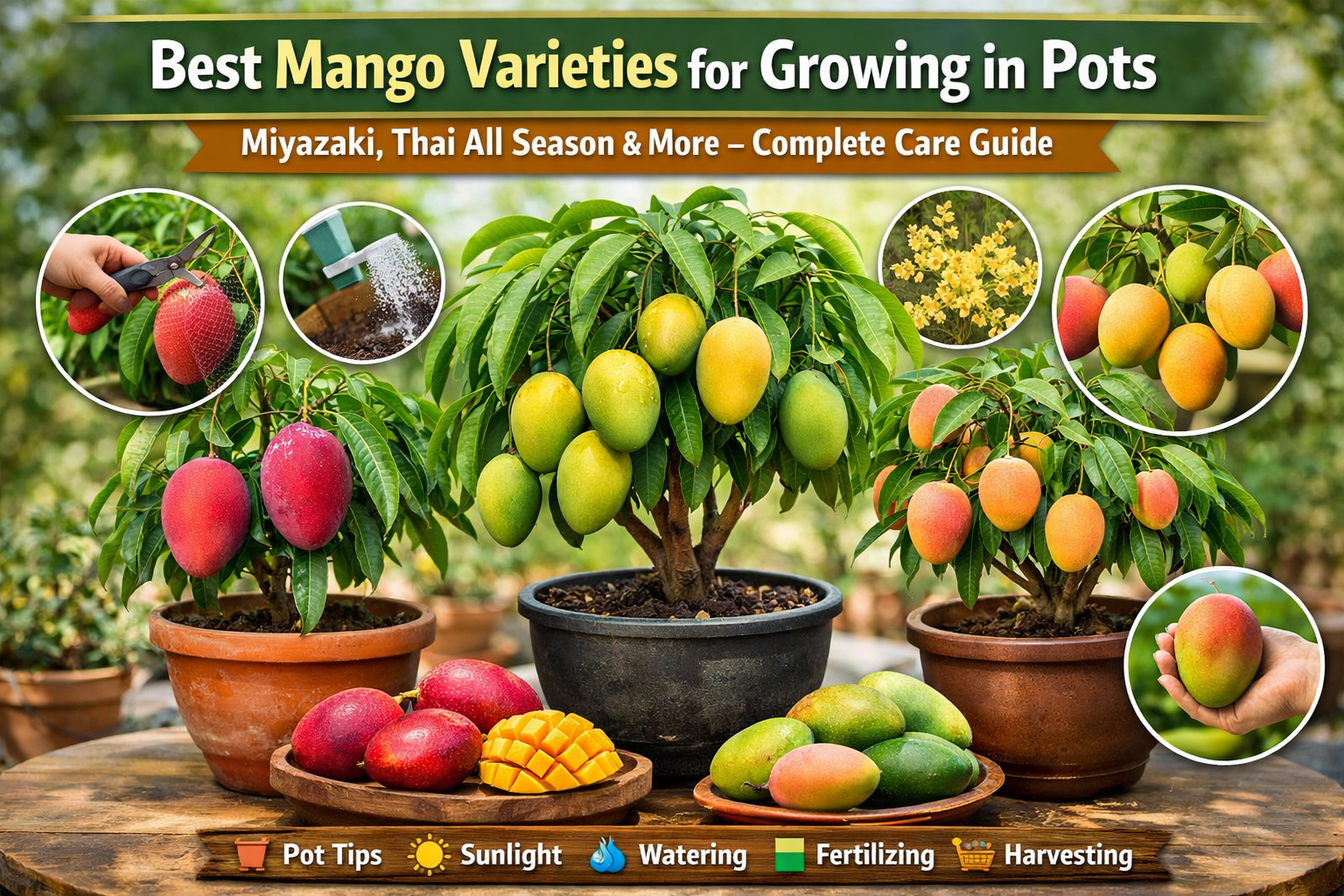
Best Mango Varieties for Growing in Pots (Including Miyazaki & Thai All Season) – Complete Guide to Growing Mango in Containers for Maximum Fruit Yield

Growing mangoes in pots is no longer just a gardening experiment — it has become a practical solution for urban gardeners who have limited space but dream of harvesting sweet, homegrown mangoes.

With the availability of dwarf and grafted mango varieties, you can now successfully grow mango trees on terraces, balconies, rooftops, and small gardens.

This detailed guide will help you choose the best mango varieties for containers, understand pot selection, soil preparation, fertilization, pruning, pest control, and proven methods to increase fruit production.

If you are looking for premium grafted mango plants, you can visit Bonsai Plants Nursery or contact us on WhatsApp: 8299790172.

mango_in_pot
mango_in_pot

Why Grow Mango in Pots?

Mango is known as the “King of Fruits.” Especially in India, mango holds cultural, economic, and emotional importance.

Benefits of Growing Mango in Containers:

  • Perfect for small spaces

  • Ideal for terrace and balcony gardening

  • Easy pest and disease control

  • Organic fruit production at home

  • Decorative and productive plant


Best Mango Varieties for Growing in Pots

Choosing the right variety is the most important factor for successful container mango gardening. Always choose grafted or dwarf varieties, not seed-grown plants.


1. Amrapali Mango

  • Dwarf variety

  • Heavy fruit-bearing

  • Sweet and aromatic

  • Perfect for container gardening


2. Mallika Mango

  • High-yield variety

  • Excellent disease resistance

  • Medium-sized tree

  • Suitable for large pots


3. Dasheri (Grafted)

  • Popular traditional variety

  • Excellent taste and aroma

  • Suitable for container growing


4. Neelum Mango

  • Can flower more than once a year

  • Good adaptability

  • Suitable for pot cultivation


5. Miyazaki Mango (Premium Variety)

The Miyazaki Mango is one of the most premium mango varieties in the world.

Features:

  • Large fruit size

  • Thin skin

  • Extremely sweet taste

  • High vitamin and antioxidant content

  • Attractive deep red color

Although originally from Japan, it can be grown in pots in warm climates with proper care.

It requires:

  • Full sunlight

  • Balanced fertilization

  • Controlled watering

  • Good drainage

This is a high-demand premium mango variety ideal for collectors and serious gardeners.


6. Thai All Season Mango

The Thai All Season mango is a popular variety from Thailand.

Why It Is Special:

  • Can produce fruit multiple times a year

  • Fast-growing

  • Suitable for tropical and subtropical climates

  • Medium to large fruits

  • Pleasant aroma

It is highly recommended for container gardening due to its adaptability and regular fruiting potential.


Ideal Pot Size for Growing Mango

For successful fruiting, pot size matters.

Recommended Pot Size:

  • Minimum: 18–24 inches depth

  • Ideal: 24–30 inches wide and deep

  • Material: Cement, plastic, clay, or heavy grow bags

Ensure:

  • 3–4 drainage holes

  • Strong base

  • Stable positioning (wind protection)


Best Soil Mix for Mango in Pots

Good drainage and nutrient-rich soil are essential.

Ideal Soil Mixture:

  • 40% garden soil

  • 30% well-decomposed cow manure

  • 20% river sand

  • 10% vermicompost

Add:

  • Neem cake powder

  • Bone meal

Ideal soil pH: 5.5–7.5


How to Plant Mango in a Pot (Step-by-Step)

  1. Add small stones at the bottom for drainage

  2. Fill with prepared soil mix

  3. Remove grafted plant carefully from nursery bag

  4. Place upright in center

  5. Keep graft union above soil level

  6. Press soil gently

  7. Water lightly


Sunlight & Temperature Requirements

  • 6–8 hours of direct sunlight daily

  • Ideal temperature: 24°C to 38°C

  • Protect from frost and extreme cold

South or west-facing balconies are ideal.


Watering Schedule

  • Summer: Every 2–3 days

  • Winter: Every 7–10 days

  • Rainy season: Avoid waterlogging

Overwatering causes root rot.


Fertilization Schedule for Maximum Fruit Yield

First Year:

  • Vermicompost every 2 months

  • Neem cake powder

Before Flowering:

  • Phosphorus-rich fertilizer

During Fruit Formation:

  • Potassium-rich fertilizer

Organic sprays:

  • Seaweed extract

  • Buttermilk spray

  • Neem oil spray


Pruning for Better Yield

Pruning improves airflow and fruit production.

  • Top the plant at 2–3 feet height

  • Remove inward-growing branches

  • Remove dry and diseased parts

  • Light pruning after monsoon


Care During Flowering and Fruiting

  • Avoid excess nitrogen

  • Control watering

  • Support pollination

  • Apply light potassium

Flower drop is normal in mango.


Tips to Get Maximum Fruits in Pots

  • Choose grafted plants

  • Provide full sunlight

  • Use balanced fertilizers

  • Maintain proper drainage

  • Regular pruning

  • Controlled watering during flowering

  • Ensure pollination


Common Mango Pests and Diseases

Common Pests:

  • Aphids

  • Mealybugs

  • Fruit flies

Control:

  • Neem oil spray every 15 days

  • Soap water spray

  • Yellow sticky traps

Common Diseases:

  • Powdery mildew

  • Anthracnose

Use fungicide carefully if needed.


Annual Care Calendar

Month Activity
Jan Light watering
Feb Flowering begins
Mar Pest management
Apr Fruit setting
May–Jun Harvesting
Jul Light pruning
Aug Fertilizing
Sep Growth management
Oct Inspection
Nov Light watering
Dec Cold protection

Harvesting & Storage

  • Harvest when fully mature

  • Cut with small stem attached

  • Store in cool place

  • Wrap raw mango in paper for ripening


Conclusion

Growing mango in pots is absolutely possible with the right variety, proper pot size, balanced nutrition, and regular care.

Premium varieties like:

  • Miyazaki Mango

  • Thai All Season

  • Amrapali

  • Mallika

are excellent choices for container gardening.

If you are looking to buy high-quality grafted mango plants, visit Bonsai Plants Nursery or contact us on WhatsApp: 8299790172.

Start your mango-growing journey today and enjoy fresh, organic mangoes from your own terrace garden!


Frequently Asked Questions (FAQ)

1. Can Miyazaki mango grow in pots?
Yes, with proper sunlight and nutrition.

2. How many years does mango take to fruit in pots?
Grafted plants start fruiting in 2–3 years.

3. How much sunlight does mango need?
Minimum 6–8 hours daily.

4. Why are mango flowers dropping?
Due to overwatering or nutrient imbalance.

5. Can Thai All Season fruit multiple times a year?
Yes, under suitable climate conditions.

6. What fertilizer is best for mango?
Vermicompost + phosphorus + potassium-based fertilizer.

7. Can mango grow in balcony?
Yes, if it receives sufficient sunlight.

8. How often should pruning be done?
Once or twice a year.

9. Why are fruits small?
Overcrowding or nutrient deficiency.

10. Is grafted mango better than seed-grown?
Yes, for container gardening.

Posted on Leave a comment

गमले में फल देने वाली आम की मुख्य किस्में (Miyazaki, Thai All Season सहित) – गमले में आम उगाने, अधिक फल पाने और संपूर्ण देखभाल की पूरी गाइड

🌱 गमले में आम उगाना क्यों फायदेमंद है?

आम को “फल का राजा” कहा जाता है और घर पर इसका पौधा लगाकर ऑर्गेनिक, मीठे फल प्राप्त करना एक सुखद अनुभव है।
शहरी या सीमित जगह वालों के लिए गमले में आम उगाना बेहद प्रैक्टिकल और लाभदायक है।

mango_in_pot
mango_in_pot

✅ सीमित जगह में बागवानी
✅ सजावटी और फलदार दोनों लाभ
✅ कीट नियंत्रण आसान
✅ ऑर्गेनिक फलों की प्राप्ति


🥭 गमले में फल देने वाली आम की मुख्य किस्में

गमले में आम उगाने के लिए बौनी/ग्राफ्टेड किस्मों का चयन श्रेष्ठ रहता है। नीचे सीधी, विस्तृत और SEO-फ्रेंडली जानकारी है —

1. 🌟 अमरपाली (Amrapali)

  • बौनी और संतुलित विकास

  • गमले में आसानी से फल

  • मीठा, सुगंधित, रसीला

2. 🟡 मल्लिका (Mallika)

  • मध्यम आकार

  • अच्छा उत्पादन

  • रोग-प्रतिरोधक क्षमता

3. 🍈 दशहरी (Kalmi)

  • लोकप्रिय स्वाद

  • संतुलित आकार

  • कंटेनर गार्डनिंग के लिए अच्छा चयन

4. 🟢 नीलम (Neelum)

  • दोबारा फूल आने की क्षमता

  • गमले में भी स्वस्थ वृद्धि


🥭 नई समृद्ध किस्में शामिल —

5. ✨ Miyazaki Mango

  • विशेष उन्नत किस्म

  • पतली छाल, बड़ा आकार

  • बेहद मधुर, कार्बोहायड्रेट व विटामिन-C मात्रा अधिक

  • गमले में लगाने पर सही देखभाल और खाद-पानी के साथ फल जल्दी आते हैं

  • उच्च मांग वाली प्रीमियम किस्म — ई-कॉमर्स हेतु उत्तम

☑️ लोकप्रियता कारण:
✔ सुगंध व स्वाद
✔ अंतरराष्ट्रीय स्तर पर मान्यता
✔ रसीले और पतले फल


6. 🇹🇭 Thai All Season Mango

  • थाईलैंड की बहुउपयोगी किस्म

  • सभी मौसमों में उत्पादन क्षमता

  • उष्ण कटिबंधीय व उपोष्ण कटिबंधीय दोनों में फल

  • पतली पत्तियों वाला, ग्रोथ तेज

  • कंटेनर-फ्रेंडली और जल्दी फल देने वाली किस्म

☑️ विशेषताएँ:
✔ सभी मौसम में फल देना
✔ सुंदर आकार
✔ मध्यम से बड़े फल
✔ सुखद सुगंध


🪴 गमले का सही चयन — आकार, सामग्री और ड्रेनेज

🧱 गमले के लिए सुझाव:

✔ न्यूनतम गहरा/चौड़ा — 24″ x 24″
✔ मजबूत प्लास्टिक, सीमेंट या मिट्टी
✔ नीचे ड्रेनेज होल्स अनिवार्य
✔ भारी गमला हवा में गिरने से बचाता है

🎯 गमले में जड़ों की वृद्धि के लिए ड्रेनेज और मिट्टी की गुणवत्ता सर्वोपरि है।


🏡 गमले की मिट्टी कैसे तैयार करें?

उपजाऊ मिट्टी + सही पोषक तत्व = अधिक फल

📌 आदर्श मिट्टी मिश्रण:

🔹 40% बगीचे की मिट्टी
🔹 30% गोबर की सड़ी खाद
🔹 20% नदी बालू
🔹 10% वर्मी कंपोस्ट / बोनमील

💡 pH स्तर: 5.5–7.5 आदर्श

👉 इससे जड़ों को हवा और पोषक तत्व दोनों प्राप्त होते हैं।


🪴 आम लगाने की सही विधि — स्टेप बाय स्टेप

1️⃣ गमले के नीचे कंकड़ की परत
2️⃣ मिट्टी मिश्रण भरें
3️⃣ ग्राफ्टेड पौधे को बैग से निकालें
4️⃣ पौधे को सीधा टिकाएँ
5️⃣ मिट्टी हल्की-सी दबाएँ
6️⃣ तुरंत हल्का पानी दें

✨ ध्यान: ग्राफ्टेड पॉइंट मिट्टी से ऊपर रखें।


☀️ धूप और स्थान — क्यों महत्वपूर्ण है?

✔ आम को प्रतिदिन 6-8 घंटे सीधी धूप चाहिए
✔ दक्षिण/पश्चिम दिशा वाली बालकनी सर्वोत्तम
✔ ठंड में सुरक्षा आवश्यक

🌡 आदर्श तापमान — 24°C से 38°C


💧 सिंचाई — सही रूटीन

🔹 गर्मियों में — हर 2-3 दिन
🔹 सर्दियों में — 7-10 दिन
🔹 बरसात — पानी जमा न होने दें

⚠ अत्यधिक सिंचाई → जड़ सड़ सकती है।


🌿 खाद और पोषण प्रबंधन

खाद का समय:

🌱 शुरुआती 1 साल — हर 2 महीने
🌼 फूल आने से पहले — फास्फोरस आधारित खाद
🍈 फल बनने के समय — पोटाश आधारित खाद

📌 उपयोगी स्प्रे:
✔ नीम तेल स्प्रे
✔ समुद्री शैवाल अर्क
✔ जैविक छाछ स्प्रे


✂️ छंटाई (Pruning) — क्यों आवश्यक?

🔸 विकास संतुलित
🔸 फलों की संख्या बढ़े
🔸 सूरज की किरणें शाखाओं तक पहुंचें
🔸 रोग-ग्रस्त भाग हटें

🟢 टिप: मानसून के बाद हल्की छंटाई उत्तम।


🍍 फूल और फल आने पर जरूरी देखभाल

✔ फूलों पर हल्का पानी
✔ अधिक नाइट्रोजन न दें
✔ परागण के लिए मधुमक्खियों को आकर्षित करें
✔ फल सेटिंग के दौरान पोषक तत्व दें


📈 अधिक से अधिक फल पाने के सर्वोत्तम उपाय

✅ ग्राफ्टेड पौधे चुनें
✅ पर्याप्त धूप दें
✅ संतुलित खाद
✅ नियमित छंटाई
✅ ड्रेनेज का ध्यान
✅ सही समय पर पानी
✅ परागण सुनिश्चित करें


🐛 कीट और रोग प्रबंधन — सरल उपाय

सामान्य कीट:

🟠 एफिड्स
🟠 मिलीबग्स
🟠 फल मक्खी

समाधान:

✔ नीम तेल स्प्रे
✔ साबुन-पानी स्प्रे
✔ पीले ट्रैप

रोग:

✔ पाउडरी मिल्ड्यू
✔ एंथ्रैक्नोज

👉 फफूंदनाशक सिफारिश योग्य, संयमित उपयोग।


📅 सालभर की देखभाल — कैलेंडर

माह टास्क
जनवरी हल्की सिंचाई
फरवरी फूल आने की तैयारी
मार्च कीट-रोग नियंत्रण
अप्रैल फल सेटिंग
मई-जून फल पकना
जुलाई हल्की छंटाई
अगस्त खाद देना
सितंबर वृद्धि संतुलन
अक्टूबर निरीक्षण
नवंबर सफ़ाई
दिसंबर सर्दियों की सुरक्षा

🍯 फल तोड़ने व स्टोरेज

✔ पूरी तरह पका आम तोड़ें
✔ डंठल सहित तोड़ें
✔ सीधी धूप से बचाएँ
✔ कच्चे आम को अख़बार में लपेट क्र पकाएँ


📌 निष्कर्ष — गमले में आम उगाना अब आसान!

गमले में आम उगाना अब सीमित जगह में भी संभव है — विशेषकर बौनी और ग्राफ्टेड किस्मों के साथ जैसे:

  • 🌟 Miyazaki Mango

  • 🇹🇭 Thai All Season

  • 🍈 अमरपाली

  • 🟡 मल्लिका
    और अन्य लोकप्रिय किस्में

यदि आप इन प्रीमियम पौधों को खरीदना चाहते हैं, या मार्गदर्शन चाहिए तो संपर्क करें:

📍 वेबसाइट: www.bonsaiplantsnursery.com
📱 WhatsApp: 8299790172

हम आपके गमले को हरियाली और मीठे आमों से भरने में मदद करेंगे! 🪴🌞🥭


❓ FAQ — अक्सर पूछे गए प्रश्न

1. क्या Miyazaki Mango गमले में फल देगा?
हाँ, संतुलित खाद, पानी और धूप मिलने पर यह प्रीमियम किस्म गमले में भी भरपूर फल देती है।

2. Thai All Season किस मौसम में फल देती है?
यह किस्म सभी मौसमों में फलों की क्षमता रखती है, इसलिए कंटेनर गार्डनिंग के लिए उपयुक्त।

3. आम को हर रोज पानी देना चाहिए?
गर्मियों में लगभग हर 2-3 दिन, सर्दियों में हर 7-10 दिन पर्याप्त है।

4. कौन सी खाद सबसे प्रभावी है?
गोबर खाद + वर्मी कंपोस्ट + फास्फोरस/पोटाश युक्त खाद सबसे उपयुक्त।

5. फल क्यों नहीं लग रहे?
कम धूप, असंतुलित खाद, या परागण की कमी इसके मुख्य कारण हो सकते हैं।

6. क्या गमले को बदलना आवश्यक है?
हर 2-3 साल में यदि जड़ें भर जाएं तो बड़े गमले में शिफ्ट करें।

7. रोग नियंत्रण के सरल उपाय क्या हैं?
नीम तेल स्प्रे, साबुन-पानी स्प्रे, और फungal नियंत्रण ध्यान रखें।

8. अमरपाली और Miyazaki में क्या अंतर है?
अमरपाली पारंपरिक भारतीय स्वाद, जबकि Miyazaki अधिक मीठा, उच्च गुणवत्ता वाला और प्रीमियम किस्म है।

9. फल जल्दी पकने में क्या मदद करेगा?
पानी नियंत्रित मात्रा, पोटाश युक्त खाद, पर्याप्त धूप।

10. गमले में आम कब लगाएं?
सर्दियों के अंत या वसंत ऋतु में — ताकि गर्मियों में अच्छी वृद्धि हो।

Posted on Leave a comment

Why Is Mahogany Called the Poor Man’s Sandalwood? Benefits, Price & Complete Guide

Website: www.bonsaiplantsnursery.com
WhatsApp / Call: +91 8299790172


Introduction

Mahogany has rapidly emerged as one of the most profitable and reliable timber trees in India. Due to its high-value wood, low maintenance, and long-term returns, mahogany is popularly known as the “Poor Man’s Sandalwood.” This detailed guide is written to help farmers, landowners, investors, and garden lovers understand why planting mahogany today can secure a strong financial future tomorrow.

Mahogany_plants_for_sale

What Is Mahogany?

Mahogany (Swietenia species) is a premium hardwood tree known for its straight trunk, fast growth, and durable reddish-brown timber. It is widely used in luxury furniture, interior décor, musical instruments, and plywood industries.


Why Is Mahogany Called the Poor Man’s Sandalwood?

  • High market value like sandalwood
  • No fragrance-related legal restrictions in most states
  • Easy to grow and maintain
  • Suitable for farmers with limited resources
  • Long-term green investment

Mahogany offers wealth creation without legal complications, making it ideal for middle-class farmers and investors.


Benefits of Planting Mahogany Trees

1. High Timber Value

Mahogany wood is extremely durable and fetches premium prices in the timber market.

2. Low Maintenance

Requires minimal watering after establishment and grows well in Indian climates.

3. Fast Growth Rate

Under proper care, mahogany grows 4–6 feet per year.

4. Suitable for Agroforestry

Can be grown alongside crops, vegetables, or fruit plants.

5. Long-Term Asset

Acts as a natural fixed deposit for landowners.


Mahogany Growth Timeline

Year Approx Height Status
1 4–6 ft Establishment
5 18–25 ft Strong trunk
10 35–45 ft Timber value rises
15–20 60+ ft Commercial harvest

Is Mahogany Legal in India?

Yes ✅ Mahogany cultivation is legal in most Indian states. However, before harvesting, farmers should consult local forest authorities for transport rules.


Best Climate & Soil for Mahogany

  • Climate: Tropical & subtropical
  • Soil: Well-drained loamy soil
  • pH: 6.5–7.5
  • Rainfall: Moderate

How to Plant Mahogany Saplings

  • Best Season: July–September
  • Pit Size: 2×2×2 feet
  • Spacing: 10–12 feet
  • Fertilizer: Organic manure preferred

Mahogany Plant Care Guide

  • Regular watering for first year
  • Protect from grazing animals
  • Organic compost every 6 months
  • Minimal pruning required

Where Can Mahogany Be Grown?

  • Agricultural fields
  • Farmhouses
  • Roadside plantations
  • Industrial land
  • Agroforestry projects

Mahogany Plant Price in India

Mahogany plant prices depend on age, height, and quality.

📌 Healthy, premium-quality mahogany plants available

👉 WhatsApp for latest price: 8299790172


Why Buy from Bonsai Plants Nursery?

  • Healthy, disease-free plants
  • Expert planting guidance
  • Secure packaging
  • Trusted seller
  • PAN India delivery support

Call to Action – Order Today

🌳 Plant Mahogany Today – Secure Your Tomorrow

👉 Website: www.bonsaiplantsnursery.com
👉 WhatsApp: +91 8299790172

Bulk orders welcome for farms & projects.


Frequently Asked Questions (FAQ)

Q1. How many years does mahogany take to mature?
15–20 years.

Q2. Can mahogany grow in North India?
Yes, it grows well in most regions of India.

Q3. Is mahogany profitable?
Yes, it is considered a high-return green investment.


Bonsai Plants Nursery – Healthy Plants, Honest Guidance, Long-Term Value

Posted on 2 Comments

🌳 महोगनी का पौधा क्यों कहलाता है गरीबों का चंदन? फायदे, कीमत और पूरी जानकारी (Complete High‑Profit Guide)

Website: 🌐 www.bonsaiplantsnursery.com
WhatsApp / Order: 📱 8299790172


🔰 भूमिका (Introduction)

आज के समय में जब लोग कम ज़मीन में ज़्यादा मुनाफ़ा, लॉन्ग‑टर्म सुरक्षित निवेश और भविष्य की आर्थिक सुरक्षा की तलाश में हैं, तब एक नाम सबसे तेज़ी से लोकप्रिय हो रहा है—महोगनी (Mahogany) का पौधा। यही कारण है कि महोगनी को अब भारत में “गरीबों का चंदन” कहा जाने लगा है।

महोगनी एक ऐसा बहुमूल्य लकड़ी वाला पेड़ है जो कम देखभाल, तेज़ ग्रोथ और आने वाले वर्षों में लाखों रुपये तक की लकड़ी देने की क्षमता रखता है। किसान, ज़मीन मालिक, फार्महाउस ओनर, प्लॉट निवेशक और यहाँ तक कि नौकरीपेशा लोग भी अब महोगनी को Green Investment के रूप में देख रहे हैं।

Mahogany_plants_for_sale

🌳 महोगनी क्या है? (What is Mahogany?)

महोगनी एक हार्डवुड ट्री है जिसकी लकड़ी अंतरराष्ट्रीय स्तर पर फर्नीचर, इंटीरियर, दरवाज़े, लक्ज़री आइटम्स और सजावटी कार्यों में इस्तेमाल होती है। इसकी लकड़ी:

  • मजबूत होती है
  • दीमक प्रतिरोधी होती है
  • लंबे समय तक टिकती है
  • और दिखने में बेहद प्रीमियम होती है

इसी कारण महोगनी की लकड़ी की मांग हमेशा बनी रहती है


🪵 महोगनी को “गरीबों का चंदन” क्यों कहा जाता है?

चंदन बहुत कीमती है लेकिन:

  • उगाने में कठिन
  • सरकारी नियम कड़े
  • और सामान्य व्यक्ति के लिए जोखिम भरा

वहीं महोगनी:

  • ✔️ उगाने में आसान
  • ✔️ कानूनी
  • ✔️ कम लागत
  • ✔️ और भविष्य में बहुत ज़्यादा मूल्य

इसीलिए कहा जाता है:

“अगर चंदन अमीरों का सपना है, तो महोगनी गरीबों की हकीकत है।”


✅ महोगनी का पौधा लगाने के प्रमुख फायदे

1️⃣ लंबी अवधि का सुरक्षित निवेश

महोगनी शेयर बाज़ार या क्रिप्टो की तरह अस्थिर नहीं है। यह ज़मीन में खड़ा फिजिकल एसेट है।

2️⃣ तेज़ ग्रोथ

पहले ही साल में 4–6 फीट तक बढ़ सकता है।

3️⃣ कम देखभाल

ना ज़्यादा पानी, ना ज़्यादा खाद।

4️⃣ हर मौसम में उगने योग्य

उत्तर भारत से दक्षिण भारत तक सफल।

5️⃣ भविष्य में लाखों की लकड़ी

15–20 साल में एक पेड़ लाखों रुपये का हो सकता है।


📈 महोगनी की ग्रोथ और कमाई – सच्चाई (Reality Based Analysis)

वर्ष अनुमानित ऊँचाई स्थिति
1 वर्ष 4–6 फीट पौधा स्थापित
3 वर्ष 12–15 फीट तेज़ विकास
5 वर्ष 20–25 फीट तना मोटा
10 वर्ष 35–45 फीट लकड़ी का मूल्य बढ़ता
15–20 वर्ष 60+ फीट व्यावसायिक कटाई

⚠️ महत्वपूर्ण नोट: कोई भी नर्सरी 5 साल में करोड़ों का झूठा वादा करे—उससे बचें।


💰 महोगनी की लकड़ी की कीमत

महोगनी की लकड़ी की कीमत समय, साइज और बाज़ार पर निर्भर करती है।

  • आज भी फर्नीचर इंडस्ट्री में महोगनी महंगी बिकती है
  • आने वाले 15–20 सालों में लकड़ी की कमी के कारण कीमत और बढ़ेगी

👉 इसीलिए आज लगाया गया पौधा भविष्य का सोना है।


⚖️ क्या महोगनी का पौधा कानूनी है?

हाँ, महोगनी भारत के अधिकांश राज्यों में कानूनी है।

  • इसे निजी ज़मीन पर उगाया जा सकता है
  • लकड़ी बेचना भी वैध है

📌 फिर भी कटाई से पहले स्थानीय नियम अवश्य जाँचें।


🌱 महोगनी का पौधा कैसे लगाएं? (Step‑by‑Step)

📅 सही समय

  • जुलाई से सितंबर (मानसून)

🕳️ गड्ढा

  • 2×2×2 फीट

🌱 दूरी

  • 10–12 फीट प्रति पौधा

💧 पानी

  • पहले 6–12 महीने नियमित

🧪 खाद

  • गोबर खाद + वर्मी कम्पोस्ट

🪴 महोगनी के पौधे की देखभाल

  • शुरुआती साल नियमित सिंचाई
  • पशुओं से सुरक्षा
  • साल में 1–2 बार जैविक खाद
  • खरपतवार नियंत्रण

🏡 महोगनी कहाँ लगाई जा सकती है?

  • खेत
  • प्लॉट
  • फार्महाउस
  • सड़क किनारे
  • एग्री‑फॉरेस्ट्री प्रोजेक्ट

🛒 महोगनी का पौधा कहाँ से खरीदें?

यही सबसे अहम सवाल है।

⚠️ बाज़ार में बहुत से लोग:

  • गलत किस्म बेचते हैं
  • बीमार पौधे देते हैं
  • झूठे मुनाफ़े के वादे करते हैं

✅ भरोसेमंद समाधान:

🌱 Bonsai Plants Nursery

  • स्वस्थ और सही किस्म के पौधे
  • उचित मार्गदर्शन
  • सुरक्षित पैकिंग
  • All‑India सपोर्ट

👉 Order Now:
🌐 www.bonsaiplantsnursery.com
📱 WhatsApp: 8299790172


💵 महोगनी पौधे की कीमत

कीमत निर्भर करती है:

  • पौधे की ऊँचाई
  • उम्र
  • क्वालिटी

👉 Latest Price जानने के लिए WhatsApp करें: 8299790172


❓ महोगनी से जुड़े अक्सर पूछे जाने वाले सवाल (FAQ)

Q. क्या महोगनी उत्तर भारत में उग सकती है?
✔️ हाँ, बिल्कुल।

Q. क्या यह निवेश के लिए सही है?
✔️ हाँ, लॉन्ग‑टर्म के लिए।

Q. क्या कम ज़मीन में लगाया जा सकता है?
✔️ हाँ, प्लॉट और फार्महाउस के लिए आदर्श।


🎯 निष्कर्ष (Final Call to Action)

अगर आप आज कोई ऐसा पौधा लगाना चाहते हैं जो:

  • भविष्य सुरक्षित करे
  • ज़मीन की कीमत बढ़ाए
  • और आने वाले वर्षों में आर्थिक मज़बूती दे

तो महोगनी का पौधा आपके लिए सबसे सही विकल्प है।

🌳 आज लगाइए महोगनी – कल का सुरक्षित भविष्य बनाइए

👉 Website: www.bonsaiplantsnursery.com
👉 WhatsApp: 8299790172


🌱 Bonsai Plants Nursery

Healthy Plants | Honest Guidance | Real Value

Posted on Leave a comment

🥥 Coconut (Cocos nucifera) Complete Guide: 50 Most Frequently Asked Questions and Detailed Answers (FAQ)

Website: www.bonsaiplantsnursery.com
WhatsApp: 8299790172


🌴 Introduction: Why Coconut is Called the Kalpavriksha

The coconut tree (Cocos nucifera) is often referred to as the Kalpavriksha or Tree of Life because every part of this plant is useful in one way or another. From food, oil, medicine, fiber, and timber to religious rituals and commercial farming, coconut plays a vital role in daily life, especially in tropical countries like India.

coconut_faq
coconut_faq


Due to increasing interest in home gardening, terrace gardening, farm plantations, and commercial coconut farming, people frequently ask many questions related to coconut plants. In this SEO-friendly WordPress blog post, we answer the 50 most frequently asked questions about coconut plants in a clear and structured FAQ format.


🌱 Coconut Plant FAQ – 50 Important Questions & Answers

Q1. What is the scientific name of coconut?

Answer: The scientific name of coconut is Cocos nucifera.

Q2. In which countries does coconut grow best?

Answer: Coconut grows best in tropical regions such as India, Sri Lanka, Indonesia, Philippines, Thailand, and coastal Africa.

Q3. Can coconut be grown in India?

Answer: Yes, coconut grows very well in India, especially in warm and humid regions.

Q4. Which states in India are best for coconut cultivation?

Answer: Kerala, Tamil Nadu, Karnataka, Andhra Pradesh, Goa, Maharashtra, Odisha, West Bengal, and Andaman & Nicobar Islands.

Q5. Can coconut be grown in North India?

Answer: Yes, coconut can be grown in North India with proper care, sunlight, and winter protection, especially in pots or farmhouses.


Q6. What climate is suitable for coconut plants?

Answer: A temperature range of 25°C–35°C with high humidity is ideal.

Q7. How much sunlight does a coconut plant need?

Answer: Coconut plants require 6–8 hours of direct sunlight daily.

Q8. What type of soil is best for coconut plants?

Answer: Well-drained sandy loam or loamy soil with pH between 5.5 and 7.5.

Q9. Can coconut be grown in pots?

Answer: Yes, dwarf coconut varieties can be grown in large pots during early years.

Q10. What size pot is required for coconut?

Answer: A pot of at least 24–30 inches with good drainage holes.


Q11. How often should a coconut plant be watered?

Answer: Regular watering is required in summer; reduce watering in winter. Avoid waterlogging.

Q12. Is overwatering harmful to coconut plants?

Answer: Yes, overwatering can cause root rot and fungal diseases.

Q13. When is the best time to plant coconut?

Answer: Monsoon season (June–September) is ideal.

Q14. How is coconut grown from seed?

Answer: Fully mature coconuts are planted halfway in soil; germination starts in 3–6 months.

Q15. How long does coconut take to grow?

Answer: Coconut is a slow-growing plant and takes several years to mature.


Q16. How many years does a coconut plant take to bear fruit?

Answer: Seed-grown plants take 6–8 years; dwarf varieties take 3–4 years.

Q17. What are the main varieties of coconut?

Answer: Tall coconut, Dwarf coconut, and Hybrid coconut varieties.

Q18. What is the advantage of dwarf coconut varieties?

Answer: Early fruiting, shorter height, and suitable for home gardens.

Q19. How many coconuts does one tree produce annually?

Answer: On average, 80–120 coconuts per year with proper care.

Q20. How long does a coconut fruit take to mature?

Answer: About 10–12 months after flowering.


Q21. What is the difference between green and mature coconuts?

Answer: Green coconuts are used for water; mature coconuts are used for oil and copra.

Q22. What are the health benefits of coconut water?

Answer: Coconut water is rich in electrolytes, hydrates the body, and aids digestion.

Q23. What are the benefits of coconut oil?

Answer: Good for heart health, skin care, hair growth, and immunity.

Q24. Is coconut plant auspicious according to Vastu?

Answer: Yes, coconut symbolizes prosperity and positivity.

Q25. How often should fertilizer be applied to coconut plants?

Answer: 2–3 times a year using organic manure and NPK fertilizer.


Q26. Which fertilizer is best for coconut plants?

Answer: Farmyard manure, vermicompost, and balanced NPK fertilizer.

Q27. What diseases affect coconut plants?

Answer: Root wilt, leaf spot, bud rot, and red palm weevil infestation.

Q28. How can coconut plant diseases be prevented?

Answer: Proper drainage, organic sprays, and regular monitoring.

Q29. How tall does a coconut tree grow?

Answer: Coconut trees can grow up to 20–30 meters tall.

Q30. What is the lifespan of a coconut tree?

Answer: Coconut trees can live and produce fruit for 60–80 years.


Q31. Is coconut suitable for terrace gardening?

Answer: Only dwarf varieties are suitable for terrace gardening.

Q32. Can coconut plants survive winter?

Answer: Coconut plants are sensitive to cold and need protection below 10°C.

Q33. How far apart should coconut plants be planted?

Answer: Maintain a spacing of 7–8 meters between plants.

Q34. Can coconut be grown organically?

Answer: Yes, coconut can be grown using organic fertilizers and neem-based sprays.

Q35. Is coconut farming profitable?

Answer: Yes, coconut farming offers long-term and stable income.


Q36. What are the commercial uses of coconut?

Answer: Coconut oil, water, copra, fiber, timber, cosmetics, and food products.

Q37. What is coconut husk used for?

Answer: Used to make coir fiber, ropes, mats, pots, and brushes.

Q38. What is coconut leaf used for?

Answer: Roofing, decorations, handicrafts, and rituals.

Q39. Is permission required to cut coconut trees?

Answer: In some Indian states, government permission is required.

Q40. Can coconut plants be transplanted?

Answer: Transplanting mature coconut trees is very difficult.


Q41. Is coconut plant safe for children and pets?

Answer: Yes, coconut plants are non-toxic.

Q42. Can coconut be grown as an indoor plant?

Answer: No, coconut requires full sunlight and outdoor conditions.

Q43. How much water does a coconut plant need daily?

Answer: Depending on climate, 20–40 liters per day for mature trees.

Q44. Can coconut plants tolerate salty soil?

Answer: Yes, coconut plants have good salt tolerance.

Q45. How can fruit drop in coconut be prevented?

Answer: Proper nutrition, irrigation, and pest control.


Q46. Where can I buy healthy coconut plants?

Answer: You can buy from www.bonsaiplantsnursery.com.

Q47. Do you provide home delivery of plants?

Answer: Yes, contact us on WhatsApp 8299790172.

Q48. Is coconut plant good for beginners?

Answer: Yes, with proper guidance, beginners can grow coconut successfully.

Q49. Is coconut a good long-term investment?

Answer: Yes, coconut offers long-term returns and sustainability.

Q50. Who should grow coconut plants?

Answer: Home gardeners, farmers, terrace gardeners, and commercial growers.


📌 Conclusion

The coconut plant is not just a tree but a complete ecosystem and income source. Whether you want to grow coconut for home use, gardening, or commercial farming, proper knowledge and healthy plants are essential.

👉 Buy quality coconut plants and get expert guidance at:
🌐 www.bonsaiplantsnursery.com
📱 WhatsApp: 8299790172

🌱 Bonsai Plants Nursery – Trusted Plants, Trusted Advice

Dwarf coconut live plant (narial ka podha) hybrid coconut fruit plant


Posted on Leave a comment

“नारियल (Coconut) की पूरी जानकारी: 50 सबसे ज़्यादा पूछे जाने वाले प्रश्न और उनके विस्तृत उत्तर | Complete FAQ Guide

Website: www.bonsaiplantsnursery.com
WhatsApp: 8299790172


📝 भूमिका (Introduction)

नारियल (Coconut) को भारत में कल्पवृक्ष कहा जाता है क्योंकि इसका हर हिस्सा किसी न किसी रूप में उपयोगी होता है। पूजा-पाठ से लेकर भोजन, औषधि, सौंदर्य और व्यापार तक—नारियल का महत्व अतुलनीय है। आजकल लोग घर, फार्महाउस, टेरेस गार्डन और व्यावसायिक खेती के लिए नारियल का पौधा लगाना चाहते हैं, लेकिन इसके बारे में कई सवाल होते हैं।

coconut_faq
coconut_faq


इसी कारण, इस ब्लॉग पोस्ट में हम नारियल के बारे में 50 सबसे ज़्यादा पूछे जाने वाले प्रश्न और उनके विस्तृत उत्तर FAQ फॉर्मेट में प्रस्तुत कर रहे हैं। यह लेख पूरी तरह SEO‑friendly है और WordPress ब्लॉग के लिए उपयुक्त है।


🌴 Nariyal Plant FAQ – 50 Important Questions & Answers

❓ Q1. नारियल का वैज्ञानिक नाम क्या है?

उत्तर: नारियल का वैज्ञानिक नाम Cocos nucifera है।

❓ Q2. नारियल का पौधा भारत के किन क्षेत्रों में अच्छे से उगता है?

उत्तर: नारियल मुख्यतः तटीय और उष्णकटिबंधीय क्षेत्रों में अच्छे से उगता है, जैसे केरल, तमिलनाडु, आंध्र प्रदेश, कर्नाटक, गोवा, महाराष्ट्र, ओडिशा, पश्चिम बंगाल और अंडमान-निकोबार।

❓ Q3. क्या उत्तर भारत में नारियल का पौधा उगाया जा सकता है?

उत्तर: हाँ, उचित देखभाल, गर्म तापमान, धूप और सर्दियों में सुरक्षा के साथ उत्तर भारत में भी नारियल उगाया जा सकता है, खासकर गमले या फार्महाउस में।

❓ Q4. नारियल के पौधे के लिए कौन-सी जलवायु सबसे अच्छी है?

उत्तर: 25°C से 35°C तापमान, उच्च आर्द्रता और भरपूर धूप नारियल के लिए आदर्श होती है।

❓ Q5. नारियल का पौधा बीज से कैसे उगाया जाता है?

उत्तर: पूरी तरह पका हुआ नारियल लें, उसे मिट्टी में आधा दबाकर रखें। 3–6 महीनों में अंकुरण शुरू हो जाता है।

❓ Q6. नारियल के पौधे के लिए कौन-सी मिट्टी उपयुक्त है?

उत्तर: अच्छी जल निकासी वाली दोमट या रेतीली मिट्टी सबसे अच्छी होती है। मिट्टी का pH 5.5–7.5 होना चाहिए।

❓ Q7. क्या नारियल का पौधा गमले में लगाया जा सकता है?

उत्तर: हाँ, शुरुआती वर्षों में बड़े गमले (24–30 इंच) में लगाया जा सकता है, लेकिन भविष्य में ज़मीन बेहतर रहती है।

❓ Q8. नारियल के पौधे को रोज़ पानी देना चाहिए?

उत्तर: गर्मियों में नियमित पानी जरूरी है, लेकिन जलभराव से बचें। सर्दियों में पानी कम करें।

❓ Q9. नारियल के पौधे को कितनी धूप चाहिए?

उत्तर: रोज़ाना कम से कम 6–8 घंटे सीधी धूप आवश्यक है।

❓ Q10. नारियल का पौधा कितने साल में फल देना शुरू करता है?

उत्तर: बीज से उगाया पौधा 6–8 साल में और ग्राफ्टेड पौधा 3–4 साल में फल देना शुरू कर देता है।


❓ Q11. नारियल की कौन-कौन सी किस्में होती हैं?

उत्तर: मुख्य किस्में हैं – Tall Coconut, Dwarf Coconut, Hybrid Coconut।

❓ Q12. ड्वार्फ नारियल के फायदे क्या हैं?

उत्तर: जल्दी फल देना, कम ऊँचाई, घरों और बाग़ीचों के लिए उपयुक्त।

❓ Q13. नारियल के फूल कब आते हैं?

उत्तर: पौधा परिपक्व होने के बाद साल भर फूल आते रहते हैं।

❓ Q14. नारियल के फल को पकने में कितना समय लगता है?

उत्तर: फूल आने के बाद 10–12 महीने में नारियल पूरी तरह पक जाता है।

❓ Q15. हरे नारियल और सूखे नारियल में क्या अंतर है?

उत्तर: हरा नारियल पानी के लिए, सूखा नारियल गिरी और तेल के लिए उपयोग होता है।

❓ Q16. नारियल पानी पीने के क्या फायदे हैं?

उत्तर: यह शरीर को हाइड्रेट करता है, इलेक्ट्रोलाइट्स से भरपूर होता है और पाचन में मदद करता है।

❓ Q17. नारियल तेल के क्या लाभ हैं?

उत्तर: बालों, त्वचा, हृदय स्वास्थ्य और इम्यूनिटी के लिए लाभकारी।

❓ Q18. क्या नारियल का पौधा वास्तु के अनुसार शुभ है?

उत्तर: हाँ, इसे समृद्धि और सकारात्मक ऊर्जा का प्रतीक माना जाता है।

❓ Q19. नारियल के पौधे में खाद कब और कितनी डालनी चाहिए?

उत्तर: साल में 2–3 बार गोबर की खाद, वर्मीकम्पोस्ट और NPK दें।

❓ Q20. नारियल के पौधे में कौन-से रोग लगते हैं?

उत्तर: लीफ स्पॉट, रूट विल्ट, रेड पाम वीविल जैसे रोग हो सकते हैं।


❓ Q21. नारियल के रोगों से कैसे बचाव करें?

उत्तर: नियमित निरीक्षण, जैविक कीटनाशक और उचित जल निकासी जरूरी है।

❓ Q22. क्या नारियल का पौधा काटना कानूनी है?

उत्तर: कई राज्यों में अनुमति की आवश्यकता होती है। स्थानीय नियम अवश्य जाँचें।

❓ Q23. नारियल की खेती से कितनी कमाई हो सकती है?

उत्तर: सही देखभाल से प्रति पेड़ 80–120 नारियल सालाना मिल सकते हैं।

❓ Q24. एक एकड़ में कितने नारियल के पेड़ लगाए जा सकते हैं?

उत्तर: लगभग 65–70 पेड़।

❓ Q25. नारियल के छिलके का क्या उपयोग है?

उत्तर: कोयर, रस्सी, गमले, मैट और ईंधन में।

❓ Q26. नारियल के पत्तों का क्या उपयोग है?

उत्तर: छप्पर, सजावट और धार्मिक कार्यों में।

❓ Q27. नारियल का पौधा कितने साल तक जीवित रहता है?

उत्तर: 60–80 साल या उससे अधिक।

❓ Q28. क्या नारियल का पौधा सर्दी सह सकता है?

उत्तर: अधिक ठंड नुकसानदायक होती है। 10°C से नीचे सुरक्षा ज़रूरी है।

❓ Q29. नारियल के पौधे की ऊँचाई कितनी होती है?

उत्तर: 20–30 मीटर तक।

❓ Q30. क्या नारियल ऑर्गेनिक तरीके से उगाया जा सकता है?

उत्तर: हाँ, जैविक खाद और नीम तेल से।


❓ Q31. नारियल का पौधा कहाँ से खरीदें?

उत्तर: आप www.bonsaiplantsnursery.com से स्वस्थ नारियल पौधे मंगा सकते हैं।

❓ Q32. क्या आप होम डिलीवरी देते हैं?

उत्तर: हाँ, WhatsApp 8299790172 पर संपर्क करें।

❓ Q33. नारियल का पौधा लगाने का सही समय कौन‑सा है?

उत्तर: जून से सितंबर (मानसून) सबसे अच्छा समय है।

❓ Q34. नारियल के पौधे के लिए गड्ढा कितना बड़ा होना चाहिए?

उत्तर: 3×3×3 फीट का गड्ढा आदर्श है।

❓ Q35. क्या नारियल का पौधा टेरेस गार्डन के लिए ठीक है?

उत्तर: केवल ड्वार्फ किस्में ही उपयुक्त हैं।

❓ Q36. नारियल के पौधे को सहारा देना जरूरी है?

उत्तर: शुरुआती वर्षों में तेज़ हवा से बचाने के लिए सहारा दें।

❓ Q37. नारियल के पौधे में फल गिरने का कारण क्या है?

उत्तर: पोषक तत्वों की कमी, पानी की समस्या या कीट।

❓ Q38. नारियल का पौधा कितनी दूरी पर लगाएं?

उत्तर: 7–8 मीटर की दूरी रखें।

❓ Q39. क्या नारियल का पौधा पानी में उग सकता है?

उत्तर: नहीं, जलभराव से जड़ सड़ सकती है।

❓ Q40. नारियल का पौधा बच्चों और पालतू जानवरों के लिए सुरक्षित है?

उत्तर: हाँ, पूरी तरह सुरक्षित है।


❓ Q41. नारियल के पेड़ पर चढ़ना सुरक्षित है?

उत्तर: प्रशिक्षित व्यक्ति या मशीन का उपयोग करें।

❓ Q42. नारियल के फूलों से क्या बनता है?

उत्तर: नीरा, गुड़ और सिरका।

❓ Q43. नारियल की लकड़ी का क्या उपयोग है?

उत्तर: फर्नीचर और निर्माण में।

❓ Q44. नारियल के पौधे को ट्रांसप्लांट किया जा सकता है?

उत्तर: बहुत मुश्किल होता है, छोटे पौधे में ही संभव है।

❓ Q45. क्या नारियल का पौधा बीमारियों से जल्दी प्रभावित होता है?

उत्तर: नहीं, यह अपेक्षाकृत मजबूत पौधा है।

❓ Q46. नारियल का पौधा कितनी बार फल देता है?

उत्तर: साल भर अलग‑अलग समय पर।

❓ Q47. नारियल का पौधा धार्मिक रूप से क्यों महत्वपूर्ण है?

उत्तर: यह पवित्रता, पूर्णता और समृद्धि का प्रतीक है।

❓ Q48. क्या नारियल का पौधा निवेश के लिए अच्छा है?

उत्तर: हाँ, दीर्घकालिक और लाभकारी निवेश है।

❓ Q49. नारियल की खेती में मुख्य खर्च क्या होता है?

उत्तर: सिंचाई, खाद और देखभाल।

❓ Q50. शुरुआती लोगों के लिए नारियल उगाना आसान है?

उत्तर: हाँ, सही मार्गदर्शन के साथ बिल्कुल आसान है।


📞 निष्कर्ष (Conclusion)

नारियल न केवल एक पौधा बल्कि जीवनशैली और आय का साधन भी है। यदि आप नारियल का पौधा खरीदना चाहते हैं या विशेषज्ञ सलाह चाहते हैं, तो आज ही संपर्क करें:

👉 Website: www.bonsaiplantsnursery.com
👉 WhatsApp: 8299790172

🌱 Bonsai Plants Nursery – भरोसेमंद पौधे, सही मार्गदर्शन के साथ!

Dwarf coconut live plant (narial ka podha) hybrid coconut fruit plant


Posted on Leave a comment

🌸 Adenium Plant (Desert Rose): 50 Most Frequently Asked Questions with Answers – Complete FAQ Guide 2026

Category: Flowering Plants | Bonsai | Home Gardening
Website: 🌐 www.bonsaiplantsnursery.com
WhatsApp: 📱 8299790172
SEO Keywords: Adenium Plant Care, Desert Rose Plant, Adenium Bonsai, Adenium FAQ, Adenium Flower Plant


🌿 Introduction: What is Adenium (Desert Rose)?

Adenium, commonly known as Desert Rose, is a stunning flowering plant famous for its thick caudex (swollen trunk), glossy leaves, and vibrant flowers in shades of pink, red, white, and multicolor. It is a low-maintenance, drought-tolerant plant, making it perfect for Indian climate conditions.

Adenium_Plant_FAQ
Adenium_Plant_FAQ


Because of its sculptural shape and bonsai potential, Adenium is highly popular among home gardeners, terrace gardeners, and bonsai lovers. In this guide, we answer the 50 most frequently asked questions about Adenium plants to help you grow them successfully.


🌸 50 Frequently Asked Questions About Adenium (Desert Rose)


1. What is an Adenium plant?

Answer: Adenium is a flowering succulent plant also known as Desert Rose.


2. Why is Adenium called Desert Rose?

Answer: Because it thrives in dry conditions and produces rose-like flowers.


3. Can Adenium grow in India?

Answer: Yes, Adenium grows very well in Indian climate.


4. Where can I buy Adenium plants online?

Answer:
🌐 www.bonsaiplantsnursery.com
📱 WhatsApp: 8299790172


5. What is the best time to plant Adenium?

Answer: February–March and July–August.


6. Can Adenium be grown in pots?

Answer: Yes, Adenium grows best in pots and containers.


7. How much sunlight does Adenium need?

Answer: 6–8 hours of bright direct sunlight daily.


8. What type of soil is best for Adenium?

Answer: Well-drained sandy or succulent soil.


9. How often should Adenium be watered?

Answer:
Summer: Every 3–4 days
Winter: Every 7–10 days


10. What happens if Adenium is overwatered?

Answer: Root rot and plant death may occur.


11. When does Adenium start flowering?

Answer: From March to October.


12. How long does Adenium take to flower?

Answer: Around 8–12 months after planting.


13. What flower colors are available in Adenium?

Answer: Pink, red, white, purple, and double-shade varieties.


14. How tall does an Adenium plant grow?

Answer: 1–3 feet in pots.


15. Can Adenium be grown as bonsai?

Answer: Yes, Adenium is one of the best bonsai plants.


16. When should Adenium be pruned?

Answer: During February–March.


17. Why do Adenium leaves turn yellow?

Answer: Overwatering, low sunlight, or nutrient deficiency.


18. Is leaf drop normal in Adenium?

Answer: Yes, especially during winter dormancy.


19. How should Adenium be cared for in winter?

Answer: Reduce watering and keep in bright sunlight.


20. How should Adenium be cared for in summer?

Answer: Full sun with moderate watering.


21. Which fertilizer is best for Adenium?

Answer: Vermicompost and phosphorus-rich fertilizer.


22. How often should fertilizer be applied?

Answer: Every 20–30 days during growing season.


23. How can flowering be increased in Adenium?

Answer: Use bone meal and potash-rich fertilizer.


24. What pests affect Adenium plants?

Answer: Mealybugs and aphids.


25. How to control pests in Adenium?

Answer: Spray neem oil regularly.


26. Can Adenium be grown from seeds?

Answer: Yes, but it takes more time.


27. Can Adenium be grown from cuttings?

Answer: Yes, but caudex formation is weak.


28. Why are grafted Adenium plants better?

Answer: They flower earlier and have better shape.


29. How to prevent root rot in Adenium?

Answer: Use well-drained soil and avoid excess watering.


30. What is the lifespan of Adenium?

Answer: 15–20 years or more.


31. Is Adenium an indoor plant?

Answer: No, it is an outdoor sun-loving plant.


32. Is Adenium safe for pets and children?

Answer: No, its sap is toxic.


33. Why is my Adenium not flowering?

Answer: Lack of sunlight or excess nitrogen fertilizer.


34. How to get more flowers on Adenium?

Answer: Full sun, limited watering, and proper nutrition.


35. What type of pot is best for Adenium?

Answer: Wide pot with good drainage holes.


36. When should Adenium be repotted?

Answer: Every 2–3 years.


37. Why do Adenium leaves turn black?

Answer: Fungal infection or excess moisture.


38. How to prevent fungal diseases?

Answer: Reduce watering and use fungicide if needed.


39. Is Adenium good for terrace gardening?

Answer: Yes, it is perfect for terrace gardens.


40. Is Adenium a low-maintenance plant?

Answer: Yes, it requires minimal care.


41. Why is Adenium so popular?

Answer: Because of its unique trunk and beautiful flowers.


42. Is Adenium good for business or nursery?

Answer: Yes, it has high market demand.


43. What is the price of Adenium plant?

Answer: ₹299 to ₹3000+ depending on variety.


44. How can I order Adenium plants online?

Answer:
🌐 www.bonsaiplantsnursery.com
📱 WhatsApp: 8299790172

Bonsai Adenium Plant – Red Flowers


45. In which season does Adenium bloom most?

Answer: Summer and rainy season.


46. How often should Adenium be watered?

Answer: Only when soil is completely dry.


47. What is the biggest mistake in Adenium care?

Answer: Overwatering.


48. Is Adenium suitable for beginners?

Answer: Yes, very beginner-friendly.


49. How to give decorative shape to Adenium?

Answer: Through pruning and bonsai training.


50. Where can I get expert advice for Adenium?

Answer:
🌐 www.bonsaiplantsnursery.com
📱 WhatsApp: 8299790172


🌸 Conclusion

Adenium (Desert Rose) is a beautiful, hardy, and low-maintenance flowering plant that adds a premium look to any garden or terrace. With proper sunlight, minimal watering, and the right soil, Adenium rewards you with stunning flowers year after year.

🌿 Buy healthy Adenium plants, bonsai, and get expert guidance at:
🌐 www.bonsaiplantsnursery.com
📱 8299790172

Bonsai Adenium Plant – Red Flowers

Posted on Leave a comment

🌸 Adenium Plant (Desert Rose) की पूरी जानकारी – Adenium के बारे में 50 सबसे ज्यादा पूछे जाने वाले प्रश्न और उनके उत्तर (FAQ Guide 2026)

Category: Flowering Plants | Bonsai | Home Gardening
Website: www.bonsaiplantsnursery.com
WhatsApp: 8299790172
Focus Keywords: Adenium Plant Care, Desert Rose in Hindi, Adenium Bonsai, Adenium FAQ, Adenium Flower Plant


🌿 परिचय – Adenium (Desert Rose) क्या है?

Adenium, जिसे आम भाषा में Desert Rose कहा जाता है, एक अत्यंत सुंदर, आकर्षक और कम देखभाल वाला फूलदार पौधा है। इसकी मोटी जड़ (Caudex), चमकदार पत्तियाँ और गुलाबी, लाल, सफेद रंग के फूल इसे गार्डनिंग और बोन्साई प्रेमियों के बीच बेहद लोकप्रिय बनाते हैं।

Adenium की सबसे बड़ी खासियत यह है कि यह कम पानी, तेज धूप और गर्म मौसम में भी बहुत अच्छे से बढ़ता है। यही कारण है कि यह भारत में गमले, टेरेस गार्डन और बोन्साई के लिए परफेक्ट पौधा माना जाता है।

Adenium_Plant_FAQ
Adenium_Plant_FAQ


इस ब्लॉग में हम Adenium से जुड़े 50 सबसे ज़्यादा पूछे जाने वाले प्रश्नों के सरल और व्यावहारिक उत्तर दे रहे हैं।


🌸 Adenium Plant से जुड़े 50 सबसे ज्यादा पूछे जाने वाले प्रश्न (FAQ)


1. Adenium Plant क्या है?

उत्तर: Adenium एक फूलदार सजावटी पौधा है, जिसे Desert Rose भी कहा जाता है।


2. Adenium को Desert Rose क्यों कहा जाता है?

उत्तर: क्योंकि यह रेगिस्तानी जलवायु में भी गुलाब जैसे सुंदर फूल देता है।


3. Adenium भारत में उगाया जा सकता है?

उत्तर: हाँ, यह भारत की जलवायु के लिए बहुत उपयुक्त है।


4. Adenium Plant कहां से खरीदें?

उत्तर:
🌐 www.bonsaiplantsnursery.com
📱 8299790172

Bonsai Adenium Plant – Red Flowers


5. Adenium लगाने का सही समय क्या है?

उत्तर: फरवरी–मार्च और जुलाई–अगस्त सबसे अच्छा समय है।


6. क्या Adenium गमले में उगाया जा सकता है?

उत्तर: हाँ, यह गमले और बोन्साई दोनों के लिए परफेक्ट है।


7. Adenium को कितनी धूप चाहिए?

उत्तर: रोज़ाना 6–8 घंटे तेज धूप।


8. Adenium के लिए कौन-सी मिट्टी सही है?

उत्तर: अच्छी जल निकासी वाली रेतीली मिट्टी।


9. Adenium में पानी कितनी बार दें?

उत्तर:
गर्मी में – 3–4 दिन में
सर्दी में – 7–10 दिन में


10. Adenium को ज्यादा पानी देने से क्या होगा?

उत्तर: जड़ सड़ने (Root Rot) का खतरा होता है।


11. Adenium में फूल कब आते हैं?

उत्तर: मार्च से अक्टूबर तक।


12. Adenium कितने समय में फूल देने लगता है?

उत्तर: 8–12 महीने में।


13. Adenium के फूल कितने रंगों में होते हैं?

उत्तर: गुलाबी, लाल, सफेद, डबल शेड।


14. Adenium की ऊँचाई कितनी होती है?

उत्तर: 1–3 फीट (गमले में)।


15. Adenium Bonsai कैसे बनाएं?

उत्तर: जड़ को एक्सपोज़ कर और नियमित छंटाई से।


16. Adenium में छंटाई (Pruning) कब करें?

उत्तर: फरवरी–मार्च में।


17. Adenium की पत्तियाँ पीली क्यों हो जाती हैं?

उत्तर:

  • ज्यादा पानी

  • कम धूप

  • पोषक तत्वों की कमी


18. Adenium में पत्तियाँ गिरना सामान्य है?

उत्तर: हाँ, सर्दियों में यह सामान्य है।


19. Adenium सर्दियों में कैसे रखें?

उत्तर: धूप वाली जगह रखें और पानी कम दें।


20. Adenium गर्मी में कैसे रखें?

उत्तर: तेज धूप और हल्का पानी दें।


21. Adenium के लिए कौन-सी खाद सही है?

उत्तर: वर्मी कम्पोस्ट और फॉस्फोरस युक्त खाद।


22. Adenium में खाद कितनी बार दें?

उत्तर: हर 20–30 दिन में।


23. फूल बढ़ाने के लिए कौन-सी खाद दें?

उत्तर: बोन मील और पोटाश।


24. Adenium में कीट लगते हैं?

उत्तर: हाँ, मीलिबग और एफिड्स।


25. कीट नियंत्रण कैसे करें?

उत्तर: नीम तेल का स्प्रे करें।


26. Adenium का पौधा बीज से उगाया जा सकता है?

उत्तर: हाँ, लेकिन समय ज्यादा लगता है।


27. Adenium कटिंग से उगाया जा सकता है?

उत्तर: हाँ, लेकिन Caudex मोटा नहीं बनता।


28. Adenium ग्राफ्टेड पौधा बेहतर क्यों है?

उत्तर: जल्दी फूल और सुंदर शेप मिलती है।


29. Adenium में Root Rot से कैसे बचाएं?

उत्तर: अच्छी ड्रेनेज और कम पानी से।


30. Adenium का जीवनकाल कितना होता है?

उत्तर: 15–20 साल या उससे अधिक।


31. क्या Adenium Indoor Plant है?

उत्तर: नहीं, यह Outdoor Plant है।


32. Adenium बच्चों और पालतू जानवरों के लिए सुरक्षित है?

उत्तर: नहीं, इसका रस जहरीला होता है।


33. Adenium में फूल न आने का कारण?

उत्तर:

  • धूप की कमी

  • ज्यादा नाइट्रोजन

  • गलत मिट्टी


34. Adenium में फूल कैसे बढ़ाएं?

उत्तर: तेज धूप, कम पानी और सही खाद दें।


35. Adenium के लिए कौन-सा गमला सही है?

उत्तर: चौड़ा और ड्रेनेज होल वाला।


36. Adenium को रिपॉट कब करें?

उत्तर: हर 2–3 साल में।


37. Adenium में पत्तियाँ काली क्यों होती हैं?

उत्तर: फंगल इन्फेक्शन या ज्यादा नमी।


38. Adenium में फंगल रोग से कैसे बचें?

उत्तर: पानी कम दें और फंगीसाइड स्प्रे करें।


39. Adenium टेरेस गार्डन के लिए अच्छा है?

उत्तर: हाँ, बहुत अच्छा विकल्प है।


40. Adenium कम देखभाल वाला पौधा है?

उत्तर: हाँ, यह Low Maintenance Plant है।


41. Adenium की डिमांड क्यों ज्यादा है?

उत्तर: सुंदर फूल और बोन्साई लुक के कारण।


42. Adenium व्यापार के लिए अच्छा है?

उत्तर: हाँ, नर्सरी और ऑनलाइन सेल में।


43. Adenium पौधे की कीमत क्या होती है?

उत्तर: ₹299 से ₹3000+ तक।


44. Adenium Plant ऑनलाइन कैसे मंगाएं?

उत्तर:
🌐 www.bonsaiplantsnursery.com
📱 8299790172

Bonsai Adenium Plant – Red Flowers


45. Adenium में ज्यादा फूल किस मौसम में आते हैं?

उत्तर: गर्मी और बरसात में।


46. Adenium को कितनी बार पानी देना चाहिए?

उत्तर: मिट्टी सूखने पर ही।


47. Adenium के लिए सबसे बड़ी गलती क्या है?

उत्तर: जरूरत से ज्यादा पानी देना।


48. Adenium Beginner के लिए सही पौधा है?

उत्तर: हाँ, बिल्कुल।


49. Adenium को सजावटी रूप कैसे दें?

उत्तर: बोन्साई ट्रेनिंग और प्रूनिंग से।


50. Adenium से जुड़ी सलाह कहां मिलेगी?

उत्तर:
🌐 www.bonsaiplantsnursery.com
📱 WhatsApp: 8299790172


🌸 निष्कर्ष (Conclusion)

Adenium यानी Desert Rose एक ऐसा पौधा है जो सुंदरता, मजबूती और कम देखभाल – तीनों का बेहतरीन मेल है। चाहे आप शुरुआती हों या एक्सपर्ट गार्डनर, Adenium आपके गार्डन को एक प्रीमियम लुक देगा।

🌿 Adenium Plants, Bonsai, Pots और Expert Guidance के लिए संपर्क करें:
🌐 www.bonsaiplantsnursery.com
📱 8299790172

Bonsai Adenium Plant – Red Flowers

Posted on Leave a comment

🌞🥭 Miyazaki Mango (Egg of Sun Plant): 50 Most Frequently Asked Questions with Complete Guide (FAQ 2026)

Category: Exotic Fruit Plants | Gardening | Farming
Website: www.bonsaiplantsnursery.com
WhatsApp: 8299790172
Focus Keywords: Miyazaki Mango Plant, Egg of Sun Mango, Exotic Mango Farming, Premium Mango Variety, Miyazaki Mango India


🌿 Introduction – What is Miyazaki Mango?

Miyazaki Mango, famously known as the “Egg of the Sun”, is one of the most premium and expensive mango varieties in the world. Originating from Japan’s Miyazaki Prefecture, this mango is renowned for its deep red color, extraordinary sweetness, rich aroma, and high nutritional value.

In recent years, Miyazaki Mango Plant has gained massive popularity in India among farmers and gardeners looking for high-profit exotic fruit farming. With the right care and climate, this plant can produce world-class premium fruits.

50_Frequently_Asked_Questions_About_Miyazaki_Mango_Egg_of_Sun

This detailed FAQ guide answers the 50 most commonly asked questions about Miyazaki Mango cultivation, care, profitability, and market value.


🍋 50 Frequently Asked Questions About Miyazaki Mango (Egg of Sun)


1. What is Miyazaki Mango?

Answer: Miyazaki Mango is a premium mango variety from Japan, also called Egg of the Sun, known for its sweetness and deep red color.


2. Why is Miyazaki Mango so expensive?

Answer:
✔ Limited production
✔ Special growing conditions
✔ Superior sweetness
✔ International demand


3. How does Miyazaki Mango taste?

Answer: It is extremely sweet, juicy, and aromatic.


4. Can Miyazaki Mango be grown in India?

Answer: Yes, with proper care and climate, it can be grown successfully in India.


5. Where can I buy Miyazaki Mango Plant?

Answer:
🌐 www.bonsaiplantsnursery.com
📱 8299790172


6. What is the price of Miyazaki Mango Plant?

Answer: ₹2500 to ₹8000 depending on quality and size.


7. Best time to plant Miyazaki Mango?

Answer: February–March and July–August.


8. Best soil for Miyazaki Mango?

Answer: Well-drained loamy soil.


9. How much sunlight is required?

Answer: Minimum 7–8 hours of direct sunlight daily.


10. Can it be grown in pots?

Answer: Yes, in large pots or grow bags.


11. When does Miyazaki Mango start fruiting?

Answer: Grafted plants start fruiting in 2–3 years.


12. How many fruits per tree?

Answer: Around 20–50 fruits per year.


13. What is the price of one Miyazaki Mango fruit?

Answer: ₹2000 to ₹10,000 per fruit.


14. Height of Miyazaki Mango tree?

Answer: 10–15 feet.


15. How often should it be watered?

Answer:
Summer: Every 2–3 days
Winter: Once a week


16. Nutritional value of Miyazaki Mango?

Answer: Rich in Vitamin A, C, fiber, and antioxidants.


17. Is it safe for diabetic patients?

Answer: In limited quantity.


18. What color is Miyazaki Mango?

Answer: Deep red to dark crimson.


19. Is it suitable for organic farming?

Answer: Yes, it is ideal for organic cultivation.


20. Harvesting time?

Answer: May–June.


21. Flowering season?

Answer: January–February.


22. Common pests?

Answer: Mealybugs, fruit flies, aphids.


23. How to control pests?

Answer: Neem oil spray and organic pesticides.


24. Best fertilizer?

Answer: Vermicompost, cow dung manure, potash.


25. How often to fertilize?

Answer: Every 2–3 months.


26. Is Miyazaki Mango profitable?

Answer: Yes, highly profitable exotic fruit crop.


27. Market demand?

Answer: Very high internationally.


28. Should I buy grafted plants?

Answer: Yes, for early fruiting.


29. How are the leaves?

Answer: Dark green and glossy.


30. Lifespan of the tree?

Answer: 30–40 years.


31. Can it grow in greenhouse?

Answer: Yes, with better yield and quality.


32. Ideal temperature?

Answer: 20–35°C.


33. Can it be grown from seed?

Answer: Yes, but grafted plants are better.


34. How to increase yield?

Answer: Proper fertilization, pruning, irrigation.


35. How is Miyazaki Mango packed?

Answer: In soft net packing and luxury boxes.


36. Is it export quality fruit?

Answer: Yes, highly exportable.


37. Why do flowers drop?

Answer: Due to nutrient deficiency or moisture stress.


38. How to prevent fruit drop?

Answer: Boron spray and regular irrigation.


39. Is it disease resistant?

Answer: More resistant than common mango varieties.


40. Is care difficult?

Answer: No, just regular attention needed.


41. Expected income per acre?

Answer: ₹10–25 lakh annually.


42. Is subsidy available?

Answer: In many states for exotic fruits.


43. Can it grow on terrace?

Answer: Yes, in large containers.


44. Major buyers globally?

Answer: Japan, UAE, Europe.


45. Other name of Miyazaki Mango?

Answer: Egg of the Sun.


46. Is it more nutritious than normal mango?

Answer: Yes, higher antioxidants.


47. Is it risky to grow?

Answer: No, with proper guidance it is safe.


48. How to identify Miyazaki Mango?

Answer: Red skin, round shape, extreme sweetness.


49. Best place to buy plants?

Answer:
🌐 www.bonsaiplantsnursery.com
📱 8299790172


50. Where to get expert guidance?

Answer: Bonsai Plants Nursery provides full support.


🌿 Conclusion

Miyazaki Mango or Egg of the Sun is one of the most premium and profitable fruit plants in the world. For farmers, gardeners, and investors, it offers high returns in small space.

👉 For genuine Miyazaki Mango plants, farming guidance & support, contact:
🌐 www.bonsaiplantsnursery.com
📱 8299790172

Posted on Leave a comment

🌞🥭 Miyazaki Mango (Egg of Sun) Plant: 50 सबसे ज़्यादा पूछे जाने वाले प्रश्न और उनके उत्तर – पूरी जानकारी (FAQ Guide)

Category: Exotic Fruit Plants | Gardening | Farming
Website: www.bonsaiplantsnursery.com
WhatsApp: 8299790172
Focus Keywords: Miyazaki Mango Plant, Egg of Sun Mango, Miyazaki Aam, Miyazaki Mango Farming, Exotic Mango in India


🌿 परिचय – Miyazaki Mango (Egg of Sun) क्या है?

Miyazaki Mango, जिसे “Egg of Sun” भी कहा जाता है, दुनिया के सबसे महंगे और प्रीमियम आमों में से एक है। यह आम जापान के Miyazaki प्रांत में विकसित किया गया था और अपनी गहरी लाल रंगत, बेहतरीन मिठास, सुगंध और पौष्टिकता के कारण विश्वभर में प्रसिद्ध है।

50_Frequently_Asked_Questions_About_Miyazaki_Mango_Egg_of_Sun


भारत में अब Miyazaki Mango Plant तेजी से लोकप्रिय हो रहा है, खासकर उन किसानों और गार्डनर्स के बीच जो हाई-प्रॉफिट एक्सोटिक फ्रूट फार्मिंग करना चाहते हैं।


🍋 Miyazaki Mango (Egg of Sun) से जुड़े 50 सबसे ज़्यादा पूछे जाने वाले प्रश्न (FAQ)


1. Miyazaki Mango क्या है?

उत्तर: Miyazaki Mango जापान की एक दुर्लभ और महंगी आम की किस्म है, जिसे Egg of Sun भी कहा जाता है।


2. Miyazaki Mango इतना महंगा क्यों है?

उत्तर:
✔ सीमित उत्पादन
✔ विशेष क्लाइमेट की जरूरत
✔ उच्च मिठास और क्वालिटी
✔ अंतरराष्ट्रीय मांग


3. Miyazaki Mango का स्वाद कैसा होता है?

उत्तर: यह अत्यंत मीठा, रसीला और सुगंधित होता है।


4. क्या Miyazaki Mango भारत में उगाया जा सकता है?

उत्तर: हां, सही देखभाल और जलवायु में इसे भारत में उगाया जा सकता है।


5. Miyazaki Mango Plant कहां से खरीदें?

उत्तर:
🌐 www.bonsaiplantsnursery.com
📱 8299790172


6. Miyazaki Mango के पौधे की कीमत क्या होती है?

उत्तर: ₹2500 से ₹8000 तक (क्वालिटी पर निर्भर)


7. Miyazaki Mango उगाने का सही समय क्या है?

उत्तर: फरवरी–मार्च और जुलाई–अगस्त


8. Miyazaki Mango के लिए कौन सी मिट्टी उपयुक्त है?

उत्तर: अच्छी जल निकास वाली दोमट मिट्टी


9. इसे कितनी धूप चाहिए?

उत्तर: प्रतिदिन कम से कम 7–8 घंटे सीधी धूप


10. क्या Miyazaki Mango गमले में उगाया जा सकता है?

उत्तर: हां, बड़े गमले या ग्रो बैग में उगाया जा सकता है।


11. Miyazaki Mango फल देने में कितना समय लेता है?

उत्तर: ग्राफ्टेड पौधा 2–3 साल में फल देना शुरू करता है।


12. एक पेड़ से कितने फल मिलते हैं?

उत्तर: 20–50 फल प्रति वर्ष (देखभाल पर निर्भर)


13. एक फल की कीमत कितनी होती है?

उत्तर: ₹2000 से ₹10000 प्रति फल तक


14. Miyazaki Mango की ऊंचाई कितनी होती है?

उत्तर: 10–15 फीट तक


15. इसके लिए कितनी सिंचाई आवश्यक है?

उत्तर: गर्मी में 2–3 दिन में, सर्दी में सप्ताह में एक बार


16. Miyazaki Mango में कौन-कौन से पोषक तत्व होते हैं?

उत्तर: विटामिन A, C, फाइबर, एंटीऑक्सीडेंट


17. क्या यह डायबिटीज के मरीज खा सकते हैं?

उत्तर: सीमित मात्रा में


18. Miyazaki Mango का रंग कैसा होता है?

उत्तर: गहरा लाल या बैंगनी लाल


19. क्या यह ऑर्गेनिक फार्मिंग के लिए उपयुक्त है?

उत्तर: हां, पूरी तरह उपयुक्त


20. Miyazaki Mango की कटाई कब होती है?

उत्तर: मई–जून में


21. इसके फूल कब आते हैं?

उत्तर: जनवरी–फरवरी


22. इसमें कौन से कीट लगते हैं?

उत्तर: मीलिबग, फल मक्खी, एफिड्स


23. कीट नियंत्रण कैसे करें?

उत्तर: नीम तेल स्प्रे और जैविक कीटनाशक से


24. इसके लिए कौन सा खाद उपयुक्त है?

उत्तर: वर्मी कम्पोस्ट, गोबर खाद, पोटाश


25. कितनी बार खाद डालनी चाहिए?

उत्तर: हर 2–3 महीने में


26. क्या Miyazaki Mango व्यावसायिक खेती के लिए लाभकारी है?

उत्तर: हां, बहुत ज्यादा लाभकारी


27. Miyazaki Mango की मार्केट डिमांड कैसी है?

उत्तर: इंटरनेशनल लेवल पर बहुत ज्यादा


28. क्या इसे नर्सरी से ग्राफ्टेड पौधे के रूप में लेना चाहिए?

उत्तर: हां, इससे जल्दी फल मिलता है।


29. Miyazaki Mango के पत्ते कैसे होते हैं?

उत्तर: गहरे हरे और चमकदार


30. इसकी लाइफ कितनी होती है?

उत्तर: 30–40 साल


31. क्या इसे ग्रीनहाउस में उगाया जा सकता है?

उत्तर: हां, और इससे बेहतर उत्पादन मिलता है।


32. इसके लिए आदर्श तापमान क्या है?

उत्तर: 20–35°C


33. क्या Miyazaki Mango का बीज लगाया जा सकता है?

उत्तर: लगाया जा सकता है लेकिन ग्राफ्टेड बेहतर है।


34. इसकी पैदावार कैसे बढ़ाएं?

उत्तर: सही खाद, सिंचाई और प्रूनिंग से


35. Miyazaki Mango को कैसे पैक किया जाता है?

उत्तर: सॉफ्ट नेट पैकिंग और लक्ज़री बॉक्स में


36. क्या यह निर्यात योग्य फल है?

उत्तर: हां, बहुत उच्च मूल्य वाला निर्यात फल


37. Miyazaki Mango के फूल गिरने का कारण?

उत्तर: नमी की कमी या पोषण की कमी


38. इसके फल गिरने से कैसे बचाएं?

उत्तर: बोरॉन स्प्रे और नियमित सिंचाई


39. क्या यह पौधा रोग प्रतिरोधक है?

उत्तर: हां, सामान्य आम से अधिक


40. Miyazaki Mango Plant की देखभाल कठिन है?

उत्तर: नहीं, बस नियमित देखभाल चाहिए


41. Miyazaki Mango से कितनी कमाई हो सकती है?

उत्तर: ₹10–25 लाख प्रति एकड़ वार्षिक तक


42. क्या सरकार से सब्सिडी मिलती है?

उत्तर: कई राज्यों में एक्सोटिक फ्रूट पर मिलती है


43. क्या इसे टेरेस गार्डन में उगाया जा सकता है?

उत्तर: हां, बड़े कंटेनर में संभव है


44. Miyazaki Mango के लिए कौन सा देश सबसे बड़ा खरीदार है?

उत्तर: जापान, यूएई, यूरोप


45. Miyazaki Mango का दूसरा नाम क्या है?

उत्तर: Egg of Sun


46. क्या यह आम आमों से ज्यादा पौष्टिक है?

उत्तर: हां, इसमें एंटीऑक्सीडेंट ज्यादा होते हैं


47. क्या Miyazaki Mango की खेती रिस्की है?

उत्तर: नहीं, सही जानकारी से यह बहुत सुरक्षित है


48. Miyazaki Mango को कैसे पहचानें?

उत्तर: लाल रंग, गोल आकार और अत्यधिक मिठास


49. Miyazaki Mango Plant खरीदने का सही स्थान?

उत्तर:
🌐 www.bonsaiplantsnursery.com
📱 8299790172


50. Miyazaki Mango से जुड़ी सलाह कहां मिलेगी?

उत्तर: Bonsai Plants Nursery से एक्सपर्ट गाइडेंस उपलब्ध


🌿 निष्कर्ष (Conclusion)

Miyazaki Mango यानी Egg of Sun, भविष्य का सबसे प्रॉफिटेबल और प्रीमियम फ्रूट प्लांट है। यदि आप कम जगह में अधिक मुनाफा चाहते हैं तो यह आपके लिए परफेक्ट विकल्प है।

👉 पौधे खरीदने, गाइडेंस और फार्मिंग सपोर्ट के लिए संपर्क करें:
🌐 www.bonsaiplantsnursery.com
📱 8299790172

Posted on Leave a comment

🍋 Complete Guide: 50 Most Frequently Asked Questions About Lemon (Nimbu) – FAQ 2026

Category: Fruit Plants | Gardening | Farming
Focus Keywords: Lemon Plant Care, Nimbu Farming, Lemon FAQ, Citrus Tree Guide
Website: www.bonsaiplantsnursery.com
Contact: 8299790172

50_Frequently_Asked_Questions_About_Lemon

🌿 Introduction

Lemon (Nimbu) is one of the most widely used fruits in India and across the world. It plays an important role in cooking, health, cosmetics, and medicine. Lemon farming is considered a low-investment and high-return fruit crop, making it ideal for farmers as well as home gardeners.

Many people ask common questions like:
✔ When should lemon be planted?
✔ Why are flowers not coming?
✔ Why do fruits fall early?
✔ Which fertilizer is best for lemon?

Here is a complete FAQ guide with 50 most frequently asked questions about Lemon cultivation and care, designed specially for farmers and gardeners.


🍋 50 Frequently Asked Questions About Lemon (Nimbu)


1. What is the best time to plant lemon?

Answer: February–March and July–August are the best times.


2. What type of soil is best for lemon?

Answer: Well-drained loamy soil is ideal for lemon cultivation.


3. How much sunlight does lemon need?

Answer: At least 6–8 hours of direct sunlight daily.


4. Can lemon be grown in pots?

Answer: Yes, lemon grows very well in pots and grow bags.


5. How many years does lemon take to bear fruit?

Answer: A grafted lemon plant starts fruiting in 1.5–2 years.


6. What are the main varieties of lemon?

Answer:
Kagzi Lemon, Eureka, Lisbon, Assam Lemon, Meyer Lemon.


7. Why is my lemon plant not flowering?

Answer:

  • Lack of sunlight

  • Excess nitrogen

  • Improper pruning

  • Overwatering


8. Which fertilizer is best for lemon?

Answer: Cow dung manure, vermicompost, and potash-rich fertilizers.


9. How often should lemon be watered?

Answer:
Summer: Every 2–3 days
Winter: Once a week


10. How tall does a lemon tree grow?

Answer: Lemon trees usually grow 10–15 feet tall.


11. Why do lemon fruits fall?

Answer:

  • Boron deficiency

  • Water stress

  • Pest infestation


12. Why do lemon fruits crack?

Answer: Due to sudden heavy irrigation after dryness.


13. What pests attack lemon plants?

Answer: Aphids, citrus psyllid, mealybugs.


14. How to control pests in lemon?

Answer: Use neem oil spray or organic pesticides.


15. What diseases affect lemon?

Answer: Citrus canker, leaf miner, root rot.


16. When should lemon be pruned?

Answer: February–March or after fruit harvesting.


17. How profitable is lemon farming?

Answer: Annual income of ₹1.5 to ₹3 lakh per acre is possible.


18. What is the lifespan of a lemon plant?

Answer: About 30–35 years.


19. When does lemon flowering occur?

Answer: February–March and July–August.


20. How long does lemon take to mature after flowering?

Answer: About 4–5 months.


21. Why is drip irrigation best for lemon?

Answer: It saves water and maintains uniform moisture.


22. What is the ideal temperature for lemon cultivation?

Answer: 20–30°C.


23. Why do lemon leaves turn yellow?

Answer:

  • Iron deficiency

  • Overwatering

  • Diseases


24. What are the medicinal benefits of lemon leaves?

Answer: Helpful for cold, cough, and digestion.


25. What are the health benefits of lemon?

Answer:
✔ Boosts immunity
✔ Improves digestion
✔ Helps in weight loss


26. Is lemon good for diabetic patients?

Answer: Yes, in limited quantity.


27. Which states produce the most lemon in India?

Answer: Andhra Pradesh, Maharashtra, Tamil Nadu, Rajasthan.


28. When is lemon crop ready?

Answer: Regular production begins after 1.5–2 years.


29. What spacing should be maintained for lemon plants?

Answer: 4×4 meters or 5×5 meters.


30. Which micronutrients are essential for lemon?

Answer: Zinc, Iron, and Boron.


31. How to make lemon fruits more sour?

Answer: Balanced fertilization and moderate watering.


32. How often should fertilizers be applied?

Answer: Three times a year – February, June, September.


33. What are the commercial uses of lemon?

Answer: Juice, pickles, cosmetics, medicines.


34. Where can I buy lemon plants?

Answer:
🌐 www.bonsaiplantsnursery.com
📱 8299790172


35. How to start a lemon nursery?

Answer: By preparing grafted plants and selling them.


36. How is lemon grafting done?

Answer: By joining a superior scion with a healthy rootstock.


37. When should lemon be repotted?

Answer: Every 2–3 years.


38. How to prevent flower drop in lemon?

Answer: Apply boron spray and maintain soil moisture.


39. What is the market price of lemon?

Answer: ₹30–100 per kg.


40. How to store lemons?

Answer: In a cool, dry place for 10–12 days.


41. How to grow organic lemon?

Answer: Use organic manure and neem-based sprays.


42. Why do lemon leaves fall?

Answer: Disease, water stress, or nutrient deficiency.


43. Why are lemon fruits small?

Answer: Poor nutrition or excess fruit load.


44. Are lemon seeds edible?

Answer: Yes, in limited quantity.


45. How long does it take for flowers to turn into fruits?

Answer: About 120–150 days.


46. How many times does lemon bear fruit in a year?

Answer: 2–3 times a year.


47. When should chemical fertilizers be applied?

Answer: During active growth stages.


48. When should organic manure be applied?

Answer: Every 3–4 months.


49. Is government subsidy available for lemon farming?

Answer: Yes, in many states.


50. Where can I get solutions for lemon-related problems?

Answer:
🌐 www.bonsaiplantsnursery.com
📱 WhatsApp: 8299790172


🍋 Conclusion

Lemon is a highly profitable, multi-purpose, and easy-to-grow fruit crop. With proper care, nutrition, and modern techniques, lemon farming can generate consistent and excellent income.

For lemon plants, fertilizers, garden kits, and expert guidance, contact:
🌐 www.bonsaiplantsnursery.com
📱 8299790172

Posted on Leave a comment

🍋 नींबू की पूरी जानकारी – नींबू (Lemon) के बारे में 50 सबसे ज्यादा पूछे जाने वाले प्रश्न और उनके उत्तर | Complete FAQ Guide 2026

🌐 Website: www.bonsaiplantsnursery.com
📱 WhatsApp: 8299790172
Category: Fruit Plants | Gardening | Farming
SEO Keywords: नींबू की खेती, Lemon FAQ Hindi, नींबू पौधा देखभाल, Lemon Plant Care

50_Frequently_Asked_Questions_About_Lemon

🍋 भूमिका (Introduction)

नींबू भारत में सबसे अधिक उपयोग किए जाने वाले फलों में से एक है। यह स्वाद, सेहत और व्यापार – तीनों दृष्टि से अत्यंत महत्वपूर्ण है। नींबू का उपयोग सब्ज़ी, सलाद, जूस, अचार, औषधि और सौंदर्य उत्पादों तक में किया जाता है।

नींबू की खेती कम लागत में लगातार आमदनी देने वाली फसल मानी जाती है। लेकिन अधिकतर किसान और गार्डनिंग प्रेमियों के मन में कई प्रश्न होते हैं जैसे –
✔ नींबू का पौधा कब लगाएं?
✔ नींबू में फूल क्यों नहीं आते?
✔ फल गिरने की समस्या क्यों होती है?
✔ नींबू के लिए कौन-सी खाद सबसे अच्छी है?

इसीलिए हम लाए हैं नींबू से जुड़े 50 सबसे ज्यादा पूछे जाने वाले प्रश्न और उनके सरल उत्तर, जिससे आपकी खेती और गार्डनिंग दोनों आसान हो जाए।


🍋 नींबू (Lemon) से जुड़े 50 Frequently Asked Questions (FAQ)


1. नींबू का पौधा लगाने का सही समय क्या है?

उत्तर: नींबू लगाने का सबसे अच्छा समय फरवरी–मार्च और जुलाई–अगस्त होता है।


2. नींबू के लिए कौन सी मिट्टी सबसे उपयुक्त है?

उत्तर: अच्छी जल निकास वाली दोमट मिट्टी नींबू के लिए सर्वोत्तम होती है।


3. नींबू के पौधे को कितनी धूप चाहिए?

उत्तर: नींबू को रोजाना कम से कम 6–8 घंटे सीधी धूप चाहिए।


4. क्या नींबू गमले में उगाया जा सकता है?

उत्तर: हाँ, नींबू गमले और ग्रो बैग में बहुत अच्छे से उगाया जा सकता है।


5. नींबू का पौधा कितने साल में फल देने लगता है?

उत्तर: ग्राफ्टेड नींबू का पौधा 1.5–2 साल में फल देने लगता है।


6. नींबू की प्रमुख किस्में कौन-सी हैं?

उत्तर:
कागजी नींबू, यूरेका, लिस्बन, असामी नींबू, मेयर लेमन।


7. नींबू में फूल क्यों नहीं आते?

उत्तर:

  • धूप की कमी

  • अधिक नाइट्रोजन

  • गलत छंटाई

  • अत्यधिक पानी


8. नींबू के लिए कौन-सी खाद सबसे अच्छी है?

उत्तर:
गोबर खाद, वर्मी कम्पोस्ट और पोटाश युक्त खाद नींबू के लिए श्रेष्ठ होती है।


9. नींबू में पानी कितनी बार देना चाहिए?

उत्तर:
गर्मी में 2–3 दिन में एक बार
सर्दी में सप्ताह में 1 बार


10. नींबू का पेड़ कितना बड़ा होता है?

उत्तर: नींबू का पेड़ सामान्यतः 10–15 फीट तक बढ़ता है।


11. नींबू में फल गिरने का कारण क्या है?

उत्तर:

  • बोरॉन की कमी

  • पानी की कमी

  • कीट संक्रमण


12. नींबू में फल फटने की समस्या क्यों होती है?

उत्तर: अचानक अधिक पानी देने से फल फट जाते हैं।


13. नींबू में कौन-कौन से कीट लगते हैं?

उत्तर:
एफिड्स, सिट्रस सायलीड, मिलीबग।


14. नींबू में कीट नियंत्रण कैसे करें?

उत्तर: नीम तेल का छिड़काव करें या जैविक कीटनाशक प्रयोग करें।


15. नींबू में रोग कौन-से होते हैं?

उत्तर:
सिट्रस कैंकर, लीफ माइनर, जड़ सड़न।


16. नींबू की छंटाई कब करनी चाहिए?

उत्तर: फरवरी–मार्च में या फल तुड़ाई के बाद।


17. नींबू की खेती कितनी लाभकारी है?

उत्तर: प्रति एकड़ ₹1.5 से ₹3 लाख तक वार्षिक आय संभव है।


18. नींबू के पौधे का जीवनकाल कितना होता है?

उत्तर: लगभग 30–35 वर्ष।


19. नींबू में फूल कब आते हैं?

उत्तर: फरवरी–मार्च और जुलाई–अगस्त में।


20. नींबू फल पकने में कितना समय लगता है?

उत्तर: फूल आने के 4–5 महीने बाद।


21. नींबू में ड्रिप सिंचाई क्यों अच्छी होती है?

उत्तर: इससे पानी की बचत होती है और पौधों को समान नमी मिलती है।


22. नींबू के लिए उपयुक्त तापमान क्या है?

उत्तर: 20–30°C सर्वोत्तम रहता है।


23. नींबू की पत्तियाँ पीली क्यों हो जाती हैं?

उत्तर:

  • आयरन की कमी

  • अधिक पानी

  • रोग


24. नींबू के पत्तों के औषधीय लाभ क्या हैं?

उत्तर: पत्तियाँ सर्दी-खांसी और पाचन में लाभकारी होती हैं।


25. नींबू खाने के स्वास्थ्य लाभ क्या हैं?

उत्तर:
✔ इम्युनिटी बढ़ाता है
✔ पाचन सुधारता है
✔ वजन घटाने में सहायक


26. क्या नींबू मधुमेह रोगियों के लिए फायदेमंद है?

उत्तर: हाँ, सीमित मात्रा में।


27. भारत में नींबू की खेती कहाँ सबसे ज्यादा होती है?

उत्तर: आंध्र प्रदेश, महाराष्ट्र, तमिलनाडु, राजस्थान।


28. नींबू की फसल कब तैयार होती है?

उत्तर: रोपण के 1.5–2 साल बाद नियमित उत्पादन।


29. नींबू के पौधों की दूरी कितनी रखें?

उत्तर: 4×4 मीटर या 5×5 मीटर।


30. नींबू में कौन-सा सूक्ष्म पोषक तत्व जरूरी है?

उत्तर: जिंक, आयरन और बोरॉन।


31. नींबू के फल अधिक खट्टे कैसे बनते हैं?

उत्तर: संतुलित खाद और कम पानी देने से।


32. नींबू को कितनी बार खाद दें?

उत्तर: साल में 3 बार – फरवरी, जून, सितंबर।


33. नींबू का व्यावसायिक उपयोग क्या है?

उत्तर: जूस, अचार, कॉस्मेटिक, औषधि उद्योग।


34. नींबू का पौधा कहां से खरीदें?

उत्तर:
🌐 www.bonsaiplantsnursery.com
📱 8299790172


35. नींबू की नर्सरी कैसे शुरू करें?

उत्तर: ग्राफ्टेड पौध तैयार कर बिक्री करें।


36. नींबू की ग्राफ्टिंग कैसे होती है?

उत्तर: उत्तम किस्म को मजबूत रूटस्टॉक पर जोड़ा जाता है।


37. नींबू को गमले में कितनी बार रिपॉट करें?

उत्तर: हर 2–3 साल में।


38. नींबू में फूल झड़ने से कैसे रोकें?

उत्तर: बोरॉन स्प्रे और नियमित सिंचाई करें।


39. नींबू का बाजार मूल्य कितना होता है?

उत्तर: ₹30 से ₹100 प्रति किलो।


40. नींबू को कैसे स्टोर करें?

उत्तर: ठंडी व सूखी जगह पर 10–12 दिन।


41. नींबू की जैविक खेती कैसे करें?

उत्तर: जैविक खाद और नीम आधारित कीटनाशक प्रयोग करें।


42. नींबू में पत्तियाँ झड़ने का कारण क्या है?

उत्तर: रोग, पानी की कमी या पोषक तत्वों की कमी।


43. नींबू का फल छोटा क्यों रह जाता है?

उत्तर: पोषण की कमी या अधिक फल भार।


44. नींबू का बीज खाने योग्य है?

उत्तर: हाँ, सीमित मात्रा में।


45. नींबू में फूल से फल बनने में कितना समय लगता है?

उत्तर: लगभग 120–150 दिन।


46. नींबू का फसल चक्र क्या होता है?

उत्तर: साल में 2–3 बार फल देता है।


47. नींबू में रासायनिक खाद कब दें?

उत्तर: सक्रिय वृद्धि अवस्था में।


48. नींबू में जैविक खाद कब डालें?

उत्तर: हर 3–4 महीने में।


49. नींबू की खेती में सरकारी सब्सिडी मिलती है?

उत्तर: हाँ, कई राज्यों में मिलती है।


50. नींबू से जुड़ी समस्याओं का समाधान कहाँ मिलेगा?

उत्तर:
🌐 www.bonsaiplantsnursery.com
📱 WhatsApp: 8299790172


🍋 निष्कर्ष (Conclusion)

नींबू एक अत्यंत लाभकारी, बहुपयोगी और कम लागत वाली फल फसल है। यदि सही देखभाल और पोषण दिया जाए तो नींबू की खेती से लगातार और अच्छी आमदनी संभव है।

🌱 नींबू के पौधे, खाद, गार्डन किट और विशेषज्ञ सलाह के लिए संपर्क करें:
🌐 www.bonsaiplantsnursery.com
📱 8299790172

Posted on Leave a comment

🍎 Complete Guide: 50 Most Frequently Asked Questions About Pomegranate (Anaar) – FAQ 2026

Category: Fruit Plants | Gardening | Farming
Focus Keywords: Pomegranate Plant Care, Anaar Farming, Pomegranate FAQ, Anaar Tree Guide
Website: www.bonsaiplantsnursery.com
Contact: 8299790172

50_Frequently_Asked_Questions_About_Pomegranate

🌿 Introduction

Pomegranate (Anaar) is one of the most nutritious and high-value fruits grown in India. In Ayurveda, it is considered a blood-purifying and immunity-boosting fruit. Pomegranate farming is highly profitable due to its strong market demand, export value, and health benefits.

Many farmers and gardeners ask common questions like:
✔ When should pomegranate be planted?
✔ Why does the fruit crack or drop?
✔ Which fertilizer is best?
✔ How to increase yield?

This complete guide answers the 50 most frequently asked questions about pomegranate, helping beginners and professionals grow pomegranate successfully.


🍎 50 Frequently Asked Questions About Pomegranate (Anaar)


1. What is the best time to plant pomegranate?

Answer: The best time is from July to September and February to March.


2. What type of soil is suitable for pomegranate?

Answer: Well-drained loamy soil is best.


3. How much sunlight does pomegranate need?

Answer: At least 6–8 hours of direct sunlight daily.


4. Can pomegranate be grown in pots?

Answer: Yes, dwarf varieties can be grown in large pots or grow bags.


5. How many years does pomegranate take to bear fruit?

Answer: Pomegranate starts fruiting in 2–3 years.


6. What are the major pomegranate varieties?

Answer: Bhagwa, Ganesh, Arakta, Mridula, Kandhari.


7. Why does my pomegranate plant not flower?

Answer:

  • Lack of sunlight

  • Excess nitrogen

  • Improper pruning

  • Overwatering


8. Which fertilizer is best for pomegranate?

Answer: Cow dung manure, vermicompost, and potash-rich fertilizers.


9. How often should pomegranate be watered?

Answer:
Summer: Every 2–3 days
Winter: Once a week


10. How tall does a pomegranate tree grow?

Answer: About 10–15 feet.


11. Why do pomegranate fruits drop?

Answer:

  • Boron deficiency

  • Water stress

  • Pest infestation


12. Why do pomegranate fruits crack?

Answer: Due to sudden heavy irrigation after dryness.


13. What pests affect pomegranate?

Answer: Fruit borers, aphids, mealybugs.


14. How to control pests in pomegranate?

Answer: Use neem oil spray or organic pesticides.


15. What diseases affect pomegranate?

Answer: Leaf blight, leaf spot, root rot.


16. When should pomegranate be pruned?

Answer: After harvesting, during February–March.


17. How profitable is pomegranate farming?

Answer: Annual income of ₹2–4 lakh per acre is possible.


18. What is the lifespan of a pomegranate tree?

Answer: 30–40 years.


19. When does pomegranate flowering occur?

Answer: February–March and July–August.


20. When do fruits mature?

Answer: 5–6 months after flowering.


21. Why is drip irrigation best for pomegranate?

Answer: Saves water and maintains uniform moisture.


22. What is the ideal temperature for pomegranate?

Answer: 25–35°C.


23. Why do pomegranate leaves turn yellow?

Answer: Iron deficiency or overwatering.


24. What are the medicinal benefits of pomegranate leaves?

Answer: Helps in diarrhea control and oral health.


25. What are the health benefits of pomegranate?

Answer:
✔ Improves blood quality
✔ Supports heart health
✔ Boosts immunity


26. Is pomegranate good for diabetics?

Answer: Yes, in moderate quantity.


27. Which states produce most pomegranates in India?

Answer: Maharashtra, Karnataka, Gujarat, Andhra Pradesh.


28. When is pomegranate crop ready?

Answer: Regular yield begins after 2–3 years of planting.


29. What spacing should be maintained?

Answer: 5×5 meters.


30. Which micronutrients are essential for pomegranate?

Answer: Boron and Zinc.


31. How to make fruits sweeter?

Answer: Increase potash and maintain proper irrigation.


32. How often should fertilizers be applied?

Answer: Three times a year – February, June, September.


33. What are the commercial uses of pomegranate?

Answer: Juice, anardana, syrup, Ayurvedic medicines.


34. Where can I buy pomegranate plants?

Answer:
🌐 www.bonsaiplantsnursery.com
📱 8299790172


35. How to start a pomegranate nursery?

Answer: By producing grafted plants and selling online/offline.


36. How is pomegranate grafting done?

Answer: By joining a superior scion to a healthy rootstock.


37. When should pomegranate be repotted?

Answer: Every 2–3 years.


38. How to prevent flower drop?

Answer: Apply boron spray and maintain soil moisture.


39. What is the export value of pomegranate?

Answer: ₹100–300 per kg depending on quality.


40. How to store pomegranates?

Answer: In a cool and dry place for 10–15 days.


41. How to grow organic pomegranates?

Answer: Use organic manure and neem-based sprays.


42. Why do leaves fall in pomegranate?

Answer: Disease, water stress, or nutrient deficiency.


43. Why are fruits small in size?

Answer: Poor nutrition or excess fruit load.


44. Are pomegranate seeds edible?

Answer: Yes, seeds are highly nutritious.


45. How long does it take for flowers to turn into fruits?

Answer: 150–180 days.


46. What are Bahar treatments in pomegranate?

Answer: Mrig Bahar, Hasta Bahar, and Ambe Bahar cropping cycles.


47. What is Bahar treatment?

Answer: A technique to induce flowering at a specific time.


48. When should chemical fertilizers be applied?

Answer: During active growth stages.


49. What is the market price of pomegranate?

Answer: ₹60–200 per kg depending on season and quality.


50. Where can I get solutions for pomegranate problems?

Answer:
🌐 www.bonsaiplantsnursery.com
📱 WhatsApp: 8299790172


🍎 Conclusion

Pomegranate is one of the most profitable and nutritious fruit crops in India. With proper care, fertilization, and modern techniques, pomegranate farming can generate excellent income.

For pomegranate plants, fertilizers, garden kits, and expert advice, contact:
🌐 www.bonsaiplantsnursery.com
📱 8299790172

Posted on Leave a comment

🍎 अनार की पूरी जानकारी – अनार (Pomegranate) के बारे में 50 सबसे ज़्यादा पूछे जाने वाले प्रश्न और उनके उत्तर (FAQ Guide 2026)

Category: Fruit Plants | Gardening | Farming
Focus Keywords: अनार की खेती, अनार पौधा देखभाल, Pomegranate FAQ, Anaar Plant Care
Website: www.bonsaiplantsnursery.com
Contact: 8299790172

50_Frequently_Asked_Questions_About_Pomegranate

🌿 भूमिका (Introduction)

अनार भारत का एक अत्यंत लोकप्रिय, स्वादिष्ट और पोषण से भरपूर फल है। इसे आयुर्वेद में रक्तवर्धक फल कहा गया है। अनार की खेती कम लागत और अधिक लाभ देने वाली मानी जाती है।

बहुत से किसान और बागवानी प्रेमी अनार से जुड़े कई सवाल पूछते हैं, जैसे –
✔ अनार कब लगाना चाहिए?
✔ अनार में फूल क्यों नहीं आते?
✔ फल गिरने की समस्या क्यों होती है?
✔ अनार में कौन-सी खाद डालें?

इन्हीं सभी सवालों के उत्तर आपको इस 50 FAQ गाइड में मिलेंगे।


🍎 अनार के बारे में 50 सबसे ज़्यादा पूछे जाने वाले प्रश्न और उनके उत्तर


1. अनार का पौधा लगाने का सही समय क्या है?

उत्तर: जुलाई से सितंबर और फरवरी से मार्च अनार लगाने का सबसे अच्छा समय होता है।


2. अनार किस प्रकार की मिट्टी में अच्छा उगता है?

उत्तर: अच्छी जल निकास वाली दोमट मिट्टी अनार के लिए सबसे उपयुक्त होती है।


3. अनार के पौधे को कितनी धूप चाहिए?

उत्तर: रोज़ाना कम से कम 6–8 घंटे की सीधी धूप आवश्यक है।


4. क्या अनार गमले में उगाया जा सकता है?

उत्तर: हाँ, बौनी किस्मों को बड़े गमलों या ग्रो बैग में उगाया जा सकता है।


5. अनार फल देने में कितने साल लेता है?

उत्तर: अनार का पौधा 2–3 साल में फल देना शुरू कर देता है।


6. अनार की प्रमुख किस्में कौन-सी हैं?

उत्तर:
भगवा, गणेश, अर्का रक्ता, मृदुला, कंधारी।


7. अनार के पौधे में फूल क्यों नहीं आते?

उत्तर:

  • धूप की कमी

  • अधिक नाइट्रोजन

  • गलत छंटाई

  • अधिक पानी


8. अनार में कौन-सी खाद सबसे अच्छी है?

उत्तर:
गोबर खाद, वर्मी कम्पोस्ट और पोटाश युक्त खाद सर्वोत्तम होती है।


9. अनार में पानी कितनी बार देना चाहिए?

उत्तर:
गर्मी में 2–3 दिन में एक बार
सर्दी में सप्ताह में एक बार


10. अनार का पेड़ कितना ऊँचा होता है?

उत्तर: लगभग 10–15 फीट।


11. अनार के पौधे में फल गिरने का कारण क्या है?

उत्तर:

  • बोरॉन की कमी

  • जल की कमी

  • कीट संक्रमण


12. अनार के फल फटने की समस्या क्यों होती है?

उत्तर:
अचानक अधिक पानी देने से फल फट जाते हैं।


13. अनार में कीट कौन-से लगते हैं?

उत्तर:
फल छेदक कीट, एफिड्स, मिलीबग।


14. कीट नियंत्रण कैसे करें?

उत्तर:
नीम तेल का छिड़काव करें या जैविक कीटनाशक प्रयोग करें।


15. अनार में रोग कौन-से होते हैं?

उत्तर:
झुलसा रोग, पत्ती धब्बा रोग, जड़ सड़न।


16. अनार की छंटाई कब करनी चाहिए?

उत्तर:
फल तोड़ने के बाद फरवरी-मार्च में।


17. अनार की खेती कितनी लाभकारी है?

उत्तर:
प्रति एकड़ ₹2–4 लाख तक वार्षिक आय संभव है।


18. अनार का जीवनकाल कितना होता है?

उत्तर:
30–40 वर्ष।


19. अनार में फूल कब आते हैं?

उत्तर:
फरवरी–मार्च और जुलाई–अगस्त में।


20. फल पकने का समय क्या होता है?

उत्तर:
फूल आने के 5–6 महीने बाद।


21. अनार में ड्रिप सिंचाई क्यों अच्छी है?

उत्तर:
पानी की बचत और समान नमी बनाए रखने के लिए।


22. अनार में कौन-सा तापमान उपयुक्त है?

उत्तर:
25–35°C सर्वोत्तम है।


23. अनार में पीले पत्ते क्यों आते हैं?

उत्तर:
आयरन की कमी या अधिक पानी।


24. अनार के पत्तों के औषधीय लाभ क्या हैं?

उत्तर:
डायरिया नियंत्रण और दाँतों के लिए लाभकारी।


25. अनार खाने के स्वास्थ्य लाभ क्या हैं?

उत्तर:
✔ खून बढ़ाता है
✔ दिल को स्वस्थ रखता है
✔ इम्युनिटी बढ़ाता है


26. क्या अनार डायबिटीज़ में फायदेमंद है?

उत्तर:
हाँ, सीमित मात्रा में।


27. अनार की खेती किस राज्य में सबसे अधिक होती है?

उत्तर:
महाराष्ट्र, कर्नाटक, गुजरात, आंध्र प्रदेश।


28. अनार की फसल कब तैयार होती है?

उत्तर:
रोपण के 2–3 वर्ष बाद नियमित उत्पादन।


29. अनार के पौधों की दूरी कितनी रखें?

उत्तर:
5×5 मीटर।


30. अनार में कौन-सा माइक्रोन्यूट्रिएंट जरूरी है?

उत्तर:
बोरॉन और जिंक।


31. अनार में फल मीठे कैसे बनाएं?

उत्तर:
पोटाश की मात्रा बढ़ाएं और नियमित सिंचाई करें।


32. अनार को कितनी बार खाद दें?

उत्तर:
साल में 3 बार – फरवरी, जून और सितंबर।


33. अनार का व्यावसायिक उपयोग क्या है?

उत्तर:
जूस, अनारदाना, सिरप, आयुर्वेदिक दवाइयाँ।


34. अनार का पौधा कहां से खरीदें?

उत्तर:
🌐 www.bonsaiplantsnursery.com
📱 8299790172


35. अनार की नर्सरी कैसे शुरू करें?

उत्तर:
ग्राफ्टेड पौध तैयार कर ऑनलाइन व ऑफलाइन बिक्री करें।


36. अनार की ग्राफ्टिंग कैसे होती है?

उत्तर:
बेहतर किस्म को मजबूत जड़ पर जोड़ा जाता है।


37. अनार को गमले में कितनी बार रिपॉट करें?

उत्तर:
हर 2–3 साल में।


38. अनार में फूल झड़ने से कैसे रोकें?

उत्तर:
बोरॉन स्प्रे करें और नमी बनाए रखें।


39. अनार का निर्यात मूल्य कितना है?

उत्तर:
₹100–300 प्रति किलो तक।


40. अनार को कैसे स्टोर करें?

उत्तर:
ठंडी व सूखी जगह पर 10–15 दिन।


41. अनार की जैविक खेती कैसे करें?

उत्तर:
रासायनिक खाद के बजाय जैविक खाद और नीम आधारित दवाइयाँ प्रयोग करें।


42. अनार की पत्तियाँ झड़ने का कारण?

उत्तर:
रोग, पानी की कमी या पोषक तत्वों की कमी।


43. अनार में फल आकार छोटा क्यों होता है?

उत्तर:
पोषण की कमी या अधिक फल भार।


44. अनार का बीज खाने योग्य होता है?

उत्तर:
हाँ, बीज बहुत पौष्टिक होते हैं।


45. अनार में फूल से फल बनने में कितना समय लगता है?

उत्तर:
150–180 दिन।


46. अनार में फसल चक्र क्या होता है?

उत्तर:
मृग बहार, हस्त बहार और अंबे बहार।


47. अनार में बहार उपचार क्या है?

उत्तर:
एक निश्चित समय पर फूल लाने की तकनीक।


48. अनार में रासायनिक खाद कब दें?

उत्तर:
सक्रिय वृद्धि काल में।


49. अनार का बाज़ार भाव क्या रहता है?

उत्तर:
₹60 से ₹200 प्रति किलो।


50. अनार से जुड़ी समस्याओं का समाधान कहाँ मिलेगा?

उत्तर:
🌐 www.bonsaiplantsnursery.com
📱 WhatsApp: 8299790172


🍎 निष्कर्ष (Conclusion)

अनार एक अत्यंत लाभकारी, पोषक और कम लागत वाली फल फसल है। सही देखभाल, पोषण और तकनीक से अनार की खेती से शानदार आमदनी संभव है।

🌱 अनार के पौधे, खाद, गार्डन किट और सलाह के लिए संपर्क करें:
🌐 www.bonsaiplantsnursery.com
📱 8299790172

Posted on Leave a comment

🍈 50 Most Frequently Asked Questions About Guava (Amrood) – Complete FAQ Guide 2026

Website: www.bonsaiplantsnursery.com
📱 WhatsApp: 8299790172
Category: Fruit Plants / Gardening / Farming
SEO Keywords: Guava FAQ, Amrood Plant Care, Guava Farming Guide, Guava Tree Questions Answers

50_Frequently_Asked_Questions_About_Guava

🍈 Introduction

Guava (Amrood) is one of the most popular, nutritious, and affordable fruits in India. It is often called the “Apple of the Poor” because it is easily available, inexpensive, and highly beneficial for health.
Guava farming is considered a low-cost and high-profit fruit cultivation.

Many gardeners and farmers have common questions like:
✔ How to plant guava trees?
✔ In how many years does guava bear fruit?
✔ Which fertilizer is best?
✔ Why do flowers and fruits drop?

So here is a complete FAQ guide with the 50 most commonly asked questions about Guava, specially prepared for beginners and professionals.


🍈 50 Frequently Asked Questions About Guava (Amrood)


1. What is the best time to plant guava?

Answer: The best time to plant guava is from July to September and February to March.


2. Which soil is best for guava trees?

Answer: Well-drained loamy soil is best for guava cultivation.


3. How much sunlight does guava need?

Answer: Guava requires 6–8 hours of direct sunlight daily.


4. Can guava be grown in pots?

Answer: Yes, dwarf guava varieties can be grown in pots and grow bags.


5. In how many years does guava start bearing fruit?

Answer: Guava starts bearing fruit in 2–3 years.


6. Why is my guava plant not flowering?

Answer:

  • Lack of sunlight

  • Excess nitrogen

  • Improper pruning

  • Overwatering


7. Which fertilizer is best for guava?

Answer:

  • Cow dung manure

  • Vermicompost

  • Potash-rich fertilizer


8. How often should guava plants be watered?

Answer:
In summer: once every 2–3 days
In winter: once a week


9. How tall does a guava tree grow?

Answer: Guava trees grow 10 to 20 feet tall.


10. What are the main varieties of guava?

Answer:
Allahabad Safeda, Lucknow-49, Pink Guava, Thai Guava, Taiwan Guava.


11. Is it better to grow guava from seeds or grafted plants?

Answer: Grafted plants are better as they bear fruit early and produce better quality fruits.


12. How long does a guava tree produce fruit?

Answer: About 20–25 years.


13. Why do pests attack guava trees?

Answer:

  • Fruit flies

  • Aphids

  • Mealybugs


14. How to control pests in guava?

Answer: Spray neem oil or use organic pesticides.


15. When should guava be pruned?

Answer: After harvesting or during February–March.


16. Why are guava fruits small?

Answer:

  • Lack of nutrients

  • Water stress

  • Excess fruit load


17. Why do guava flowers fall off?

Answer:

  • High temperature

  • Diseases

  • Nutrient deficiency


18. How to increase fruiting in guava?

Answer:

  • Proper fertilization

  • Timely irrigation

  • Pruning

  • Pest control


19. What are the major diseases in guava?

Answer:

  • Wilt disease

  • Anthracnose

  • Powdery mildew


20. How to prevent guava diseases?

Answer:

  • Fungicide spray

  • Good drainage

  • Clean orchard practices


21. How profitable is guava farming?

Answer: You can earn ₹1 to ₹2.5 lakh per acre per year.


22. What is the ideal spacing for guava trees?

Answer:
Normal: 5×5 meters
Dwarf: 3×3 meters


23. Is it auspicious to plant guava at home?

Answer: Yes, it is considered auspicious and beneficial.


24. What is the medicinal value of guava leaves?

Answer:

  • Helps control diarrhea

  • Improves dental health


25. What products are made from guava?

Answer:
Juice, jam, jelly, candy, chutney.


26. Which states produce the most guava in India?

Answer: Uttar Pradesh, Bihar, Maharashtra, Karnataka.


27. Where can I buy guava plants?

Answer:
👉 www.bonsaiplantsnursery.com
📱 8299790172


28. Why does root rot occur in guava plants?

Answer: Due to overwatering and poor drainage.


29. Why are guava leaves turning yellow?

Answer:

  • Iron deficiency

  • Overwatering

  • Disease


30. How many times does guava bear fruit in a year?

Answer: Usually twice a year.


31. When does guava flowering start?

Answer: February–March and July–August.


32. When does guava fruit ripen?

Answer: November–February and August–September.


33. What is the best irrigation method for guava?

Answer: Drip irrigation is the best method.


34. When should fertilizer be applied to guava?

Answer:

  • February

  • June

  • September


35. How is grafting done in guava?

Answer: By joining a superior scion to a healthy rootstock.


36. Is guava grown from seeds good for fruiting?

Answer: No, seed-grown plants fruit late and give inferior quality fruits.


37. What is the lifespan of a guava tree?

Answer: 30–40 years.


38. What are the health benefits of eating guava?

Answer:

  • Rich in Vitamin C

  • Boosts immunity

  • Improves digestion


39. Is guava good for diabetic patients?

Answer: Yes, in limited quantity.


40. Can guava be grown on a balcony?

Answer: Yes, dwarf varieties can be grown.


41. How to care for guava plants?

Answer:

  • Timely watering

  • Fertilizing

  • Pruning

  • Pest control


42. Is government subsidy available for guava farming?

Answer: Yes, many states provide subsidies.


43. How to start a guava nursery?

Answer:

  • Prepare grafted plants

  • Sell online

  • Proper packaging


44. How to prevent fruit drop in guava?

Answer:

  • Apply boron

  • Potash

  • Regular irrigation


45. Why do insects enter guava fruits?

Answer: Due to fruit fly infestation.


46. When should guava plants be repotted?

Answer: Every 2–3 years.


47. What is the ideal temperature for guava cultivation?

Answer: 23–30°C.


48. Which fertilizer is best for guava trees?

Answer: Organic manure along with balanced NPK.


49. How to do guava business?

Answer:

  • Wholesale markets

  • Online selling

  • Processing units


50. Where can I get solutions for guava-related problems?

Answer:
🌐 www.bonsaiplantsnursery.com
📱 WhatsApp: 8299790172


🍈 Conclusion

Guava is a highly profitable, nutritious, and easy-to-grow fruit crop. With proper care and scientific practices, guava can become a great source of income and health.

For guava plants, fertilizers, and farming support, contact:
🌐 www.bonsaiplantsnursery.com
📱 8299790172

Posted on Leave a comment

🍈 अमरूद (Guava) के बारे में 50 सबसे ज्यादा पूछे जाने वाले प्रश्न और उनके उत्तर – सम्पूर्ण FAQ गाइड 2026

Website: www.bonsaiplantsnursery.com
📱 WhatsApp: 8299790172
Category: Fruit Plants / Gardening / Farming
SEO Keywords: Amrood ke prashn uttar, Guava FAQ in Hindi, अमरूद की खेती, Guava Plant Care


🍈 प्रस्तावना (Introduction)

अमरूद भारत का एक अत्यंत लोकप्रिय, स्वादिष्ट और पोषक तत्वों से भरपूर फल है। इसे “गरीबों का सेब” भी कहा जाता है क्योंकि यह सस्ता, सुलभ और स्वास्थ्य के लिए अत्यंत लाभकारी होता है।
अमरूद की खेती कम लागत में अधिक लाभ देने वाली खेती मानी जाती है।

लेकिन बहुत से लोगों के मन में सवाल होते हैं जैसे –
✔ अमरूद का पौधा कैसे लगाएं?
✔ कितने साल में फल आता है?
✔ कौन सी खाद डालें?
✔ फूल और फल क्यों गिर जाते हैं?

इसीलिए हम आपके लिए लाए हैं अमरूद से जुड़े 50 सबसे ज्यादा पूछे जाने वाले प्रश्न और उनके आसान उत्तर, जिससे अमरूद की खेती और पौधों की देखभाल आपके लिए आसान हो जाए।

50_Frequently_Asked_Questions_About_Guava

🍈 अमरूद (Guava) से जुड़े 50 Frequently Asked Questions (FAQ)


1. अमरूद का पौधा लगाने का सबसे अच्छा समय क्या है?

उत्तर: अमरूद लगाने का सबसे अच्छा समय जुलाई से सितंबर और फरवरी से मार्च होता है।


2. अमरूद के लिए कौन सी मिट्टी सबसे अच्छी होती है?

उत्तर: अमरूद के लिए दोमट मिट्टी जिसमें जल निकास अच्छा हो, सबसे उपयुक्त होती है।


3. अमरूद के पौधे को कितनी धूप चाहिए?

उत्तर: अमरूद को प्रतिदिन 6–8 घंटे सीधी धूप चाहिए।


4. क्या अमरूद गमले में उगाया जा सकता है?

उत्तर: हाँ, बौनी (ड्वार्फ) किस्मों का अमरूद गमले में उगाया जा सकता है।


5. अमरूद का पौधा कितने साल में फल देता है?

उत्तर: अमरूद का पौधा 2–3 साल में फल देना शुरू कर देता है।


6. अमरूद में फूल क्यों नहीं आते?

उत्तर:

  • धूप की कमी

  • अधिक नाइट्रोजन

  • गलत छंटाई

  • अधिक पानी


7. अमरूद के लिए कौन सी खाद सबसे अच्छी है?

उत्तर:

  • गोबर की खाद

  • वर्मी कम्पोस्ट

  • पोटाश युक्त खाद


8. अमरूद के पौधे को कितनी बार पानी देना चाहिए?

उत्तर:
गर्मी में 2–3 दिन में एक बार,
सर्दी में सप्ताह में 1 बार।


9. अमरूद का पेड़ कितना बड़ा होता है?

उत्तर: अमरूद का पेड़ 10 से 20 फीट तक बढ़ सकता है।


10. अमरूद की प्रमुख किस्में कौन सी हैं?

उत्तर:
इलाहाबादी सफेदा, लखनऊ-49, पिंक अमरूद, थाई अमरूद, ताइवान अमरूद।


11. अमरूद बीज से उगाना बेहतर है या ग्राफ्ट से?

उत्तर: ग्राफ्टेड पौधा बेहतर होता है क्योंकि वह जल्दी फल देता है।


12. अमरूद का पेड़ कितने साल तक फल देता है?

उत्तर: लगभग 20–25 साल तक।


13. अमरूद में कीड़े क्यों लगते हैं?

उत्तर:

  • फल मक्खी

  • एफिड्स

  • मिलीबग


14. अमरूद में कीट नियंत्रण कैसे करें?

उत्तर: नीम तेल का छिड़काव करें या जैविक कीटनाशक का प्रयोग करें।


15. अमरूद की छंटाई कब करें?

उत्तर: फल तुड़ाई के बाद या फरवरी-मार्च में।


16. अमरूद के फल छोटे क्यों रह जाते हैं?

उत्तर:

  • पोषण की कमी

  • पानी की कमी

  • अधिक फल भार


17. अमरूद के फूल झड़ क्यों जाते हैं?

उत्तर:

  • अधिक गर्मी

  • रोग

  • पोषक तत्वों की कमी


18. अमरूद में ज्यादा फल कैसे लाएं?

उत्तर:

  • सही खाद

  • समय पर सिंचाई

  • छंटाई

  • कीट नियंत्रण


19. अमरूद में प्रमुख रोग कौन से होते हैं?

उत्तर:

  • विल्ट रोग

  • एन्थ्रेक्नोज

  • पाउडरी मिल्ड्यू


20. अमरूद में रोग से बचाव कैसे करें?

उत्तर:

  • फफूंदनाशक छिड़काव

  • जल निकास सही रखें

  • साफ-सफाई


21. अमरूद की खेती से कितना लाभ होता है?

उत्तर: 1 एकड़ से ₹1 से ₹2.5 लाख प्रति वर्ष तक लाभ संभव है।


22. अमरूद का पौधा कितनी दूरी पर लगाएं?

उत्तर:
सामान्य: 5×5 मीटर
बौना: 3×3 मीटर


23. अमरूद का पेड़ घर में लगाना शुभ है?

उत्तर: हाँ, यह शुभ और लाभकारी माना जाता है।


24. अमरूद के पत्तों का औषधीय महत्व क्या है?

उत्तर:

  • दस्त रोकने में उपयोगी

  • दांत और मसूड़ों के लिए लाभकारी


25. अमरूद से कौन-कौन से उत्पाद बनते हैं?

उत्तर:
जूस, जैम, जेली, कैंडी, चटनी।


26. भारत में अमरूद की खेती कहाँ सबसे ज्यादा होती है?

उत्तर: उत्तर प्रदेश, बिहार, महाराष्ट्र, कर्नाटक।


27. अमरूद का पौधा कहां से खरीदें?

उत्तर:
👉 www.bonsaiplantsnursery.com
📱 8299790172


28. अमरूद के पौधे में जड़ सड़न क्यों होती है?

उत्तर: अधिक पानी और खराब जल निकास से।


29. अमरूद की पत्तियां पीली क्यों हो जाती हैं?

उत्तर:

  • आयरन की कमी

  • अधिक पानी

  • रोग


30. अमरूद साल में कितनी बार फल देता है?

उत्तर: आमतौर पर साल में 2 बार


31. अमरूद में फूल आने का समय क्या है?

उत्तर: फरवरी–मार्च और जुलाई–अगस्त।


32. अमरूद का फल पकने का समय क्या है?

उत्तर: नवंबर–फरवरी और अगस्त–सितंबर।


33. अमरूद की सिंचाई का सही तरीका क्या है?

उत्तर: ड्रिप इरिगेशन सबसे अच्छा तरीका है।


34. अमरूद में खाद कब डालें?

उत्तर:

  • फरवरी

  • जून

  • सितंबर


35. अमरूद में ग्राफ्टिंग कैसे करें?

उत्तर: उत्तम किस्म की टहनी को स्वस्थ जड़ पर जोड़कर।


36. अमरूद बीज से अच्छा फल देता है?

उत्तर: नहीं, बीज से उगा पौधा देर से फल देता है।


37. अमरूद के पेड़ की उम्र कितनी होती है?

उत्तर: 30–40 साल।


38. अमरूद खाने के स्वास्थ्य लाभ क्या हैं?

उत्तर:

  • विटामिन C से भरपूर

  • इम्यूनिटी बढ़ाता है

  • पाचन सुधारता है


39. अमरूद मधुमेह में लाभकारी है?

उत्तर: हाँ, सीमित मात्रा में।


40. अमरूद बालकनी में उगा सकते हैं?

उत्तर: हाँ, बौनी किस्में।


41. अमरूद की देखभाल कैसे करें?

उत्तर:

  • समय पर पानी

  • खाद

  • छंटाई

  • कीट नियंत्रण


42. अमरूद की खेती में सरकारी सब्सिडी मिलती है?

उत्तर: हाँ, कई राज्यों में मिलती है।


43. अमरूद की नर्सरी कैसे शुरू करें?

उत्तर:

  • ग्राफ्टेड पौधे तैयार करें

  • ऑनलाइन बिक्री

  • अच्छी पैकिंग


44. अमरूद में फल झड़ने से कैसे रोकें?

उत्तर:

  • बोरॉन

  • पोटाश

  • नियमित सिंचाई


45. अमरूद के फल में कीड़े क्यों लगते हैं?

उत्तर: फल मक्खी के कारण।


46. अमरूद को कब रिपॉट करें?

उत्तर: हर 2–3 साल में।


47. अमरूद की खेती के लिए आदर्श तापमान क्या है?

उत्तर: 23–30°C।


48. अमरूद के लिए श्रेष्ठ उर्वरक कौन सा है?

उत्तर: जैविक खाद + संतुलित NPK।


49. अमरूद का व्यापार कैसे करें?

उत्तर:

  • मंडी

  • ऑनलाइन

  • प्रोसेसिंग यूनिट


50. अमरूद से जुड़ी समस्या का समाधान कहाँ मिलेगा?

उत्तर:
🌐 www.bonsaiplantsnursery.com
📱 WhatsApp: 8299790172


🍈 निष्कर्ष (Conclusion)

अमरूद कम लागत में अधिक लाभ देने वाला फल है। यदि सही तकनीक और देखभाल अपनाई जाए तो यह स्वास्थ्य के साथ-साथ अच्छी आय का साधन बन सकता है।

अमरूद के पौधे, खाद और खेती से जुड़ी हर सहायता के लिए संपर्क करें:

🌐 www.bonsaiplantsnursery.com
📱 8299790172

Posted on Leave a comment

🥭 50 Most Frequently Asked Questions About Mango (Aam) – Complete FAQ Guide 2026

Website: www.bonsaiplantsnursery.com
📱 WhatsApp: 8299790172
Category: Fruit Plants / Gardening / Farming
SEO Keywords: Mango FAQ, Aam Plant Care, Mango Farming Guide, Mango Tree Questions Answers


🥭 Introduction

Mango is known as the “King of Fruits” in India and across the world. It is loved not only for its delicious taste but also for its nutritional value, commercial importance, and cultural significance. India is the largest producer of mango in the world.

Many people have common questions such as:
✔ How to grow a mango tree?
✔ Why is my mango not fruiting?
✔ Which fertilizer is best?
✔ How many years does it take to bear fruit?

So, here is a complete FAQ Guide with the 50 most commonly asked questions about Mango plants and cultivation, specially written for gardeners and farmers.

50_Frequently_Asked_Questions_About_Mango50

🥭 50 Frequently Asked Questions About Mango (Aam)


1. What is the best time to plant a mango tree?

Answer: The best time to plant mango is from July to September and February to March.


2. Which soil is best for mango trees?

Answer: Mango grows best in well-drained loamy soil.


3. How much sunlight does a mango tree need?

Answer: Mango trees need 6–8 hours of direct sunlight daily.


4. Can mango be grown in pots?

Answer: Yes, dwarf mango varieties can be grown in pots.


5. How many years does a mango tree take to bear fruit?

Answer: A mango tree usually starts bearing fruit in 3–5 years.


6. Why is my mango tree not flowering?

Answer:

  • Excess nitrogen

  • Lack of sunlight

  • Improper pruning

  • Overwatering


7. Which fertilizer is best for mango?

Answer:

  • Cow dung manure

  • Vermicompost

  • Potash-rich fertilizer


8. How often should a mango tree be watered?

Answer:
In summer: every 2–3 days
In winter: once a week


9. How tall does a mango tree grow?

Answer: A mango tree can grow 30 to 50 feet tall.


10. How many varieties of mango are there?

Answer: Some popular varieties are:
Dasheri, Langra, Chausa, Alphonso, Kesar, Amrapali.


11. Should mango be grown from seed or grafted plant?

Answer: A grafted plant is better as it bears fruit earlier and gives quality yield.


12. How long does a mango tree produce fruit?

Answer: A mango tree can produce fruit for 40–50 years.


13. Why do pests attack mango trees?

Answer:

  • Fruit fly

  • Stem borer

  • Aphids


14. How to control pests in mango trees?

Answer: Spray neem oil or use organic pesticides.


15. When should mango trees be pruned?

Answer: After harvesting or in February–March.


16. Why are mango fruits small?

Answer:

  • Lack of nutrients

  • Water stress

  • Pest infestation


17. Why do mango flowers fall off?

Answer:

  • High temperature

  • Fungal disease

  • Nutrient deficiency


18. How to increase fruiting in mango?

Answer:

  • Timely fertilization

  • Proper watering

  • Pest control

  • Correct pruning


19. What diseases affect mango trees?

Answer:

  • Powdery mildew

  • Anthracnose

  • Dieback


20. How to prevent diseases in mango trees?

Answer:

  • Fungicide spray

  • Proper spacing

  • Clean orchard practices


21. How profitable is mango farming?

Answer: You can earn ₹1.5 to ₹3 lakh per acre per year.


22. What is the ideal spacing for mango trees?

Answer:
Large trees: 10×10 meters
Dwarf trees: 5×5 meters


23. Is it auspicious to plant mango tree at home?

Answer: Yes, mango trees are considered auspicious in Indian culture.


24. What is the religious importance of mango leaves?

Answer: Mango leaves are used in worship, torans, and kalash.


25. What products are made from mango?

Answer:

  • Mango juice

  • Pickle

  • Jam

  • Pulp

  • Murabba


26. Which states produce the most mango in India?

Answer: Uttar Pradesh, Maharashtra, Bihar, Andhra Pradesh.


27. Where can I buy mango plants?

Answer:
👉 www.bonsaiplantsnursery.com
📱 8299790172


28. Why does root rot occur in mango plants?

Answer: Due to excess water and poor drainage.


29. Why are mango leaves turning yellow?

Answer:

  • Iron deficiency

  • Overwatering

  • Disease


30. How many times does mango bear fruit in a year?

Answer: Once a year.


31. When does mango flowering start?

Answer: February to March.


32. When do mango fruits ripen?

Answer: From May to July.


33. What is the best irrigation method for mango?

Answer: Drip irrigation is the best.


34. When should fertilizer be applied to mango trees?

Answer:

  • February

  • June

  • September


35. How is grafting done in mango?

Answer: By joining a superior scion with a healthy rootstock.


36. Is mango from seed good for fruiting?

Answer: No, seed-grown plants bear late and poor-quality fruit.


37. What is the lifespan of a mango tree?

Answer: 80–100 years.


38. What are the medicinal benefits of mango leaves?

Answer:

  • Helpful in diabetes

  • Strengthens teeth


39. Why is mango good for health?

Answer:

  • Rich in Vitamin A & C

  • Boosts immunity


40. Can mango be grown on a balcony?

Answer: Only dwarf varieties can be grown in balconies.


41. How to care for a mango tree?

Answer:

  • Regular watering

  • Fertilizing

  • Pruning

  • Pest control


42. Is there government subsidy for mango farming?

Answer: Yes, various state governments provide subsidies.


43. How to start a mango nursery?

Answer:

  • Prepare grafted plants

  • Online selling

  • Proper packaging


44. How to prevent fruit drop in mango?

Answer:

  • Apply potash

  • Boron spray

  • Regular irrigation


45. Why do insects enter mango fruits?

Answer: Due to fruit fly infestation.


46. When should mango plants be repotted?

Answer: Every 2–3 years.


47. What temperature is ideal for mango cultivation?

Answer: 24–30°C.


48. Which fertilizer is best for mango trees?

Answer: Organic manure along with balanced NPK.


49. How to do mango business?

Answer:

  • Wholesale markets

  • Online selling

  • Processing units


50. Where can I get solutions for mango-related problems?

Answer:
🌐 www.bonsaiplantsnursery.com
📱 WhatsApp: 8299790172


🥭 Conclusion

Mango is not just a fruit but a symbol of India’s culture and prosperity. With proper care and farming practices, mango can become a great source of income and health.

For mango plants, fertilizers, and farming support, contact:

🌐 www.bonsaiplantsnursery.com
📱 8299790172