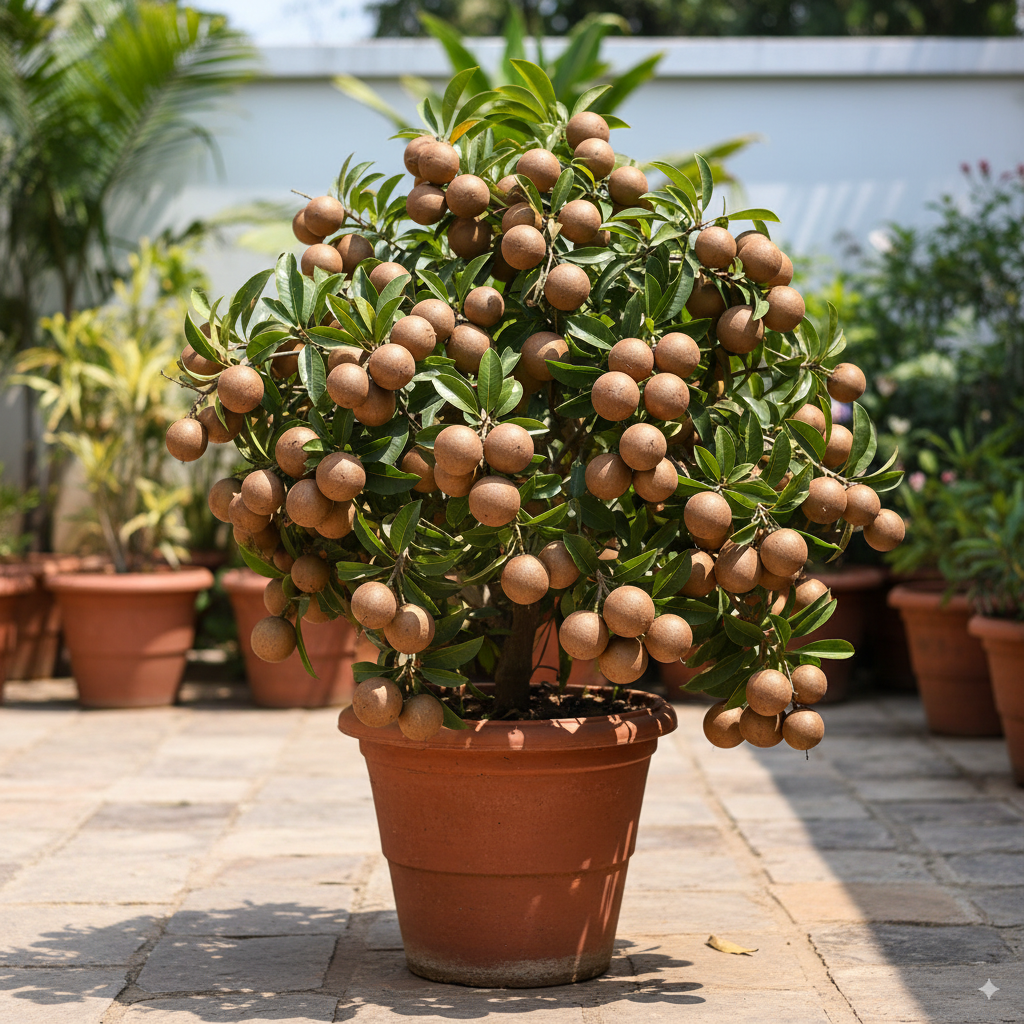
Chiku (also known as Sapota or Sapodilla) is a tropical fruit loved for its sweetness and nutritional benefits. Rich in vitamins A, C, iron, calcium, and dietary fiber, it is considered one of the healthiest fruits for children and adults alike.
While traditionally grown in orchards and farmlands, Chiku can also be successfully cultivated in pots and containers with the right plantation method and care. This makes it possible for urban gardeners and plant lovers to enjoy fresh homegrown Chikus even in balconies and terraces.
Use a pot or drum at least 22–30 inches in diameter and 2–3 feet deep.
Ensure drainage holes at the bottom to prevent waterlogging.
Clay or ceramic pots are ideal as they keep the roots cool, but plastic drums and cement tubs also work well.
✔ Preparing the Soil Mix
Chiku thrives in well-drained sandy-loam soil. Prepare the mix as follows:
40% garden soil
30% river sand (for drainage)
20% organic compost (cow dung or vermicompost)
10% cocopeat or coconut husk powder
Add 2–3 handfuls of neem cake powder to prevent root diseases.
✔ Plantation Method
Fill the pot with the prepared soil mix.
Plant a grafted Chiku sapling (avoid seed-grown plants as they take 7–8 years to fruit).
Water lightly after planting.
Place the pot in a sunny location that receives at least 6–8 hours of sunlight.
💧 Watering Schedule
First Year: Water every 2–3 days.
Summer: Water daily or on alternate days.
Winter: Water once every 5–7 days.
During flowering & fruiting: Keep the soil consistently moist but not waterlogged.
⚠️ Overwatering can cause root rot, especially in pots.
🌿 Fertilization for Fruiting
Balanced nutrition is essential for maximum fruit yield in Chiku.
Time
Fertilizer Requirement
Purpose
Every 2 months
1–2 kg organic compost
Improves soil fertility
March–April
50 g neem cake + 50 g bone meal
Prevents root diseases
July–August
50 g urea + 50 g DAP
Boosts vegetative growth
October–November
100 g potash + micronutrients
Enhances flowering & fruiting
👉 Potassium (Potash) is the most important nutrient for fruit development.
🌞 Sunlight & Climate
Chiku requires 6–8 hours of direct sunlight daily.
Ideal temperature: 20–35°C.
Place pots in open, airy spaces such as terraces, balconies, or backyards.
✂️ Pruning & Maintenance
Trim dry, yellow, or diseased leaves regularly.
Maintain 20–25 healthy green leaves for better photosynthesis.
Light pruning every 6–8 months improves branching and fruit set.
Support the plant with a stick if grown in smaller pots.
🍎 Tips to Maximize Fruiting in Pots
Always use grafted Chiku plants instead of seed-grown.
Use a deep pot (30 inches) to allow root expansion.
Spray boron + potash solution during the flowering stage.
Encourage natural pollinators like honeybees or practice hand pollination.
Perform fruit thinning – remove excess small fruits to allow bigger and sweeter fruits to grow.
Use mulching (dry leaves, straw, or coco husk) to retain soil moisture.
Regular neem oil spray keeps pests away naturally.
🐛 Pest & Disease Management
Problem
Symptoms
Solution
Mealybugs
White cotton-like patches on leaves
Neem oil spray every 15 days
Leaf spot
Brown or black spots on leaves
Spray Copper Oxychloride
Fruit fly
Infests and spoils fruits
Cover fruits with net bags
Root rot
Plant turns yellow and weak
Ensure good drainage, use neem cake
🌟 Health Benefits of Eating Chiku
Improves digestion due to high fiber content.
Rich in Vitamin A, supports good eyesight.
Iron content helps fight anemia.
Natural energy booster due to natural sugars.
Strengthens immunity and supports healthy skin.
Excellent for pregnant women and children.
📊 Quick Care Chart for Chiku in Pots
Stage
Care Requirement
Tips
Plantation
22–30 inch pot, sandy loam soil
Use grafted plants
Watering
2–3 days (young), 5–7 days (winter)
Avoid overwatering
Fertilizer
Compost every 2 months, NPK thrice a year
Focus on Potash
Sunlight
6–8 hours daily
South-facing locations best
Fruiting
Starts in 3–4 years (grafted plants)
Thin fruits for quality yield
❓ Frequently Asked Questions (FAQ)
Q1: Can Chiku grow in pots? ✔ Yes, grafted Chiku plants grow well in pots and start fruiting in 3–4 years.
Q2: How long will a potted Chiku plant live? ✔ With proper care, it can live and produce fruits for 12–15 years.
Q3: How much sunlight does a Chiku plant need? ✔ At least 6–8 hours of direct sunlight daily.
Q4: How to get sweeter fruits? ✔ Apply potash-rich fertilizers and maintain consistent watering.
Q5: Can Chiku be grown from seeds in pots? ✔ Yes, but seed-grown plants take 7–8 years to fruit and may not produce quality fruits.
🎯 Conclusion
Growing Chiku (Sapota) in pots is an excellent way for urban gardeners to enjoy fresh, sweet, and healthy fruits at home. With the right soil preparation, proper watering, sunlight, pruning, and fertilization techniques, you can maximize fruiting and enjoy delicious homegrown Chikus for years.
Whether you have a balcony, terrace, or small backyard, a potted Chiku plant can become a long-term fruiting companion that not only provides nutrition but also enhances the beauty of your home garden.
चीकू जिसे अंग्रेज़ी में Sapota या Sapodilla कहा जाता है, एक स्वादिष्ट और पौष्टिक फल है। यह विटामिन A, C, आयरन और फाइबर से भरपूर होता है। आमतौर पर इसे बगीचों और खेतों में लगाया जाता है, लेकिन सही तकनीक से इसे गमले (Container / Pot) में भी सफलतापूर्वक उगाया जा सकता है।
🪴 चीकू को गमले में लगाने की विधि (Plantation in Pots)
✔ सही गमले का चुनाव
कम से कम 22–30 इंच व्यास का गमला चुनें।
गमले में छेद (Drainage Holes) होना ज़रूरी है।
मिट्टी के बड़े गमले, प्लास्टिक ड्रम या सीमेंट के टब भी अच्छे रहते हैं।
✔ मिट्टी की तैयारी
चीकू के लिए मिट्टी का मिश्रण इस प्रकार होना चाहिए –
40% बगीचे की मिट्टी
30% नदी की बालू / रेतीली मिट्टी
20% गोबर की खाद / वर्मीकम्पोस्ट
10% नारियल की भूसी / कोकोपीट
मुट्ठी भर नीमखली पाउडर मिट्टी में मिलाएँ।
✔ पौधा लगाना
गमले में तैयार मिट्टी भरें।
ग्राफ्टेड पौधा (Grafted Plant) लगाएँ (बीज से लगा पौधा देर से फल देता है)।
पौधे को लगाकर हल्की सिंचाई करें।
गमले को धूप वाली जगह रखें।
💧 पानी देने की विधि (Watering Schedule)
पहले वर्ष: हर 2–3 दिन पर हल्का पानी दें।
गर्मी में: रोज़ या एक दिन छोड़कर पानी दें।
सर्दी में: 5–7 दिन में एक बार।
फूल और फल लगने पर: लगातार नमी बनाए रखें। ⚠️ ध्यान रखें – पानी ज्यादा भरकर न रखें, वरना जड़ों में सड़न हो जाएगी।
🌿 खाद और पोषण (Fertilization for Fruiting)
चीकू में संतुलित खाद और पोषण ज़रूरी है।
समय
खाद की मात्रा
विशेष टिप्स
हर 2 महीने
1–2 किलो गोबर की खाद / वर्मी कम्पोस्ट
मिट्टी के ऊपर डालें
मार्च–अप्रैल
50 ग्राम नीमखली + 50 ग्राम बोन मील
जड़ सड़न और कीट से बचाव
जुलाई–अगस्त
50 ग्राम यूरिया + 50 ग्राम डीएपी
पत्तियों की हरी बढ़वार
अक्टूबर–नवंबर
100 ग्राम पोटाश + माइक्रोन्यूट्रिएंट्स
फल बनने की क्षमता बढ़ेगी
👉 पोटाश (Potash) फल बनने में सबसे महत्वपूर्ण है।
🌞 धूप और तापमान (Sunlight & Climate)
चीकू का पौधा पूरी धूप (6–8 घंटे) चाहता है।
तापमान 20–35°C इसके लिए उपयुक्त है।
गमले को हमेशा खुले और हवादार स्थान पर रखें।
✂️ छँटाई और देखभाल (Pruning & Maintenance)
हर 6 महीने में पौधे की हल्की छँटाई करें।
सूखी और पीली पत्तियाँ हटा दें।
गमले के आसपास खरपतवार न उगने दें।
ज़रूरत पड़ने पर पौधे को सहारा दें।
🍎 गमले में अधिक फल पाने के उपाय (Maximizing Fruiting in Pots)
हमेशा ग्राफ्टेड पौधे लगाएँ।
गमले को कम से कम 30 इंच गहरा रखें।
फूल आने पर बोरॉन और पोटाश का स्प्रे करें।
मधुमक्खियों का आकर्षण या कृत्रिम परागण (Artificial Pollination) करें।
फल पतले करना (Fruit Thinning): बहुत अधिक फल होने पर छोटे फल हटा दें, इससे बचे हुए फल बड़े और मीठे बनते हैं।
नियमित रूप से नीम तेल का छिड़काव करें ताकि कीट न लगें।
🐛 रोग और कीट नियंत्रण (Pests & Diseases)
रोग/कीट
लक्षण
समाधान
मिलीबग (Mealy Bug)
पत्तियों पर सफेद परत
नीम तेल का छिड़काव
लीफ स्पॉट
पत्तियों पर धब्बे
कॉपर ऑक्सीक्लोराइड का छिड़काव
फल मक्खी
फल में छेद करके गूदे को खराब करती है
फल को नेट बैग से ढकें
जड़ सड़न
पौधा पीला और कमजोर
पानी निकासी सही रखें
🌟 चीकू खाने के फायदे (Health Benefits of Sapota)
पाचन शक्ति बढ़ाता है।
विटामिन A से आँखों की रोशनी के लिए अच्छा।
आयरन से खून की कमी दूर करता है।
ऊर्जा और ताजगी प्रदान करता है।
बच्चों और गर्भवती महिलाओं के लिए पौष्टिक फल।
📊 Quick Care Chart for Chiku in Pots
स्टेज
देखभाल
टिप्स
पौधा लगाना
22–30 इंच गमला, रेतीली-दोमट मिट्टी
ग्राफ्टेड पौधा चुनें
पानी देना
हर 2–3 दिन (गर्मी), 5–7 दिन (सर्दी)
ओवरवॉटरिंग से बचें
खाद
हर 2 महीने ऑर्गेनिक खाद, साल में 3 बार NPK
पोटाश पर ध्यान दें
धूप
6–8 घंटे
दक्षिण दिशा की धूप सबसे बेहतर
फल पाना
फूल आने पर बोरॉन + पोटाश का स्प्रे
फल पतले करें
❓ अक्सर पूछे जाने वाले प्रश्न (FAQ)
Q1: क्या चीकू गमले में फल देगा? ✔ हाँ, अगर आप ग्राफ्टेड पौधा लगाएँगे और सही देखभाल करेंगे तो 3–4 साल में फल मिलने लगेंगे।
Q2: गमले में चीकू कितने साल तक चल सकता है? ✔ सही मिट्टी और देखभाल से 12–15 साल तक अच्छे फल मिल सकते हैं।
Q3: गमले में चीकू को कितनी धूप चाहिए? ✔ रोज़ाना कम से कम 6–8 घंटे की सीधी धूप।
Q4: अधिक मीठे फल कैसे पाएँ? ✔ पोटाश युक्त खाद दें और समय पर सिंचाई करें।
Q5: क्या बीज से चीकू उगा सकते हैं? ✔ हाँ, लेकिन बीज से पौधा 7–8 साल बाद फल देता है और फल की गुणवत्ता अच्छी नहीं होती।
🎯 निष्कर्ष (Conclusion)
चीकू का पौधा न सिर्फ स्वादिष्ट फल देता है बल्कि घर की सुंदरता भी बढ़ाता है। अगर आप इसे गमले में सही तकनीक से लगाते हैं, पर्याप्त धूप, पानी और खाद देते हैं, तो आप सालों तक मीठे और पौष्टिक चीकू का आनंद घर बैठे ले सकते हैं।
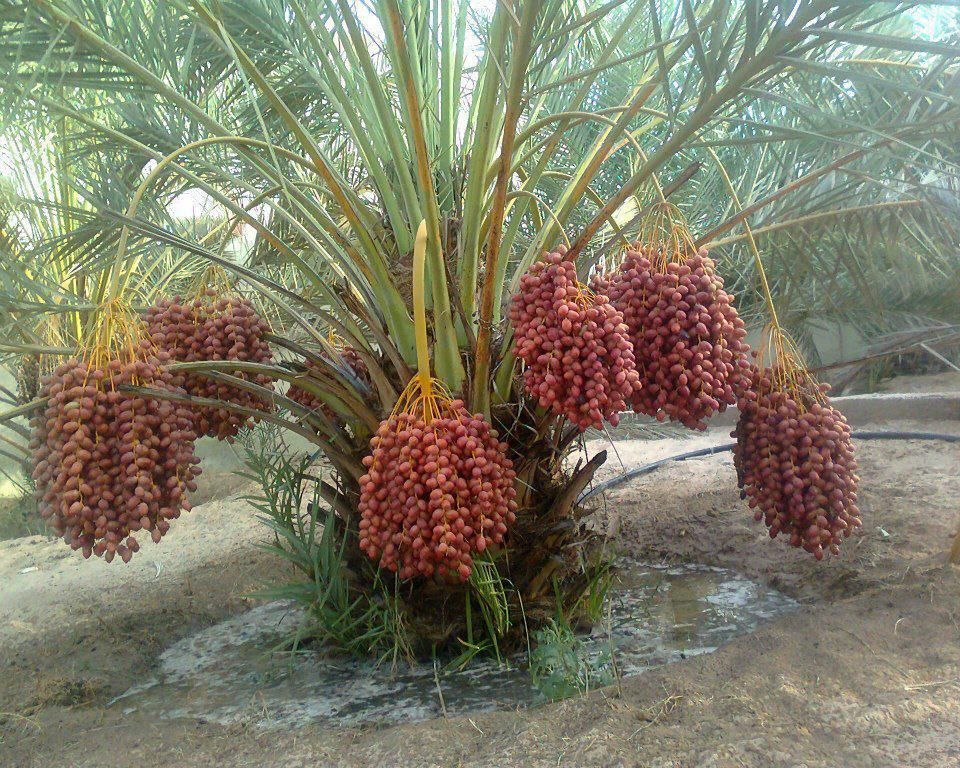
The Date Palm (Khajoor Plant) is one of the oldest cultivated fruit trees in the world. It is highly valued not only for its delicious and nutritious fruits but also for its cultural, medicinal, and economic importance. Many gardeners and farmers wish to grow date palms in their home garden or pots, but often face challenges in getting fruits. The main reason is lack of knowledge about male and female plants, proper pollination techniques, and seasonal care.
🌱 Plantation, Care & Maximizing Fruiting in Date Palm (Khajoor)
🪴 1. How to Do Plantation of Date Palm
✅ Choosing the Right Variety
Select tissue-cultured plants or offshoots (suckers) from healthy female trees.
Popular fruiting varieties: Barhee, Medjool, Halawy, Khalas, Deglet Noor.
✅ Plantation Site
Date palms need hot, dry climate and well-drained sandy soil.
Avoid waterlogged soils – root rot is common in excess moisture.
✅ Planting Time
Best season: February–March or August–September.
Avoid extreme summer and winter for new plantation.
✅ Plantation Method
Dig a pit: 3 ft × 3 ft × 3 ft.
Mix soil with:
15–20 kg cow dung manure
500 g Neem cake
200 g Super phosphate
Place the sapling in the center, cover with soil, and water lightly.
✅ Spacing
For orchard: 8–10 meters apart (about 100–120 plants/acre).
For garden/pots: Use a large drum or 24–30 inch pot with drainage.
🌿 2. How to Take Care of Date Palm
🌞 Sunlight
Requires 6–8 hours of direct sunlight daily.
💧 Watering
Young plants: Water every 3–4 days.
Mature plants: Deep watering once every 7–10 days.
Avoid overwatering during fruit ripening.
🌱 Manuring & Fertilization
Organic: Cow dung, vermicompost, neem cake every 2–3 months.
Chemical:
Urea (N) → 300 g per plant (split dose).
SSP (P) → 200 g per plant.
MOP (K) → 400 g per plant.
Add Micronutrients (Zinc, Boron, Iron) via foliar spray.
✂️ Pruning
Remove old, dry fronds regularly.
Clean the trunk for air circulation.
🐛 Pest & Disease Control
Protect from fruit borers, mites, scale insects.
Use neem oil spray or light pesticides if needed.
Cover fruits with net bags to protect from birds.
🍎 3. Tips to Maximize Fruiting in Date Palm
Male-Female Balance:
Keep 1 male for 15–20 female plants.
Use Artificial Pollination to ensure 70–80% fruit set.
Timely Pollination:
Best within 2–3 days of female flowers opening.
Morning hours are most effective.
Fruit Thinning:
Remove extra fruits from clusters.
Helps remaining fruits grow larger and sweeter.
Fertilizer Boost During Fruiting:
Apply Potash (K) before and after pollination for better fruit size.
Apply Magnesium Sulphate to increase sweetness.
Irrigation Management:
Provide regular watering during flowering & fruit set.
Reduce water when fruits are ripening (to avoid cracking).
Mulching:
Use dry leaves or straw mulch around the base.
Conserves moisture and regulates soil temperature.
Harvest at Right Time:
Dates are ready 5–6 months after pollination.
Harvest when fully colored and soft for maximum sweetness.
📊 Quick Care & Fruiting Tips Table
Factor
Recommendation
Benefit
Plantation Time
Feb–Mar / Aug–Sep
Healthy establishment
Spacing
8–10 m (field) / 24–30 inch pot
Good root growth
Sunlight
6–8 hrs/day
Strong fruiting
Watering
7–10 days (mature)
Avoid root rot
Fertilizer
NPK + Organic + Micronutrients
High yield
Pollination
Artificial within 2–3 days of bloom
2–3× more fruits
Fruit Thinning
Remove excess fruits
Bigger, sweeter dates
Protection
Nets + Neem oil
Save from birds & pests
✅ With proper plantation method, balanced care, and scientific pollination techniques, your Date Palm can yield 20–25 kg of fruits per plant annually in garden conditions, and 100–150 kg per tree in orchards.
🌱 Potted Date Palm (Khajoor) Care Guide – Step by Step
🪴 1. Choosing the Right Pot & Soil
Pot Size: Start with a 24–30 inch diameter pot or drum with drainage holes.
Material: Use clay/ceramic pots for natural cooling, or plastic drums for durability.
Soil Mix:
50% Sandy Soil (for drainage)
30% Organic Compost (cow dung/vermicompost)
20% Garden Soil + Cocopeat
👉 Add 2–3 handfuls of Neem Cake Powder to prevent soil pests.
🌿 2. Plantation in Pots
Fill pot with the prepared soil mix.
Place a tissue-cultured sapling or sucker (offshoot) in the center.
Water lightly after planting.
Keep the pot in a sunny location (balcony/terrace with 6–8 hrs sunlight).
💧 3. Watering Schedule
First Year: Every 3–4 days (light watering).
Mature Plant: Once every 7–10 days (deep watering).
During Fruiting: Maintain consistent moisture.
Avoid: Overwatering → causes root rot in pots.
🌱 4. Fertilization in Pots
Every 2 months: Add 1–2 kg organic compost.
Quarterly (3 months):
50 g Urea (Nitrogen)
50 g Super Phosphate
100 g Muriate of Potash (MOP)
Micronutrients: Foliar spray of Zinc + Boron + Iron once in 2 months.
✂️ 5. Pruning & Cleaning
Remove old, dry, or yellowing leaves regularly.
Keep only 20–25 healthy fronds for better growth.
Clean trunk for neat appearance and airflow.
🌸 6. Pollination in Pots
Keep at least 1 male plant if you have multiple pots.
If space is limited: Borrow pollen from a nearby male tree.
Use Artificial Pollination (brush or hand method) for fruit set.
🍎 7. Fruiting & Yield in Pots
Fruiting starts after 4–5 years in potted plants.
Each mature potted palm can yield 8–15 kg dates annually.
Thin excess fruit clusters for bigger, sweeter dates.
🐛 8. Pest & Disease Care in Pots
Mealybugs / Scale Insects: Use neem oil spray every 20 days.
Fruit Borers: Cover bunches with fruit net bags.
Root Rot: Always ensure proper drainage.
🌟 9. Tips to Maximize Fruiting in Pots
Keep the pot in full sunlight (south-facing terrace/balcony).
Use Potash-rich fertilizer during flowering and fruit set.
Hand pollinate within 2–3 days of female flowers blooming.
Mulch the pot surface with dry leaves or straw to maintain soil moisture.
Re-pot every 3–4 years into a slightly larger pot with fresh soil mix.
📊 Quick Potted Date Palm Guide
Stage
Care Needed
Tips
Plantation
24–30 inch pot, sandy soil mix
Add neem cake for pest prevention
Watering
3–4 days (young), 7–10 days (mature)
Avoid waterlogging
Fertilizer
Organic compost every 2 months, NPK quarterly
Add Potash during fruiting
Sunlight
6–8 hrs daily
South-facing open space best
Pollination
Hand pollination essential
Use male pollen within 2–3 days
Fruiting
8–15 kg/year in pots
Thin clusters for quality fruits
✅ With this step-by-step container care, your readers can grow healthy Date Palms in pots or terraces and enjoy sweet homegrown dates.
🌱 Male and Female Date Palm Identification
Feature
Male Plant 🌸
Female Plant 🌼
Flower Color & Shape
Small, dense, cream/white clusters
Large, loose, yellowish-white clusters
Fragrance
Strong fragrance
Mild or no fragrance
Inflorescence
Compact, short
Long, spreading
Leaves
Slightly stiff, pointed
Broader, softer
Fruit
Never produces fruits
Produces fruits after pollination
Identification Time
3–5 years (after flowering)
3–5 years (after flowering & fruiting)
Use in Cultivation
Used only for pollen
Used for main fruit production
👉 Tip: Maintain a ratio of 5–6 male plants for every 100 female plants for natural pollination.
✋ Artificial Pollination (Step-by-Step Guide)
Step 1: Collecting Pollen from Male Plant
Cut flower clusters (spathes) from the male plant.
Dry them in shade for 1–2 days.
Rub gently to collect pollen powder.
Store in a cool and dry place for up to 2–3 weeks.
Step 2: Identifying Female Flowers
Female flowers appear in large, loose clusters.
They have a visible ovary.
Best pollination time is within 2–3 days of flowering.
Step 3: Hand Pollination
Use a small brush, cotton, or hand to sprinkle pollen on female flowers.
You can also tie a small male flower cluster directly onto a female inflorescence.
Step 4: Aftercare
Within 7–10 days small fruit sets will appear.
Provide light irrigation and potash-rich fertilizer.
Thin out extra fruits for better quality and size.
📊 Quick Pollination Table
Step
Activity
Time
1. Pollen Collection
Collect pollen from male flowers
Feb–March
2. Female Flower Stage
Identify female inflorescence
2–3 days after blooming
3. Pollination
Apply pollen with brush/cotton
Morning time
4. Fruit Set
Fruits appear
7–10 days later
👉 Benefits of Artificial Pollination
Increases fruit yield by 2–3 times.
Produces bigger, sweeter fruits.
Ensures 70–80% flowers convert into fruits (compared to 30–40% in natural pollination).
📅 Annual Care Calendar for Date Palm
🌱 January – February (Winter End)
Tasks: Pruning of old leaves, cleaning.
Fertilizer: Apply 2–3 kg of cow dung manure per plant.
Watering: Very light irrigation.
Note: Plant remains in dormant stage.
🌸 March – April (Flowering Season)
Tasks: Identify male & female flowers, perform pollination.
Fertilizer: Apply DAP or organic compost (1 kg/plant).
Watering: 1–2 times per week.
Note: Critical for fruit setting.
🌞 May – June (Fruit Setting Stage)
Tasks: Fruit thinning for bigger fruits.
Fertilizer: Potash and phosphorus-rich fertilizers.
Watering: Every 4–5 days.
Note: Protect from hot winds using shade nets.
🌴 July – August (Monsoon)
Tasks: Weed removal, root growth management.
Fertilizer: Apply vermicompost (2–3 kg/plant) and micronutrients (Zinc, Boron).
Watering: Ensure good drainage during rains.
🍂 September – October (Fruit Ripening)
Tasks: Protect fruits from birds and insects using nets.
Fertilizer: Apply neem cake or organic manure.
Watering: Light irrigation (avoid overwatering).
Note: Critical fruit maturity stage.
🍎 November – December (Harvesting & Post-Harvest Care)
Tasks: Harvest ripe dates, prune old leaves.
Fertilizer: Apply 2–3 kg cow dung manure after harvest.
Watering: Very light irrigation.
Note: Plant enters dormancy again.
📊 Quick Annual Chart
Month
Main Task
Fertilizer
Irrigation
Jan–Feb
Pruning, cleaning
Cow dung manure
Very light
Mar–Apr
Flowering, Pollination
DAP, organic compost
1–2 times/week
May–Jun
Fruit setting, thinning
Potash, phosphorus
Every 4–5 days
Jul–Aug
Monsoon, root growth
Vermicompost, micronutrients
Drain excess water
Sep–Oct
Fruit ripening
Neem cake, organic manure
Light irrigation
Nov–Dec
Harvesting, pruning
Cow dung manure
Very light
🌟 Bonus Tips for Maximum Yield
Maintain Male-Female Balance: 5–6 male plants per 100 female plants.
Artificial Pollination: Boosts yield by 2–3 times.
Balanced Fertilization: Use organic + chemical fertilizers together.
Avoid Overwatering: Prevents root rot and fruit cracking.
Timely Harvesting: Improves sweetness and fruit quality.
✅ With this step-by-step guide, artificial pollination method, and annual care calendar, you can grow healthy date palm plants in garden or pots and enjoy maximum fruit production.
✅ English FAQs
Q1. How to identify male and female date palm plants? 👉 Male plants have small, dense, fragrant white/cream flowers and never produce fruits, while female plants have large, loose, yellowish-white flowers and bear fruits after pollination.
Q2. How many years does it take for a date palm to bear fruits? 👉 A date palm takes about 4–6 years to start flowering and fruiting after plantation.
Q3. Can date palm be grown in pots? 👉 Yes, dwarf varieties of date palm can be grown in large pots, but regular watering, pruning, and pollination are essential.
Q4. Do date palms need both male and female plants? 👉 Yes, only female plants bear fruits, but they require pollen from male plants for fruiting.
Q5. How many male plants are needed for pollination? 👉 About 1 male plant is sufficient for every 15–20 female plants when artificial pollination is done.
Q6. What is the best fertilizer for date palm? 👉 A combination of organic compost, cow dung manure, and potash-rich fertilizers ensures healthy growth and high yield.
Q7. When is the best time for artificial pollination? 👉 The best time is 2–3 days after the female flowers bloom, preferably in the morning hours.
Q8. How long do date palm trees live? 👉 Date palms can live for 100 years or more under proper care, though commercial fruiting is best between 15–40 years.
Q9. Can date palms survive in Indian climate? 👉 Yes, date palms grow well in hot, dry, and arid regions like Rajasthan, Gujarat, and parts of South India.
Q10. How to increase fruit size and sweetness in date palms? 👉 Regular fertilization, proper thinning of fruits, and timely irrigation help improve fruit size, sweetness, and quality.
फसल के समय NPK (Nitrogen, Phosphorus, Potash) संतुलित मात्रा दें।
फल बनने से पहले पोटाश और फॉस्फेट बढ़ाएँ।
माइक्रोन्यूट्रिएंट (जिंक, आयरन) भी दें।
✂️ छंटाई और देखभाल
सूखी पत्तियाँ समय-समय पर हटा दें।
फूल और फल आने से पहले पौधे को साफ रखें।
गमले वाले पौधे को छोटे आकार में रखने के लिए छंटाई करें।
🐛 रोग और कीट नियंत्रण
रेड पाम वीविल: तने को खोखला करता है → नीम तेल का छिड़काव करें।
लीफ स्पॉट: पत्तों पर धब्बे → कॉपर ऑक्सीक्लोराइड का छिड़काव।
स्केल इंसेक्ट: पत्तों का रस चूसते हैं → कीटनाशक साबुन का प्रयोग करें।
🍎 अधिक फल पाने के उपाय
नर और मादा पौधे दोनों लगाएँ (परागण आवश्यक)।
प्रति 100 मादा पौधों पर 5–6 नर पौधे रखें।
फूल आने पर कृत्रिम परागण (artificial pollination) करें।
धूप और गर्मी ज्यादा मिले।
गमले में पौधे को खुले स्थान पर रखें।
फसल के समय अतिरिक्त पोटाश दें।
🌸 खजूर के फायदे और उपयोग
ऊर्जा और ग्लूकोज से भरपूर।
पाचन में सहायक।
हड्डियों को मजबूत करता है (कैल्शियम से भरपूर)।
खून की कमी (एनीमिया) दूर करता है।
रोग प्रतिरोधक क्षमता बढ़ाता है।
आयुर्वेद में खजूर को बलवर्धक और शुक्राणु वृद्धि हेतु माना गया है।
🪔 धार्मिक और सांस्कृतिक महत्व
इस्लामिक परंपरा में रमजान के समय खजूर खाने का विशेष महत्व।
बाइबल और पुराणों में भी खजूर का उल्लेख।
वास्तु अनुसार घर में खजूर लगाने से समृद्धि और सौभाग्य आता है।
📊 Quick Care Table
पहलू
जानकारी
पौधे का नाम
खजूर (Phoenix dactylifera)
गमला
24–30 इंच
मिट्टी
बलुई दोमट + खाद
धूप
10–12 घंटे
पानी
गर्मी – हर 5–7 दिन, सर्दी – 15–20 दिन
खाद
हर 2–3 महीने
परागण
नर और मादा पौधों से
औषधीय लाभ
पाचन, हड्डियों, रोग प्रतिरोधक क्षमता
आयु
50–70 साल फल देने वाला वृक्ष
खजूर का पौधा (Date Palm – Phoenix dactylifera)द्विलिंगी (dioecious) होता है, यानी नर (Male) और मादा (Female) पौधे अलग-अलग होते हैं। फल केवल मादा पौधे पर आते हैं और नर पौधे पर केवल पराग (pollen) होता है।
👉 लेकिन सबसे बड़ी समस्या यह है कि पौधे की नर और मादा की पहचान तब तक स्पष्ट नहीं होती जब तक कि पौधा फूल न दे। यह सामान्यतः 3–5 साल बाद शुरू होता है।
🌿 नर और मादा पौधे की पहचान
1. फूलों से पहचान
नर पौधा (Male Plant)
फूल: छोटे, सफेद या क्रीम रंग के।
गुच्छे (spikes) छोटे और सघन होते हैं।
इनमें केवल परागकण (pollen) होता है।
इन फूलों से तेज़ सुगंध आती है।
मादा पौधा (Female Plant)
फूल: पीले-सफेद, बड़े और थोड़े ढीले गुच्छों में।
फूलों में अंडाशय (ovary) स्पष्ट दिखता है।
यही फूल बाद में फल (Dates) में बदलते हैं।
2. फल से पहचान
नर पौधा कभी भी फल नहीं देगा।
मादा पौधे पर परागण होने के बाद अंडाकार हरे फल बनते हैं जो पकने पर भूरे या लाल-भूरे हो जाते हैं।
3. वैज्ञानिक तरीकों से पहचान
DNA Marker Testing या Molecular sexing द्वारा 1–2 साल के पौधों की भी पहचान की जा सकती है।
कुछ नर्सरियों में पहले से लैब-टेस्टेड मादा पौधे बेचे जाते हैं।
4. परागण (Pollination) की आवश्यकता
प्राकृतिक वातावरण में कीट और हवा से परागण होता है, लेकिन अधिक उत्पादन के लिए किसान कृत्रिम परागण (hand pollination) करते हैं।
इसके लिए नर पौधे से पराग लेकर मादा पौधे के फूलों पर छिड़कते हैं।
🌴 व्यावहारिक सुझाव
यदि आप 10–12 मादा पौधे लगाते हैं तो 1 नर पौधा पर्याप्त होता है।
छोटे पैमाने पर गमले या बगीचे में लगाने के लिए कम से कम 1 नर + 3 मादा पौधे रखें।
🌴 नर और मादा खजूर पौधों (Date Palm) की पहचान
विशेषता
नर पौधा (Male Plant)
मादा पौधा (Female Plant)
🌸 फूलों का रंग व आकार
सफेद/क्रीम रंग, छोटे और घने (क्लस्टर में)
पीले-सफेद, बड़े और ढीले गुच्छों में
🌼 फूलों की सुगंध
तेज़ सुगंध आती है
हल्की या बहुत कम सुगंध
🌱 गुच्छे (Inflorescence)
छोटे और बहुत सघन
लंबे और फैले हुए
🍃 पत्तियों का रूप
पत्तियों में हल्की कठोरता और अधिक नुकीलापन
पत्तियाँ थोड़ी चौड़ी और नरम दिखती हैं
🍎 फल लगना
कभी फल नहीं लगते
परागण के बाद खजूर के फल (Dates) बनते हैं
🕰️ पहचान का समय
3–5 साल में फूल आने पर पता चलता है
3–5 साल बाद फूल और फल से पहचान
👨🌾 खेती में महत्व
केवल परागण के लिए उपयोगी
मुख्य फल उत्पादन (Dates) देती है
🌞 अतिरिक्त टिप्स
परागण के लिए अनुपात:
हर 100 मादा पौधों पर कम से कम 5–6 नर पौधे रखें।
गमले/छोटे बगीचे में:
3 मादा + 1 नर पौधा पर्याप्त होगा।
Artificial Pollination:
नर फूलों से पराग एकत्रित करके मादा फूलों पर छिड़कें → इससे उत्पादन 2–3 गुना बढ़ जाता है।
🌸 खजूर के पौधों में कृत्रिम परागण (Artificial Pollination) – सम्पूर्ण गाइड
🪴 Step 1: नर पौधे से पराग (Pollen) एकत्र करना
जब नर पौधा फूल देता है, उसके गुच्छों (male spathes) को सावधानी से काट लें।
इन गुच्छों में छोटे-छोटे सफेद/क्रीम रंग के फूल होते हैं।
इन्हें छायादार जगह पर सुखा लें।
सुखाने के बाद फूलों को हल्के हाथ से मसलकर पाउडर जैसे परागकण (pollen) अलग करें।
👉 नोट: पराग 2–3 हफ्ते तक सुरक्षित रहता है यदि सूखी और ठंडी जगह पर रखा जाए।
🌱 Step 2: मादा पौधे के फूल पहचानना
मादा पौधे के फूल बड़े और ढीले गुच्छों में निकलते हैं।
फूलों में अंडाशय (ovary) साफ दिखाई देता है।
फूल खिलने के 2–3 दिन के भीतर परागण करना सबसे प्रभावी होता है।
✋ Step 3: परागण करना (Hand Pollination)
नर पौधे से एकत्रित परागकण लें।
मादा फूलों के गुच्छों को हल्का खोलें।
ब्रश, रूई या हाथ से सीधे मादा फूलों पर परागकण छिड़कें।
चाहें तो नर पौधे के छोटे फूलों का गुच्छा सीधे मादा फूल के बीच बाँध सकते हैं।
💧 Step 4: देखभाल के बाद
परागण के 7–10 दिन बाद फल बनने के संकेत दिखने लगते हैं।
इस समय पौधे को हल्की सिंचाई और पोटाशयुक्त खाद दें।
अनावश्यक या अधिक फल लगे गुच्छों को पतला (thinning) कर दें → इससे बचे हुए फल बड़े और मीठे होंगे।
📊 Quick Pollination Guide Table
स्टेप
क्रिया
समय
1. पराग एकत्र करना
नर पौधे के फूल काटकर पराग निकालना
फूल आने पर (फरवरी–मार्च)
2. मादा फूल पहचानना
बड़े, ढीले, पीले-सफेद फूल
फूल खिलने के 2–3 दिन बाद
3. परागण करना
ब्रश/रूई से मादा फूलों पर पराग डालना
सुबह के समय
4. फल बनना
परागण के बाद 7–10 दिन में प्रारंभ
फल पकने तक 5–6 महीने
🌟 कृत्रिम परागण के फायदे
फल का आकार और मिठास बढ़ती है।
उत्पादन 2–3 गुना तक बढ़ जाता है।
फल अधिक समान और गुणवत्ता वाले होते हैं।
समय पर परागण करने से 70–80% तक फूल फल में बदल जाते हैं, जबकि प्राकृतिक परागण में केवल 30–40%।
📅 खजूर (Date Palm) का सालभर का देखभाल कैलेंडर
🌱 जनवरी – फरवरी (सर्दियों का अंत)
काम:
पुराने सूखे पत्ते हटाएँ।
पौधे की हल्की छंटाई करें।
खाद:
गोबर की खाद (2–3 किलो प्रति पौधा) डालें।
पानी:
यदि ठंड अधिक हो तो पानी कम दें।
नोट: पौधा इस समय आराम की अवस्था (Dormant Stage) में रहता है।
🌸 मार्च – अप्रैल (फूल आने की शुरुआत)
काम:
नर और मादा फूलों की पहचान करें।
कृत्रिम परागण (Artificial Pollination) करें।
खाद:
डीएपी या जैविक खाद (1 किलो प्रति पौधा) डालें।
पानी:
सप्ताह में 1–2 बार हल्की सिंचाई करें।
नोट: यही समय फल बनने की शुरुआत का है।
🌞 मई – जून (गर्मी और फल सेट होना)
काम:
परागण के 7–10 दिन बाद फल सेट हो जाएंगे।
छोटे फल पतले (Thinning) करें ताकि बाकी फल बड़े हों।
खाद:
पोटाश और फॉस्फोरस वाली खाद डालें।
पानी:
हर 4–5 दिन में नियमित पानी दें।
नोट: गर्मी में पौधे को छायादार नेट (Shade Net) से बचाना फायदेमंद है।
🌴 जुलाई – अगस्त (मानसून का समय)
काम:
पौधे के चारों ओर खरपतवार हटाएँ।
नई जड़ों की वृद्धि तेज होती है।
खाद:
वर्मी कम्पोस्ट (2–3 किलो प्रति पौधा)।
माइक्रोन्यूट्रिएंट्स (जिंक, बोरॉन) स्प्रे करें।
पानी:
बारिश हो तो अतिरिक्त पानी निकालने की व्यवस्था करें।
🍂 सितम्बर – अक्टूबर (फल पकना)
काम:
फल तोड़ने की तैयारी करें।
फलों को पक्षियों और कीटों से बचाने के लिए जाल (Net) लगाएँ।
खाद:
फल पकने से पहले 1 किलो नीमखली या जैविक खाद डालें।
पानी:
हल्की सिंचाई करें, अधिक पानी से फल फट सकते हैं।
नोट: फसल का यह सबसे महत्वपूर्ण समय है।
🍎 नवम्बर – दिसम्बर (फल तुड़ाई और पौधे की तैयारी)
काम:
पके हुए खजूर के फल तोड़ें और सुखाएँ।
पौधे की हल्की छंटाई करें।
खाद:
फसल के बाद पौधे को 2–3 किलो गोबर की खाद दें।
पानी:
ठंड के कारण पानी कम दें।
नोट: पौधा धीरे-धीरे आराम की अवस्था (Dormancy) में चला जाता है।
📊 Quick Annual Care Chart
महीना
मुख्य कार्य
खाद
सिंचाई
जनवरी–फरवरी
छंटाई, सफाई
गोबर की खाद
कम
मार्च–अप्रैल
फूल, परागण
डीएपी, जैविक खाद
1–2 बार/सप्ताह
मई–जून
फल सेट, थिनिंग
पोटाश, फॉस्फोरस
4–5 दिन में
जुलाई–अगस्त
मानसून, जड़ वृद्धि
वर्मी कम्पोस्ट, माइक्रो न्यूट्रिएंट्स
जरूरत अनुसार
सितम्बर–अक्टूबर
फल पकना
नीमखली
हल्की
नवम्बर–दिसम्बर
तुड़ाई, छंटाई
गोबर खाद
कम
🌟 बोनस टिप्स
नर और मादा पौधों का संतुलन – 100 मादा पौधों पर 5–6 नर पौधे ज़रूरी।
Artificial Pollination – उत्पादन को 2–3 गुना बढ़ा देता है।
खाद – जैविक + रासायनिक खाद का संतुलित उपयोग करें।
सिंचाई – अधिक पानी से जड़ों में सड़न और फलों में फटना हो सकता है।
फल तोड़ाई – पूरी तरह पकने पर ही करें, इससे स्वाद और मिठास बढ़ती है।
❓ FAQs
Q1. क्या खजूर का पौधा गमले में फल देगा? 👉 हाँ, dwarf variety गमले में फल देती है लेकिन बड़े पैमाने पर बगीचे में बेहतर।
Q2. खजूर के पेड़ को फल आने में कितना समय लगता है? 👉 5–7 साल में फल देना शुरू करता है।
Q3. क्या भारत में खजूर की खेती लाभदायक है? 👉 हाँ, राजस्थान, गुजरात और पंजाब में बड़े पैमाने पर सफल।
Q4. क्या एक पौधे से ही फल मिलेगा? 👉 नहीं, नर और मादा दोनों पौधे चाहिए।
Q5. खजूर को सबसे ज्यादा फायदा किस चीज़ से मिलता है? 👉 गर्म जलवायु, पर्याप्त धूप और उचित परागण से।
Crossostephium chinense, commonly known as Chinese Wormwood or Chinese Lavender, is a versatile ornamental and medicinal plant belonging to the Asteraceae family, the same family as sunflowers, chrysanthemums, and chamomile.
This plant is admired for its silvery foliage, distinct aroma, and therapeutic properties. It is widely cultivated in gardens, balconies, and pots due to its compact growth and decorative appeal.
Leaves: Silvery-gray, spatulate, velvety in texture
Flowers: Small daisy-like flowers with yellow centers
Native Habitat: Coastal regions of China, Taiwan, Japan, Philippines, and Southeast Asia
This unique plant combines aesthetic value with traditional medicinal importance, making it a favorite for both gardeners and herbalists.
🌞 Climate & Light Requirements
Thrives in warm, subtropical, and coastal climates.
Sunlight: Requires at least 5–6 hours of direct sun daily.
Partial Shade: Beneficial during extreme heat.
Drought Tolerance: Can survive with minimal watering, making it a hardy choice.
🌿 Soil Requirements
Type: Well-draining sandy or loamy soil
pH Level: Slightly alkaline is best
Organic Matter: Enrich with compost or cow dung manure for healthy growth
💡 Tip: When growing in pots, use a mix of garden soil (50%), coarse sand (30%), and compost (20%). Add pebbles or cocopeat at the base to prevent waterlogging.
🌱 Planting Methods
1. In Pots
Choose a pot 8–10 inches wide.
Prepare soil mix with garden soil, sand, and compost.
Place the plant in the center and water lightly.
2. In Gardens
Maintain 20–25 cm spacing between plants.
Select a sunny location.
Provide light irrigation after planting.
💧 Watering Schedule
Summer: 2–3 times per week
Winter: Only when soil feels dry
Caution: Avoid overwatering to prevent root rot
🌿 Fertilization & Nutrition
Organic Manure: Apply compost or vermicompost every 30–40 days.
Liquid Fertilizer: Use organic tea or diluted vermicompost solution monthly.
Chemical Fertilizer: Apply mild NPK solution only if necessary.
✂️ Pruning & Maintenance
Regular pruning enhances compact and bushy growth.
Remove dry, yellow, or diseased leaves.
Trimming encourages fresh shoots and keeps the plant in shape.
🐛 Pests & Disease Management
Common Issues
Powdery Mildew: Due to excess moisture
Root Rot: From overwatering
Leaf Yellowing: Nutrient deficiency or poor soil
Solutions
Spray neem oil solution every 15 days.
Maintain controlled watering.
Enrich soil with compost and organic matter.
🌿 Medicinal & Traditional Uses
1. Traditional Chinese Medicine
Relieves coughs and phlegm
Helps regulate menstrual irregularities
Reduces fever
2. Other Uses
Improves digestion
Provides relief from inflammation and pain
Used in treating minor skin conditions
🪴 Ornamental Value
Border Planting: Ideal for decorating garden edges
Rock Gardens: Looks stunning between stones
Balcony Gardening: Compact and attractive in small pots
Silver Foliage Appeal: Adds contrast and brightness to landscapes
🌍 Environmental Importance
Prevents soil erosion in coastal and dry areas
Can grow in poor soils with minimal care
Supports biodiversity by attracting beneficial insects
Crossostephium chinense, जिसे आमतौर पर Chinese Wormwood या Chinese Lavender कहा जाता है, एक आकर्षक और बहुउपयोगी पौधा है। यह पौधा Asteraceae परिवार से संबंधित है, वही परिवार जिसमें सूर्यमुखी, गेंदा और कैमोमाइल जैसे पौधे आते हैं।
यह पौधा अपने चाँदी जैसे पत्तों, हल्की सुगंध, और औषधीय महत्व के कारण बागवानी प्रेमियों और पारंपरिक चिकित्सा पद्धतियों दोनों में खास स्थान रखता है। इसे गमले, बालकनी और गार्डन बॉर्डर में आसानी से उगाया जा सकता है।