
Introduction
Jamun (Indian Blackberry) is one of the most popular fruit trees in India. Its fruits are not only delicious but are also valued for their nutritional benefits. Jamun has been traditionally appreciated for its role in supporting a healthy lifestyle and is especially popular among health-conscious consumers.
Among the improved jamun varieties available today, KG-10 Jamun has gained significant popularity due to its large fruit size, superior taste, attractive appearance, and excellent yield potential.
Whether you want to grow fruit trees in your home garden, farm, orchard, or terrace garden, KG-10 Jamun is an excellent choice.
What is KG-10 Jamun?
KG-10 Jamun is an improved and selected variety known for producing larger fruits and better yields compared to many traditional jamun varieties.
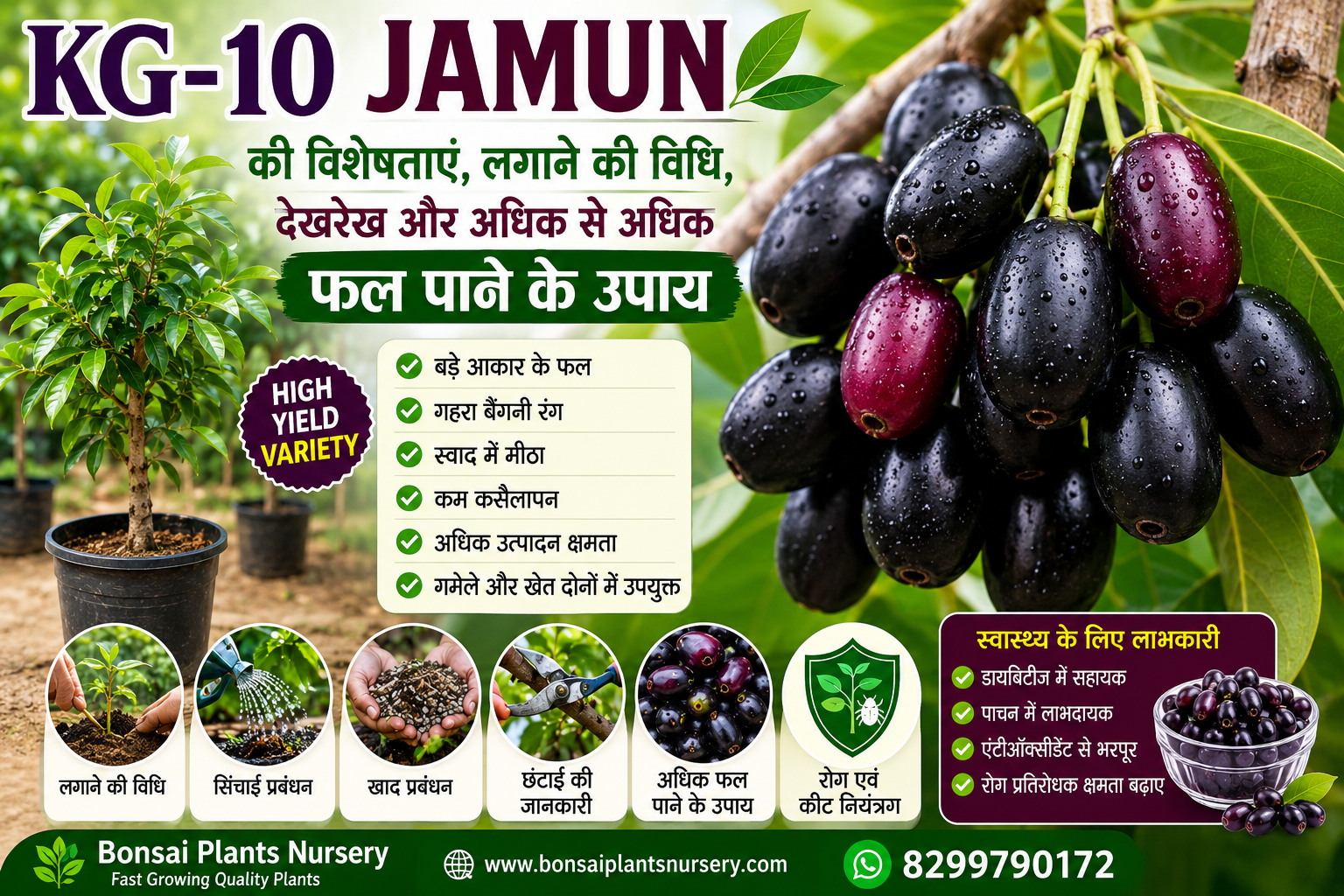
This variety is increasingly preferred by gardeners and farmers because of its fruit quality and commercial value.
KG-10 Jamun Plant (Grafted) – High Yield Variety | Large Sweet Fruits | Fast Growing Quality Plant
Key Features
- Large-sized fruits
- Attractive deep purple color
- Sweet taste
- Less astringency
- High productivity
- Long productive lifespan
- Strong growth habit
Main Characteristics of KG-10 Jamun
1. Large Fruit Size
One of the biggest attractions of KG-10 Jamun is its larger fruit size.
The fruits are noticeably bigger than those of ordinary jamun trees.
2. Excellent Taste
The fruits are sweeter and less astringent, making them highly appealing to consumers.
3. High Yield Potential
With proper care and management, KG-10 Jamun can produce abundant harvests year after year.
4. Strong Market Demand
Because of its attractive fruits and superior taste, KG-10 Jamun is highly suitable for commercial cultivation.
5. Nutritional Benefits
Jamun fruits contain:
- Iron
- Calcium
- Potassium
- Vitamin C
- Antioxidants
Best Time to Plant KG-10 Jamun
Although jamun trees can be planted throughout much of the year, some seasons are more favorable.
Ideal Planting Season
July to September
The monsoon season is considered the best time for planting.
February to March
Spring planting is also successful in many regions.
How to Select a Healthy Jamun Plant
Choosing a healthy plant is the first step toward success.
Always Choose a Grafted Plant
Grafted plants:
- Produce fruits earlier
- Maintain true varietal characteristics
- Offer better productivity
Signs of a Healthy Plant
- Strong stem
- Green leaves
- Disease-free growth
- Healthy root system
How to Grow KG-10 Jamun in Pots
Modern terrace gardening has made it possible to grow fruit trees successfully in containers.
KG-10 Jamun can perform very well in large pots or drums.
Recommended Container Size
- 24–36 inch container
- 200–300 liter drum
Best Potting Mix
For healthy growth, use:
- 40% Garden soil
- 30% Well-rotted cow manure
- 20% Vermicompost
- 10% Sand
This mixture provides excellent drainage and nutrition.
Field Planting Method
Pit Size
Prepare pits measuring:
3 ft × 3 ft × 3 ft
Pit Preparation
Mix the excavated soil with:
- Organic manure
- Neem cake
- Vermicompost
Before planting.
Plant Spacing
Maintain a spacing of:
20–25 feet between plants.
Irrigation Management
Immediately After Planting
Water thoroughly after planting.
During the First Year
Water 2–3 times per week during summer.
Established Trees
Irrigate according to weather and soil moisture conditions.
Sunlight Requirement
KG-10 Jamun requires sufficient sunlight for healthy growth and fruit production.
Ideal Sunlight
6–8 hours of direct sunlight daily.
Fertilizer Management
Balanced nutrition is essential for higher yields.
Monthly Feeding
Apply:
- 2–5 kg cow manure
- 1 kg vermicompost
- 200 grams neem cake
Before Flowering
Apply fertilizers rich in:
- Phosphorus
- Potassium
to encourage flowering and fruit set.
15 Proven Ways to Increase Fruit Production
1. Use Grafted Plants
Grafted plants begin fruiting earlier and provide better yields.
2. Ensure Full Sunlight
At least 6–8 hours of sunlight daily.
3. Apply Organic Fertilizers Regularly
Use:
- Cow manure
- Vermicompost
- Neem cake
on a regular schedule.
4. Water Properly
Avoid both drought stress and overwatering.
5. Apply Potassium During Flowering
Potassium improves fruit development and size.
6. Use Mulching
Benefits include:
- Moisture conservation
- Reduced weed growth
- Better root protection
7. Maintain Orchard Hygiene
Remove fallen leaves and diseased plant parts regularly.
8. Prune Properly
Pruning improves air circulation and sunlight penetration.
9. Supply Micronutrients
Periodic application of:
- Zinc
- Boron
- Magnesium
helps improve flowering and fruiting.
10. Prevent Diseases Early
Prevention is always better than treatment.
11. Use Neem Oil Spray
Spray neem oil every 15–20 days as a preventive measure.
12. Prevent Flower Drop
Avoid moisture stress during flowering.
13. Reduce Plant Stress
Avoid sudden changes in watering, fertilization, or pruning.
14. Improve Soil Health
Add organic matter regularly.
15. Monitor Plants Frequently
Early detection of pests and diseases prevents major losses.
Pruning KG-10 Jamun Trees
Pruning plays an important role in maintaining plant health and productivity.
Benefits of Pruning
- Encourages new growth
- Improves fruit production
- Maintains tree shape
- Enhances air circulation
Best Time for Pruning
Immediately after harvesting.
Common Diseases of KG-10 Jamun
Leaf Spot Disease
Symptoms
Brown or black spots on leaves.
Management
- Remove infected leaves
- Use organic neem-based sprays
Root Rot
Cause
Poor drainage and excessive watering.
Management
- Improve drainage
- Reduce irrigation
Yellowing Leaves
Causes
- Nutrient deficiency
- Excess moisture
Solution
Apply balanced fertilizer and improve drainage.
Common Pests
Aphids
Feed on tender new growth.
Mealybugs
Appear as white cotton-like masses on stems and leaves.
Scale Insects
Often found attached to branches and stems.
Organic Pest Control Methods
Neem Oil Spray
Mix:
5 ml neem oil per liter of water.
Garlic-Ginger Extract
A natural and effective organic pest control solution.
Soap Spray
Useful for mild infestations.
When Does KG-10 Jamun Start Fruiting?
A healthy grafted plant may start producing fruits within:
2–4 Years
depending on climate and growing conditions.
Seed-grown plants generally take much longer.
Yield Potential
A mature and healthy KG-10 Jamun tree can produce substantial quantities of fruit annually.
Actual production depends on:
- Tree age
- Climate
- Soil fertility
- Management practices
Harvesting
How to Identify Ripe Fruits
Fruits are ready for harvesting when:
- They develop a deep purple color
- Reach full size
- Taste sweet and flavorful
Health Benefits of Jamun
KG-10 Jamun is valued not only for its taste but also for its nutritional benefits.
Benefits
- Rich in antioxidants
- Supports digestive health
- Provides essential minerals
- Helps strengthen immunity
- Refreshing summer fruit
Advantages of Growing Jamun in Pots
- Suitable for limited spaces
- Easy maintenance
- Ideal for terrace gardening
- Fresh fruits at home
- Attractive ornamental value
Frequently Asked Questions (FAQs)
1. What is KG-10 Jamun?
An improved, high-quality jamun variety.
2. Can KG-10 Jamun be grown in pots?
Yes, successfully in large containers.
3. What pot size is recommended?
At least 24–36 inches.
4. When should it be planted?
July–September is ideal.
5. How much sunlight does it need?
6–8 hours daily.
6. Does it fruit early?
Grafted plants fruit relatively early.
7. What is the best fertilizer?
Cow manure and vermicompost.
8. Is neem cake beneficial?
Yes.
9. Is pruning necessary?
Yes.
10. Can it grow in North India?
Yes.
11. Can it grow in South India?
Yes.
12. Can it be grown organically?
Absolutely.
13. When does Jamun ripen?
Generally during summer.
14. Is there market demand for Jamun?
Yes, strong demand exists.
15. Is KG-10 Jamun suitable for commercial farming?
Yes, it is considered an excellent commercial variety.
Conclusion
KG-10 Jamun is an outstanding fruit variety known for its large fruits, superior taste, and high yield potential. Whether grown in a home garden, orchard, terrace garden, or farm, it can provide years of productive harvests when managed properly.
For maximum fruit production, focus on adequate sunlight, balanced nutrition, timely irrigation, regular pruning, and organic pest management. A healthy grafted KG-10 Jamun plant can become one of the most rewarding fruit trees in your collection.
Buy Premium KG-10 Jamun Plants
Bonsai Plants Nursery
🌐 Website: www.bonsaiplantsnursery.com
📱 WhatsApp: 8299790172
KG-10 Jamun Plant (Grafted) – High Yield Variety | Large Sweet Fruits | Fast Growing Quality Plant
Available Plants
✔ KG-10 Jamun
✔ Taiwan Pink Guava
✔ Miyazaki Mango
✔ Banana Mango
✔ All Season Lemon
✔ Dragon Fruit
✔ Premium Fruit Plants
Fast Growing Quality Plants