Posted on Leave a comment

Why Is Mahogany Called the Poor Man’s Sandalwood? Benefits, Price & Complete Guide

Website: www.bonsaiplantsnursery.com
WhatsApp / Call: +91 8299790172


Introduction

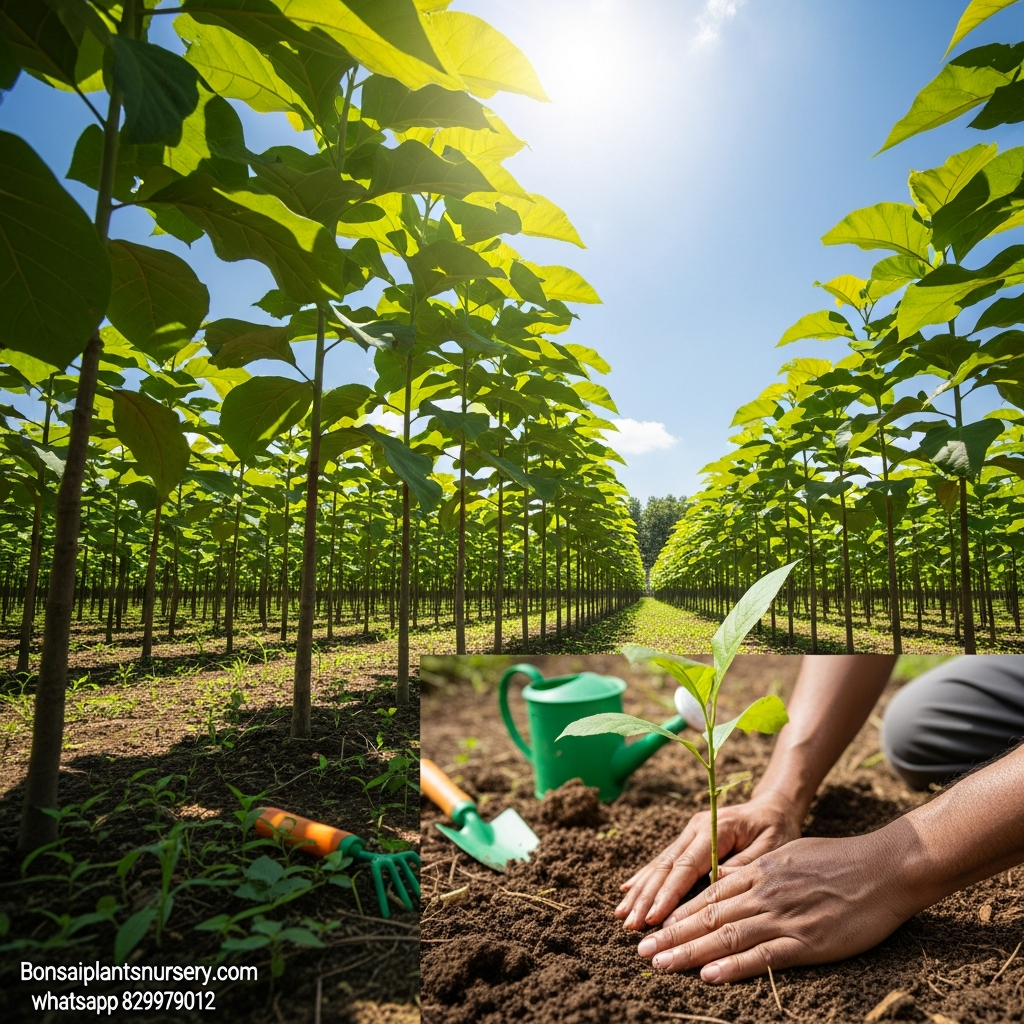
Mahogany has rapidly emerged as one of the most profitable and reliable timber trees in India. Due to its high-value wood, low maintenance, and long-term returns, mahogany is popularly known as the “Poor Man’s Sandalwood.” This detailed guide is written to help farmers, landowners, investors, and garden lovers understand why planting mahogany today can secure a strong financial future tomorrow.

Mahogany_plants_for_sale

What Is Mahogany?

Mahogany (Swietenia species) is a premium hardwood tree known for its straight trunk, fast growth, and durable reddish-brown timber. It is widely used in luxury furniture, interior décor, musical instruments, and plywood industries.


Why Is Mahogany Called the Poor Man’s Sandalwood?

  • High market value like sandalwood
  • No fragrance-related legal restrictions in most states
  • Easy to grow and maintain
  • Suitable for farmers with limited resources
  • Long-term green investment

Mahogany offers wealth creation without legal complications, making it ideal for middle-class farmers and investors.


Benefits of Planting Mahogany Trees

1. High Timber Value

Mahogany wood is extremely durable and fetches premium prices in the timber market.

2. Low Maintenance

Requires minimal watering after establishment and grows well in Indian climates.

3. Fast Growth Rate

Under proper care, mahogany grows 4–6 feet per year.

4. Suitable for Agroforestry

Can be grown alongside crops, vegetables, or fruit plants.

5. Long-Term Asset

Acts as a natural fixed deposit for landowners.


Mahogany Growth Timeline

Year Approx Height Status
1 4–6 ft Establishment
5 18–25 ft Strong trunk
10 35–45 ft Timber value rises
15–20 60+ ft Commercial harvest

Is Mahogany Legal in India?

Yes ✅ Mahogany cultivation is legal in most Indian states. However, before harvesting, farmers should consult local forest authorities for transport rules.


Best Climate & Soil for Mahogany

  • Climate: Tropical & subtropical
  • Soil: Well-drained loamy soil
  • pH: 6.5–7.5
  • Rainfall: Moderate

How to Plant Mahogany Saplings

  • Best Season: July–September
  • Pit Size: 2×2×2 feet
  • Spacing: 10–12 feet
  • Fertilizer: Organic manure preferred

Mahogany Plant Care Guide

  • Regular watering for first year
  • Protect from grazing animals
  • Organic compost every 6 months
  • Minimal pruning required

Where Can Mahogany Be Grown?

  • Agricultural fields
  • Farmhouses
  • Roadside plantations
  • Industrial land
  • Agroforestry projects

Mahogany Plant Price in India

Mahogany plant prices depend on age, height, and quality.

📌 Healthy, premium-quality mahogany plants available

👉 WhatsApp for latest price: 8299790172


Why Buy from Bonsai Plants Nursery?

  • Healthy, disease-free plants
  • Expert planting guidance
  • Secure packaging
  • Trusted seller
  • PAN India delivery support

Call to Action – Order Today

🌳 Plant Mahogany Today – Secure Your Tomorrow

👉 Website: www.bonsaiplantsnursery.com
👉 WhatsApp: +91 8299790172

Bulk orders welcome for farms & projects.


Frequently Asked Questions (FAQ)

Q1. How many years does mahogany take to mature?
15–20 years.

Q2. Can mahogany grow in North India?
Yes, it grows well in most regions of India.

Q3. Is mahogany profitable?
Yes, it is considered a high-return green investment.


Bonsai Plants Nursery – Healthy Plants, Honest Guidance, Long-Term Value

Posted on Leave a comment

🌳 महोगनी का पौधा क्यों कहलाता है गरीबों का चंदन? फायदे, कीमत और पूरी जानकारी (Complete High‑Profit Guide)

Website: 🌐 www.bonsaiplantsnursery.com
WhatsApp / Order: 📱 8299790172


🔰 भूमिका (Introduction)

आज के समय में जब लोग कम ज़मीन में ज़्यादा मुनाफ़ा, लॉन्ग‑टर्म सुरक्षित निवेश और भविष्य की आर्थिक सुरक्षा की तलाश में हैं, तब एक नाम सबसे तेज़ी से लोकप्रिय हो रहा है—महोगनी (Mahogany) का पौधा। यही कारण है कि महोगनी को अब भारत में “गरीबों का चंदन” कहा जाने लगा है।

महोगनी एक ऐसा बहुमूल्य लकड़ी वाला पेड़ है जो कम देखभाल, तेज़ ग्रोथ और आने वाले वर्षों में लाखों रुपये तक की लकड़ी देने की क्षमता रखता है। किसान, ज़मीन मालिक, फार्महाउस ओनर, प्लॉट निवेशक और यहाँ तक कि नौकरीपेशा लोग भी अब महोगनी को Green Investment के रूप में देख रहे हैं।

Mahogany_plants_for_sale

🌳 महोगनी क्या है? (What is Mahogany?)

महोगनी एक हार्डवुड ट्री है जिसकी लकड़ी अंतरराष्ट्रीय स्तर पर फर्नीचर, इंटीरियर, दरवाज़े, लक्ज़री आइटम्स और सजावटी कार्यों में इस्तेमाल होती है। इसकी लकड़ी:

  • मजबूत होती है
  • दीमक प्रतिरोधी होती है
  • लंबे समय तक टिकती है
  • और दिखने में बेहद प्रीमियम होती है

इसी कारण महोगनी की लकड़ी की मांग हमेशा बनी रहती है


🪵 महोगनी को “गरीबों का चंदन” क्यों कहा जाता है?

चंदन बहुत कीमती है लेकिन:

  • उगाने में कठिन
  • सरकारी नियम कड़े
  • और सामान्य व्यक्ति के लिए जोखिम भरा

वहीं महोगनी:

  • ✔️ उगाने में आसान
  • ✔️ कानूनी
  • ✔️ कम लागत
  • ✔️ और भविष्य में बहुत ज़्यादा मूल्य

इसीलिए कहा जाता है:

“अगर चंदन अमीरों का सपना है, तो महोगनी गरीबों की हकीकत है।”


✅ महोगनी का पौधा लगाने के प्रमुख फायदे

1️⃣ लंबी अवधि का सुरक्षित निवेश

महोगनी शेयर बाज़ार या क्रिप्टो की तरह अस्थिर नहीं है। यह ज़मीन में खड़ा फिजिकल एसेट है।

2️⃣ तेज़ ग्रोथ

पहले ही साल में 4–6 फीट तक बढ़ सकता है।

3️⃣ कम देखभाल

ना ज़्यादा पानी, ना ज़्यादा खाद।

4️⃣ हर मौसम में उगने योग्य

उत्तर भारत से दक्षिण भारत तक सफल।

5️⃣ भविष्य में लाखों की लकड़ी

15–20 साल में एक पेड़ लाखों रुपये का हो सकता है।


📈 महोगनी की ग्रोथ और कमाई – सच्चाई (Reality Based Analysis)

वर्ष अनुमानित ऊँचाई स्थिति
1 वर्ष 4–6 फीट पौधा स्थापित
3 वर्ष 12–15 फीट तेज़ विकास
5 वर्ष 20–25 फीट तना मोटा
10 वर्ष 35–45 फीट लकड़ी का मूल्य बढ़ता
15–20 वर्ष 60+ फीट व्यावसायिक कटाई

⚠️ महत्वपूर्ण नोट: कोई भी नर्सरी 5 साल में करोड़ों का झूठा वादा करे—उससे बचें।


💰 महोगनी की लकड़ी की कीमत

महोगनी की लकड़ी की कीमत समय, साइज और बाज़ार पर निर्भर करती है।

  • आज भी फर्नीचर इंडस्ट्री में महोगनी महंगी बिकती है
  • आने वाले 15–20 सालों में लकड़ी की कमी के कारण कीमत और बढ़ेगी

👉 इसीलिए आज लगाया गया पौधा भविष्य का सोना है।


⚖️ क्या महोगनी का पौधा कानूनी है?

हाँ, महोगनी भारत के अधिकांश राज्यों में कानूनी है।

  • इसे निजी ज़मीन पर उगाया जा सकता है
  • लकड़ी बेचना भी वैध है

📌 फिर भी कटाई से पहले स्थानीय नियम अवश्य जाँचें।


🌱 महोगनी का पौधा कैसे लगाएं? (Step‑by‑Step)

📅 सही समय

  • जुलाई से सितंबर (मानसून)

🕳️ गड्ढा

  • 2×2×2 फीट

🌱 दूरी

  • 10–12 फीट प्रति पौधा

💧 पानी

  • पहले 6–12 महीने नियमित

🧪 खाद

  • गोबर खाद + वर्मी कम्पोस्ट

🪴 महोगनी के पौधे की देखभाल

  • शुरुआती साल नियमित सिंचाई
  • पशुओं से सुरक्षा
  • साल में 1–2 बार जैविक खाद
  • खरपतवार नियंत्रण

🏡 महोगनी कहाँ लगाई जा सकती है?

  • खेत
  • प्लॉट
  • फार्महाउस
  • सड़क किनारे
  • एग्री‑फॉरेस्ट्री प्रोजेक्ट

🛒 महोगनी का पौधा कहाँ से खरीदें?

यही सबसे अहम सवाल है।

⚠️ बाज़ार में बहुत से लोग:

  • गलत किस्म बेचते हैं
  • बीमार पौधे देते हैं
  • झूठे मुनाफ़े के वादे करते हैं

✅ भरोसेमंद समाधान:

🌱 Bonsai Plants Nursery

  • स्वस्थ और सही किस्म के पौधे
  • उचित मार्गदर्शन
  • सुरक्षित पैकिंग
  • All‑India सपोर्ट

👉 Order Now:
🌐 www.bonsaiplantsnursery.com
📱 WhatsApp: 8299790172


💵 महोगनी पौधे की कीमत

कीमत निर्भर करती है:

  • पौधे की ऊँचाई
  • उम्र
  • क्वालिटी

👉 Latest Price जानने के लिए WhatsApp करें: 8299790172


❓ महोगनी से जुड़े अक्सर पूछे जाने वाले सवाल (FAQ)

Q. क्या महोगनी उत्तर भारत में उग सकती है?
✔️ हाँ, बिल्कुल।

Q. क्या यह निवेश के लिए सही है?
✔️ हाँ, लॉन्ग‑टर्म के लिए।

Q. क्या कम ज़मीन में लगाया जा सकता है?
✔️ हाँ, प्लॉट और फार्महाउस के लिए आदर्श।


🎯 निष्कर्ष (Final Call to Action)

अगर आप आज कोई ऐसा पौधा लगाना चाहते हैं जो:

  • भविष्य सुरक्षित करे
  • ज़मीन की कीमत बढ़ाए
  • और आने वाले वर्षों में आर्थिक मज़बूती दे

तो महोगनी का पौधा आपके लिए सबसे सही विकल्प है।

🌳 आज लगाइए महोगनी – कल का सुरक्षित भविष्य बनाइए

👉 Website: www.bonsaiplantsnursery.com
👉 WhatsApp: 8299790172


🌱 Bonsai Plants Nursery

Healthy Plants | Honest Guidance | Real Value

Posted on Leave a comment

🌳 Mahogany Commercial Plantation: 50 Most Important Questions & Answers (Complete Guide 2026)

🌳 Mahogany Commercial Plantation: 50 Most Important Questions & Answers (Complete Guide 2026)

By Bonsai Plants Nursery Team
🌐 Website: www.bonsaiplantsnursery.com
📞 WhatsApp: 8299790172


🔰 Introduction

Today, farmers and investors are looking for crops that:

  • Give long-term stable income

  • Require low maintenance

  • Have constant market demand

Mahogany Commercial Plantation

👉 Mahogany Commercial Plantation fulfills all these needs.

In this article, we present the 50 most important questions and correct answers about Mahogany plantation, helping you take the right decision without confusion.


🌱 Mahogany Commercial Plantation – 50 Important Questions & Answers


1. What is Mahogany?

Mahogany is a valuable timber tree known for its premium quality wood used in furniture and exports.

2. Can Mahogany be grown in India?

Yes, India’s climate is highly suitable for Mahogany cultivation.

3. What is the scientific name of Mahogany?

Swietenia Mahagoni

4. Why is Mahogany wood expensive?

Because it is durable, strong, termite-resistant and beautiful.

5. In how many years does Mahogany mature?

Usually 12 to 15 years.

6. What is the best time to plant Mahogany?

July–September and February–March.

7. In which states is Mahogany successfully grown?

UP, Bihar, MP, Chhattisgarh, Maharashtra, Karnataka, Tamil Nadu, etc.

8. How many plants per acre?

Approximately 400–500 plants.

9. What type of soil is best for Mahogany?

Well-drained loamy soil.

10. Does Mahogany require a lot of water?

No, after 2 years it requires very little irrigation.


11. What is the cost of Mahogany farming?

₹40,000–₹60,000 per acre.

12. How much profit can Mahogany generate?

₹40 lakh to ₹1 crore per acre is possible.

13. What is the price of Mahogany wood?

₹8,000–₹15,000 per cubic foot.

14. Is government permission required for cutting Mahogany?

Yes, in many states it is required.

15. How tall does a Mahogany tree grow?

Up to 60–80 feet.

16. Is Mahogany fast-growing?

Moderately fast-growing.

17. Can Mahogany be grown at home?

Yes, but only in open spaces.

18. Can Mahogany be grown as Bonsai?

No, it is mainly a large timber tree.

19. Does Mahogany need fertilizer?

Yes, twice a year organic fertilizer is recommended.

20. Which fertilizer is best for Mahogany?

Cow dung manure and vermicompost.


21. What are common diseases in Mahogany?

Leaf spot, termites, fungal infections.

22. How to prevent diseases?

Neem oil spray and organic pesticides.

23. Where is Mahogany wood used?

Furniture, doors, decoration, shipbuilding.

24. Why is Mahogany demand increasing?

Due to shortage of quality wood and high export demand.

25. Is Mahogany better than Teak?

Yes, lower cost with high returns.

26. Can intercrops be grown with Mahogany?

Yes, during first 3–4 years.

27. Which intercrops are suitable?

Pulses, vegetables, turmeric, ginger.

28. How are Mahogany seeds prepared?

Extracted from mature fruits.

29. Are nursery plants better than seeds?

Yes, nursery plants are more reliable.

30. Where to buy Mahogany plants?

From a trusted nursery like BonsaiPlantsNursery.com


31. When should Mahogany be harvested?

After 12–15 years.

32. Is permission required after harvesting?

Yes, from the local forest department.

33. Where to sell Mahogany wood?

Timber markets, furniture factories, exporters.

34. What is the risk level in Mahogany farming?

Very low.

35. Is crop insurance available?

In some states, yes.

36. Is subsidy available for Mahogany?

Available in selected states.

37. How much sunlight does Mahogany need?

Full sunlight.

38. Can Mahogany grow in shade?

No, it requires open sunlight.

39. What is the lifespan of Mahogany?

More than 100 years.

40. Is Mahogany eco-friendly?

Yes, it helps in carbon absorption.


41. Does Mahogany damage soil fertility?

No, it strengthens soil.

42. Does Mahogany lower groundwater level?

No, it uses water like normal trees.

43. Is Mahogany banned by the government?

No, only cutting regulations apply.

44. Can small farmers grow Mahogany?

Yes, it is very profitable for small farmers.

45. Is Mahogany exported?

Yes, on a large scale.

46. How to identify genuine Mahogany wood?

By reddish-brown color and strong grains.

47. Is fake Mahogany common?

Yes, so buy plants only from trusted nurseries.

48. What is the price of a Mahogany plant?

₹100–₹150 per plant.

49. Does Bonsai Plants Nursery supply in bulk?

Yes, all over India.

50. What is the first step to start Mahogany plantation?

Buying quality plants and proper planning.


🌐 Buy Genuine Mahogany Plants – Contact Now

For 100% Genuine Mahogany Plants, contact:

🌐 Website: www.bonsaiplantsnursery.com
📞 WhatsApp: 8299790172

✔ All India Delivery
✔ Bulk Orders Available
✔ Lifetime Support
✔ Best Quality Plants


🔚 Conclusion

Mahogany Commercial Plantation is:
👉 One of the safest
👉 Most profitable
👉 Smart green investments today 🌳💰

If you want your land to grow gold, start Mahogany plantation today!

Posted on Leave a comment

🌳 Mahogany Commercial Plantation: 50 सबसे महत्वपूर्ण सवाल और उनके जवाब (Complete Guide 2026)

🌳 Mahogany Commercial Plantation: 50 सबसे महत्वपूर्ण सवाल और उनके जवाब (Complete Guide 2026)

लेखक: Bonsai Plants Nursery टीम
🌐 Website: www.bonsaiplantsnursery.com
📞 WhatsApp: 8299790172


🔰 परिचय

आज के समय में किसान और निवेशक ऐसी फसल की तलाश में हैं जो:

  • लंबे समय तक स्थिर आय दे

  • कम देखभाल में पले

  • और बाजार में जिसकी डिमांड लगातार बनी रहे

Mahogany Commercial Plantation

👉 Mahogany (महोगनी) Commercial Plantation इन्हीं जरूरतों को पूरा करता है।

इस लेख में हम आपको बताएंगे महोगनी से जुड़े 50 सबसे जरूरी सवाल और उनके सही जवाब, जिससे आप बिना भ्रम के सही निर्णय ले सकें।


🌱 Mahogany Commercial Plantation – 50 महत्वपूर्ण सवाल-जवाब


1. महोगनी क्या है?

महोगनी एक बहुमूल्य लकड़ी देने वाला पेड़ है जिसकी लकड़ी फर्नीचर और एक्सपोर्ट में बहुत उपयोग होती है।

2. क्या महोगनी भारत में उगाई जा सकती है?

हां, भारत की जलवायु महोगनी के लिए उपयुक्त है।

3. महोगनी का वैज्ञानिक नाम क्या है?

Swietenia Mahagoni

4. महोगनी की लकड़ी क्यों महंगी होती है?

क्योंकि यह मजबूत, टिकाऊ और सुंदर होती है।

5. महोगनी का पौधा कितने साल में तैयार होता है?

12 से 15 साल में।

6. महोगनी लगाने का सही समय क्या है?

जुलाई-सितंबर और फरवरी-मार्च।

7. महोगनी की खेती कहां सफल होती है?

उत्तर प्रदेश, बिहार, एमपी, छत्तीसगढ़, महाराष्ट्र, कर्नाटक, तमिलनाडु आदि।

8. एक एकड़ में कितने पौधे लगते हैं?

लगभग 400–500 पौधे।

9. महोगनी के लिए कैसी मिट्टी चाहिए?

अच्छे जल निकास वाली दोमट मिट्टी।

10. क्या महोगनी को ज्यादा पानी चाहिए?

नहीं, शुरुआती 2 साल बाद कम पानी में भी पनपता है।


11. महोगनी की खेती में लागत कितनी आती है?

₹40,000–₹60,000 प्रति एकड़।

12. महोगनी से कमाई कितनी होती है?

एक एकड़ से ₹40 लाख से ₹1 करोड़ तक संभव।

13. महोगनी की लकड़ी का भाव क्या है?

₹8000–₹15000 प्रति घनफुट।

14. क्या महोगनी सरकारी अनुमति से कटती है?

कुछ राज्यों में अनुमति जरूरी होती है।

15. महोगनी पेड़ की ऊंचाई कितनी होती है?

60–80 फीट तक।

16. महोगनी की ग्रोथ तेज होती है या धीमी?

मध्यम से तेज।

17. क्या महोगनी को घर में लगाया जा सकता है?

हां, लेकिन खुली जगह जरूरी है।

18. क्या महोगनी Bonsai बन सकती है?

नहीं, यह मुख्य रूप से बड़ा वृक्ष है।

19. क्या महोगनी को खाद चाहिए?

हां, साल में 2 बार जैविक खाद।

20. महोगनी में कौन सी खाद सबसे अच्छी है?

गोबर खाद और वर्मी कम्पोस्ट।


21. महोगनी के प्रमुख रोग कौन से हैं?

लीफ स्पॉट, दीमक, फंगल इंफेक्शन।

22. रोग से बचाव कैसे करें?

नीम तेल स्प्रे और जैविक कीटनाशक।

23. महोगनी की लकड़ी का उपयोग कहां होता है?

फर्नीचर, दरवाजे, सजावट, जहाज निर्माण।

24. महोगनी की मांग क्यों बढ़ रही है?

लकड़ी की कमी और इंटरनेशनल डिमांड के कारण।

25. क्या महोगनी सागौन से बेहतर है?

कम लागत में ज्यादा रिटर्न – हां।

26. क्या महोगनी में अंतरफसल ली जा सकती है?

हां, पहले 3–4 साल।

27. कौन सी फसल साथ में लगाएं?

दलहन, सब्जी, हल्दी, अदरक।

28. महोगनी का बीज कैसे तैयार होता है?

फल से बीज निकालकर।

29. बीज से पौधा बेहतर है या नर्सरी से?

नर्सरी का पौधा बेहतर।

30. महोगनी पौधे कहां से खरीदें?

विश्वसनीय नर्सरी से – जैसे BonsaiPlantsNursery.com


31. महोगनी में कटाई कब करें?

12–15 साल बाद।

32. कटाई के बाद क्या अनुमति चाहिए?

हां, स्थानीय वन विभाग से।

33. महोगनी की लकड़ी कहां बेचें?

लकड़ी मंडी, फर्नीचर फैक्ट्री, एक्सपोर्टर।

34. महोगनी में जोखिम कितना है?

बहुत कम।

35. क्या महोगनी में बीमा होता है?

कुछ राज्यों में कृषि बीमा उपलब्ध।

36. महोगनी की खेती पर सब्सिडी मिलती है?

कुछ राज्यों में मिलती है।

37. महोगनी को कितनी धूप चाहिए?

पूरी धूप में अच्छा बढ़ता है।

38. क्या महोगनी छायादार जगह पर उग सकती है?

नहीं, खुली धूप जरूरी है।

39. महोगनी की उम्र कितनी होती है?

100 साल से अधिक।

40. क्या महोगनी पर्यावरण के लिए लाभकारी है?

हां, कार्बन अवशोषण में सहायक।


41. महोगनी लगाने से जमीन खराब होती है?

नहीं, मिट्टी को मजबूत करती है।

42. क्या महोगनी जल स्तर गिराती है?

नहीं, सामान्य वृक्षों जितना ही पानी लेती है।

43. क्या महोगनी पर कोई सरकारी रोक है?

नहीं, लेकिन कटाई में नियम हैं।

44. क्या छोटे किसान महोगनी लगा सकते हैं?

हां, बहुत लाभदायक है।

45. क्या महोगनी निर्यात होती है?

हां, बड़े पैमाने पर।

46. महोगनी लकड़ी की पहचान कैसे करें?

लाल-भूरी रंगत और मजबूत रेशे।

47. क्या महोगनी में मिलावट होती है?

हां, इसलिए विश्वसनीय नर्सरी से पौधे लें।

48. महोगनी पौधे की कीमत कितनी होती है?

₹100–₹150 प्रति पौधा।

49. क्या Bonsai Plants Nursery बल्क सप्लाई करता है?

हां, पूरे भारत में।

50. महोगनी Plantation शुरू करने का पहला कदम क्या है?

अच्छे पौधे खरीदना और सही प्लानिंग।


🌐 महोगनी पौधे खरीदने के लिए संपर्क करें

अगर आप 100% Genuine Mahogany Plants चाहते हैं तो अभी संपर्क करें:

🌐 Website: www.bonsaiplantsnursery.com
📞 WhatsApp: 8299790172

✔ All India Delivery
✔ Bulk Order Available
✔ Lifetime Support
✔ Best Quality Plants


🔚 निष्कर्ष

महोगनी कमर्शियल प्लांटेशन आज के समय का
👉 सबसे सुरक्षित
👉 सबसे लाभदायक
👉 और सबसे स्मार्ट ग्रीन इन्वेस्टमेंट है।

अगर आप चाहते हैं कि आपकी जमीन सोना उगले, तो महोगनी जरूर लगाएं 🌳💰

Posted on Leave a comment

🌳 10 Reasons Why African Mahogany is Being Called the “Green Gold” of the Future

Introduction – Why African Mahogany is Emerging as the Next Big Timber Revolution

Across India and many countries, one tree is rapidly rising in popularity—African Mahogany.
Known scientifically as Khaya senegalensis or Khaya ivorensis, this tree is becoming a game-changer for farmers, wood industries, agroforestry investors, and commercial plantation developers.

African Mahogany is being hailed as “The Green Gold of the Future” due to:

  • its high-quality hardwood,

  • exceptionally fast growth,

  • strong demand in domestic & global markets,

  • suitability to Indian climate,

  • and extremely high returns on investment.

In this long-form, deeply researched guide, we will explore the top 10 strongest reasons why African Mahogany is considered the most profitable timber tree of the coming decades.

Plant African Mahogany – Earn Lakhs in 10 Years

Let’s dive in.


Reason 1 – One of the Fastest-Growing Premium Hardwood Trees

Growth speed is the backbone of profitable forestry.
African Mahogany offers exceptional speed, especially in its early years.

📌 Growth Statistics

  • 2–3 meters height increase every year during the first 3–4 years

  • 30–40 cm girth within 7–10 years

  • 1 meter or more trunk girth by 15–18 years

  • Final height reaches 60–90 feet

📌 Comparison with Teak

Teak usually takes 20–25 years to mature.
African Mahogany matures in 12–15 years, cutting almost half the waiting period.

👉 Faster maturity = Faster profits = Faster return on investment.
This is one of the biggest reasons it is called Green Gold.


Reason 2 – Highly Valued, Premium-Quality Hardwood

African Mahogany produces hardwood that is:

  • dense

  • durable

  • reddish-brown

  • termite-resistant

  • moisture-resistant

  • straight-grained

  • aesthetically attractive

It is counted among the finest luxury woods worldwide.

📌 Major Applications

  • Premium furniture

  • Doors & windows

  • Wardrobe & interior panels

  • Wooden flooring

  • Hotel & resort interiors

  • Sculptures & decorative products

  • Kitchen cabinets

  • Musical instruments

  • Boat building

  • Veneer manufacturing

The market never stops demanding high-quality hardwood.
This makes African Mahogany a stable, long-term investment tree.


Reason 3 – Rapidly Growing Demand in the Indian Market

In the last 5–7 years, furniture manufacturers, interior designers, and wood traders across India have started shifting toward African Mahogany due to its:

  • durability

  • faster availability

  • lower cost compared to teak

  • excellent finishing quality

📌 Present Market Price (India)

  • Raw logs: ₹1,500 – ₹2,800 per cubic foot

  • Sawn timber: ₹3,500 – ₹6,000 per cubic foot

  • Veneer: ₹60 – ₹120 per sq. ft

Furniture companies prefer African Mahogany because:

  • it takes polish & paint extremely well

  • it provides a high-end luxury finish

  • it has uniform density and stability

  • it is more affordable than teak

👉 Demand is skyrocketing, and supply is still limited.
That’s why prices are rising every year.


Reason 4 – Exceptional Return on Investment (ROI) in Just 12–15 Years

African Mahogany is one of the highest earning trees a farmer can grow.

📌 Plantation Density

  • 250–300 trees per acre

  • Spacing: 10×10 ft or 12×12 ft

📌 Investment

Total plantation cost per acre (one-time):

  • ₹35,000 – ₹50,000

📌 Returns

An average African Mahogany tree yields:

  • 8–15 cubic feet of timber

  • Timber value per tree: ₹35,000 – ₹70,000

📌 Per Acre Profit

If 250 trees mature successfully:

250 × ₹40,000 = ₹1,00,00,000 (1 Crore Rupees per acre)
(Estimated after 12–15 years)

No other hardwood plantation gives such a high return in such a short time.

👉 High ROI + Low risk = Best long-term investment for farmers.


Reason 5 – Excellent for Agroforestry and Intercropping

Farmers can grow crops along with African Mahogany during the early years because its canopy remains small for 4–5 years.

This makes it an ideal agroforestry tree.

📌 Best Intercrops

  • Turmeric

  • Ginger

  • Lemongrass

  • Vegetables

  • Moringa

  • Tulsi

  • Fodder crops

  • Stevia

  • Cowpea

  • Medicinal herbs

Intercropping provides:

  • yearly income

  • soil improvement

  • moisture retention

  • maximum land utilization

👉 African Mahogany ensures dual income:
short-term crop income + long-term timber income.


Reason 6 – Thrives in Almost Every Indian Climate Zone

African Mahogany is highly adaptable.

📌 Suitable Indian States

  • Uttar Pradesh

  • Bihar

  • Madhya Pradesh

  • Maharashtra

  • Karnataka

  • Telangana

  • Andhra Pradesh

  • Tamil Nadu

  • Odisha

  • West Bengal

📌 Soil Requirements

  • Black soil

  • Red soil

  • Alluvial soil

  • Loamy soil

  • Sandy-loam soil

  • Soil pH: 6.0 to 7.5

📌 Climate

  • Tolerates drought

  • Performs well in humid areas

  • Ideal rainfall: 800–2000 mm

👉 Its adaptability ensures a very high survival rate, even with minimal care.


Reason 7 – Very Low Risk of Pests and Diseases

Where other trees like Eucalyptus, Poplar or Subabul often face pest and fungal issues, African Mahogany naturally resists many common problems.

📌 Natural Resistance

  • termite resistance

  • fungal resistance

  • stem-borer resistance

  • leaf spot is rare

  • no excessive disease management required

This reduces:

  • maintenance cost

  • need for pesticides

  • plantation losses

👉 Low maintenance = Higher profit margin.


Reason 8 – Very High Export Demand

African Mahogany is one of the most traded hardwoods in the global market.

Countries like:

  • USA

  • UK

  • Germany

  • France

  • UAE

  • China

  • Japan

import tons of Mahogany every year.

📌 Main Export Uses

  • luxury furniture

  • interior wood panels

  • yacht interiors

  • decorative veneering

  • musical instruments

Export demand is increasing significantly because teak supply is limited and very costly.

👉 Farmers growing African Mahogany benefit from global timber scarcity and rising demand.


Reason 9 – Environmental Benefits + Carbon Credit Income

African Mahogany absorbs a large amount of carbon dioxide due to its rapid growth rate.

It contributes to:

  • reducing carbon emissions

  • improving soil fertility

  • creating biodiversity

  • enhancing groundwater recharge

📌 Carbon Credit Earnings

Each tree generates:

  • 0.3–0.5 carbon credits annually

  • Carbon credit price: ₹600–₹1,200 each

Farmers with large plantations can earn additional income.

👉 This makes African Mahogany not only profitable but also environment-friendly.


Reason 10 – A Perfect Future Alternative to Teak

Teak (Sagwan) is world-famous but:

  • slow-growing

  • expensive

  • limited supply

  • high maintenance

  • requires 20–25 years to mature

African Mahogany offers almost all the benefits of teak, but grows twice as fast.

📌 Advantages Over Teak

  • faster growth

  • highly durable hardwood

  • excellent finishing

  • lower cost of plantation

  • quicker harvesting

  • strong global demand

Furniture & interior industries are already shifting from teak to mahogany.

👉 All these reasons make African Mahogany the Future King of Timber.


🌟 Conclusion – Is African Mahogany Truly the “Green Gold” of the Future?

Absolutely yes.

African Mahogany stands out due to:

  1. High-quality hardwood

  2. Fast growth rate

  3. Massive domestic & international demand

  4. Crore-level income per acre

  5. Low maintenance & high adaptability

  6. Perfect for agroforestry

  7. Suitable for all Indian states

  8. Strong export market

  9. Carbon credit benefits

  10. Replacement for teak

For farmers, it is one of the most profitable long-term investments.

For investors, it is a stable, future-proof asset.

For industries, it is a premium hardwood alternative.

👉 That is why African Mahogany is rightly called the “Green Gold” of the future.


📞 Need African Mahogany Plants for Plantation?

We supply high-quality African Mahogany plants across India.

✔ Healthy nursery-grown plants
✔ PAN-India delivery
✔ Bulk order supply
✔ Support for plantation guidance

📲 WhatsApp / Call: 8299790172

🌳 Plant African Mahogany on Vacant Land – Earn Lakhs in 10 Years

Posted on Leave a comment

10 कारण – African Mahogany को भविष्य का “ग्रीन गोल्ड” क्यों कहा जा रहा है? (भारतीय किसानों के लिए सबसे विस्तृत 5200+ शब्दों की पूरी मार्गदर्शिका)

परिचय – African Mahogany क्या है और यह इतना खास क्यों है?

आज भारत में यदि कोई पेड़ सबसे तेज़ी से लोकप्रिय हो रहा है, तो वह है — अफ़्रीकन महोगनी (अफ्रीकन महोगनी)
इसे वन-विज्ञान में खाया सिनेगालेन्सिस और खाया आइवोरेन्सिस जैसी प्रजातियों के नाम से भी जाना जाता है।

पिछले कुछ वर्षों में भारत, अफ्रीका, थाईलैंड, इंडोनेशिया और ऑस्ट्रेलिया सहित कई देशों में इस पेड़ की व्यावसायिक खेती में तेज़ी आई है।

इसकी तेज़ वृद्धि, उच्च गुणवत्ता की लकड़ी, बढ़ती बाज़ार माँग और कम समय में बेहतर कमाई के कारण इसे आज दुनिया भर में भविष्य का “ग्रीन गोल्ड” (हरा सोना) कहा जाता है।

इस विस्तृत लेख में हम जानेंगे कि आखिर यह पेड़ इतना खास क्यों है और भारत में इसे उगाना किसानों के लिए कितना फायदेमंद है।

Plant African Mahogany – Earn Lakhs in 10 Years

🌟 कारण 1 – अफ्रीकन महोगनी की वृद्धि गति बेहद तेज़ है

भारत में किसान ऐसे पेड़ चाहते हैं जो:

  • जल्दी बड़े हों,

  • जल्दी लकड़ी दें,

  • और खेती में कम समय लगाएँ।

अफ्रीकन महोगनी इस मामले में बिल्कुल सही पेड़ है।

✔ औसत वृद्धि

  • पहले 3–4 साल में 2 से 3 मीटर तक ऊँचाई

  • 7–10 साल में 30–40 सेंटीमीटर तना मोटाई

  • 15–18 साल में 1 मीटर से अधिक तना मोटाई

  • कुल ऊँचाई 60–90 फीट तक

✔ यह सागौन (टीक) से तेज़ क्यों बढ़ता है?

सागौन को 20–25 वर्ष लगते हैं,
जबकि अफ्रीकन महोगनी 12–15 वर्ष में ही तैयार हो जाता है।

यानी निवेश जल्दी वापस, कम समय में लकड़ी तैयार।

👉 यही इसे भविष्य का “ग्रीन गोल्ड’’ बनाता है।


🌟 कारण 2 – अफ्रीकन महोगनी की लकड़ी अत्यधिक मूल्यवान और टिकाऊ होती है

महोगनी लकड़ी दुनिया भर में लकड़ी की सर्वोच्च श्रेणी में गिनी जाती है।

इसकी विशेषताएँ:

  • मजबूत, घनी और टिकाऊ

  • दीमक और फंगस से स्वाभाविक रूप से सुरक्षित

  • लाल-भूरे रंग का आकर्षक रूप

  • सीधी और सुंदर लकड़ी की लहरदार बनावट

  • अनेक वर्षों तक खराब न होने वाली गुणवत्ता

✔ उपयोग

  • महँगे फर्नीचर

  • दरवाज़े और खिड़कियाँ

  • शोपीस और सजावटी वस्तुएँ

  • रसोई के कैबिनेट

  • होटल और रिसॉर्ट का इंटीरियर

  • संगीत वाद्ययंत्र

  • जहाज़ों के डेक

महोगनी लकड़ी की कीमतें भारत में लगातार बढ़ रही हैं।

👉 जहाँ भी प्रीमियम लकड़ी की मांग होगी, महोगनी वहाँ हमेशा चमकेगी।


🌟 कारण 3 – भारत में इसकी बाज़ार माँग तेज़ी से बढ़ रही है

भारत में पिछले 5–7 वर्षों में अफ्रीकन महोगनी की मांग तेजी से बढ़ी है।

इसका मुख्य कारण है:

  • बढ़ता हुआ निर्माण कार्य

  • लक्ज़री फर्नीचर उद्योग

  • इंटीरियर डिज़ाइन और लकड़ी आधारित उद्योगों का विस्तार

  • विदेशों में बढ़ती मांग

✔ लकड़ी का बाज़ार भाव

  • कच्चा लट्ठा: ₹1,500 – ₹2,800 प्रति घन फीट

  • तैयार तख्ते: ₹3,500 – ₹6,000 प्रति घन फीट

  • सजावटी परत (वीनीयर): ₹60 – ₹120 प्रति वर्ग फीट

कई कंपनियाँ टीक (सागौन) के बजाय महोगनी को बेहतर विकल्प मान रही हैं।

👉 यानी मांग बढ़ने से किसानों को बिक्री में कोई समस्या नहीं होती।


🌟 कारण 4 – 12–15 वर्षों में करोड़ों तक की कमाई का सामर्थ्य

अफ्रीकन महोगनी की खेती को सबसे अधिक लाभदायक इसलिए कहा जाता है क्योंकि यह कम समय में असाधारण कमाई देता है।

✔ प्रति एकड़ पौधे

  • 250 से 300 पौधे (12×12 फीट दूरी पर)

✔ लागत

  • लगभग ₹35,000 – ₹50,000 केवल एक बार में

✔ प्रति पेड़ लकड़ी

  • 8 से 15 घन फीट

  • प्रति पेड़ कमाई: ₹35,000 – ₹70,000 या उससे अधिक

✔ औसत एकड़ कमाई

यदि 250 पौधे सफल मानें:

250 × ₹40,000 = ₹1,00,00,000 (1 करोड़ रुपये तक)

और यह सब 12–15 वर्षों में।

👉 किसी भी किसान के लिए यह निवेश पर सबसे अधिक लाभ (ROI) देने वाला पेड़ साबित हो सकता है।


🌟 कारण 5 – अंतरफसली खेती में सर्वश्रेष्ठ विकल्प (Agroforestry)

अफ्रीकन महोगनी की छाया शुरुआत के वर्षों में कम होती है,
इसलिए किसान इसके नीचे कई फसलें उगा सकते हैं।

✔ उपयुक्त अंतरफसलें

  • हल्दी

  • अदरक

  • लेमनग्रास

  • सब्जियाँ

  • सहजन (मोरिंगा)

  • पशुपालन और चारे की फसलें

  • मेंहदी

  • तुलसी

  • अरहर

इससे किसान को हर साल अतिरिक्त आय मिलती रहती है।

👉 एक ही खेत से दोहरी आमदनी — यही इसकी सबसे बड़ी ताकत है।


🌟 कारण 6 – भारत की जलवायु में खुद को आसानी से ढाल लेता है

यह पेड़ गर्म और नम दोनों प्रकार के मौसम में बहुत अच्छा बढ़ता है।

✔ जहाँ-जहाँ इसकी खेती सफल है

  • उत्तर प्रदेश

  • बिहार

  • मध्य प्रदेश

  • झारखंड

  • महाराष्ट्र

  • कर्नाटक

  • तेलंगाना

  • आंध्र प्रदेश

  • तमिलनाडु

  • ओडिशा

  • पश्चिम बंगाल

✔ मिट्टी

  • काली, लाल, दोमट या बलुई – सभी उपयुक्त

  • पीएच 6.5 से 7.5 आदर्श

✔ पानी

  • 800–2000 मि.मी. वर्षा क्षेत्र वाले इलाक़े आदर्श

अफ्रीकन महोगनी सूखा भी सह सकता है और ज्यादा बारिश में भी अच्छा पनपता है।

👉 यानी इसे भारत के किसी भी कोने में उगाया जा सकता है।


🌟 कारण 7 – रोग और कीटों का कम खतरा

कई पेड़ों जैसे नीलगिरी, सफेदा, पॉपलर आदि में कीट हमलों की समस्या रहती है।

परंतु अफ्रीकन महोगनी में:

  • दीमक का हमला बहुत कम

  • फफूंद समस्याएँ कम

  • पत्तियों में सड़न की समस्या न के बराबर

  • तने में छेद करने वाले कीड़े नहीं पनपते

इससे रखरखाव बहुत कम होता है।

👉 किसान को अतिरिक्त खर्च और परेशानी दोनों से राहत मिलती है।


🌟 कारण 8 – विदेशों में अत्यधिक मांग (निर्यात मूल्य बहुत अधिक)

अफ्रीका और एशिया के कई देशों में महोगनी लकड़ी का निर्यात करोड़ों में चलता है।
यूरोप, अमेरिका और खाड़ी देशों में इसकी मांग लगातार बढ़ रही है।

✔ मुख्य निर्यात उपयोग

  • महँगे फर्नीचर

  • सजावटी उत्पाद

  • जहाज़

  • लक्ज़री इंटीरियर

  • संगीत वाद्ययंत्र

कई भारतीय व्यापारियों ने अब महोगनी की लकड़ी के निर्यात पर ध्यान देना शुरू कर दिया है।

👉 किसान को घरेलू ही नहीं, विदेशी बाज़ार से भी कमाई हो सकती है।


🌟 कारण 9 – पर्यावरण के लिए अत्यंत लाभकारी (कार्बन क्रेडिट आय)

कार्बन क्रेडिट आज एक बड़ी आय का स्रोत बन चुके हैं।
तेज़ी से बढ़ने वाले पेड़ अधिक कार्बन पकड़ते हैं और इसके बदले किसान को भुगतान मिलता है।

अफ्रीकन महोगनी:

  • बहुत कार्बन अवशोषित करता है

  • पर्यावरण को साफ़ करता है

  • मिट्टी की गुणवत्ता सुधारता है

✔ कार्बन क्रेडिट कमाई

  • प्रति पेड़ प्रति वर्ष 0.3–0.5 क्रेडिट

  • एक क्रेडिट का अंतरराष्ट्रीय मूल्य ₹600–₹1200 तक

👉 बड़े खेत में हजारों पेड़ लगाकर किसान अलग से आय कमा सकते हैं।


🌟 कारण 10 – भविष्य में सागौन (टीक) का सबसे मजबूत विकल्प

सागौन की प्रमुख समस्या यह है कि:

  • यह धीरे बढ़ता है

  • देखभाल अधिक चाहिए

  • दाम बहुत अधिक

  • उपलब्धता कम

इसके विपरीत, अफ्रीकन महोगनी—

  • जल्दी बढ़ता है

  • कम देखभाल चाहता है

  • मजबूत लकड़ी देता है

  • सागौन जैसा ही प्रीमियम लुक

  • सस्ती और बेहतर विकल्प

फर्नीचर उद्योग अब तेजी से महोगनी की तरफ बढ़ रहा है।

👉 इसलिए इसे भविष्य का “ग्रीन गोल्ड’’ कहा जा रहा है।


🟢 निष्कर्ष – क्या अफ्रीकन महोगनी सच में ‘ग्रीन गोल्ड’ है?

पूरी तरह हाँ।

इसके 5 मुख्य कारण:

  1. तेज़ी से बढ़ने वाला पेड़

  2. प्रीमियम गुणवत्ता की लकड़ी

  3. घरेलू और विदेशी दोनों बाज़ारों में भारी मांग

  4. 1 एकड़ से 1 करोड़ तक कमाई

  5. कम देखभाल और रोग प्रतिरोधक क्षमता

यदि कोई किसान भविष्य के लिए सुरक्षित निवेश करना चाहता है, तो अफ्रीकन महोगनी सबसे श्रेष्ठ विकल्पों में से एक है।


🌱 यदि आपको अफ्रीकन महोगनी के उच्च गुणवत्ता वाले पौधे चाहिए

हम आपकी नर्सरी से पूरे भारत में पौधे भेजते हैं।

✔ स्वस्थ और बड़े आकार के पौधे
✔ खेत, फार्म और बड़े पैमाने पर ऑर्डर उपलब्ध
✔ सुरक्षित पैकिंग और परिवहन
✔ सभी राज्यों में डिलीवरी

📞 संपर्क / व्हाट्सऐप: 8299790172
(आप सीधे इस नंबर पर संदेश भेज सकते हैं)

🌳 खाली ज़मीन पर अफ्रीकन महोगनी लगाएं – 10 साल में लाखों कमाएं


Posted on Leave a comment

मेलिया डबिया (Melia Dubia / Malabar Neem) की व्यावसायिक खेती से लाखों रुपए कमाएँ

मेलिया डबिया (Melia Dubia / Malabar Neem) की व्यावसायिक खेती से लाखों रुपए कमाएँ

पूरी जानकारी: पौधा चयन, रोपण विधि, रख-रखाव, लागत, उपज और बिक्री

भारत में आजकल कृषि क्षेत्र में सबसे तेज़ी से बढ़ने वाले पेड़ों में से मेलिया डबिया (Malabar Neem / मेहगनी जैसा लेकिन तेज़ी से बढ़ने वाला) का नाम सबसे ऊपर आता है। यह पौधा केवल 4 से 6 साल में कटाई योग्य हो जाता है और इसका उपयोग फ़र्नीचर, प्लाईवुड, पेपर, पैकिंग बॉक्स, सरकारी व निजी निर्माण कार्यों, लकड़ी मिलों और फ़र्नीचर फैक्ट्रियों में बड़े पैमाने पर किया जाता है।

इसकी तेज़ ग्रोथ, कम पानी की जरूरत, कम रख-रखाव और तैयार लकड़ी की लगातार बढ़ती मार्केट डिमांड इसे एक सबसे अधिक लाभदायक व्यावसायिक पेड़ बनाती है।

Melia Dubia (Malabar Neem) Commercial Farming – Earn Lakhs in Just 4 Years

मेलिया डबिया क्या है?

विवरण जानकारी
वैज्ञानिक नाम Melia Dubia
सामान्य नाम Malabar Neem / मेलिया डबिया
प्रकृति तेज़ी से बढ़ने वाली व्यावसायिक लकड़ी
कटाई योग्य समय 4–6 वर्ष
उपयोग फर्नीचर, प्लाईवुड, बॉक्स, पेपर इंडस्ट्री
खासियत 6-10 गुना तेजी से बढ़ता है

मेलिया डबिया की खेती क्यों करें? (मुख्य फायदे)

✔ 4 से 6 साल में तैयार
✔ 100% मार्केट डिमांड
✔ कम पानी और कम खाद आवश्यकता
✔ रोग और कीट से लगभग सुरक्षित
✔ बिना रख-रखाव भी बढ़ता है
✔ खाली खेत या बंजर ज़मीन पर भी सफल
✔ प्लाईवुड इंडस्ट्री में बड़ी मांग
✔ सरकार द्वारा बढ़ावा और अनुदान की संभावना


जलवायु और मिट्टी की आवश्यकता

आवश्यकता विवरण
तापमान 18°C से 42°C
वर्षा 800 से 1800 mm
मिट्टी दोमट, लाल, रेतीली-दोमट
pH 6.0 से 7.5
नमी जल निकासी अच्छी होनी चाहिए

ध्यान रखें: पानी खड़ा नहीं होना चाहिए, जड़ें सड़ सकती हैं।


खेती के लिए उपयुक्त पौधों का चयन

पौधों का प्रकार विशेषता सलाह
Tissue Culture Melia Dubia तेजी से बढ़ते, एक समान ऊंचाई सर्वश्रेष्ठ
Grafted / Clone Plants मजबूत जड़ें, रोग प्रतिरोधी अच्छा विकल्प
स्थानीय बीज वाले पौधे असमान ग्रोथ, कम उपज इस्तेमाल ना करें

बोंसाई प्लांट नर्सरी (Bonsaiplantsnursery.com) पर
उच्च गुणवत्ता वाले Melia Dubia Tissue Culture Plants उपलब्ध
Call/WhatsApp: 8299790172


एक एकड़ में पौधों की संख्या और दूरी

दूरी प्रति एकड़ पौधे परिणाम
10 ft × 10 ft 450–500 पौधे सबसे लोकप्रिय
12 ft × 12 ft 300–350 पौधे लकड़ी का आकार बड़ा
8 ft × 8 ft 600–700 पौधे High Density Farming

भूमि की तैयारी

  1. खेत की गहरी जुताई करें

  2. कंकर, घास और झाड़ियों को हटाएँ

  3. जल निकासी की उचित व्यवस्था करें

  4. फिर हल्की जुताई करके मिट्टी भुरभुरी बनाई जाए


गड्ढों की खुदाई और भराई

गड्ढे का आकार:

1 ft x 1 ft x 1 ft

गड्ढे की भराई में मिलाएँ:

सामग्री मात्रा
गोबर खाद / वर्मी कम्पोस्ट 5 kg
नीमखली 100–150 gm
ट्राइकोडर्मा 50 gm
रेत (यदि मिट्टी भारी है) 10–15%

रोपाई का सही समय

सीजन उपयुक्तता
वर्षा ऋतु (जुलाई–अगस्त) सबसे अच्छा
बसंत ऋतु अच्छा
गर्मी और सर्दी टालें

सिंचाई प्रबंधन

समय पानी
रोपाई के 1 महीने तक हर 4–5 दिन में
बाद में केवल गर्मियों में
बारिश वाले क्षेत्र सिंचाई की आवश्यकता नहीं

ड्रिप सिंचाई होने पर पौधा 30–50% तेजी से बढ़ता है।


खाद एवं पोषण प्रबंधन

समय खाद की मात्रा
रोपाई के समय 5-10 kg जैविक खाद प्रति पौधा
हर 6 महीने 2–3 kg कम्पोस्ट
प्रति वर्ष NPK 100–200 gm + सूक्ष्म पोषक

कुल 4 साल में पेड़ कितना बढ़ता है?

वर्ष ऊँचाई मोटाई (Circumference)
1 वर्ष 7–12 ft 4–6 inch
2 वर्ष 15–20 ft 8–12 inch
3 वर्ष 25–35 ft 14–18 inch
4 वर्ष 35–50 ft 18–24+ inch

4 साल में एक पेड़ 30–60 cubic feet लकड़ी दे सकता है (मार्केट पर निर्भर)।


रोग व कीट प्रबंधन

मेलिया डबिया में रोग और कीट बहुत कम लगते हैं, फिर भी:

समस्या समाधान
दीमक क्लोरोपायरीफॉस या नीम तेल का छिड़काव
फफूंद ट्राइकोडर्मा + गोबर खाद
पत्तियाँ पीली होना सूक्ष्म पोषक तत्व + पानी नियंत्रण

कटाई और उपज

कटाई का समय:

4 से 5 वर्ष (व्यावसायिक उद्देश्य)

एक पेड़ की कीमत (4 साल में):

₹800 से ₹2,500+ प्रति पेड़
(गुणवत्ता, मोटाई और खरीदार पर निर्भर)


एक एकड़ में लागत और मुनाफा (4 साल का अनुमान)

लागत

खर्चा राशि (₹)
पौधे (500 × ₹20–60) ₹10,000 – ₹30,000
जुताई, श्रम, खाद ₹15,000 – ₹25,000
सिंचाई व रख-रखाव ₹5,000 – ₹15,000
कुल लागत ₹30,000 – ₹70,000 (एक बार)**

आय (4 साल बाद)

500 पौधे × ₹1,200 प्रति पौधा =
₹6,00,000 (6 लाख)

यदि लकड़ी का साइज़ बड़ा होता है:
500 पौधे × ₹2,500 प्रति पौधा =
₹12,50,000 (12.5 लाख)

सिर्फ 4 साल में!


कहाँ बेचें?

  • स्थानीय लकड़ी मिलें

  • प्लाईवुड फैक्ट्रियाँ

  • पेपर उद्योग

  • ऑनलाइन व थोक व्यापारी

  • अंतरराज्यीय लकड़ी व्यापार मंडी


उच्च गुणवत्ता वाले Melia Dubia पौधे उपलब्ध हैं

Bonsaiplantsnursery.com
✅ Tissue Culture & Clone Plants
✅ All India Delivery
✅ Full Plantation Guidance

📞 Call / WhatsApp: 8299790172


Melia Dubia Farming FAQs (Frequently Asked Questions)

Q1. Melia Dubia (Malabar Neem) की कटाई कितने साल में होती है?

उत्तर: Melia Dubia पौधे की कटाई सामान्यतः 4 से 6 वर्ष में की जा सकती है। यदि पौधा अच्छी भूमि, सिंचाई और खाद के साथ लगाया गया हो तो यह 4 साल में ही कटाई योग्य हो जाता है।


Q2. एक पेड़ से कितनी लकड़ी मिलती है?

उत्तर: 4 साल में एक पेड़ से लगभग 30–60 cubic feet लकड़ी प्राप्त हो सकती है। यह मिट्टी, देखरेख और पौधे की गुणवत्ता पर निर्भर करता है।


Q3. Melia Dubia की लकड़ी की मार्केट प्राइस क्या है?

उत्तर: इसकी कीमत क्षेत्र अनुसार बदलती है, परंतु आम तौर पर:

  • ₹800 से ₹2,500+ प्रति पेड़ (4 साल में)

  • बड़े आकार पर रेट और भी अधिक मिलता है।


Q4. Melia Dubia के पौधे कहाँ से खरीदें?

उत्तर: प्रमाणित Tissue Culture और Clone पौधे ही खरीदें।
Bonsaiplantsnursery.com पर उच्च गुणवत्ता वाले पौधे उपलब्ध हैं।
📞 Call/WhatsApp: 8299790172


Q5. क्या Melia Dubia को बहुत पानी चाहिए?

उत्तर: नहीं।
शुरुआत में 1–2 महीनों के लिए हल्की सिंचाई चाहिए।
इसके बाद यह बारिश के पानी पर भी बढ़ सकता है।


Q6. क्या यह पौधा रोगों और दीमक से प्रभावित होता है?

उत्तर: Melia Dubia की लकड़ी और जड़ें प्राकृतिक रूप से दीमक प्रतिरोधी होती हैं।
रोग बहुत कम लगते हैं, इसलिए यह कम रखरखाव वाला पेड़ है।


Q7. एक एकड़ में कितने पौधे लगाए जा सकते हैं?

उत्तर:
Spacing 10 ft × 10 ft रखने पर 450–500 पौधे लगाए जाते हैं।


Q8. क्या Melia Dubia खेती में सरकारी अनुमति चाहिए?

उत्तर:
नहीं।
यह पौधा Forest Act के अंतर्गत प्रतिबंधित वृक्षों में नहीं आता, इसलिए आप इसकी कटाई और बिक्री आसानी से कर सकते हैं।


Q9. क्या बंजर या कम उपजाऊ जमीन पर Melia Dubia लग सकता है?

उत्तर:
हाँ।
यह पेड़ कम उपजाऊ मिट्टी में भी तेजी से बढ़ जाता है, बस जल निकासी अच्छी होनी चाहिए।


Q10. क्या Melia Dubia को दूसरे फसलों के साथ भी लगाया जा सकता है?

उत्तर:
हाँ।
पहले 18–24 महीनों तक आप हल्की फसलें जैसे मूंग, उड़द, बाजरा, चारा आदि साथ में उगा सकते हैं।


सारांश (Conclusion)

यदि आपके पास खाली भूमि है और आप कम निवेश में जल्दी और निश्चित आय चाहते हैं, तो Melia Dubia की व्यावसायिक खेती आपके लिए एक बेहद लाभदायक कृषि व्यापार साबित हो सकती है।
सिर्फ 4 साल में 6 से 12 लाख+ तक का लाभ सिर्फ एक एकड़ में संभव है।


उच्च गुणवत्ता वाले Melia Dubia Tissue Culture पौधे उपलब्ध हैं

Bonsaiplantsnursery.com
📞 Call / WhatsApp: 8299790172
🚚 All India Delivery
🌱 100% High Survival Rate
🧑‍🌾 Free Plantation Guidance

प्रमुख व्यावसायिक पेड़: खाली प्लॉट या खेत में लगाकर कुछ वर्षों में अच्छा मुनाफा कमाने का सुनहरा अवसर

Posted on Leave a comment

Melia Dubia (Malabar Neem) Commercial Farming – Earn Lakhs in Just 4 Years

Melia Dubia (Malabar Neem) Commercial Farming – Earn Lakhs in Just 4 Years

Complete Guide: Plantation Method, Care, Irrigation, Pruning, Harvesting and Selling


Introduction

If you have vacant land and you are looking for a high-profit, low-maintenance agricultural business, then Melia Dubia (also known as Malabar Neem) is one of the fastest-growing and most income-generating trees you can cultivate.

This tree matures quickly, requires minimal care, grows well in different soil types, and has huge demand in the plywood, furniture, construction, packaging, and paper industries. The best part is that it is not restricted under forest laws, so its harvesting and selling are legally free and hassle-free.

Many farmers across India are earning 6 to 12+ lakhs per acre in just 4 years through Melia Dubia farming.

This article will explain everything step-by-step:

  • Benefits of Melia Dubia

  • Climate and soil requirements

  • Land preparation and spacing

  • Fertilizer and irrigation schedule

  • Pest and disease management

  • Expected yield and profit calculation

  • Wood market prices and buyers list

  • Complete business model to start farming successfully


What is Melia Dubia (Malabar Neem)?

Melia Dubia is a fast-growing deciduous timber tree belonging to the mahogany family.
It grows rapidly and forms straight cylindrical boles, making it ideal for timber production.

Melia Dubia (Malabar Neem) Commercial Farming – Earn Lakhs in Just 4 Years

Common Names:

Name Region
Melia Dubia Scientific/Common name
Malabar Neem South India
Sevanthi / Hebbevu Karnataka
Maha Neem / Kala Neem North India
Mahanim Eastern regions

Characteristics of Melia Dubia:

  • Can grow 25–40 feet in 3–4 years

  • Ready for harvesting in 4–6 years

  • Naturally resistant to termites

  • Grows well with minimal water

  • Strong demand in wood markets


Why Melia Dubia is a Profitable Crop?

Feature Advantage
Very fast growth Ready for cutting in just 4 years
High survival rate Adapts to almost all climates
Strong market demand Used in plywood, packing & furniture
No government restrictions Free harvesting and selling
Low maintenance Minimal fertilizers and irrigation required

This makes it suitable for:

  • Farmers

  • Plantation business investors

  • Real estate land developers

  • Agri entrepreneurs


Climate & Soil Requirements

Climate

  • Grows best in tropical and sub-tropical regions

  • Temperature range: 18°C to 42°C

  • Requires moderate sunlight throughout the year

Soil

  • Performs well in:

    • Red soil

    • Black soil

    • Loamy soil

    • Sandy-loam soil

  • pH range: 6.5 to 8

  • Soil must be well-drained (no water logging)


Land Preparation

  1. Plough the field 2–3 times to make soil fine and loose.

  2. Remove weeds and stones.

  3. Prepare pits of size 2ft x 2ft x 2ft.

  4. Fill pits with:

    50% soil
    + 25% well-decomposed cow dung/compost
    + 25% river sand (optional)

Planting Material

Always purchase High-Quality Tissue Culture or Grafted Plants.

Why Tissue Culture Plants?

Feature Benefit
Uniform growth Even height and shape development
Disease resistance Lower mortality rate
Higher wood quality Better market price

To Buy Certified Melia Dubia Plants:
🌱 Bonsaiplantsnursery.com
📞 Call / WhatsApp: 8299790172
🚚 Home Delivery Available Across India


Plantation Spacing

For Commercial Timber Farming:

Spacing Plants Per Acre
10 ft × 10 ft 450–500 plants
12 ft × 12 ft 350–380 plants
8 ft × 8 ft 600+ plants (recommended for small land areas)

Irrigation Requirements

  • First month: Light watering every 3 days

  • 2–6 months: Irrigate weekly

  • After 6 months: Irrigation only during dry months

  • In rainfall areas, no irrigation needed after 1 year

Melia Dubia survives well in rain-fed areas.


Fertilizer Schedule

Time Fertilizer Qty per plant
At plantation Cow dung or organic manure 2–3 kg
After 6 months NPK (19:19:19) in water 50 gm
Every year Cow dung manure 3–5 kg

Use Organic neem cake and Jeevamrut to improve soil life.


Weeding and Maintenance

  • Remove weeds every 60 days for the first year.

  • Prune side branches after 8–12 months to ensure a straight, tall trunk, which increases market value.


Pest & Disease Control

Melia Dubia is naturally disease and termite-resistant, but sometimes mild pest attacks occur.

Problem Solution
Leaf-eating insects Neem oil spray (5 ml per liter)
Fungus in rainy season Copper oxychloride spray

No chemical pesticides are generally required.


Growth Timeline

Year Growth Stage
1st year 6–10 feet
2nd year 12–18 feet
3rd year 20–30 feet
4th year 25–40+ feet, ready to harvest

Harvesting & Yield

  • Tree ready for cutting at 4–6 years

  • Average wood from one tree:
    30–60 cubic feet

  • Example: 450 plants per acre
    → Yield approx. 15,000 to 30,000 cubic feet wood


Market Price & Profit Calculation

Item Value
Selling price per cubic ft ₹50 to ₹120 (region-wise)
Revenue per tree ₹800 to ₹2,500+
Revenue per acre (450 trees) ₹4,00,000 to ₹12,00,000+
Total cost per acre ₹50,000 to ₹1,20,000 only
Net Profit per acre in 4 years ₹6 to ₹12 lakhs+

Where to Sell Melia Dubia Wood?

  • Plywood factories

  • Furniture manufacturers

  • Packaging box industries

  • Paper and pulp mills

  • Timber & wood traders


Conclusion

Melia Dubia farming is a sustainable, profitable, and low-maintenance agribusiness model with a guaranteed market.
If you have even 1 acre of land, you can earn 6–12+ lakhs in just 4 years.

This is not just farming; it is a long-term wealth-building plantation model.


Buy High-Quality Melia Dubia Plants

🌱 Bonsaiplantsnursery.com
📞 Call / WhatsApp: 8299790172
🚚 Nationwide Delivery
🎯 Free Plantation Guidance Available


Frequently Asked Questions (FAQs) About Melia Dubia (Malabar Neem) Farming

Q1. How many years does it take for Melia Dubia to be ready for harvesting?

Answer: Melia Dubia reaches harvesting stage in 4 to 6 years, depending on soil quality, climate, irrigation, and plant variety. With proper management, many farmers harvest profitable timber as early as 4 years.


Q2. How many plants can be grown in one acre?

Answer:
With recommended spacing of 10 ft x 10 ft, you can plant 450 to 500 plants per acre.
In smaller spacing like 8 ft x 8 ft, more than 600+ plants can be cultivated.


Q3. How much income can be earned from Melia Dubia farming per acre?

Answer:
In 4 years, one acre plantation can generate approx:

  • ₹4,00,000 to ₹12,00,000+ revenue

  • Net profit: ₹6 to ₹12 lakhs per acre, depending on market price and wood quality.


Q4. What is the market price of Melia Dubia wood?

Answer:
The price varies by region and wood diameter:

  • ₹50 to ₹120 per cubic feet
    Large-diameter wood always receives a higher price in timber yards.


Q5. Is Melia Dubia affected by termites or pests?

Answer:
No. Melia Dubia wood is naturally termite and pest resistant.
This makes it very low maintenance compared to other timber crops.


Q6. Can Melia Dubia be grown on low-fertility or dry land?

Answer:
Yes. This tree grows well in low-fertility and semi-dry land conditions.
However, ensure good drainage and avoid waterlogging.


Q7. Does Melia Dubia require high irrigation?

Answer:
No. Only light irrigation is needed for the first 2–3 months. After that, it can survive mainly on rainwater.


Q8. Can we plant crops along with Melia Dubia?

Answer:
Yes. Intercropping is beneficial during the first 18–24 months.
Best crops to grow alongside:

  • Millets (Bajra, Jowar)

  • Pulses (Moong, Urad)

  • Fodder crops
    Avoid tall crops that block sunlight.

Posted on Leave a comment

Teak Wood Farming on Vacant Land: Earn Lakhs in 5–12 Years

Teak Wood Farming on Vacant Land: Earn Lakhs in 5–12 Years

A Complete Guide to Planting, Maintenance, Harvesting and Profit

Teak Wood Farming is becoming one of the most profitable long-term agricultural investments for farmers, landowners, and agro-entrepreneurs. If you have vacant land, unused farmland, or barren soil, you can convert it into a high-income asset by planting Teak (Sagwan) trees.

Teak is called “The Golden Timber” due to its high durability, strength, beautiful texture, and extremely high global market demand. The wood of teak is widely used in luxury furniture, government projects, naval shipbuilding, interior designing, hotels, resorts, railway coaches, and export markets.

In India, the price of teak wood continues to grow every year. This means the longer the tree grows, the more valuable it becomes, creating lifelong wealth.

सागौन-की-खेती-Teak-Wood-Farming

What is Teak (Sagwan)?

Property Description
Scientific Name Tectona Grandis
Growth Type Hardwood Timber Tree
Lifespan 50–100+ years
Region Grows well in tropical climates
Nickname Golden Timber

Its natural oil content, straight grain texture, and weather resistance make it one of the most expensive woods in the world.


Why Teak Wood is Highly Valuable?

Feature Benefit
Natural Oil Content Protects wood from water and rotting
Termite & Insect Resistant No need for chemical preservation
Hard and Heavy Wood Ideal for heavy furniture and big structures
Attractive Golden Brown Color Enhances beauty and finish
High Export Demand Global furniture industry depends on teak

Teak Wood Market Price

Teak wood price ranges from:

₹7,000 to ₹15,000+ per cubic feet (based on age and quality)

Older trees fetch much higher prices.


Why Choose Teak Farming? (Key Advantages)

सागौन-की-खेती-Teak-Wood-Farming

✔ Once planted, trees continue to grow for years
✔ Very low maintenance compared to crops
✔ Requires only seasonal irrigation
✔ Can be grown even in semi-fertile or low fertility soil
✔ Suitable for agroforestry and mixed farming
✔ Wood buyers, mills, and exporters are always ready to purchase

This makes Teak farming a safe and profitable long-term investment.


Suitable Climate and Soil Conditions for Teak Farming

Condition Requirement
Ideal Temperature 18°C to 42°C
Annual Rainfall 1000–2500 mm
Soil Type Loamy, Red Loamy, Sandy-Loam
Soil pH 6.5 to 7.5
Elevation Works in both plain and mild hilly areas

Water should not stagnate around the roots; proper drainage is essential.


Step-by-Step Teak Plantation Process

सागौन-की-खेती-Teak-Wood-Farming

1. Land Preparation

  • Plough the land 2–3 times to loosen the soil.

  • Remove weeds, stones, and wild shrubs.

  • Create proper drainage channels to prevent waterlogging.

2. Digging Pits

Make pits of:

1 ft x 1 ft x 1 ft (length × width × depth)

Fill each pit with:

Material Quantity
Cow Dung or Vermicompost 5 kg
Neem Cake 100–150 grams
NPK (20:20:20) Fertilizer 200 grams

3. Selecting Teak Plant Variety

Prefer:

Tissue Culture Teak Saplings
Clone Teak Saplings

These are:

  • Faster growing

  • Disease resistant

  • Give higher quality wood

  • Increase yield compared to seed-grown plants

Avoid local seed-grown plants, they grow slow and produce lower grade wood.


Plant Spacing and Number of Trees Per Acre

Spacing Plants per Acre Suitable For
8 ft × 8 ft 680 plants Normal plantation
10 ft × 10 ft 450–500 plants Commercial farming
6 ft × 6 ft 1000–1200 plants High-density plantation

Irrigation Requirements

  • Initial 1–2 months: water twice a week

  • After establishment: water only in summer

  • Rain-fed regions require no artificial irrigation


Fertilization Schedule

Time Application
At Planting 5 kg cow dung + neem cake
Every 6 months 1–2 kg organic compost
Yearly Light NPK dose + micronutrients

Maintenance Practices

✔ Keep weeds removed
✔ Apply soil mound around roots every monsoon
✔ Ensure proper sunlight access
✔ Use drip irrigation for water saving (optional)


Pest and Disease Management

Teak is naturally strong, but for safety:

Issue Treatment
Termite Neem Oil Spray or Soil Drench
Fungal Infection Trichoderma mixed compost
Leaf Diseases Mild Bordeaux mixture spray

Harvesting and Wood Yield

Tree Age Average Wood Volume Selling Price per Tree
5 years 0.5–1 cubic feet ₹1,000–₹3,000
10 years 1.5–2.5 cubic feet ₹10,000–₹35,000
15 years 4–7+ cubic feet ₹40,000 to ₹1,00,000+

Cost and Profit (One Acre Calculation)

Initial Cost

Expense Amount (₹)
Plants (500 saplings) 25,000–50,000
Land Preparation & Labor 20,000–40,000
Fertilizer & Maintenance 8,000–18,000
Total Investment ₹60,000 to ₹1,30,000

Income After 10 Years

500 trees × ₹15,000 per tree =
₹75,00,000 (75 Lakhs) approx.

Income After 15 Years

500 trees × ₹50,000 per tree =
₹2,50,00,000 (2.5 Crore+)


Where to Sell Teak Wood?

  • Local Timber Buyers

  • Furniture Manufacturers

  • Plywood and Veneer Factories

  • Export Traders

  • Corporate Wood Buyers


Government Permissions

Varies by state:

  • Some states allow direct sale

  • Some require prior notice to forest department

  • Process is simple and well-documented


High Quality Tissue Culture Teak Plants Available

Bonsaiplantsnursery.com
📞 Call / WhatsApp: 8299790172
🚚 All India Delivery Available
🌱 Plantation Training Support Available

Posted on Leave a comment

खाली जमीन पर सागौन की खेती (Teak Wood Farming) से कमाएँ लाखों – लगाने की विधि, देखभाल, कटाई एवं संपूर्ण जानकारी

आज के समय में किसान और भूमि मालिक अपनी खाली जमीन या परती खेतों को किसी लंबे समय तक मुनाफा देने वाले कृषि विकल्प में लगाना चाहते हैं। ऐसे में सागौन (Teak Wood / Sagwan) की खेती सबसे बेहतर और सुरक्षित विकल्प मानी जाती है। सागौन की लकड़ी की दुनिया भर में बहुत अधिक मांग है क्योंकि यह लकड़ी बहुत मजबूत, टिकाऊ, सुंदर रंग वाली और कीटों से सुरक्षित होती है।

भारत और विदेशों में फर्नीचर उद्योग, निर्माण क्षेत्र, सरकारी प्रोजेक्ट, इंटीरियर डिज़ाइन, होटेल-रिसॉर्ट लकड़ी इंटीरियर आदि में सागौन की मांग लगातार बढ़ रही है। इसके कारण सागौन की लकड़ी की कीमत साल दर साल बढ़ती जाती है, जो किसान को बहुत बड़ा लाभ देती है।

सागौन-की-खेती-Teak-Wood-Farming

सागौन (Teak) क्या है?

सागौन का वैज्ञानिक नाम Tectona grandis है।
इसे दुनिया में Golden Timber या लकड़ियों का सोना भी कहा जाता है।

मुख्य विशेषताएं:

  • भारी और मजबूत लकड़ी

  • पानी, कीट, फैलाव और मौसम से सुरक्षित

  • 50-100 वर्षों तक टिकाऊ

  • रंग सुंदर सुनहरा भूरा

  • पॉलिश होने पर बेहद आकर्षक


सागौन की लकड़ी इतनी महंगी क्यों है?

कारण विवरण
टिकाऊपन पानी, धूप, दीमक और कीड़ों से सुरक्षित
फर्नीचर की पसंदीदा लकड़ी का दाना पॉलिश पर बेहद सुंदर दिखता है
एक्सपोर्ट मांग विदेशों में प्रीमियम दामों पर खरीदी जाती है
निर्माण उद्योग में उपयोग बड़े प्रोजेक्ट्स में भारी मात्रा में इस्तेमाल

बाज़ार दर:
सागौन की लकड़ी की कीमत ₹7,000 से ₹15,000 प्रति क्यूबिक फीट तक रहती है।
पुराना सागौन इससे भी महंगे दामों में बिकता है।


क्यों करें सागौन की खेती?

✔ एक बार लगाओ → सालों तक फायदा
✔ देखभाल बहुत कम
✔ सिंचाई कम होती है
✔ सूखी या कमजोर मिट्टी में भी उग सकता है
✔ पेड़ 10-15 साल में ही अच्छा लाभ दे देता है
✔ बड़े व्यापारी, फैक्ट्री और निर्यात कंपनियाँ इसे खरीदती हैं


सागौन की खेती के लिए आवश्यक जलवायु और मिट्टी

तत्व आवश्यक मान
तापमान 18°C से 42°C
वर्षा 1000–2500 मिमी वार्षिक
मिट्टी लाल दोमट / बलुई दोमट
pH स्तर 6.5 से 7.5
धूप 6–8 घंटे प्रतिदिन

ध्यान रहे कि पानी रुकने वाली मिट्टी सागौन के लिए हानिकारक होती है।


सागौन की खेती कैसे करें? (Step-by-Step Practical Guide)

सागौन-की-खेती-Teak-Wood-Farming

1. जमीन की जुताई

  • सबसे पहले 2–3 बार गहरी जुताई करें।

  • खरपतवार पूरी तरह साफ करें।

  • मिट्टी को भुरभुरा बनाएँ ताकि जड़ें तेजी से फैलें।

2. गड्ढे खोदना

  • 1×1×1 फीट के गड्ढे बनाएं

  • गड्ढों में यह खाद मिश्रण डालें:

    • 5 किलो गोबर खाद / केंचुआ खाद

    • 100 ग्राम Neem cake

    • 200 ग्राम NPK (20:20:20)

3. पौधे का चयन

  • टिशू कल्चर / क्लोनल सागौन पौधे चुनें।

  • यह पौधे तेजी से बढ़ते हैं और लकड़ी मजबूत बनती है।

ध्यान रहे:
देसी बीज वाले पौधे धीमे बढ़ते हैं और कम लकड़ी देते हैं।


रोपण दूरी (Spacing) और पौधों की संख्या

दूरी (फुट) प्रति एकड़ पौधों की संख्या उपयोग
8×8 फीट 680 पौधे सामान्य खेती
10×10 फीट 450–500 पौधे व्यावसायिक खेती
6×6 फीट 1200+ पौधे हाई डेंसिटी प्लांटेशन

सिंचाई (Irrigation)

  • रोपण के 30-45 दिनों तक सप्ताह में 2 बार पानी दें।

  • उसके बाद केवल गर्मियों में सिंचाई पर्याप्त है।

  • वर्षा वाले क्षेत्रों में अतिरिक्त सिंचाई की आवश्यकता नहीं होती।


खाद एवं उर्वरक (Fertilization)

समय खाद
रोपण के समय 5 किलो गोबर / केंचुआ खाद
हर 6 महीने 1–2 किलो जैविक खाद प्रति पौधा
साल में 1 बार NPK + सूक्ष्म पोषक तत्व

देखभाल और रखरखाव (Maintenance)

✔ खरपतवार हटाते रहें
✔ पौधों के आसपास मिट्टी चढ़ाएं
✔ 6 महीनों के अंतर पर ट्रेंच बनाकर नमी रोकें


कीट एवं रोग नियंत्रण

सागौन में रोग कम लगते हैं।
फिर भी:

कीट/रोग समाधान
दीमक नीम तेल + पानी स्प्रे
फफूंद ट्राइकोडर्मा मिश्रित खाद
पत्ती झुलसा Bordo mix का हल्का छिड़काव

सागौन पेड़ की कटाई (Harvesting)

आयु उत्पादन अनुमानित मूल्य
5 वर्ष पतली लकड़ी ₹1,000–₹3,000 प्रति पेड़
10 वर्ष 1.5–2.5 cft लकड़ी ₹10,000–₹35,000 प्रति पेड़
15 वर्ष 4–7 cft लकड़ी ₹40,000–₹1,00,000+ प्रति पेड़

1 एकड़ खेती में लागत और आय (Profit Calculation)

कुल लागत (1 एकड़ पर 500 पौधे):

खर्च राशि (₹)
पौधे 25,000–50,000
मजदूरी/जुताई 15,000–30,000
खाद/उर्वरक 8,000–18,000
5 साल तक देखभाल 12,000–30,000
कुल निवेश ₹60,000 से ₹1,30,000

10 वर्षों बाद आय

500 × ₹15,000 = ₹75,00,000 (75 लाख रुपए तक)

15 वर्षों बाद आय

500 × ₹50,000 = ₹2,50,00,000 (2.5 करोड़ रुपए तक)


बिक्री कहाँ करें?

  • लकड़ी व्यापारी

  • सॉ-मिल संचालक

  • फर्नीचर निर्माता

  • प्लाईवुड फैक्ट्री

  • निर्यात कंपनियां


सरकारी अनुमति

कुछ राज्यों में पेड़ कटाई के लिए वन विभाग की अनुमति आवश्यक होती है।
कई राज्यों में अब सागौन निजी वृक्ष श्रेणी में आता है, जिससे नियम आसान हो गए हैं


FAQ (सामान्य प्रश्न)

प्रश्न: क्या सागौन बंजर / सूखी भूमि में उगता है?
उत्तर: हाँ, यदि पानी नहीं रुकता हो।

प्रश्न: क्या इसमें ज्यादा मेहनत लगती है?
उत्तर: नहीं, सिर्फ खरपतवार नियंत्रण और हल्की सिंचाई।

प्रश्न: पौधे कहाँ से खरीदें?
उत्तर: नीचे जानकारी दी गई है।


उच्च गुणवत्ता वाले टिशू कल्चर सागौन पौधे उपलब्ध

Bonsaiplantsnursery.com
📞 Call/WhatsApp: 8299790172
🚚 पूरे भारत में सप्लाई


निष्कर्ष

यदि आपके पास कोई खाली जमीन या परती खेत है, तो सागौन की खेती आपको आने वाले वर्षों में लाखों से करोड़ों तक कमाई करा सकती है।
यह खेती कम खर्च और कम मेहनत में अधिक लाभ देती है।
बस एक बार पौधे लगाइए और प्रकृति को अपना काम करने दें।

प्रमुख व्यावसायिक पेड़: खाली प्लॉट या खेत में लगाकर कुछ वर्षों में अच्छा मुनाफा कमाने का सुनहरा अवसर