
Growing mangoes in pots is no longer just a gardening experiment — it has become a practical solution for urban gardeners who have limited space but dream of harvesting sweet, homegrown mangoes.
With the availability of dwarf and grafted mango varieties, you can now successfully grow mango trees on terraces, balconies, rooftops, and small gardens.
This detailed guide will help you choose the best mango varieties for containers, understand pot selection, soil preparation, fertilization, pruning, pest control, and proven methods to increase fruit production.
If you are looking for premium grafted mango plants, you can visit Bonsai Plants Nursery or contact us on WhatsApp: 8299790172.
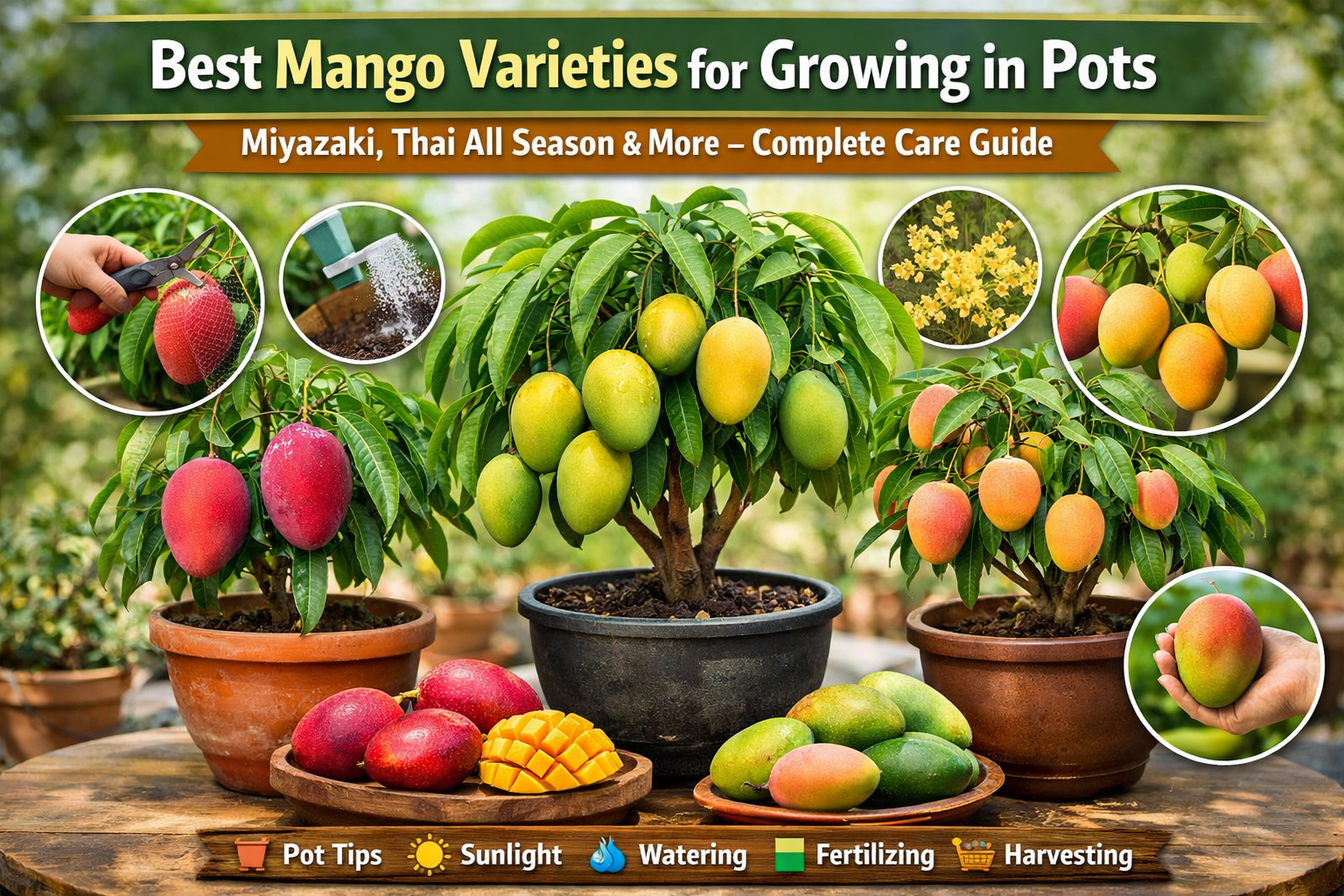
Why Grow Mango in Pots?
Mango is known as the “King of Fruits.” Especially in India, mango holds cultural, economic, and emotional importance.
Benefits of Growing Mango in Containers:
-
Perfect for small spaces
-
Ideal for terrace and balcony gardening
-
Easy pest and disease control
-
Organic fruit production at home
-
Decorative and productive plant
Best Mango Varieties for Growing in Pots
Choosing the right variety is the most important factor for successful container mango gardening. Always choose grafted or dwarf varieties, not seed-grown plants.
1. Amrapali Mango
-
Dwarf variety
-
Heavy fruit-bearing
-
Sweet and aromatic
-
Perfect for container gardening
2. Mallika Mango
-
High-yield variety
-
Excellent disease resistance
-
Medium-sized tree
-
Suitable for large pots
3. Dasheri (Grafted)
-
Popular traditional variety
-
Excellent taste and aroma
-
Suitable for container growing
4. Neelum Mango
-
Can flower more than once a year
-
Good adaptability
-
Suitable for pot cultivation
5. Miyazaki Mango (Premium Variety)
The Miyazaki Mango is one of the most premium mango varieties in the world.
Features:
-
Large fruit size
-
Thin skin
-
Extremely sweet taste
-
High vitamin and antioxidant content
-
Attractive deep red color
Although originally from Japan, it can be grown in pots in warm climates with proper care.
It requires:
-
Full sunlight
-
Balanced fertilization
-
Controlled watering
-
Good drainage
This is a high-demand premium mango variety ideal for collectors and serious gardeners.
6. Thai All Season Mango
The Thai All Season mango is a popular variety from Thailand.
Why It Is Special:
-
Can produce fruit multiple times a year
-
Fast-growing
-
Suitable for tropical and subtropical climates
-
Medium to large fruits
-
Pleasant aroma
It is highly recommended for container gardening due to its adaptability and regular fruiting potential.
Ideal Pot Size for Growing Mango
For successful fruiting, pot size matters.
Recommended Pot Size:
-
Minimum: 18–24 inches depth
-
Ideal: 24–30 inches wide and deep
-
Material: Cement, plastic, clay, or heavy grow bags
Ensure:
-
3–4 drainage holes
-
Strong base
-
Stable positioning (wind protection)
Best Soil Mix for Mango in Pots
Good drainage and nutrient-rich soil are essential.
Ideal Soil Mixture:
-
40% garden soil
-
30% well-decomposed cow manure
-
20% river sand
-
10% vermicompost
Add:
-
Neem cake powder
-
Bone meal
Ideal soil pH: 5.5–7.5
How to Plant Mango in a Pot (Step-by-Step)
-
Add small stones at the bottom for drainage
-
Fill with prepared soil mix
-
Remove grafted plant carefully from nursery bag
-
Place upright in center
-
Keep graft union above soil level
-
Press soil gently
-
Water lightly
Sunlight & Temperature Requirements
-
6–8 hours of direct sunlight daily
-
Ideal temperature: 24°C to 38°C
-
Protect from frost and extreme cold
South or west-facing balconies are ideal.
Watering Schedule
-
Summer: Every 2–3 days
-
Winter: Every 7–10 days
-
Rainy season: Avoid waterlogging
Overwatering causes root rot.
Fertilization Schedule for Maximum Fruit Yield
First Year:
-
Vermicompost every 2 months
-
Neem cake powder
Before Flowering:
-
Phosphorus-rich fertilizer
During Fruit Formation:
-
Potassium-rich fertilizer
Organic sprays:
-
Seaweed extract
-
Buttermilk spray
-
Neem oil spray
Pruning for Better Yield
Pruning improves airflow and fruit production.
-
Top the plant at 2–3 feet height
-
Remove inward-growing branches
-
Remove dry and diseased parts
-
Light pruning after monsoon
Care During Flowering and Fruiting
-
Avoid excess nitrogen
-
Control watering
-
Support pollination
-
Apply light potassium
Flower drop is normal in mango.
Tips to Get Maximum Fruits in Pots
-
Choose grafted plants
-
Provide full sunlight
-
Use balanced fertilizers
-
Maintain proper drainage
-
Regular pruning
-
Controlled watering during flowering
-
Ensure pollination
Common Mango Pests and Diseases
Common Pests:
-
Aphids
-
Mealybugs
-
Fruit flies
Control:
-
Neem oil spray every 15 days
-
Soap water spray
-
Yellow sticky traps
Common Diseases:
-
Powdery mildew
-
Anthracnose
Use fungicide carefully if needed.
Annual Care Calendar
| Month | Activity |
|---|---|
| Jan | Light watering |
| Feb | Flowering begins |
| Mar | Pest management |
| Apr | Fruit setting |
| May–Jun | Harvesting |
| Jul | Light pruning |
| Aug | Fertilizing |
| Sep | Growth management |
| Oct | Inspection |
| Nov | Light watering |
| Dec | Cold protection |
Harvesting & Storage
-
Harvest when fully mature
-
Cut with small stem attached
-
Store in cool place
-
Wrap raw mango in paper for ripening
Conclusion
Growing mango in pots is absolutely possible with the right variety, proper pot size, balanced nutrition, and regular care.
Premium varieties like:
-
Miyazaki Mango
-
Thai All Season
-
Amrapali
-
Mallika
are excellent choices for container gardening.
If you are looking to buy high-quality grafted mango plants, visit Bonsai Plants Nursery or contact us on WhatsApp: 8299790172.
Start your mango-growing journey today and enjoy fresh, organic mangoes from your own terrace garden!
Frequently Asked Questions (FAQ)
1. Can Miyazaki mango grow in pots?
Yes, with proper sunlight and nutrition.
2. How many years does mango take to fruit in pots?
Grafted plants start fruiting in 2–3 years.
3. How much sunlight does mango need?
Minimum 6–8 hours daily.
4. Why are mango flowers dropping?
Due to overwatering or nutrient imbalance.
5. Can Thai All Season fruit multiple times a year?
Yes, under suitable climate conditions.
6. What fertilizer is best for mango?
Vermicompost + phosphorus + potassium-based fertilizer.
7. Can mango grow in balcony?
Yes, if it receives sufficient sunlight.
8. How often should pruning be done?
Once or twice a year.
9. Why are fruits small?
Overcrowding or nutrient deficiency.
10. Is grafted mango better than seed-grown?
Yes, for container gardening.