
🌱 Introduction
Chiku (also known as Sapota or Sapodilla) is a tropical fruit loved for its sweetness and nutritional benefits. Rich in vitamins A, C, iron, calcium, and dietary fiber, it is considered one of the healthiest fruits for children and adults alike.
While traditionally grown in orchards and farmlands, Chiku can also be successfully cultivated in pots and containers with the right plantation method and care. This makes it possible for urban gardeners and plant lovers to enjoy fresh homegrown Chikus even in balconies and terraces.
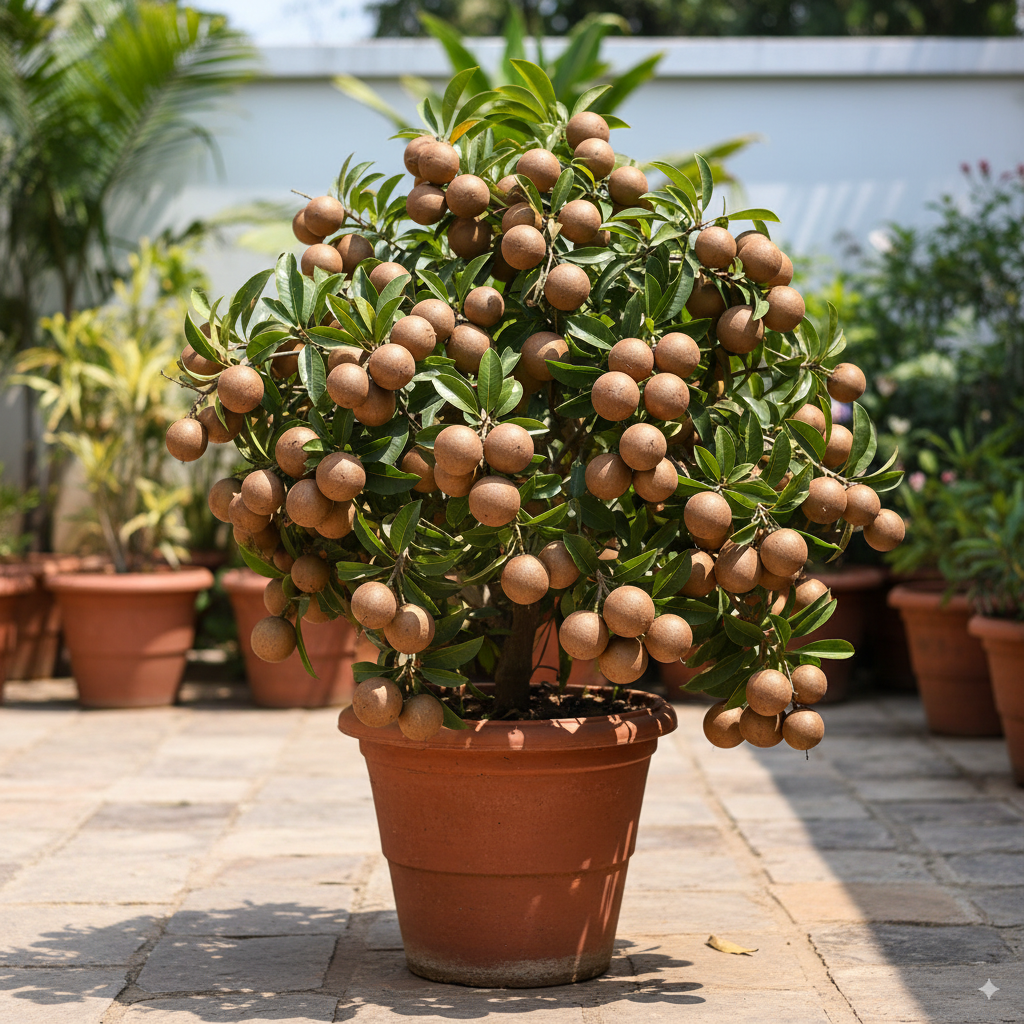
In this article, we will cover:
-
How to grow Chiku in pots step by step
-
The best soil, water, and fertilizer requirements
-
Care and pruning techniques
-
Tips to maximize fruiting in containers
-
Common pests and disease management
-
Health benefits of Chiku
🪴 Step-by-Step Guide to Planting Chiku in Pots
✔ Choosing the Right Pot
-
Use a pot or drum at least 22–30 inches in diameter and 2–3 feet deep.
-
Ensure drainage holes at the bottom to prevent waterlogging.
-
Clay or ceramic pots are ideal as they keep the roots cool, but plastic drums and cement tubs also work well.
✔ Preparing the Soil Mix
Chiku thrives in well-drained sandy-loam soil. Prepare the mix as follows:
-
40% garden soil
-
30% river sand (for drainage)
-
20% organic compost (cow dung or vermicompost)
-
10% cocopeat or coconut husk powder
-
Add 2–3 handfuls of neem cake powder to prevent root diseases.
✔ Plantation Method
-
Fill the pot with the prepared soil mix.
-
Plant a grafted Chiku sapling (avoid seed-grown plants as they take 7–8 years to fruit).
-
Water lightly after planting.
-
Place the pot in a sunny location that receives at least 6–8 hours of sunlight.
💧 Watering Schedule
-
First Year: Water every 2–3 days.
-
Summer: Water daily or on alternate days.
-
Winter: Water once every 5–7 days.
-
During flowering & fruiting: Keep the soil consistently moist but not waterlogged.
⚠️ Overwatering can cause root rot, especially in pots.
🌿 Fertilization for Fruiting
Balanced nutrition is essential for maximum fruit yield in Chiku.
| Time | Fertilizer Requirement | Purpose |
|---|---|---|
| Every 2 months | 1–2 kg organic compost | Improves soil fertility |
| March–April | 50 g neem cake + 50 g bone meal | Prevents root diseases |
| July–August | 50 g urea + 50 g DAP | Boosts vegetative growth |
| October–November | 100 g potash + micronutrients | Enhances flowering & fruiting |
👉 Potassium (Potash) is the most important nutrient for fruit development.
🌞 Sunlight & Climate
-
Chiku requires 6–8 hours of direct sunlight daily.
-
Ideal temperature: 20–35°C.
-
Place pots in open, airy spaces such as terraces, balconies, or backyards.
✂️ Pruning & Maintenance
-
Trim dry, yellow, or diseased leaves regularly.
-
Maintain 20–25 healthy green leaves for better photosynthesis.
-
Light pruning every 6–8 months improves branching and fruit set.
-
Support the plant with a stick if grown in smaller pots.
🍎 Tips to Maximize Fruiting in Pots
-
Always use grafted Chiku plants instead of seed-grown.
-
Use a deep pot (30 inches) to allow root expansion.
-
Spray boron + potash solution during the flowering stage.
-
Encourage natural pollinators like honeybees or practice hand pollination.
-
Perform fruit thinning – remove excess small fruits to allow bigger and sweeter fruits to grow.
-
Use mulching (dry leaves, straw, or coco husk) to retain soil moisture.
-
Regular neem oil spray keeps pests away naturally.
🐛 Pest & Disease Management
| Problem | Symptoms | Solution |
|---|---|---|
| Mealybugs | White cotton-like patches on leaves | Neem oil spray every 15 days |
| Leaf spot | Brown or black spots on leaves | Spray Copper Oxychloride |
| Fruit fly | Infests and spoils fruits | Cover fruits with net bags |
| Root rot | Plant turns yellow and weak | Ensure good drainage, use neem cake |
🌟 Health Benefits of Eating Chiku
-
Improves digestion due to high fiber content.
-
Rich in Vitamin A, supports good eyesight.
-
Iron content helps fight anemia.
-
Natural energy booster due to natural sugars.
-
Strengthens immunity and supports healthy skin.
-
Excellent for pregnant women and children.
📊 Quick Care Chart for Chiku in Pots
| Stage | Care Requirement | Tips |
|---|---|---|
| Plantation | 22–30 inch pot, sandy loam soil | Use grafted plants |
| Watering | 2–3 days (young), 5–7 days (winter) | Avoid overwatering |
| Fertilizer | Compost every 2 months, NPK thrice a year | Focus on Potash |
| Sunlight | 6–8 hours daily | South-facing locations best |
| Fruiting | Starts in 3–4 years (grafted plants) | Thin fruits for quality yield |
❓ Frequently Asked Questions (FAQ)
Q1: Can Chiku grow in pots?
✔ Yes, grafted Chiku plants grow well in pots and start fruiting in 3–4 years.
Q2: How long will a potted Chiku plant live?
✔ With proper care, it can live and produce fruits for 12–15 years.
Q3: How much sunlight does a Chiku plant need?
✔ At least 6–8 hours of direct sunlight daily.
Q4: How to get sweeter fruits?
✔ Apply potash-rich fertilizers and maintain consistent watering.
Q5: Can Chiku be grown from seeds in pots?
✔ Yes, but seed-grown plants take 7–8 years to fruit and may not produce quality fruits.
🎯 Conclusion
Growing Chiku (Sapota) in pots is an excellent way for urban gardeners to enjoy fresh, sweet, and healthy fruits at home. With the right soil preparation, proper watering, sunlight, pruning, and fertilization techniques, you can maximize fruiting and enjoy delicious homegrown Chikus for years.
Whether you have a balcony, terrace, or small backyard, a potted Chiku plant can become a long-term fruiting companion that not only provides nutrition but also enhances the beauty of your home garden.
Grafted Chiku Live Plant for Home and Garden – Kalmi chiku ka podha