
🌱 Introduction
The marigold plant (Tagetes spp.), known as Genda in Hindi, is one of the most popular flowering plants in India and around the world. It is admired not only for its bright and attractive blooms but also for its wide use in decorations, festivals, religious rituals, medicinal remedies, and gardening purposes.
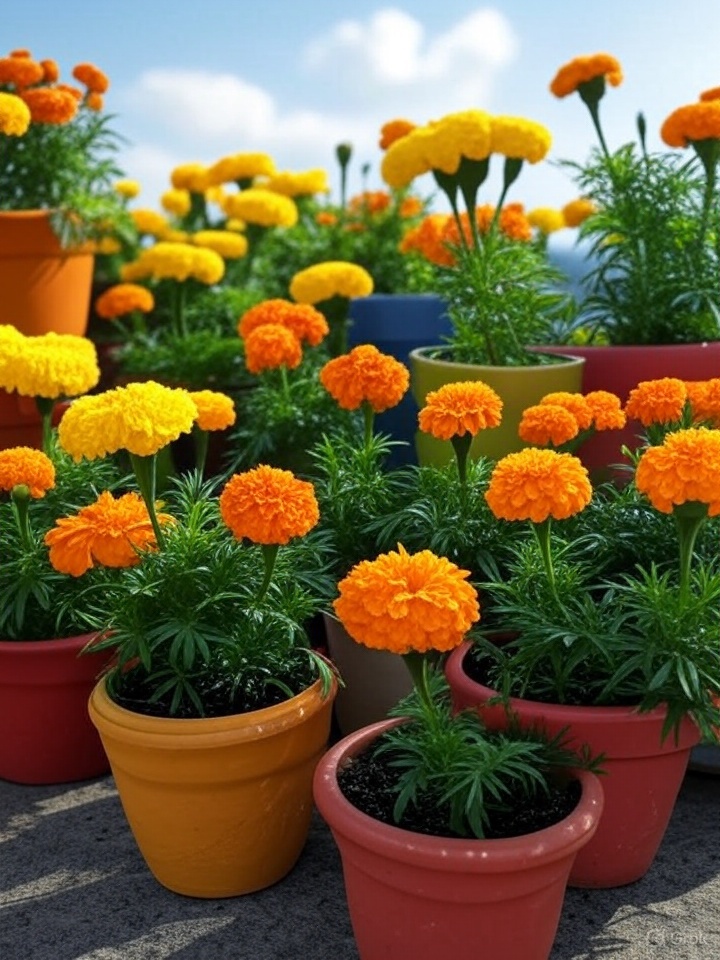
Marigolds are extremely easy to grow, require very little maintenance, and produce flowers continuously once they start blooming. This makes them a favorite for home gardens, balconies, and large landscapes.
There are mainly two popular types of marigolds:
-
African Marigold (Tagetes erecta) – Large, round, bright yellow or orange flowers.
-
French Marigold (Tagetes patula) – Smaller flowers in deep red, yellow, and orange shades, often with a strong fragrance.
From temples and weddings to festivals and gardens, marigolds hold immense importance in Indian culture. Beyond their beauty, they also offer medicinal, environmental, and economic benefits.
🌼 Benefits of Marigold Plant
1. Religious and Cultural Importance
-
Marigold flowers are considered auspicious in Hinduism.
-
They are commonly offered to Lord Ganesha and Hanuman during prayers.
-
Festivals like Diwali, Durga Puja, and Navratri use marigold garlands for decoration and rituals.
-
In weddings, marigold symbolizes good fortune and prosperity.
2. Ornamental and Gardening Uses
-
Marigolds bloom continuously once flowering begins.
-
They are perfect for borders, flower beds, and balcony decoration.
-
Their bright colors enhance the beauty of any garden space.
3. Medicinal Benefits
-
Marigolds contain antibacterial, antifungal, and anti-inflammatory properties.
-
A paste of leaves and flowers helps in skin infections and minor wounds.
-
Marigold tea reduces stomach issues and inflammation.
4. Environmental Benefits
-
The strong scent of marigolds repels mosquitoes, aphids, and harmful insects.
-
Farmers plant marigolds around crop fields as companion plants to reduce pests.
-
They also improve soil health naturally.
5. Economic Value
-
Marigold cultivation is low-cost and high-yield, making it profitable for farmers.
-
It has high demand throughout the year in markets for weddings, temples, and festivals.
🌱 How to Grow Marigold Plant
Marigolds can be grown easily from seeds, cuttings, or nursery saplings in pots and gardens.
1. Growing from Seeds
-
Prepare loose soil mixed with compost.
-
Sow seeds about 1–2 cm deep.
-
Cover lightly with soil and water gently.
-
Seeds germinate within 5–7 days.
2. Growing from Cuttings
-
Cut 4–5 inch long healthy stems.
-
Dip in rooting hormone and place in moist soil.
-
Roots appear within 10–15 days.
3. Growing in Pots
-
Use pots at least 8–10 inches deep with drainage holes.
-
Soil mix: 40% garden soil + 40% compost + 20% sand.
-
Ensure good sunlight exposure.
4. Growing in Garden Beds
-
Dig soil up to 8–10 inches deep and mix compost.
-
Plant saplings with 30–40 cm spacing.
-
Ideal for borders and mass planting.
🌿 Marigold Care Tips
1. Sunlight
-
Needs 6–7 hours of direct sunlight daily.
-
Shady conditions reduce flowering.
2. Watering
-
Water 2–3 times a week, and daily during summers.
-
Avoid waterlogging to prevent root rot.
3. Fertilization
-
Apply organic compost or vermicompost every 20–25 days.
-
For more blooms, add phosphorus and potash fertilizers.
-
Avoid excessive nitrogen (leads to more leaves, fewer flowers).
4. Pruning
-
Remove dry leaves and faded flowers regularly.
-
Promotes new buds and better flowering.
5. Pest & Disease Control
-
Common pests: aphids, mites, and fungal infections.
-
Use neem oil spray weekly as a natural insecticide.
-
For fungal issues, spray baking soda water solution.
🌸 Tips for Getting More Flowers
-
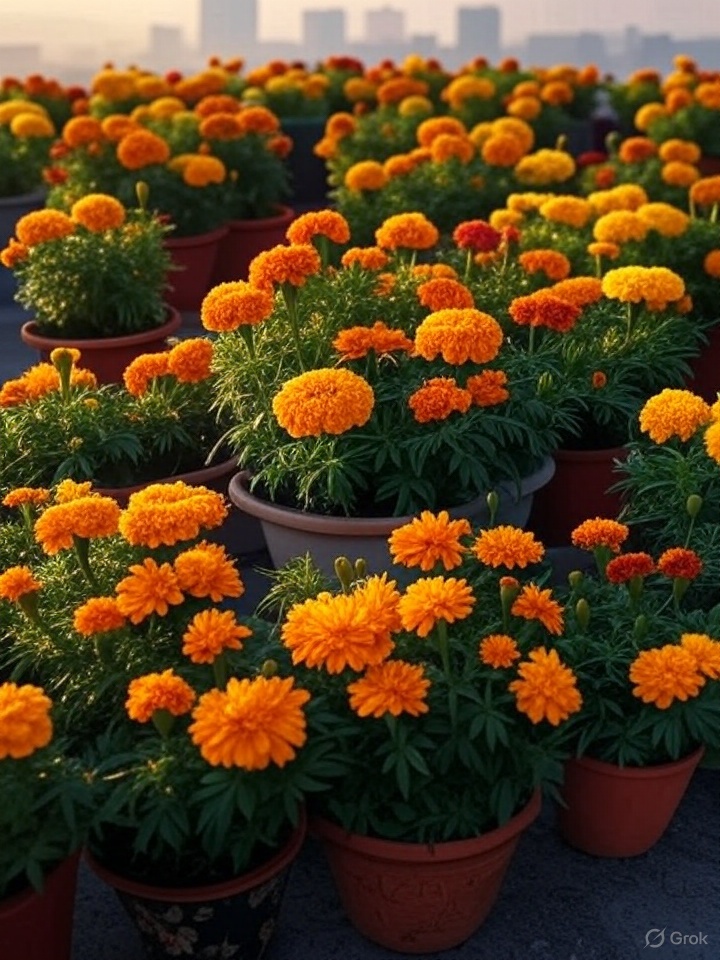
Use well-draining soil – Add sand and compost for better aeration.
-
Proper watering – Keep soil moist but never waterlogged.
-
Regular deadheading – Remove fully bloomed flowers to encourage new buds.
-
Pinching technique – Pinch tender stems after 4–6 inches growth for bushier plants.
-
Balanced fertilizers – Add bone meal, compost, and potash for more blooms.
-
Right season – Best flowering in winter and monsoon.
🌿 Medicinal & Household Uses
Medicinal Benefits
-
Skin care: Leaf paste treats rashes, acne, and infections.
-
Pain relief: Marigold extracts help with swelling and joint pain.
-
Eye health: Petals are used in Ayurvedic remedies for eyesight.
-
Digestive aid: Marigold tea improves digestion and reduces inflammation.
Household Uses
-
Mosquito repellent – Natural fragrance keeps insects away.
-
Decoration – Garlands and torans add color and positivity to homes.
-
Natural dye – Petals are used for yellow and orange dyes.
🛕 Religious & Vastu Importance
-
Marigolds are considered sacred and lucky in Hindu traditions.
-
Garlands at entrances bring positive energy and prosperity.
-
Offering marigolds to Lord Ganesha and Hanuman removes obstacles.
-
Planting marigolds in the south direction is considered auspicious in Vastu.
❓ FAQs
Q1: How much sunlight do marigolds need?
👉 At least 6–7 hours of direct sunlight.
Q2: Why is my marigold not flowering?
👉 Reasons: lack of sunlight, excess nitrogen fertilizer, or irregular pruning.
Q3: Can marigolds grow in pots?
👉 Yes, with proper soil mix and an 8–10 inch pot, marigolds thrive in containers.
Q4: Best season to grow marigolds?
👉 Monsoon and winter are ideal.
Q5: How often should I water marigolds?
👉 2–3 times weekly, daily in summer.
📌 Conclusion
The marigold plant is not just a garden flower — it is a symbol of prosperity, health, and beauty.
-
Easy to grow, even for beginners.
-
Blooms abundantly with proper care.
-
Offers religious, medicinal, and environmental benefits.
-
Enhances positivity and energy in homes and gardens.
If you want a plant that gives bright flowers, low maintenance, and high benefits, marigold is the perfect choice for your home garden or balcony.
Orange marigold Live plant (orange genda) orange genda ka podha