
✨ Introduction
Jamun (Syzygium cumini), also known as Blackberry, Java Plum, Indian Black Plum, or Malabar Plum, is one of the most popular fruits in India. It is valued for its unique tangy-sweet taste, medicinal properties, and cultural importance.
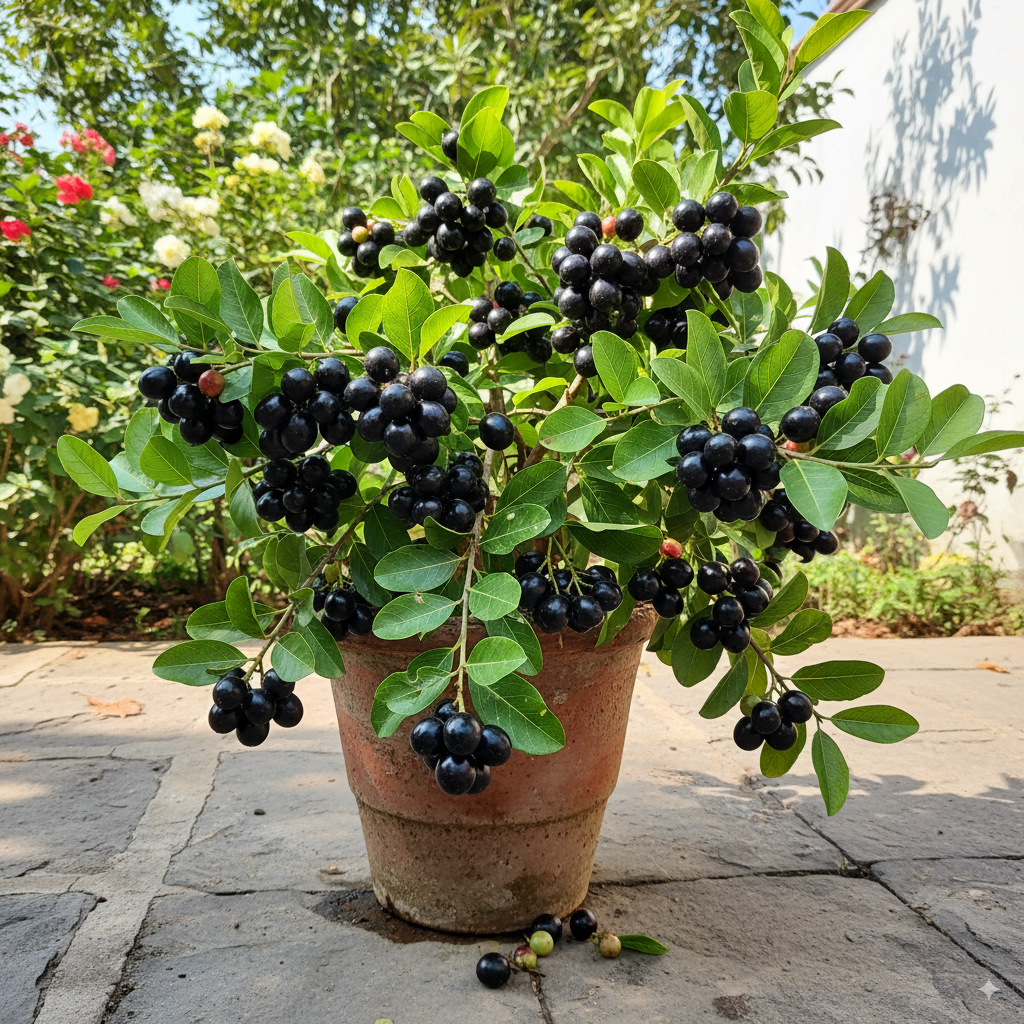
Jamun fruit has been widely used in Ayurveda, Unani, and traditional medicine systems for treating diabetes, digestion issues, blood purification, and heart diseases. The tree is evergreen, long-living, and can grow up to 30–40 meters in height under suitable conditions.
In this article, we will cover in detail:
-
Ideal climate and soil for Jamun
-
Plantation techniques in fields and pots
-
Irrigation, fertilization, and care schedule
-
Pruning and plant management
-
Tips for maximizing fruiting and sweetness
-
Pest and disease control
-
Medicinal and health benefits
-
Vastu and cultural significance
🌱 Suitable Climate and Soil for Jamun
-
Climate: Jamun grows well in tropical and subtropical regions.
-
Temperature: 25°C to 35°C is ideal.
-
Rainfall: Annual rainfall of 500–2500 mm supports healthy growth.
-
Soil Requirements:
-
Sandy loam or loamy soil is best.
-
Soil pH: 6.0–7.5.
-
Proper drainage is essential to avoid root rot.
-
🪴 Plantation Methods
✔ In Garden or Farm
-
Pit Preparation: Dig pits of 3x3x3 feet.
-
Soil Mixture: Fill with garden soil + farmyard manure + river sand + neem cake.
-
Planting: Always use grafted (budded) plants for early fruiting.
-
Spacing: Keep 8–10 meters between plants.
-
Irrigation: Light watering after plantation.
✔ In Pots/Containers
-
Pot Size: Minimum 20–24 inches deep and wide.
-
Soil Mix:
-
40% garden soil
-
30% organic compost/vermicompost
-
20% river sand
-
10% cocopeat + neem cake powder
-
-
Ensure good drainage holes in the container.
💧 Irrigation Management
-
Summer: Water every 7–10 days.
-
Winter: Every 15–20 days.
-
Fruiting Stage: Maintain consistent soil moisture.
-
Precaution: Avoid waterlogging, especially in pots.
🌿 Fertilizer and Nutrition Schedule
| Season | Fertilizer | Quantity | Purpose |
|---|---|---|---|
| Every 3 months | Farmyard manure/Vermicompost | 5–10 kg | Improves soil fertility |
| Feb–March | Nitrogen (Urea) | 200 g | Boosts new shoots & leaves |
| June–July | DAP + Potash | 200–250 g | Helps in flowering & fruit set |
| Aug–Sept | Micronutrients (Zinc, Boron) | Foliar spray | Enhances fruit size & sweetness |
👉 Potassium and Zinc are essential for fruit quality and sweetness.
🌞 Sunlight and Temperature
-
Jamun requires 6–8 hours of direct sunlight daily.
-
Avoid shady places as they reduce fruiting.
-
Protect young plants from frost in colder regions.
✂️ Pruning and Maintenance
-
Remove dry, diseased, or broken branches regularly.
-
Light pruning helps in giving a balanced shape to the tree.
-
For potted plants, perform repotting every 2–3 years with fresh soil mix.
🌸 Flowering and Fruiting
-
Seed-grown plants start fruiting after 6–8 years.
-
Grafted/budded plants bear fruits within 4–5 years.
-
Flowering Season: March–April.
-
Harvesting Season: June–July.
-
Fruits are oval-shaped, purple-black, and have a unique flavor.
🍇 Tips to Maximize Fruiting
-
Always plant grafted plants for early and better yield.
-
Apply Zinc and Boron sprays during flowering.
-
Use Potash-rich fertilizers to reduce flower/fruit drop.
-
Keep the base area weed-free.
-
Ensure timely irrigation and fertilization.
-
Thin excess fruits for better quality and size.
🐛 Pest and Disease Management
| Pest/Disease | Symptoms | Control |
|---|---|---|
| Leaf Spot | Yellow/black patches on leaves | Spray Bordeaux mixture |
| Fruit Drop | Immature fruits falling | Foliar spray of Zinc + Boron |
| Termites | Weakening of roots | Apply neem cake & neem oil |
| Fruit Fly | Holes and rotting fruits | Cover fruits with net bags |
🌟 Medicinal and Health Benefits of Jamun
-
Diabetes Management: Jamun seeds are used in Ayurvedic medicine for regulating blood sugar levels.
-
Digestion: Improves gut health and relieves diarrhea.
-
Bone Health: Rich in calcium and phosphorus.
-
Heart Health: Maintains blood pressure and cholesterol.
-
Skin Benefits: Purifies blood and helps in skin disorders.
🏡 Vastu and Cultural Importance
-
Planting Jamun at home brings positivity, prosperity, and good health.
-
Considered sacred in Indian traditions and associated with Lord Krishna.
-
Jamun is also part of Panchavati trees along with Neem, Peepal, and Banyan.
📊 Quick Care Guide
| Stage | Care | Tip |
|---|---|---|
| Plantation | Use grafted plants | Keep 8–10 m spacing |
| Watering | Summer: 7–10 days, Winter: 15–20 days | Avoid waterlogging |
| Fertilization | Organic compost every 3 months | Increase Potash at fruiting |
| Sunlight | 6–8 hrs daily | Avoid shade |
| Fruiting | Starts in 4–5 years (grafted) | Spray micronutrients |
❓ Frequently Asked Questions (FAQ)
Q1: Can Jamun grow in pots?
✔ Yes, grafted plants can grow well in large pots (20–24 inches).
Q2: How many years does Jamun take to bear fruits?
✔ Seed-grown: 6–8 years, Grafted: 4–5 years.
Q3: Which fertilizer is best for Jamun?
✔ Organic compost + Potash + Micronutrient sprays.
Q4: What is the lifespan of Jamun tree?
✔ A healthy Jamun tree can live and fruit for 50–60 years.
Q5: Is Jamun farming profitable?
✔ Yes, Jamun is highly valued for its medicinal and commercial demand.
🎯 Conclusion
Jamun is not just a delicious seasonal fruit but also a treasure of health benefits and cultural values. By planting a Jamun tree at home or farm, you can enjoy both its shade and fruits for decades.
With proper planting, irrigation, nutrition management, and pest control, you can ensure heavy harvests of sweet and medicinally rich Jamun fruits. Whether in a large farm or in a pot on your terrace, Jamun is a tree worth growing.
Grafted Blackberry Live Plant/Jaamun ka Podha for Home and Garden